Okano Yoshiyuki, Hattori Toshikazu, Fujimoto Hiroki, Noi Kaori, Okamoto Miki, Watanabe Toshiaki, Watanabe Ryoko, Fujii Rika, Tamaoki Tomoko
Department of Genetics, Hyogo College of Medicine, Nishinomiya 663-8501, Japan; Okano Children's Clinic, Izumi 594-0071, Japan.
Nutrition Dietary Section, Osaka City University Hospital, Osaka 545-0051, Japan.
Mol Genet Metab Rep. 2016 Aug 20;8:103-10. doi: 10.1016/j.ymgmr.2016.08.005. eCollection 2016 Sep.
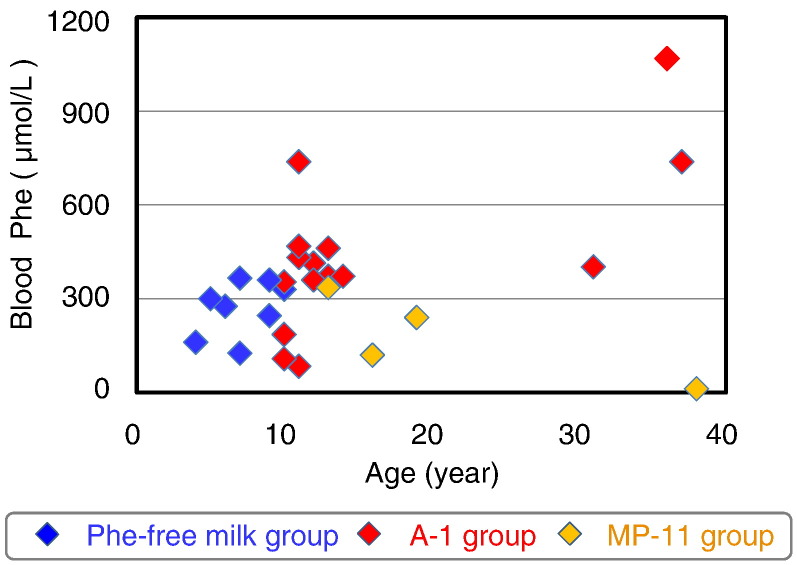
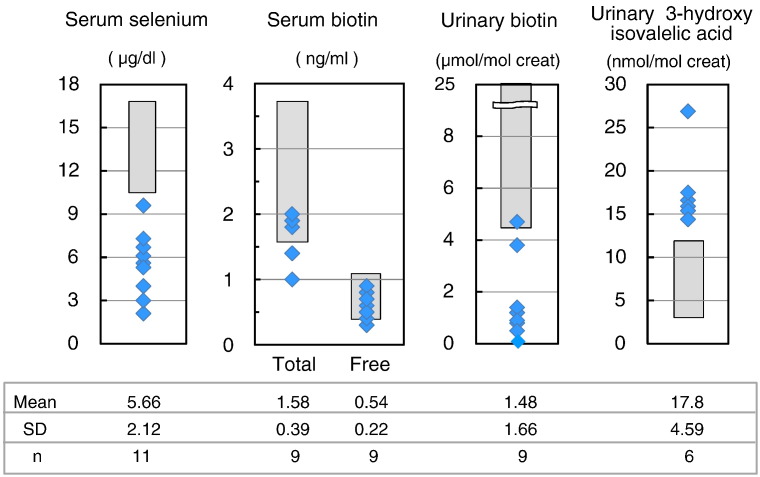
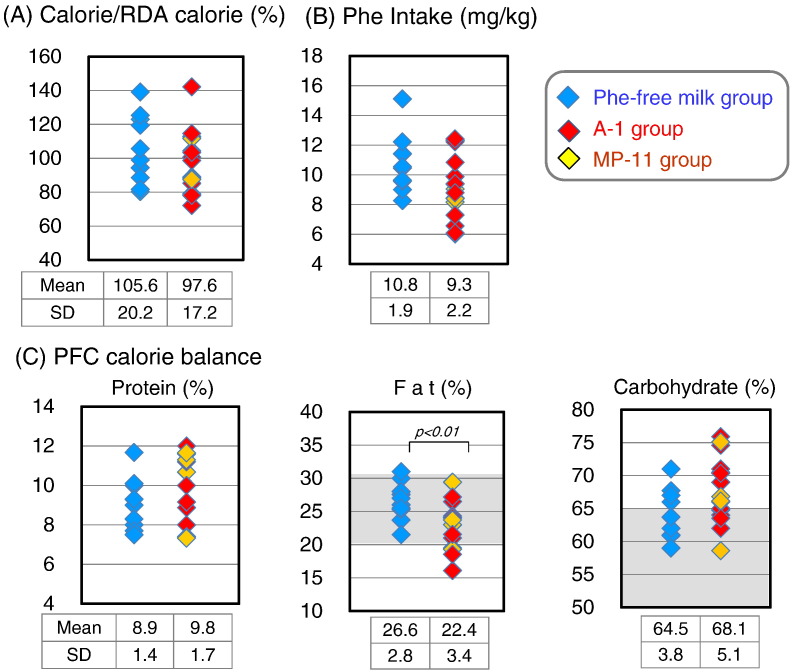
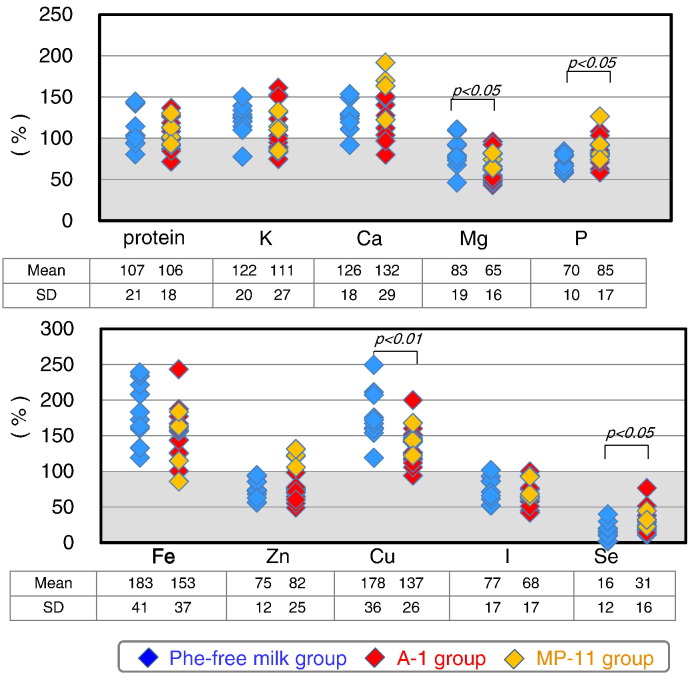
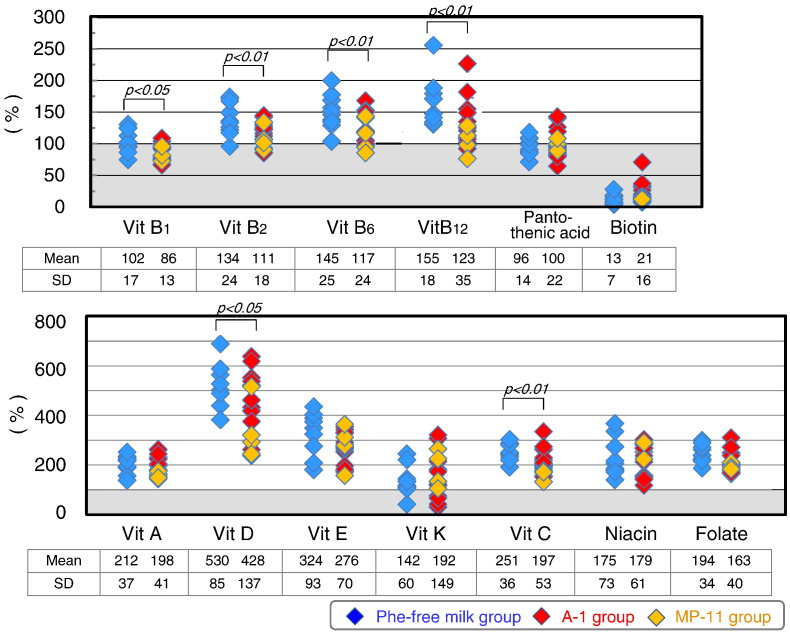
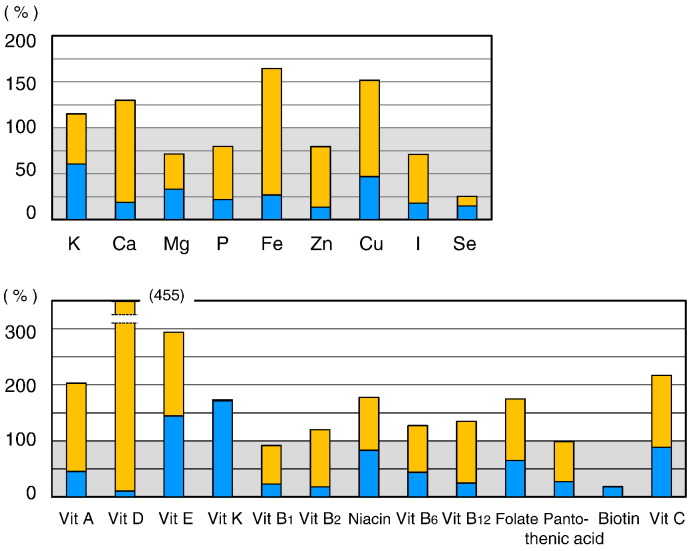
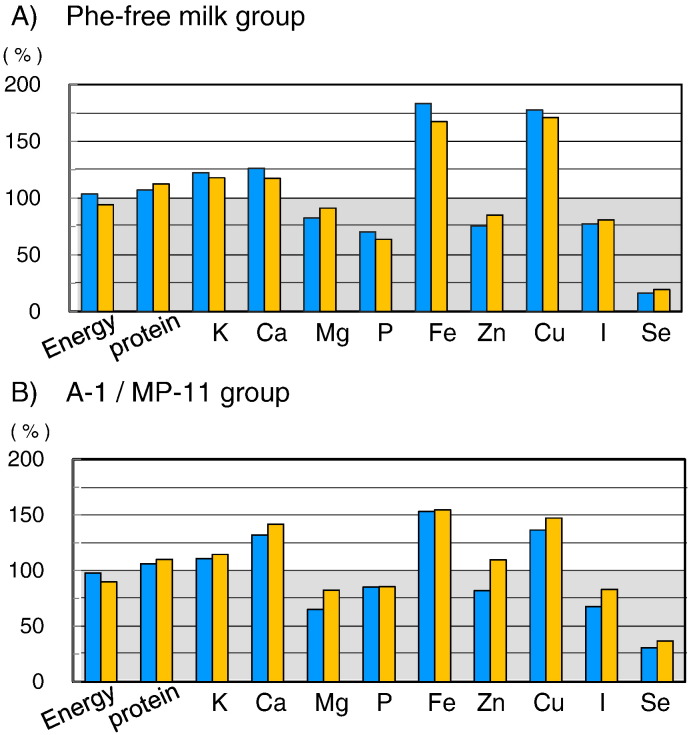
Accumulating evidence suggests that hyperphenylalaninemia in phenylketonuria (PKU) can cause neuropsychological and psychosocial problems in diet-off adult patients, and that such symptoms improve after resumption of phenylalanine-restricted diet, indicating the need for lifetime low-phenylalanine diet. While limiting protein intake, dietary therapy should provide adequate daily intake of energy, carbohydrates, fat, vitamins, and microelements. We evaluated nutrient balance in 14 patients with classical PKU aged 4-38 years. Approximately 80-85% of the recommended dietary allowance (RDA) of protein in Japanese was supplied through phenylalanine-free (Phe-free) milk and Phe-free amino acid substitutes. Nutritional evaluation showed that the calorie and protein intakes were equivalent to the RDA. Phenylalanine intake was 9.8 ± 2.2 mg/kg of body weight/day, which maintained normal blood phenylalanine concentration by the 80% Phe-free protein rule. The protein, fat, and carbohydrate ratio was 9.5:23.9:66.6% with relative carbohydrate excess. Phe-free milk and amino acid substitutes provided 33.7% of carbohydrate, 82.1% of protein, and 66.7% of fat intake in all. Selenium and biotin intakes were 25.0% and 18.1% of the RDA and adequate intake (AI) for Japanese, respectively; both were not included in Phe-free milk. PKU patients showed low serum selenium, low urinary biotin, and high urinary 3-hydroxyisovaleric acid in this study. The intakes of magnesium, zinc, and iodine were low (71.5%, 79.5%, and 71.0% of the RDA, respectively) and that of phosphorus was 79.7% of the AI, although they were supplemented in Phe-free milk. PKU patients depend on Phe-free milk and substitutes for daily requirement of microelements and vitamins as well as protein and fat. Development of low-protein food makes it possible to achieve the aimed phenylalanine blood level, but this lowers the intake of microelements and vitamins from natural foods. The dietary habits vary continuously with age and environment in PKU patients. We recommend the addition of selenium and biotin to Phe-free milk in Japan and the need to review the composition of microelements and vitamins in A-1 and MP-11 preparations.
越来越多的证据表明,苯丙酮尿症(PKU)患者的高苯丙氨酸血症会在停止饮食治疗的成年患者中引发神经心理和社会心理问题,而恢复限制苯丙氨酸饮食后这些症状会有所改善,这表明需要终身食用低苯丙氨酸饮食。在限制蛋白质摄入的同时,饮食疗法应提供足够的每日能量、碳水化合物、脂肪、维生素和微量元素摄入量。我们评估了14名年龄在4至38岁的经典型PKU患者的营养平衡情况。日本推荐膳食摄入量(RDA)中约80 - 85%的蛋白质通过无苯丙氨酸(Phe-free)牛奶和无苯丙氨酸氨基酸替代品提供。营养评估显示,热量和蛋白质摄入量与RDA相当。苯丙氨酸摄入量为9.8 ± 2.2毫克/千克体重/天,通过80%无苯丙氨酸蛋白质规则维持正常的血苯丙氨酸浓度。蛋白质、脂肪和碳水化合物的比例为9.5:23.9:66.6%,碳水化合物相对过量。无苯丙氨酸牛奶和氨基酸替代品分别提供了全部碳水化合物摄入量的33.7%、蛋白质摄入量的82.1%和脂肪摄入量的66.7%。硒和生物素的摄入量分别为日本RDA的25.0%和适宜摄入量(AI)的18.1%;无苯丙氨酸牛奶中均未包含这两种物质。在本研究中,PKU患者表现出血清硒水平低、尿生物素水平低和尿3 - 羟基异戊酸水平高。镁、锌和碘的摄入量较低(分别为RDA的71.5%、79.5%和71.0%),磷的摄入量为AI的79.7%,尽管它们在无苯丙氨酸牛奶中有所补充。PKU患者日常对微量元素、维生素以及蛋白质和脂肪的需求依赖于无苯丙氨酸牛奶和替代品。低蛋白食品的开发使得达到目标血苯丙氨酸水平成为可能,但这会降低天然食物中微量元素和维生素的摄入量。PKU患者的饮食习惯会随着年龄和环境不断变化。我们建议在日本的无苯丙氨酸牛奶中添加硒和生物素,并需要重新审视A - 1和MP - 11制剂中微量元素和维生素的成分。