Fujita Koji, Iwama Hisakazu, Oura Kyoko, Tadokoro Tomoko, Hirose Kayo, Watanabe Miwako, Sakamoto Teppei, Katsura Akiko, Mimura Shima, Nomura Takako, Tani Joji, Miyoshi Hisaaki, Morishita Asahiro, Yoneyama Hirohito, Okano Keiichi, Suzuki Yasuyuki, Himoto Takashi, Masaki Tsutomu
Department of Gastroenterology and Neurology, Faculty of Medicine, Kagawa University, Miki, Kagawa 761-0793, Japan.
Life Science Research Center, Faculty of Medicine, Kagawa University, Miki, Kagawa 761-0793, Japan.
Int J Mol Med. 2016 Oct;38(4):1135-40. doi: 10.3892/ijmm.2016.2729. Epub 2016 Sep 2.
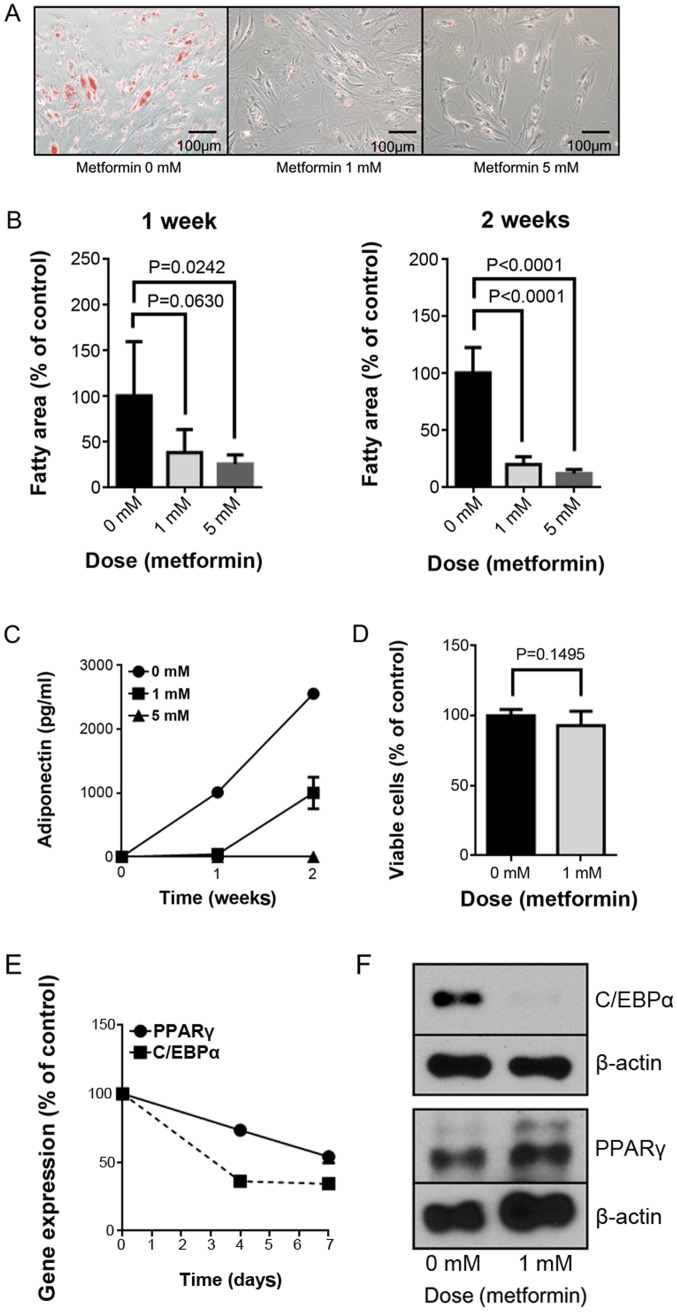
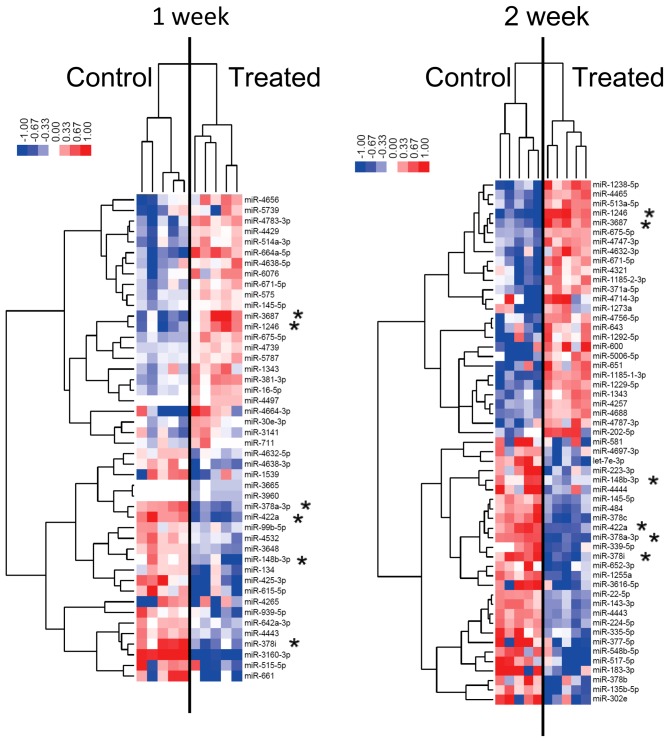
Visceral adipose tissue contributes to the pathophysiology of metabolic syndrome. Metformin has been reported to suppress lipogenesis in a murine preadipocyte cell line. However, the effect of metformin on the differentiation of human visceral adipose tissue remains unknown. MicroRNAs (miRNAs or miRs) have been suggested as therapeutic targets because of their involvement in the differentiation and maturation of fatty cells. The aim of this study was to determine whether metformin suppresses the differentiation of human preadipocytes and to identify miRNAs associated with the regulation of lipid metabolism. Human visceral preadipocytes (HPrAD-vis) were preincubated in growth media and then cultured with differentiation media containing metformin for 1 or 2 weeks. Adipogenic differentiation of the cells was assessed by Oil Red O staining, and soluble adiponectin in the culture media was measured using an enzyme-linked immunosorbent assay. Cell proliferation was assessed using a WST-8 assay, and the gene and protein expression of peroxisome proliferator-activated receptor γ (PPARγ) and CCAAT‑enhancer-binding protein α (C/EBPα) was determined by RT-qPCR and western blot analysis, respectively. miRNAs were profiled using human miRNA Oligo chips after total RNA was extracted and labeled. Oil Red O staining showed that metformin suppressed the accumulation of lipid droplets in HPrAD-vis cells. The adiponectin concentration in the culture media was also decreased in metformin-treated cells. The WST-8 assay revealed no effect on proliferation or growth inhibition following metformin treatment, although metformin suppressed the expression of PPARγ and C/EBPα. miRNA profiling further revealed differences between the metformin-treated group and control HPrAD-vis cells. Thus, the findings of the present study demonstrated that metformin suppressed the differentiation of human preadipocytes in vitro and altered the miRNA profile of these cells. Thus, the miRNAs whose expression levels were altered by metformin may contribute to the observed suppression of HPrAD-vis cell differentiation.
内脏脂肪组织参与代谢综合征的病理生理过程。据报道,二甲双胍可抑制小鼠前脂肪细胞系中的脂肪生成。然而,二甲双胍对人内脏脂肪组织分化的影响尚不清楚。由于微小RNA(miRNA或miR)参与脂肪细胞的分化和成熟,因此被认为是治疗靶点。本研究的目的是确定二甲双胍是否抑制人前脂肪细胞的分化,并鉴定与脂质代谢调节相关的miRNA。人内脏前脂肪细胞(HPrAD-vis)先在生长培养基中预孵育,然后用含二甲双胍的分化培养基培养1或2周。通过油红O染色评估细胞的成脂分化,并用酶联免疫吸附测定法测量培养基中的可溶性脂联素。使用WST-8测定法评估细胞增殖,分别通过RT-qPCR和蛋白质印迹分析测定过氧化物酶体增殖物激活受体γ(PPARγ)和CCAAT增强子结合蛋白α(C/EBPα)的基因和蛋白表达。提取并标记总RNA后,使用人miRNA寡核苷酸芯片分析miRNA。油红O染色显示,二甲双胍抑制了HPrAD-vis细胞中脂滴的积累。二甲双胍处理的细胞中培养基中的脂联素浓度也降低。WST-8测定法显示,二甲双胍处理后对细胞增殖或生长抑制没有影响,尽管二甲双胍抑制了PPARγ和C/EBPα的表达。miRNA分析进一步揭示了二甲双胍处理组与对照HPrAD-vis细胞之间的差异。因此,本研究结果表明,二甲双胍在体外抑制人前脂肪细胞的分化,并改变了这些细胞的miRNA谱。因此,其表达水平因二甲双胍而改变的miRNA可能有助于观察到的对HPrAD-vis细胞分化的抑制作用。