Peralta Humberto, Aguilar Alejandro, Díaz Rafael, Mora Yolanda, Martínez-Batallar Gabriel, Salazar Emmanuel, Vargas-Lagunas Carmen, Martínez Esperanza, Encarnación Sergio, Girard Lourdes, Mora Jaime
Centro de Ciencias Genómicas, Universidad Nacional Autónoma de México, Av. Universidad s/n, Chamilpa, Cuernavaca, Morelos, CP 62210, Mexico.
BMC Genomics. 2016 Sep 6;17(1):711. doi: 10.1186/s12864-016-3053-z.
Rhizobia are soil bacteria that establish symbiotic relationships with legumes and fix nitrogen in root nodules. We recently reported that several nitrogen-fixing rhizobial strains, belonging to Rhizobium phaseoli, R. trifolii, R. grahamii and Sinorhizobium americanum, were able to colonize Phaseolus vulgaris (common bean) seeds. To gain further insight into the traits that support this ability, we analyzed the genomic sequences and proteomes of R. phaseoli (CCGM1) and S. americanum (CCGM7) strains from seeds and compared them with those of the closely related strains CIAT652 and CFNEI73, respectively, isolated only from nodules.
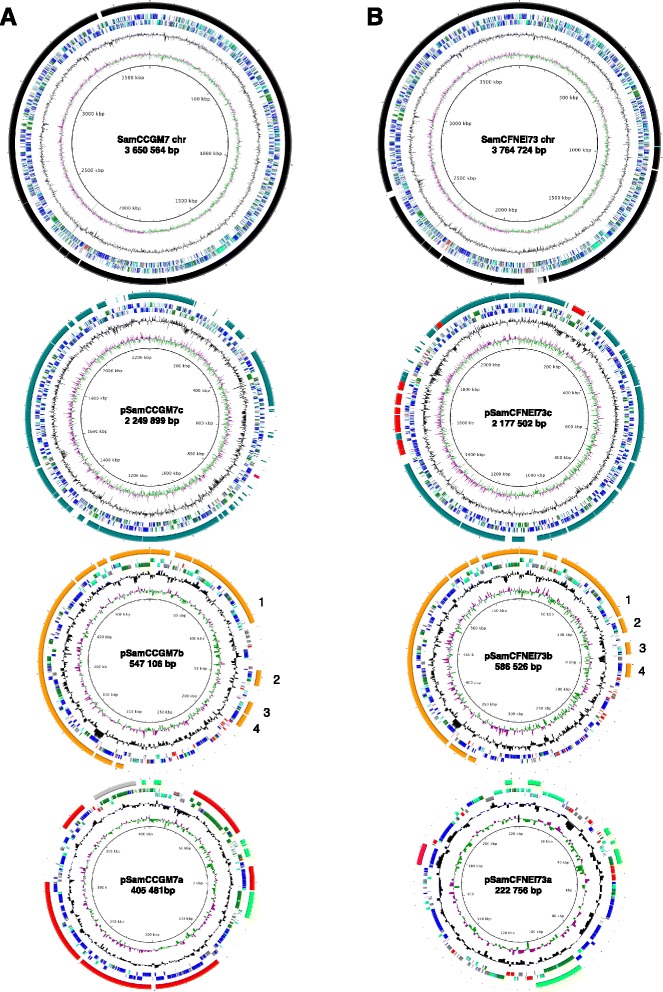
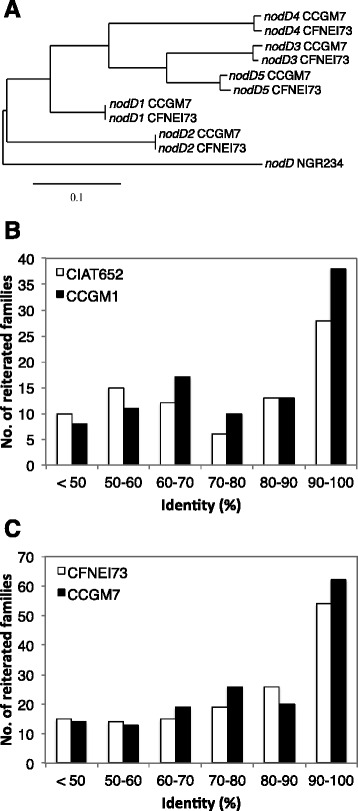
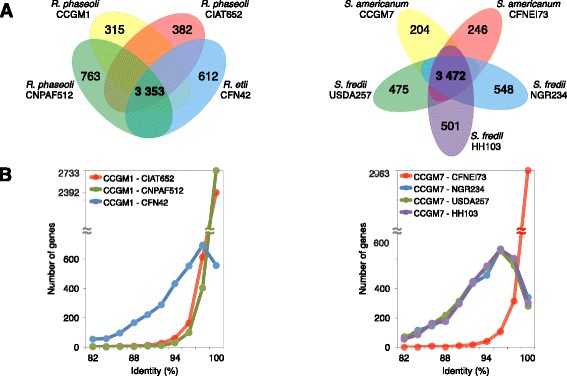
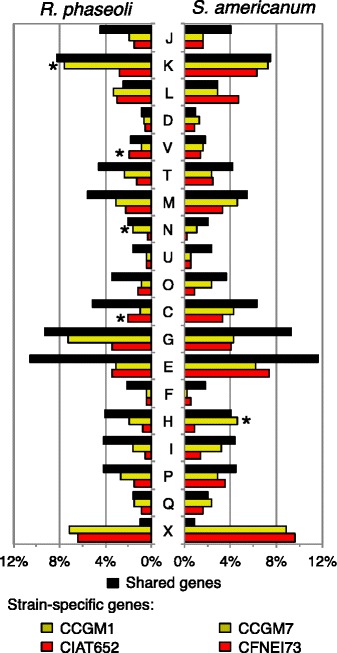
In a fine structural study of the S. americanum genomes, the chromosomes, megaplasmids and symbiotic plasmids were highly conserved and syntenic, with the exception of the smaller plasmid, which appeared unrelated. The symbiotic tract of CCGM7 appeared more disperse, possibly due to the action of transposases. The chromosomes of seed strains had less transposases and strain-specific genes. The seed strains CCGM1 and CCGM7 shared about half of their genomes with their closest strains (3353 and 3472 orthologs respectively), but a large fraction of the rest also had homology with other rhizobia. They contained 315 and 204 strain-specific genes, respectively, particularly abundant in the functions of transcription, motility, energy generation and cofactor biosynthesis. The proteomes of seed and nodule strains were obtained and showed a particular profile for each of the strains. About 82 % of the proteins in the comparisons appeared similar. Forty of the most abundant proteins in each strain were identified; these proteins in seed strains were involved in stress responses and coenzyme and cofactor biosynthesis and in the nodule strains mainly in central processes. Only 3 % of the abundant proteins had hypothetical functions.
Functions that were enriched in the genomes and proteomes of seed strains possibly participate in the successful occupancy of the new niche. The genome of the strains had features possibly related to their presence in the seeds. This study helps to understand traits of rhizobia involved in seed adaptation.
根瘤菌是一类与豆科植物建立共生关系并在根瘤中固氮的土壤细菌。我们最近报道,几种属于菜豆根瘤菌、三叶草根瘤菌、格雷厄姆根瘤菌和美国中华根瘤菌的固氮根瘤菌菌株能够定殖于菜豆种子上。为了进一步深入了解支持这种能力的特性,我们分析了来自种子的菜豆根瘤菌(CCGM1)和美国中华根瘤菌(CCGM7)菌株的基因组序列和蛋白质组,并分别将它们与仅从根瘤中分离出的密切相关菌株CIAT652和CFNEI73的基因组序列和蛋白质组进行比较。
在对美国中华根瘤菌基因组的精细结构研究中,染色体、大质粒和共生质粒高度保守且具有共线性,但较小的质粒除外,它似乎没有相关性。CCGM7的共生区域显得更为分散,这可能是转座酶作用的结果。种子菌株的染色体具有较少的转座酶和菌株特异性基因。种子菌株CCGM1和CCGM7与其最接近的菌株分别共享约一半的基因组(分别有3353和3472个直系同源基因),但其余大部分也与其他根瘤菌具有同源性。它们分别含有315和204个菌株特异性基因,尤其在转录、运动性、能量产生和辅因子生物合成功能方面较为丰富。获得了种子菌株和根瘤菌株的蛋白质组,并且每个菌株都呈现出特定的图谱。比较中约82%的蛋白质看起来相似。鉴定出了每个菌株中最丰富的40种蛋白质;种子菌株中的这些蛋白质参与应激反应、辅酶和辅因子生物合成,而根瘤菌株中的这些蛋白质主要参与核心过程。只有3%的丰富蛋白质具有假设功能。
种子菌株基因组和蛋白质组中富集的功能可能参与了对新生态位的成功占据。这些菌株的基因组具有可能与其在种子中的存在相关的特征。这项研究有助于了解参与种子适应性的根瘤菌特性。