Cho Pyung Sun, Lee Han Kyu, Lee Sang Hoon, Im Jay Zoon, Jung Sung Jun
Department of Biomedical Science, Graduate School of Biomedical Science; Engineering, Hanyang University, Seoul 04763, Korea.
Korean J Physiol Pharmacol. 2016 Sep;20(5):525-31. doi: 10.4196/kjpp.2016.20.5.525. Epub 2016 Aug 26.
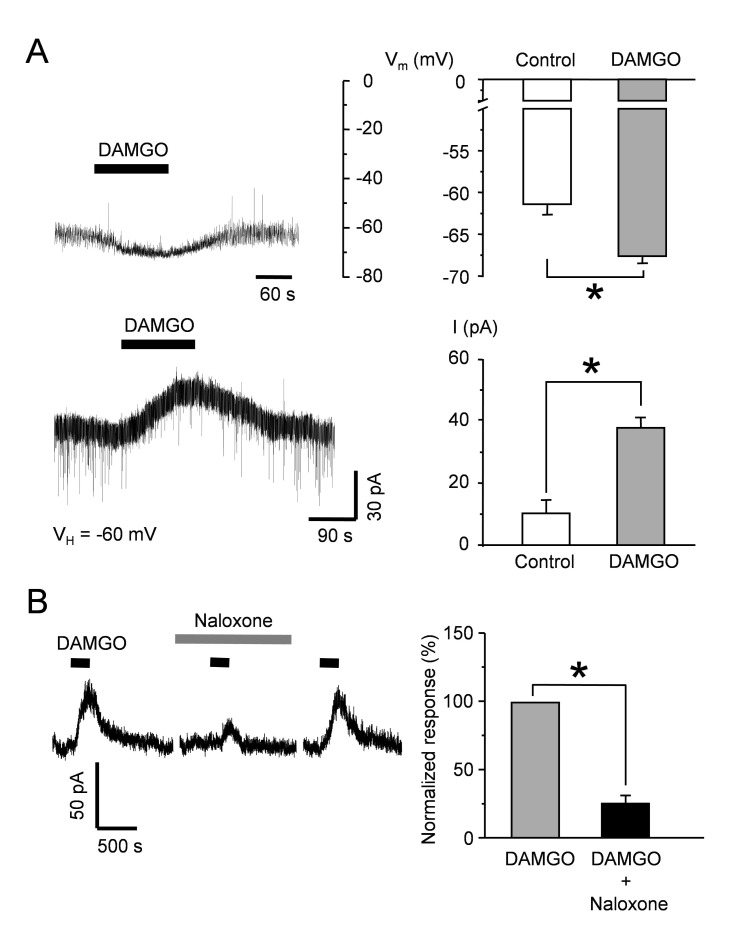
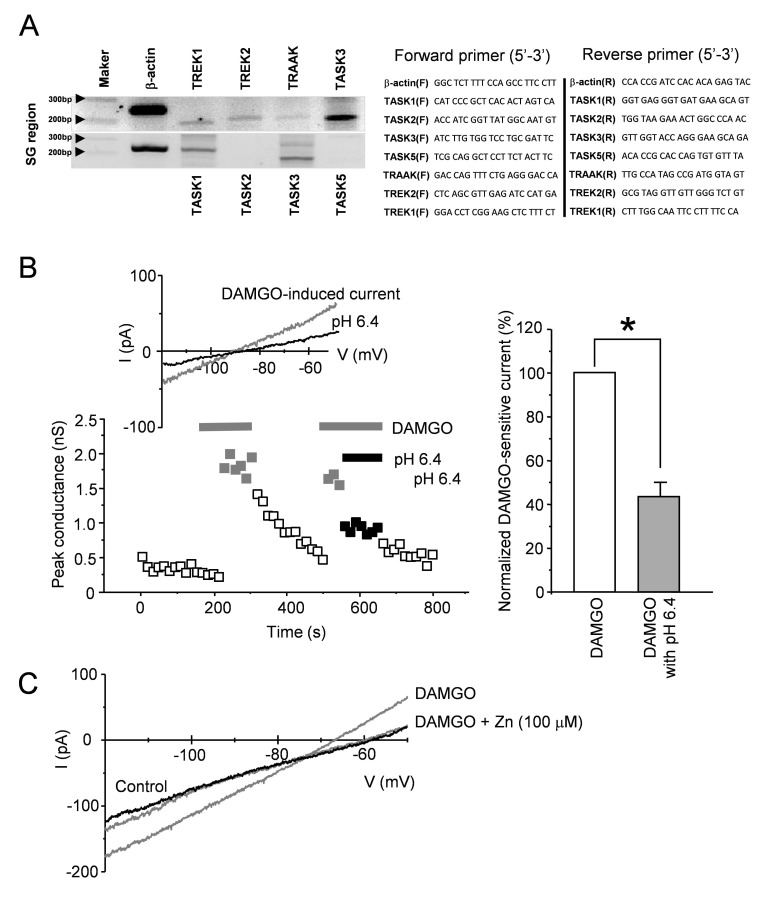
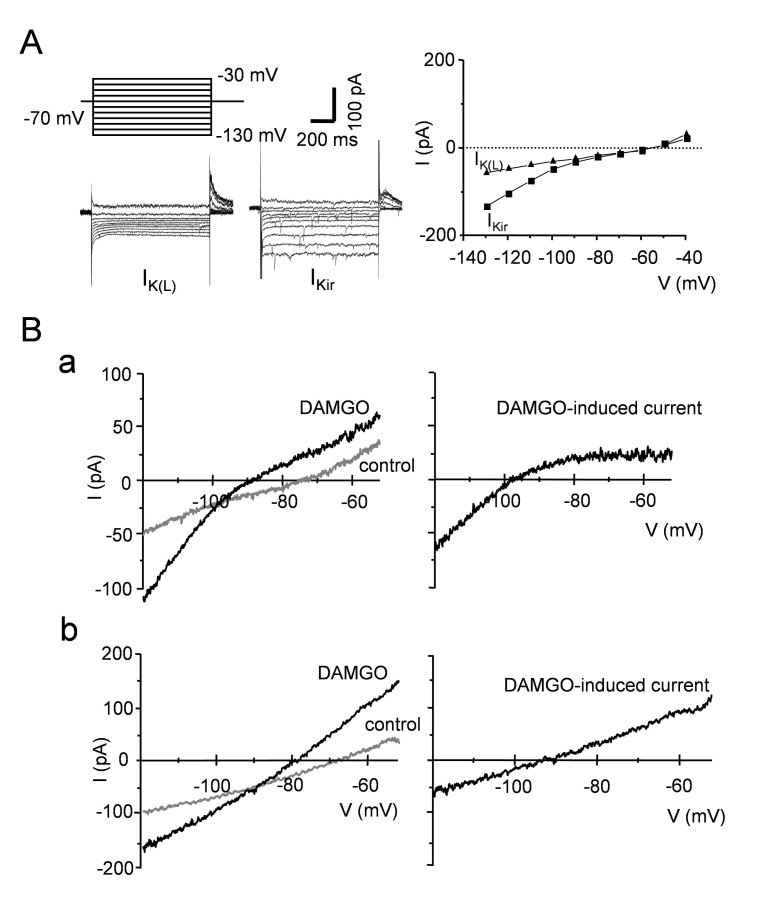
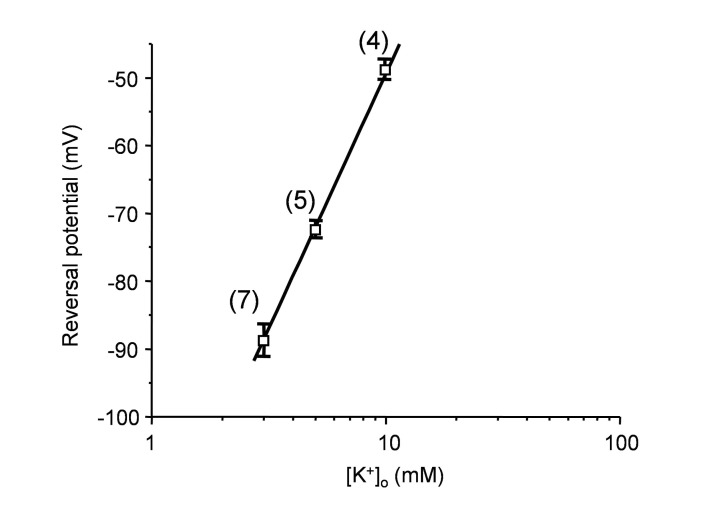
The analgesic mechanism of opioids is known to decrease the excitability of substantia gelatinosa (SG) neurons receiving the synaptic inputs from primary nociceptive afferent fiber by increasing inwardly rectifying K(+) current. In this study, we examined whether a µ-opioid agonist, [D-Ala2,N-Me-Phe4, Gly5-ol]-enkephalin (DAMGO), affects the two-pore domain K(+) channel (K2P) current in rat SG neurons using a slice whole-cell patch clamp technique. Also we confirmed which subtypes of K2P channels were associated with DAMGO-induced currents, measuring the expression of K2P channel in whole spinal cord and SG region. DAMGO caused a robust hyperpolarization and outward current in the SG neurons, which developed almost instantaneously and did not show any time-dependent inactivation. Half of the SG neurons exhibited a linear IV relationship of the DAMGO-induced current, whereas rest of the neurons displayed inward rectification. In SG neurons with a linear IV relationship of DAMGO-induced current, the reversal potential was close to the K(+) equilibrium potentials. The mRNA expression of TWIK (tandem of pore domains in a weak inwardly rectifying K(+) channel) related acid-sensitive K(+) channel (TASK) 1 and 3 was found in the SG region and a low pH (6.4) significantly blocked the DAMGO-induced K(+) current. Taken together, the DAMGO-induced hyperpolarization at resting membrane potential and subsequent decrease in excitability of SG neurons can be carried by the two-pore domain K(+) channel (TASK1 and 3) in addition to inwardly rectifying K(+) channel.
已知阿片类药物的镇痛机制是通过增加内向整流钾电流来降低接受初级伤害性传入纤维突触输入的脊髓背角胶状质(SG)神经元的兴奋性。在本研究中,我们使用脑片全细胞膜片钳技术,研究μ-阿片受体激动剂[D-丙氨酸2,N-甲基苯丙氨酸4,甘氨酸5-醇]-脑啡肽(DAMGO)是否影响大鼠SG神经元中的双孔域钾通道(K2P)电流。我们还通过测量全脊髓和SG区域中K2P通道的表达,确认了哪些K2P通道亚型与DAMGO诱导的电流相关。DAMGO在SG神经元中引起强烈的超极化和外向电流,该电流几乎瞬间产生,且未表现出任何时间依赖性失活。一半的SG神经元表现出DAMGO诱导电流的线性IV关系,而其余神经元表现出内向整流。在具有DAMGO诱导电流线性IV关系的SG神经元中,反转电位接近钾平衡电位。在SG区域发现了与酸敏感钾通道(TASK)1和3相关的TWIK(弱内向整流钾通道中的双孔域串联)的mRNA表达,低pH(6.4)显著阻断了DAMGO诱导的钾电流。综上所述,除内向整流钾通道外,双孔域钾通道(TASK1和3)也可介导DAMGO在静息膜电位时诱导的超极化以及随后SG神经元兴奋性的降低。