Mao Hanqian, McMahon John J, Tsai Yi-Hsuan, Wang Zefeng, Silver Debra L
Department of Molecular Genetics and Microbiology, Duke University School of Medicine, Durham, North Carolina, United States of America.
Department of Pharmacology, University of North Carolina, Chapel Hill, North Carolina, United States of America.
PLoS Genet. 2016 Sep 12;12(9):e1006282. doi: 10.1371/journal.pgen.1006282. eCollection 2016 Sep.
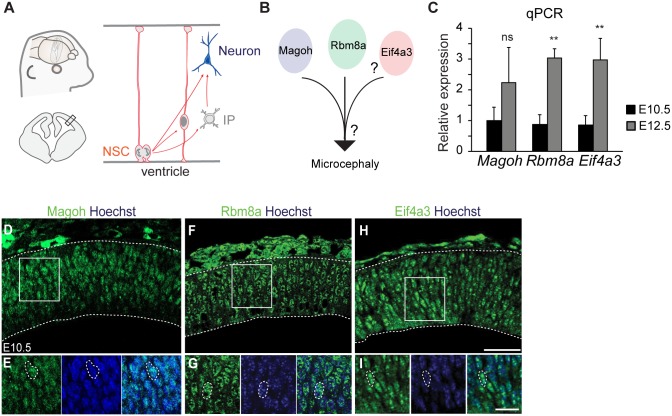
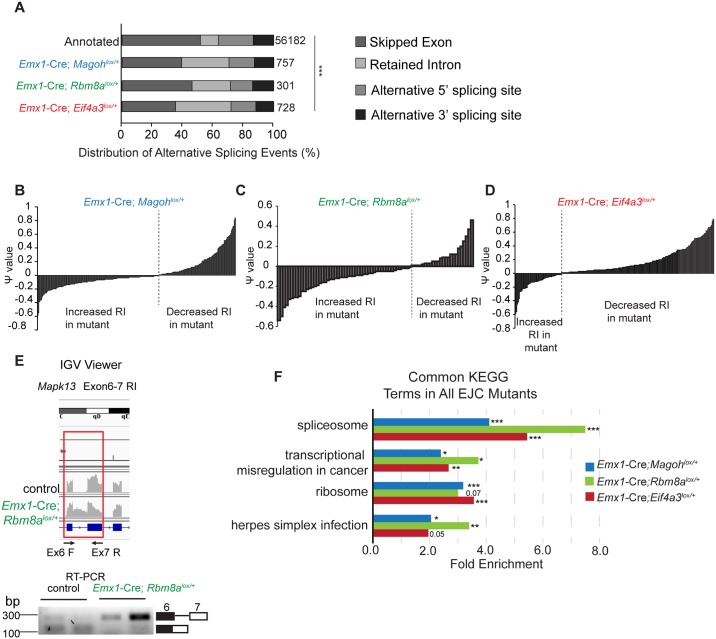
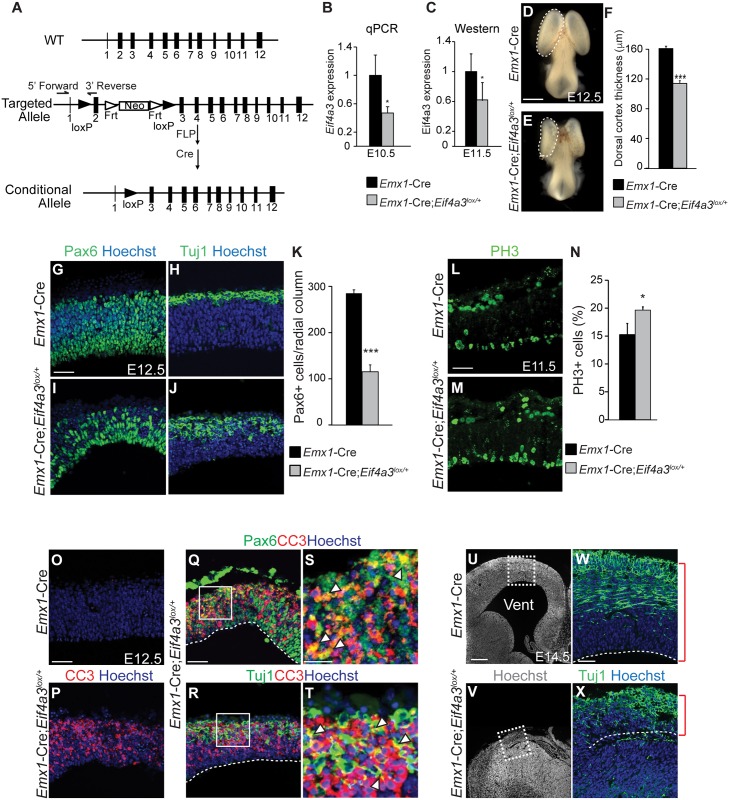
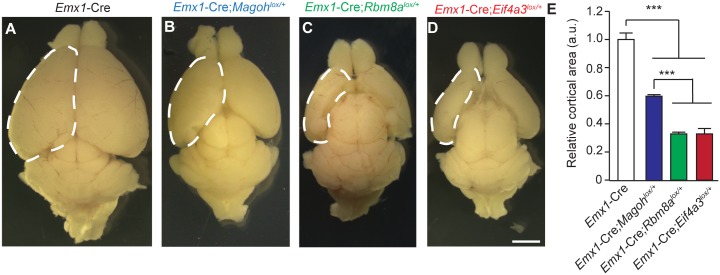
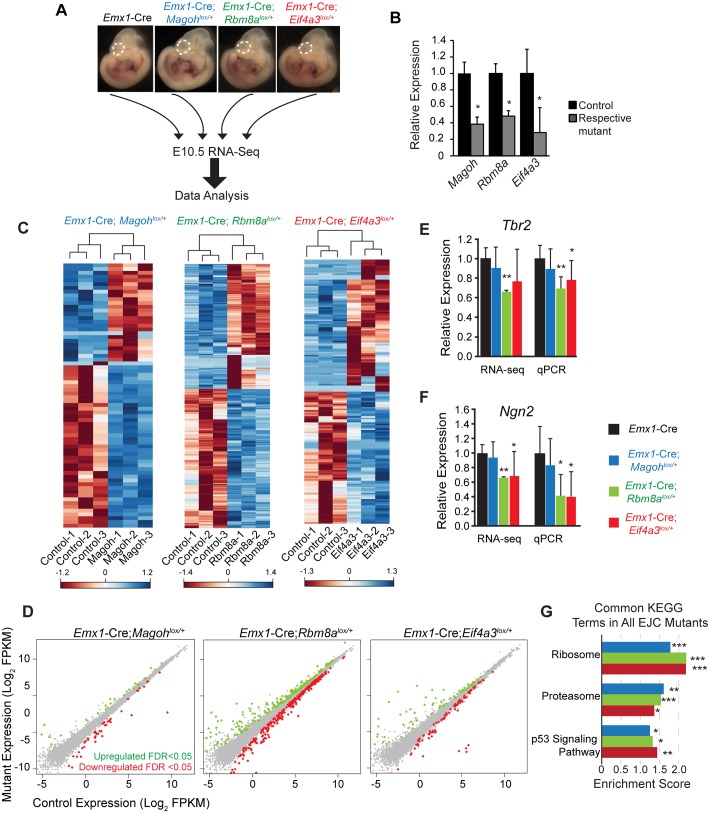
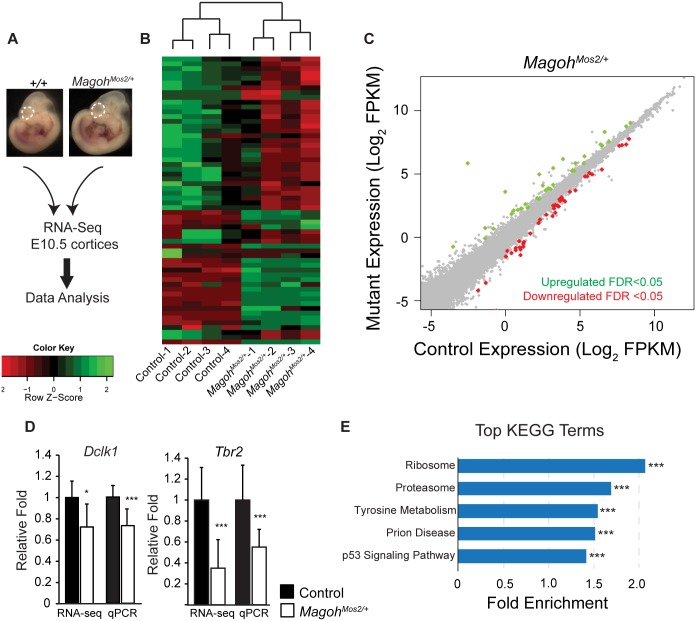
The exon junction complex (EJC) is an RNA binding complex comprised of the core components Magoh, Rbm8a, and Eif4a3. Human mutations in EJC components cause neurodevelopmental pathologies. Further, mice heterozygous for either Magoh or Rbm8a exhibit aberrant neurogenesis and microcephaly. Yet despite the requirement of these genes for neurodevelopment, the pathogenic mechanisms linking EJC dysfunction to microcephaly remain poorly understood. Here we employ mouse genetics, transcriptomic and proteomic analyses to demonstrate that haploinsufficiency for each of the 3 core EJC components causes microcephaly via converging regulation of p53 signaling. Using a new conditional allele, we first show that Eif4a3 haploinsufficiency phenocopies aberrant neurogenesis and microcephaly of Magoh and Rbm8a mutant mice. Transcriptomic and proteomic analyses of embryonic brains at the onset of neurogenesis identifies common pathways altered in each of the 3 EJC mutants, including ribosome, proteasome, and p53 signaling components. We further demonstrate all 3 mutants exhibit defective splicing of RNA regulatory proteins, implying an EJC dependent RNA regulatory network that fine-tunes gene expression. Finally, we show that genetic ablation of one downstream pathway, p53, significantly rescues microcephaly of all 3 EJC mutants. This implicates p53 activation as a major node of neurodevelopmental pathogenesis following EJC impairment. Altogether our study reveals new mechanisms to help explain how EJC mutations influence neurogenesis and underlie neurodevelopmental disease.
外显子连接复合体(EJC)是一种RNA结合复合体,由核心成分Magoh、Rbm8a和Eif4a3组成。EJC成分的人类突变会导致神经发育病理学。此外,Magoh或Rbm8a杂合的小鼠表现出异常的神经发生和小头畸形。然而,尽管这些基因对神经发育至关重要,但将EJC功能障碍与小头畸形联系起来的致病机制仍知之甚少。在这里,我们采用小鼠遗传学、转录组学和蛋白质组学分析来证明,3种核心EJC成分中的每一种单倍剂量不足都会通过对p53信号通路的趋同调节导致小头畸形。使用一种新的条件性等位基因,我们首先表明Eif4a单倍剂量不足模拟了Magoh和Rbm8a突变小鼠的异常神经发生和小头畸形。对神经发生开始时的胚胎大脑进行转录组学和蛋白质组学分析,确定了3种EJC突变体中每种突变体都改变的共同通路,包括核糖体、蛋白酶体和p53信号成分。我们进一步证明,所有3种突变体都表现出RNA调节蛋白的剪接缺陷,这意味着存在一个依赖EJC的RNA调节网络来微调基因表达。最后,我们表明,一个下游通路p53的基因敲除显著挽救了所有3种EJC突变体的小头畸形。这表明p53激活是EJC损伤后神经发育发病机制的一个主要节点。总之,我们的研究揭示了新的机制,有助于解释EJC突变如何影响神经发生并成为神经发育疾病的基础。