Chouljenko Dmitry V, Jambunathan Nithya, Chouljenko Vladimir N, Naderi Misagh, Brylinski Michal, Caskey John R, Kousoulas Konstantin G
Division of Biotechnology and Molecular Medicine and Department of Pathobiological Sciences, School of Veterinary Medicine, Louisiana State University, Baton Rouge, Louisiana, USA.
Department of Biological Sciences, College of Basic Sciences, Louisiana State University, Baton Rouge, Louisiana, USA.
J Virol. 2016 Oct 28;90(22):10351-10361. doi: 10.1128/JVI.01202-16. Print 2016 Nov 15.
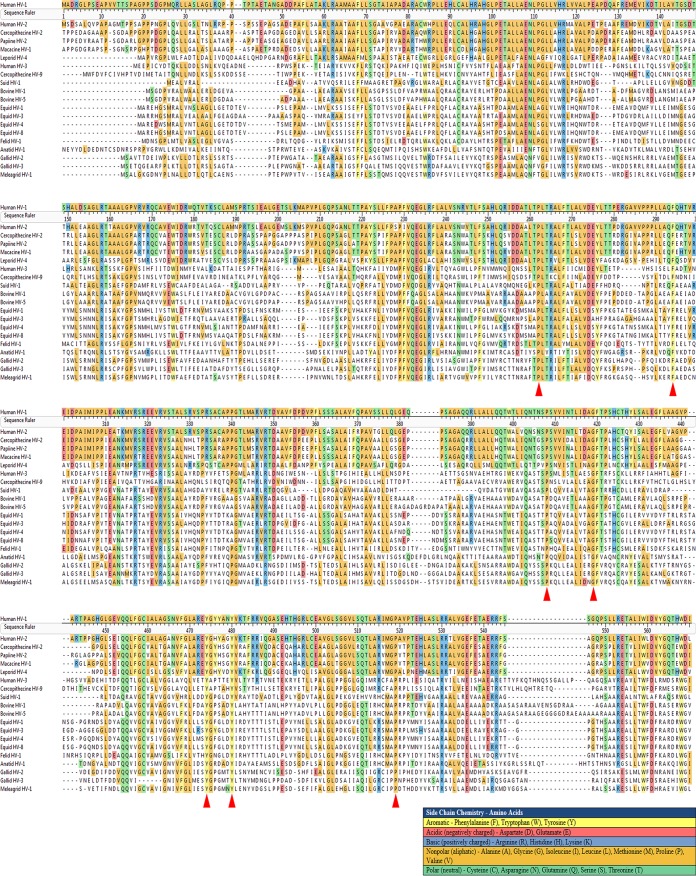
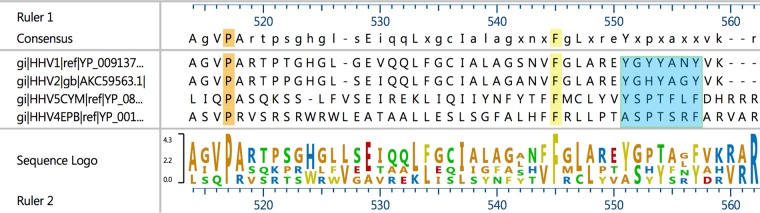
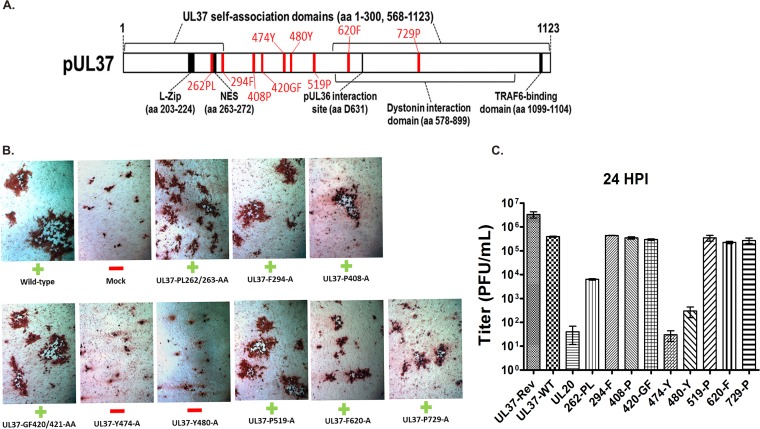
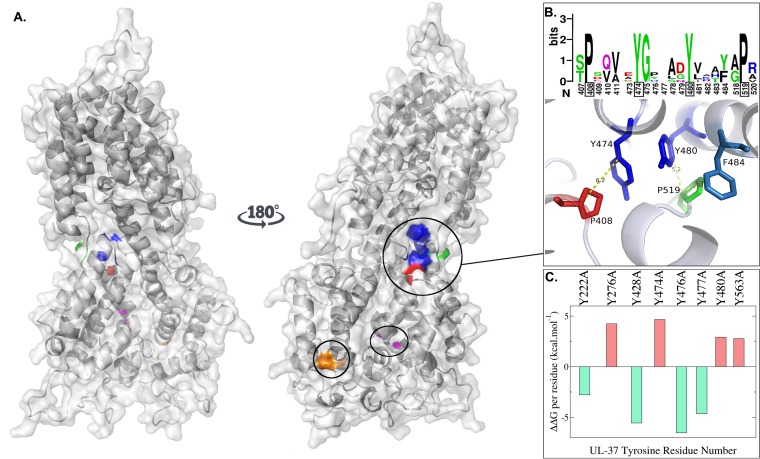
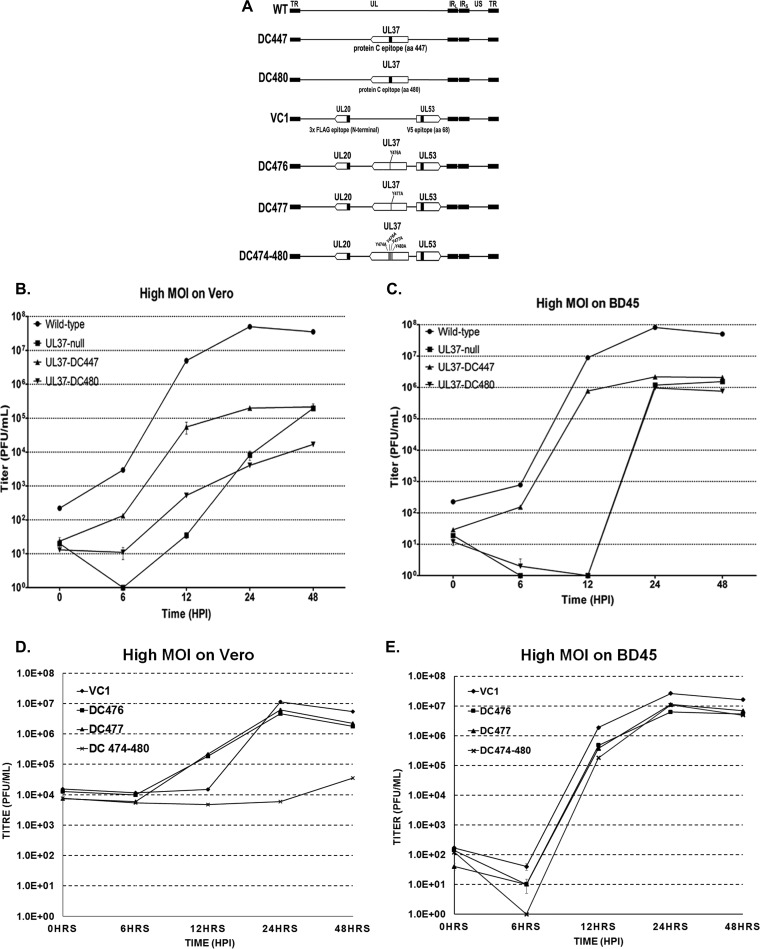
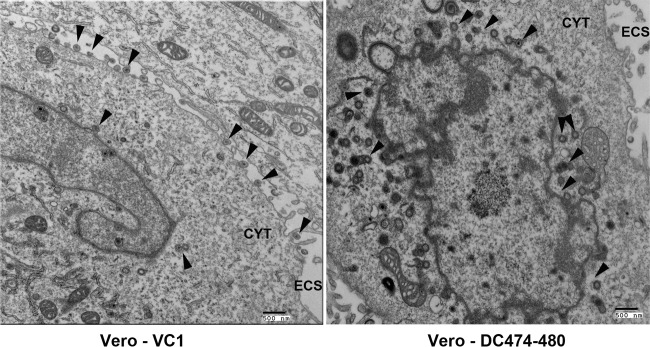
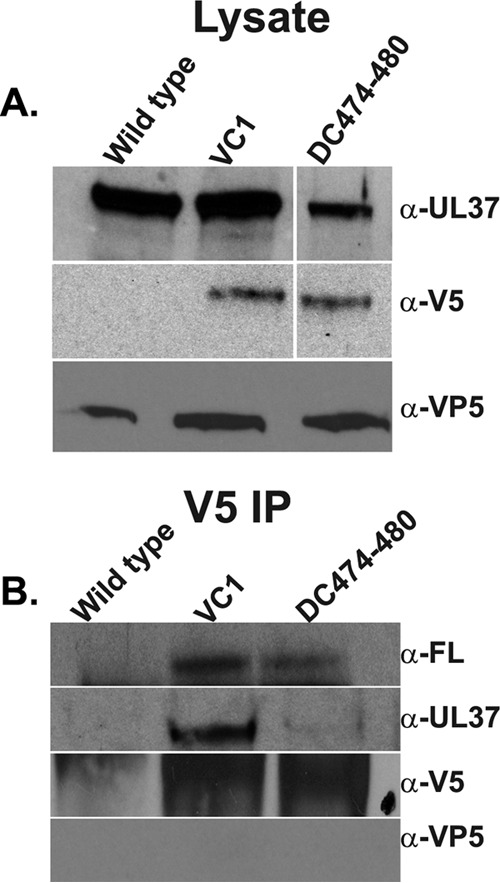
The herpes simplex virus 1 (HSV-1) UL37 protein functions in virion envelopment at trans-Golgi membranes, as well as in retrograde and anterograde transport of virion capsids. Recently, we reported that UL37 interacts with glycoprotein K (gK) and its interacting partner protein UL20 (N. Jambunathan, D. Chouljenko, P. Desai, A. S. Charles, R. Subramanian, V. N. Chouljenko, and K. G. Kousoulas, J Virol 88:5927-5935, 2014, http://dx.doi.org/10.1128/JVI.00278-14), facilitating cytoplasmic virion envelopment. Alignment of UL37 homologs encoded by alphaherpesviruses revealed the presence of highly conserved residues in the central portion of the UL37 protein. A cadre of nine UL37 site-specific mutations were produced and tested for their ability to inhibit virion envelopment and infectious virus production. Complementation analysis revealed that replacement of tyrosines 474 and 480 with alanine failed to complement the UL37-null virus, while all other mutated UL37 genes complemented the virus efficiently. The recombinant virus DC474-480 constructed with tyrosines 474, 476, 477, and 480 mutated to alanine residues produced a gK-null-like phenotype characterized by the production of very small plaques and accumulation of capsids in the cytoplasm of infected cells. Recombinant viruses having either tyrosine 476 or 477 replaced with alanine produced a wild-type phenotype. Immunoprecipitation assays revealed that replacement of all four tyrosines with alanines substantially reduced the ability of gK to interact with UL37. Alignment of HSV UL37 with the human cytomegalovirus and Epstein-Barr virus UL37 homologs revealed that Y480 was conserved only for alphaherpesviruses. Collectively, these results suggest that the UL37 conserved tyrosine 480 residue plays a crucial role in interactions with gK to facilitate cytoplasmic virion envelopment and infectious virus production.
The HSV-1 UL37 protein is conserved among all herpesviruses, functions in both retrograde and anterograde transport of virion capsids, and plays critical roles in cytoplasmic virion envelopment by interacting with gK. We show here that UL37 tyrosine residues conserved among all alphaherpesviruses serve critical roles in cytoplasmic virion envelopment and interactions with gK.
单纯疱疹病毒1型(HSV-1)的UL37蛋白在高尔基体反面膜泡的病毒体包膜形成过程中发挥作用,同时也参与病毒体衣壳的逆行和顺行运输。最近,我们报道了UL37与糖蛋白K(gK)及其相互作用伴侣蛋白UL20相互作用(N. Jambunathan、D. Chouljenko、P. Desai、A. S. Charles、R. Subramanian、V. N. Chouljenko和K. G. Kousoulas,《病毒学杂志》88:5927 - 5935,2014年,http://dx.doi.org/10.1128/JVI.00278 - 14),促进细胞质中病毒体的包膜形成。对α疱疹病毒编码的UL37同源物进行比对,发现在UL37蛋白的中央部分存在高度保守的残基。构建了一组9个UL37位点特异性突变体,并测试它们抑制病毒体包膜形成和感染性病毒产生的能力。互补分析表明,将酪氨酸474和480替换为丙氨酸不能互补UL37缺失型病毒,而所有其他突变的UL37基因都能有效地互补该病毒。将酪氨酸474、476、477和480突变为丙氨酸构建的重组病毒DC474 - 480产生了类似gK缺失型的表型,其特征是形成非常小的噬斑以及衣壳在感染细胞的细胞质中积累。将酪氨酸476或477替换为丙氨酸的重组病毒产生野生型表型。免疫沉淀试验表明,将所有四个酪氨酸都替换为丙氨酸会大幅降低gK与UL37相互作用的能力。将HSV UL37与人巨细胞病毒和EB病毒的UL37同源物进行比对,发现Y480仅在α疱疹病毒中保守。总体而言,这些结果表明,UL37保守的酪氨酸480残基在与gK相互作用以促进细胞质中病毒体包膜形成和感染性病毒产生过程中起关键作用。
HSV-1的UL37蛋白在所有疱疹病毒中都保守,在病毒体衣壳的逆行和顺行运输中发挥作用,并且通过与gK相互作用在细胞质中病毒体包膜形成过程中起关键作用。我们在此表明,所有α疱疹病毒中保守的UL37酪氨酸残基在细胞质中病毒体包膜形成以及与gK的相互作用中起关键作用。