Deng Shi, Jin Tao, Zhang Li, Bu Hong, Zhang Peng
Department of Urology, Institute of Urology, West China Hospital, Sichuan University, Chengdu, Sichuan 610041, P.R. China.
Key Laboratory of Transplant Engineering and Immunology, Ministry of Health, West China Hospital, Sichuan University, Chengdu, Sichuan 610041, P.R. China.
Mol Med Rep. 2016 Nov;14(5):4124-4134. doi: 10.3892/mmr.2016.5735. Epub 2016 Sep 13.
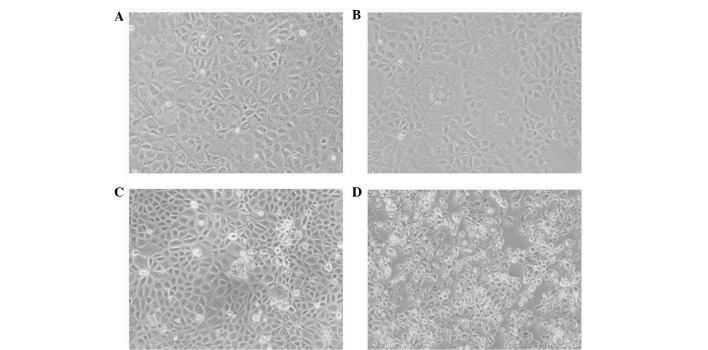
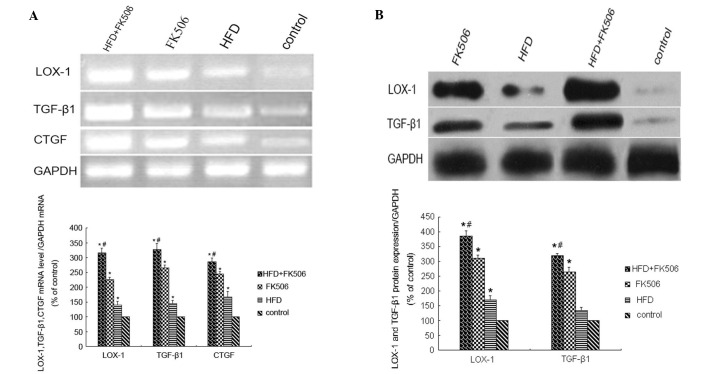
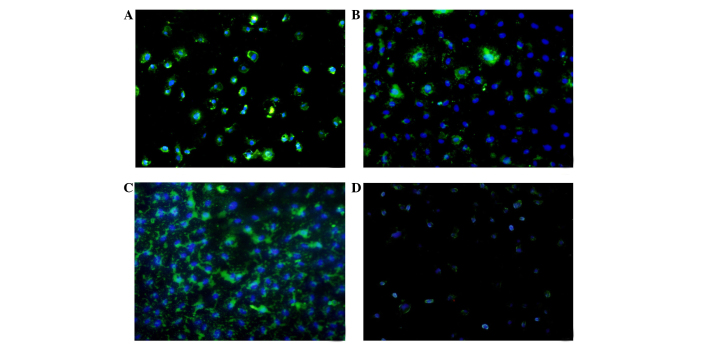
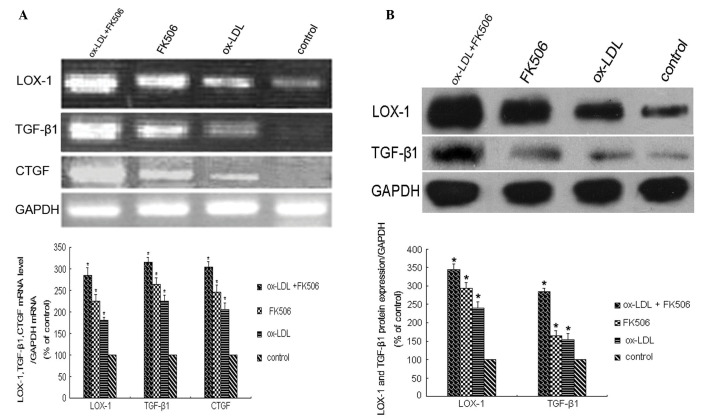
Chronic renal allograft dysfunction (CRAD) is the most common cause of graft failure following renal transplantation. However, the underlying mechanisms remain to be fully elucidated. Immunosuppressants and hyperlipidemia are associated with renal fibrosis following long‑term use. The present study aimed to determine the effects of tacrolimus (FK506) and lipid metabolism disorder on CRAD. In vitro and in vivo models were used for this investigation. Cells of the mouse proximal renal tubular epithelial cell strain, NRK‑52E, were cultured either with oxidized low‑density lipoprotein (ox‑LDL), FK506, ox‑LDL combined with FK506, or vehicle, respectively. Changes in cell morphology and changes in the levels of lectin‑like ox‑LDL receptor‑1 (LOX‑1), reactive oxygen species (ROS), hydrogen peroxide and fibrosis‑associated genes were evaluated at 24, 48 and 72 h. In separate experiment, total of 60 Sprague‑Dawley rats were divided randomly into four groups, which included a high‑fat group, FK506 group, high‑fat combined with FK506 group, and control group. After 2, 4 and 8 weeks, the serum lipid levels, the levels of ox‑LDL, ROS, and the expression levels of transforming growth factor (TGF)‑β1 and connective tissue growth factor were determined. The in vitro and in vivo models revealed that lipid metabolism disorder and FK506 caused oxidative stress and a fibrogenic response. In addition, decreased levels of LOX‑1 markedly reduced the levels of TGF‑β1 in the in vitro model. Taken together, FK506 and dyslipidemia were found to be associated with CRAD following transplantation.
慢性肾移植功能障碍(CRAD)是肾移植后移植失败的最常见原因。然而,其潜在机制仍有待充分阐明。长期使用免疫抑制剂和高脂血症与肾纤维化有关。本研究旨在确定他克莫司(FK506)和脂质代谢紊乱对CRAD的影响。为此研究使用了体外和体内模型。分别用氧化型低密度脂蛋白(ox-LDL)、FK506、ox-LDL与FK506联合或赋形剂培养小鼠近端肾小管上皮细胞系NRK-52E的细胞。在24、48和72小时评估细胞形态变化以及凝集素样ox-LDL受体-1(LOX-1)、活性氧(ROS)、过氧化氢和纤维化相关基因水平的变化。在另一项实验中,将总共60只Sprague-Dawley大鼠随机分为四组,包括高脂组、FK506组、高脂联合FK506组和对照组。在2、4和8周后,测定血清脂质水平、ox-LDL、ROS水平以及转化生长因子(TGF)-β1和结缔组织生长因子的表达水平。体外和体内模型显示,脂质代谢紊乱和FK506会导致氧化应激和纤维化反应。此外,在体外模型中,LOX-1水平降低显著降低了TGF-β1水平。综上所述,发现FK506和血脂异常与移植后的CRAD有关。