Joint Research Center for Translational Medicine of East China Normal University and Fengxian District Central Hospital, Shanghai Key Laboratory of Regulatory Biology, The Institute of Biomedical Sciences and School of Life Sciences, East China Normal University, Shanghai, 200241, China.
Joint Research Center for Translational Medicine of East China Normal University and Fengxian District Central Hospital, Fengxian Hospital affiliated to Southern Medical University, Shanghai, 201499, China.
Sci Rep. 2016 Sep 16;6:33434. doi: 10.1038/srep33434.
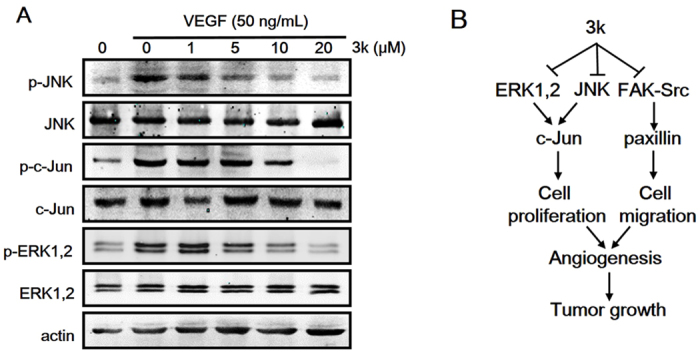
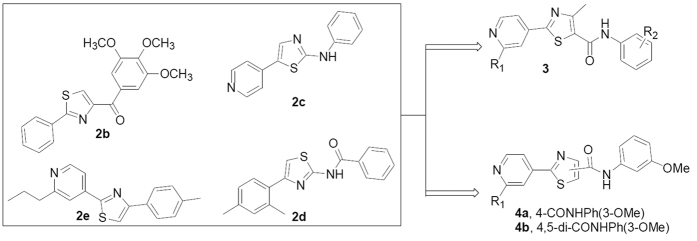
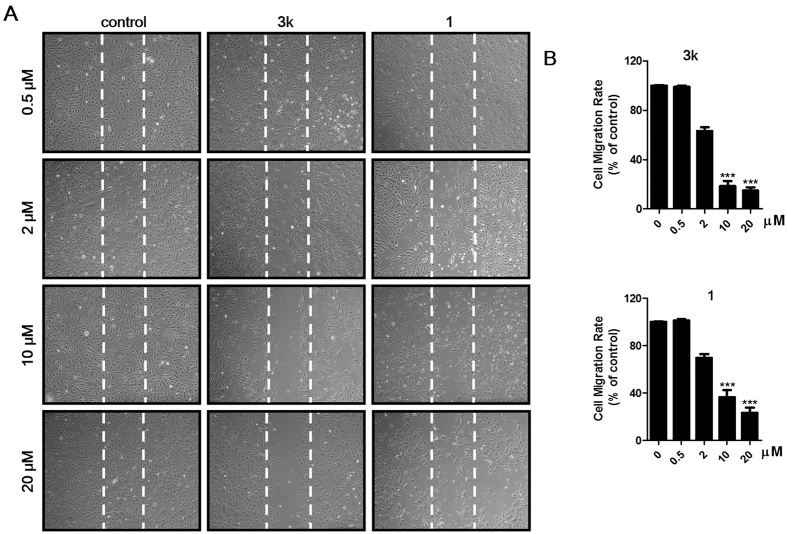
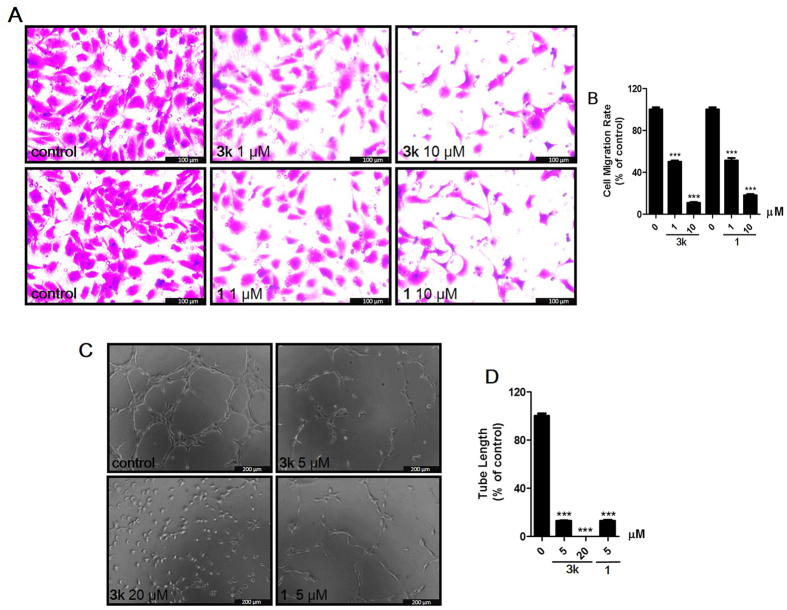
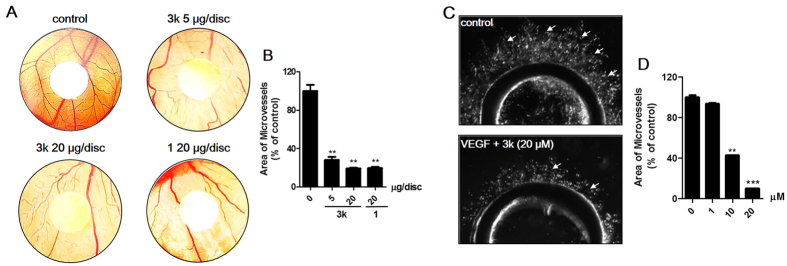
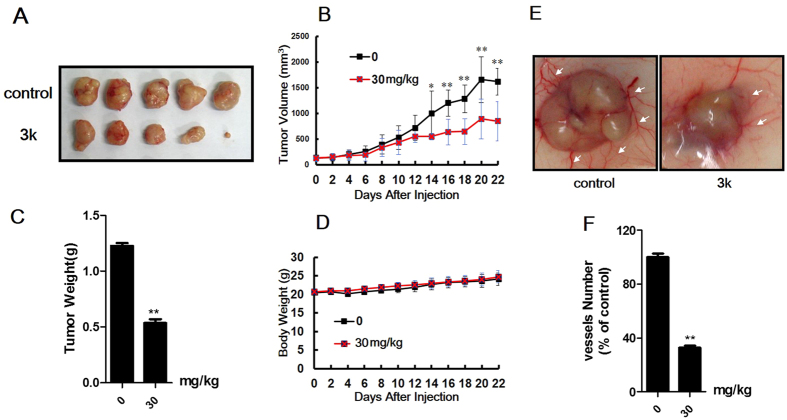
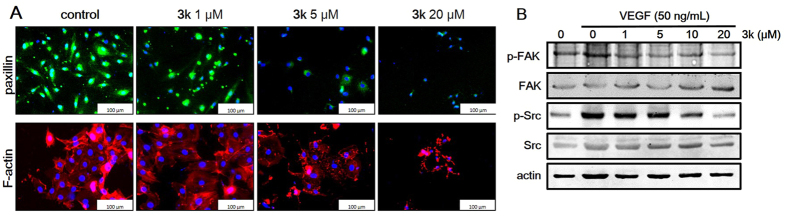
Inhibition of angiogenesis is considered as one of the desirable pathways for the treatment of tumor growth and metastasis. Herein we demonstrated that a series of pyridinyl-thiazolyl carboxamide derivatives were designed, synthesized and examined against angiogenesis through a colony formation and migration assays of human umbilical vein endothelial cells (HUVECs) in vitro. A structure-activity relationship (SAR) study was carried out and optimization toward this series of compounds resulted in the discovery of N-(3-methoxyphenyl)-4-methyl-2-(2-propyl-4-pyridinyl)thiazole-5-carboxamide (3k). The results indicated that compound 3k showed similar or better effects compared to Vandetanib in suppressing HUVECs colony formation and migration as well as VEGF-induced angiogenesis in the aortic ring spreading model and chick embryo chorioallantoic membrane (CAM) model. More importantly, compound 3k also strongly blocked tumor growth with the dosage of 30 mg/kg/day, and subsequent mechanism exploration suggested that this series of compounds took effect mainly through angiogenesis signaling pathways. Together, these results suggested compound 3k may serve as a lead for a novel class of angiogenesis inhibitors for cancer treatments.
抑制血管生成被认为是治疗肿瘤生长和转移的理想途径之一。在此,我们通过体外人脐静脉内皮细胞(HUVEC)的集落形成和迁移实验,证明了一系列吡啶基噻唑甲酰胺衍生物被设计、合成并用于抗血管生成。进行了构效关系(SAR)研究,对这一系列化合物进行了优化,发现了 N-(3-甲氧基苯基)-4-甲基-2-(2-丙基-4-吡啶基)噻唑-5-甲酰胺(3k)。结果表明,与凡德他尼相比,化合物 3k 在抑制 HUVEC 集落形成和迁移以及 VEGF 诱导的主动脉环展开模型和鸡胚绒毛尿囊膜(CAM)模型中的血管生成方面具有相似或更好的效果。更重要的是,化合物 3k 还以 30mg/kg/天的剂量强烈抑制肿瘤生长,随后的机制探索表明,这一系列化合物主要通过血管生成信号通路发挥作用。总之,这些结果表明化合物 3k 可能成为一类新型癌症治疗血管生成抑制剂的先导化合物。