Rauzi Francesca, Kirkby Nicholas S, Edin Matthew L, Whiteford James, Zeldin Darryl C, Mitchell Jane A, Warner Timothy D
The William Harvey Research Institute, Barts and the London School of Medicine and Dentistry, Queen Mary University of London, London, United Kingdom.
National Heart and Lung Institute, Imperial College London, London, United Kingdom; and.
FASEB J. 2016 Dec;30(12):4256-4266. doi: 10.1096/fj.201600530R. Epub 2016 Sep 15.
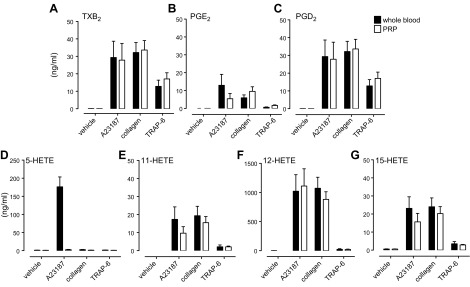
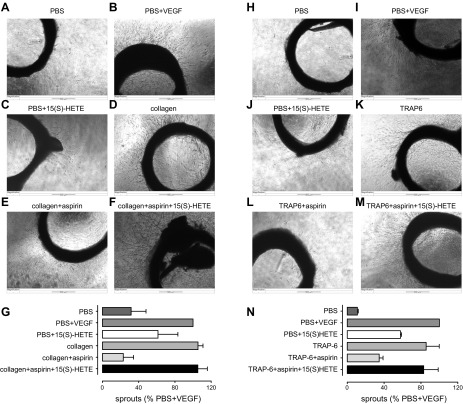
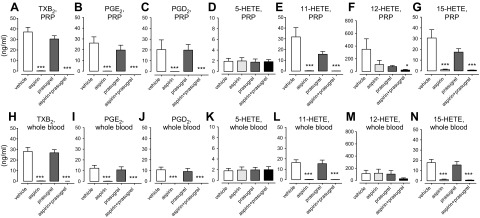
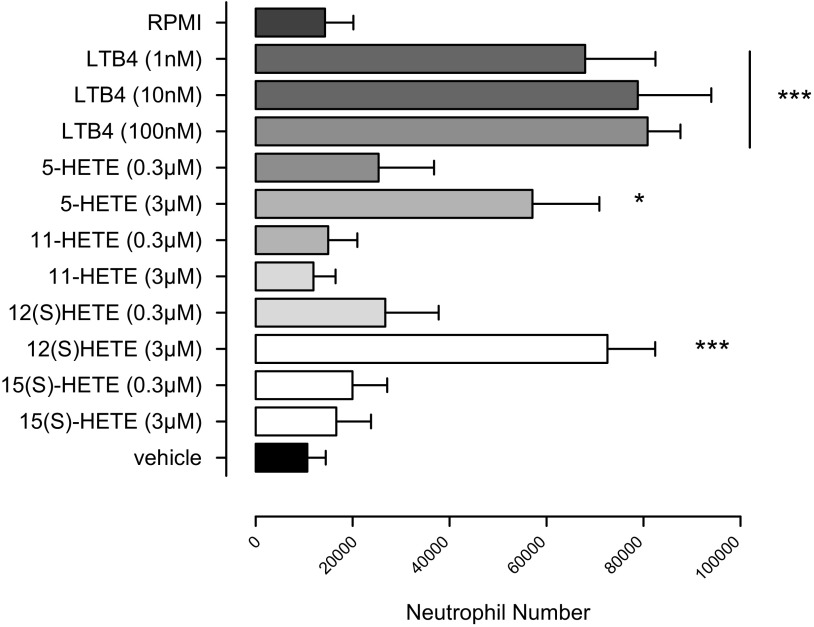
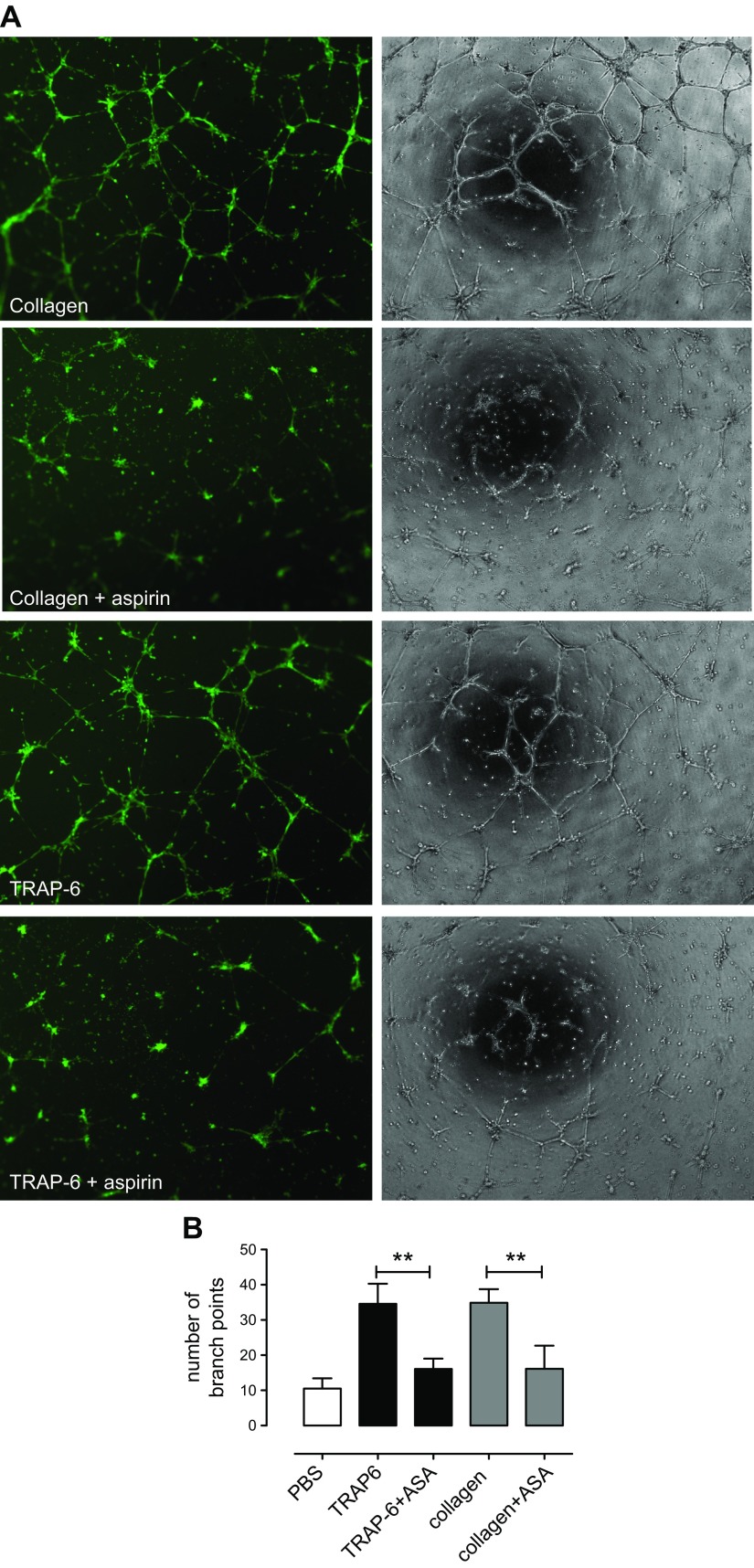
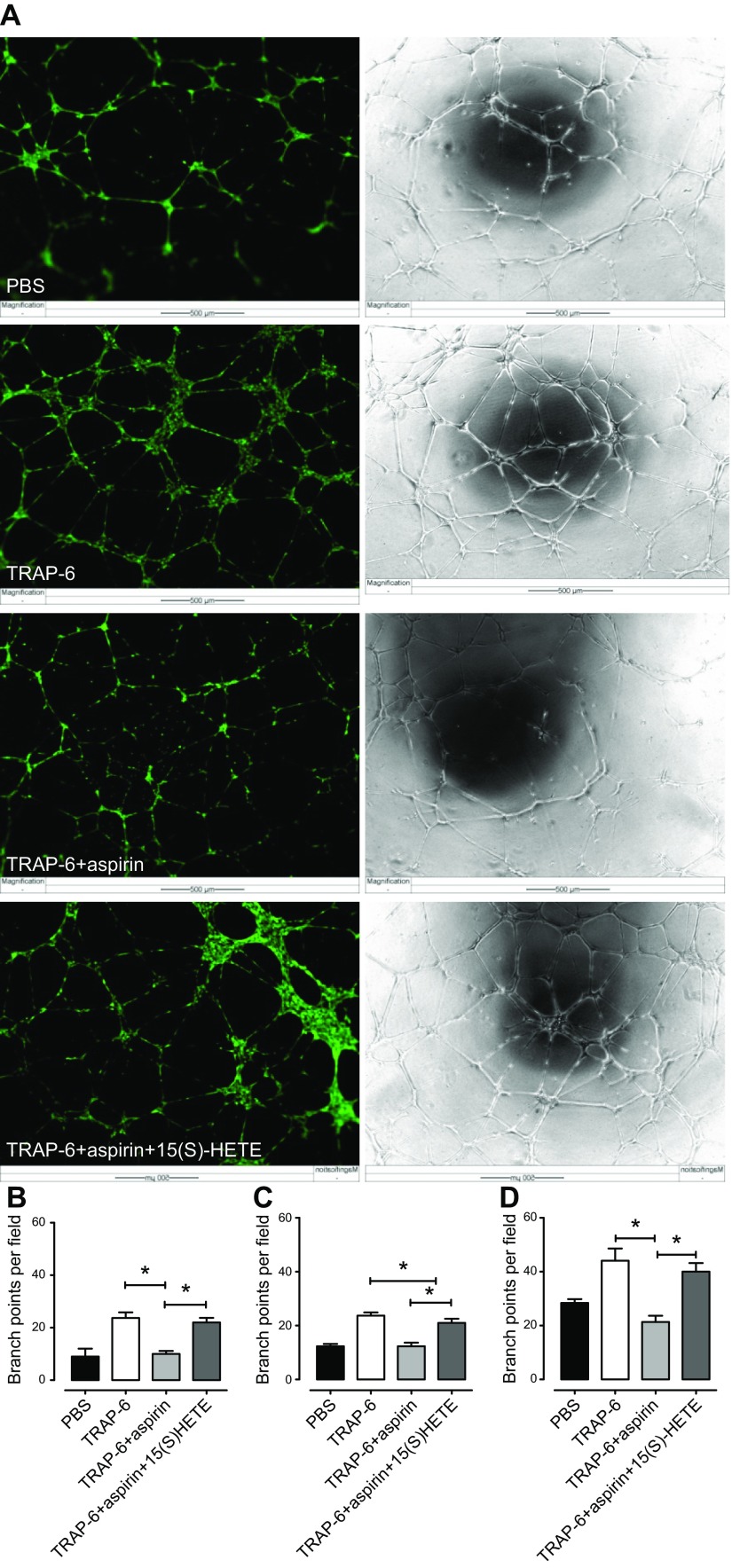
Regular consumption of low-dose aspirin reduces the occurrence of colorectal, esophageal, stomach, and gastrointestinal cancers. The underlying mechanism is unknown but may be linked to inhibition of angiogenesis. Because the effective doses of aspirin are consistent with the inhibition of cyclooxygenase-1 in platelets, we used liquid chromatography with tandem mass spectrometry analyses and immunoassays of human platelet releasates coupled with angiogenesis assays to search for the mediators of these effects. Blood or platelet-rich plasma from healthy volunteers stimulated with platelet activators produced a broad range of eicosanoids. Notably, preincubation of platelets with aspirin, but not with a P2Y receptor antagonist, caused a marked reduction in the production of 11-hydroxyeicosatetraenoic acid (HETE) and 15(S)-HETE, in addition to prostanoids such as thromboxane A Releasates from activated platelets caused cell migration and tube formation in cultured human endothelial cells and stimulated the sprouting of rat aortic rings in culture. These proangiogenic effects were absent when platelets were treated with aspirin but returned by coincubation with exogenous 15(S)-HETE. These results reveal 15(S)-HETE as a major platelet cyclooxygenase-1 product with strong proangiogenic effects. Thus, 15(S)-HETE represents a potential target for the development of novel antiangiogenic therapeutics, and blockade of its production may provide a mechanism for the anticancer effects of aspirin.-Rauzi, F., Kirkby, N. S., Edin, M. L., Whiteford, J. Zeldin, D. C., Mitchell, J. A., Warner, T. D. Aspirin inhibits the production of proangiogenic 15(S)-HETE by platelet cyclooxygenase-1.
定期服用低剂量阿司匹林可降低结直肠癌、食管癌、胃癌和胃肠道癌的发生率。其潜在机制尚不清楚,但可能与抑制血管生成有关。由于阿司匹林的有效剂量与抑制血小板中的环氧化酶-1一致,我们使用液相色谱-串联质谱分析和人血小板释放物的免疫测定,并结合血管生成测定来寻找这些作用的介质。来自健康志愿者的血液或富含血小板的血浆在血小板激活剂刺激下产生了多种类二十烷酸。值得注意的是,用阿司匹林而非P2Y受体拮抗剂预孵育血小板,除了血栓素A等前列腺素外,还导致11-羟基二十碳四烯酸(HETE)和15(S)-HETE的产生显著减少。活化血小板的释放物可导致培养的人内皮细胞发生细胞迁移和管形成,并刺激培养的大鼠主动脉环发芽。当血小板用阿司匹林处理时,这些促血管生成作用消失,但与外源性15(S)-HETE共同孵育后恢复。这些结果表明15(S)-HETE是血小板环氧化酶-1的主要产物,具有很强的促血管生成作用。因此,15(S)-HETE是新型抗血管生成疗法开发的潜在靶点,阻断其产生可能为阿司匹林的抗癌作用提供一种机制。-劳齐,F.,柯克比,N.S.,伊登,M.L.,怀特福德,J.,泽尔丁,D.C.,米切尔,J.A.,华纳,T.D.阿司匹林抑制血小板环氧化酶-1产生促血管生成的15(S)-HETE