Division of Liver and Biliopancreatic disorders, University Hospitals Leuven, KU Leuven - University of Leuven, Leuven, Belgium.
Liver Cell Biology Laboratory, Vrije Universiteit Brussel, Brussels, Belgium.
Sci Rep. 2016 Sep 16;6:33453. doi: 10.1038/srep33453.
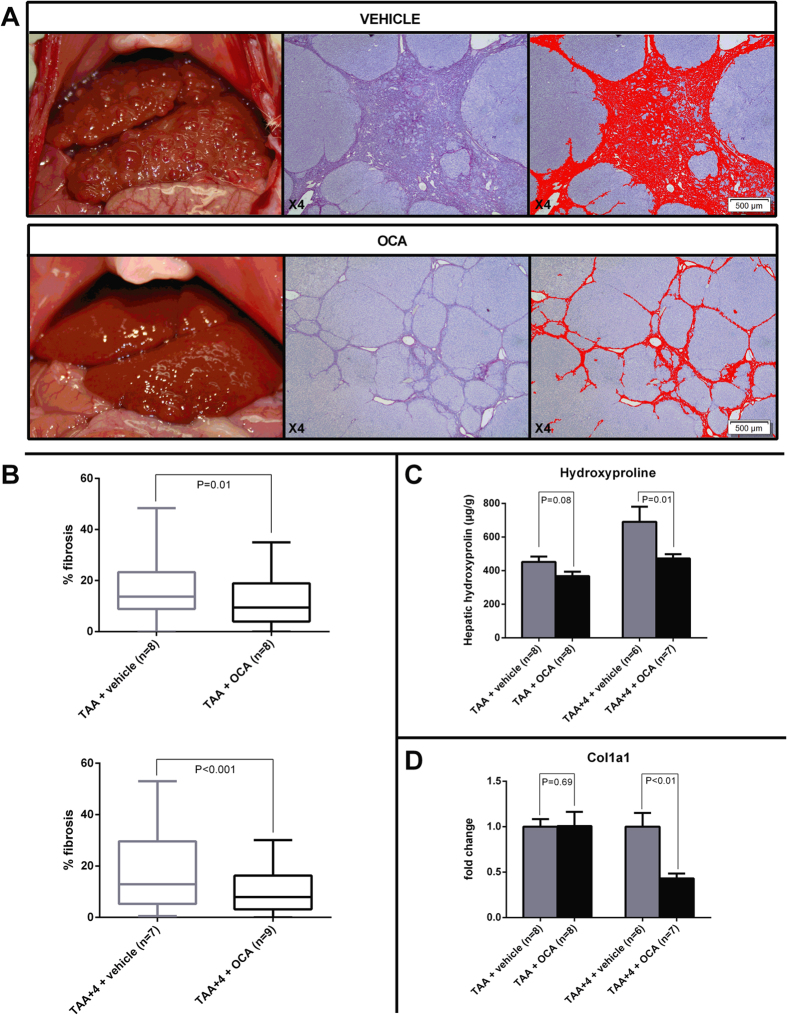
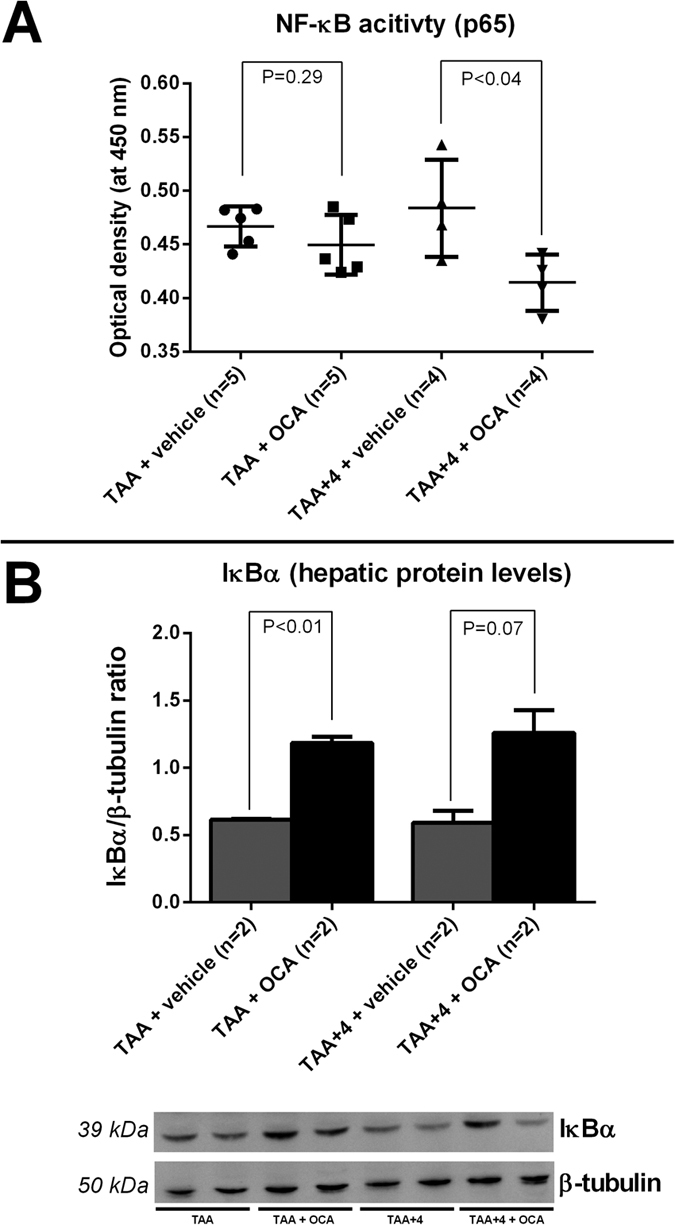
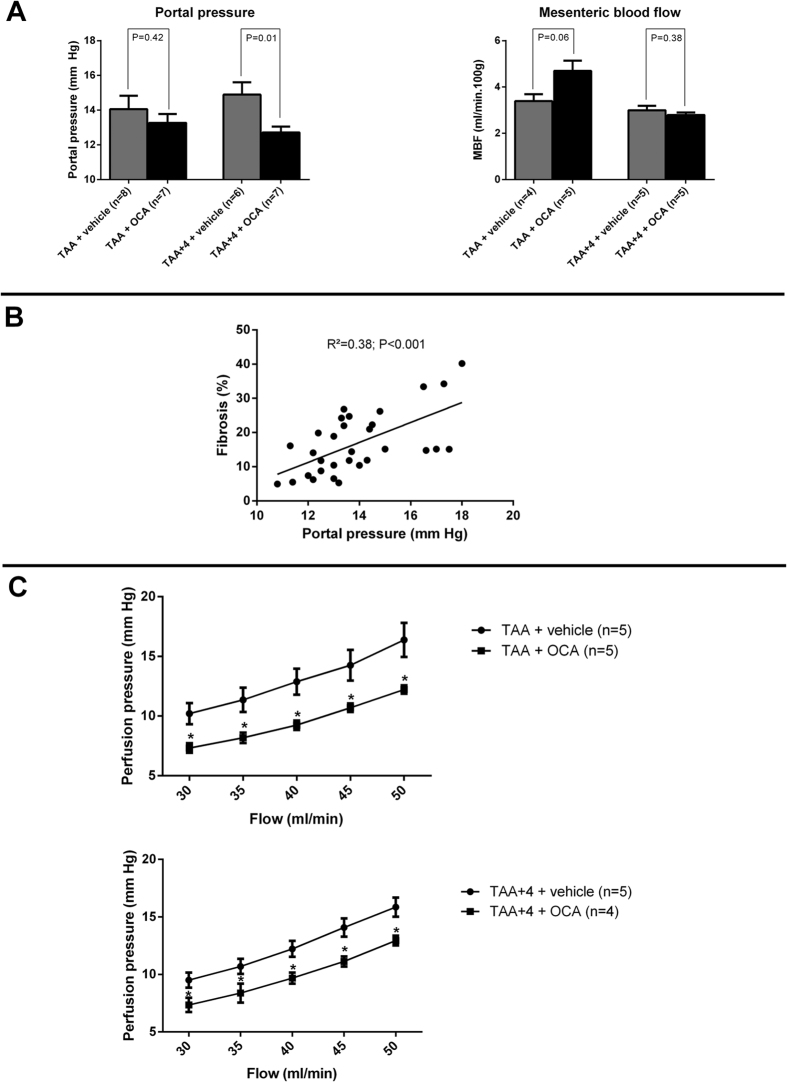
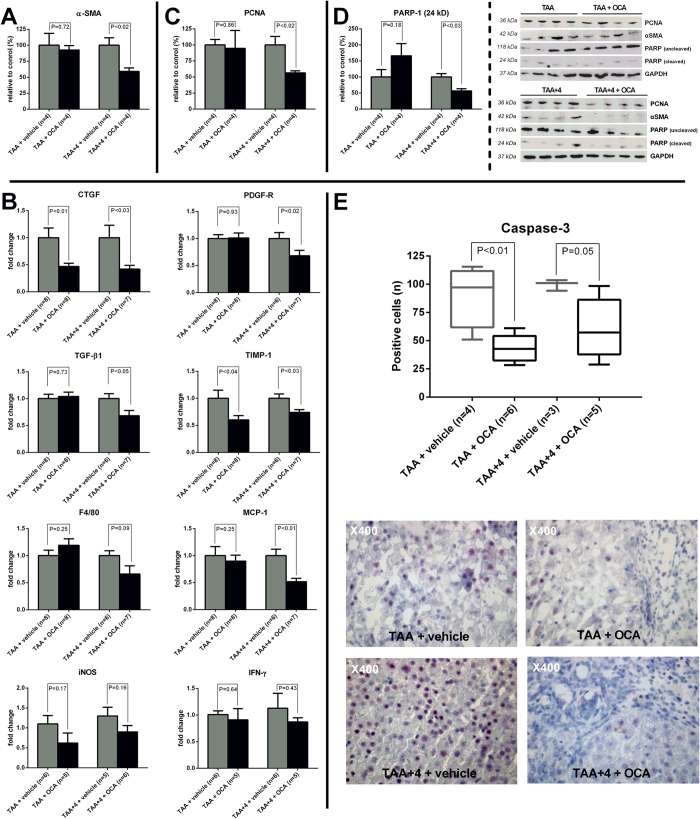
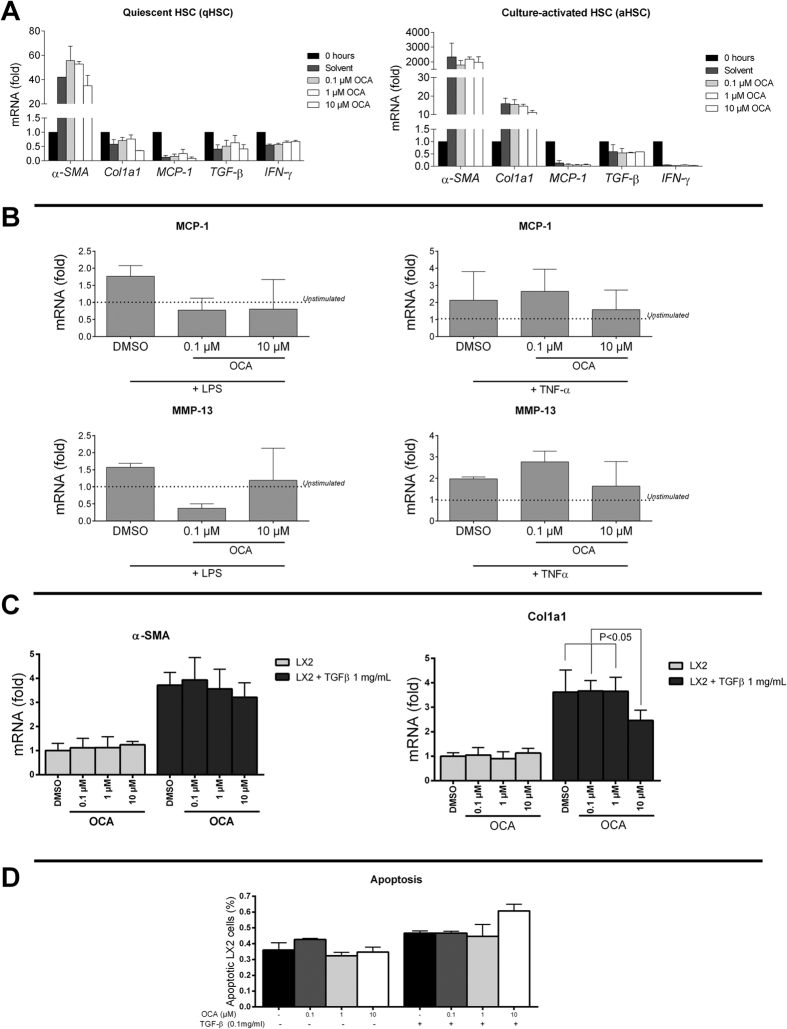
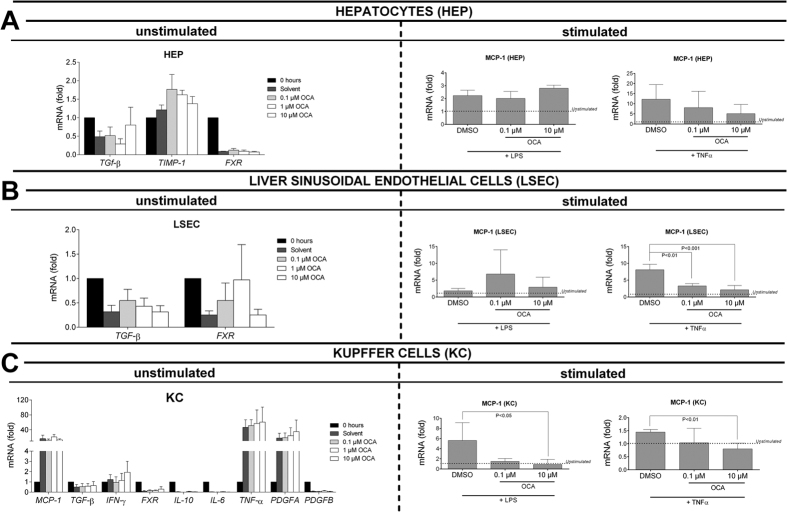
Hepatic inflammation drives hepatic stellate cells (HSC), resulting in liver fibrosis. The Farnesoid-X receptor (FXR) antagonizes inflammation through NF-κB inhibition. We investigated preventive and therapeutic effects of FXR agonist obeticholic acid (OCA) on hepatic inflammation and fibrosis in toxic cirrhotic rats. Cirrhosis was induced by thioacetamide (TAA) intoxication. OCA was given during or after intoxication with vehicle-treated rats as controls. At sacrifice, fibrosis, hemodynamic and biochemical parameters were assessed. HSC activation, cell turn-over, hepatic NF-κB activation, pro-inflammatory and pro-fibrotic cytokines were determined. The effect of OCA was further evaluated in isolated HSC, Kupffer cells, hepatocytes and liver sinusoidal endothelial cells (LSEC). OCA decreased hepatic inflammation and fibrogenesis during TAA-administration and reversed fibrosis in established cirrhosis. Portal pressure decreased through reduced intrahepatic vascular resistance. This was paralleled by decreased expression of pro-fibrotic cytokines (transforming growth-factor β, connective tissue growth factor, platelet-derived growth factor β-receptor) as well as markers of hepatic cell turn-over, by blunting effects of pro-inflammatory cytokines (e.g. monocyte chemo-attractant protein-1). In vitro, OCA inhibited both LSEC and Kupffer cell activation; while HSC remained unaffected. This related to NF-κB inhibition via up-regulated IκBα. In conclusion, OCA inhibits hepatic inflammation in toxic cirrhotic rats resulting in decreased HSC activation and fibrosis.
肝炎症驱动肝星状细胞(HSC),导致肝纤维化。法尼醇 X 受体(FXR)通过抑制 NF-κB 来拮抗炎症。我们研究了 FXR 激动剂奥贝胆酸(OCA)对有毒性肝硬化大鼠肝炎症和纤维化的预防和治疗作用。肝硬化由硫代乙酰胺(TAA)中毒诱导。OCA 在给予 TAA 期间或之后给予,并用未处理的载体处理的大鼠作为对照。在牺牲时,评估纤维化、血流动力学和生化参数。测定 HSC 激活、细胞更替、肝 NF-κB 激活、促炎和促纤维化细胞因子。还在分离的 HSC、库普弗细胞、肝细胞和肝窦内皮细胞(LSEC)中评估了 OCA 的作用。OCA 在 TAA 给药期间减少肝炎症和纤维化,并逆转已建立的肝硬化中的纤维化。门静脉压力通过降低肝内血管阻力而降低。这与促纤维化细胞因子(转化生长因子β、结缔组织生长因子、血小板衍生生长因子β受体)以及肝细胞更替标志物的表达降低平行,通过减弱促炎细胞因子(例如单核细胞趋化蛋白-1)的作用。在体外,OCA 抑制 LSEC 和库普弗细胞的激活;而 HSC 不受影响。这与通过上调 IκBα 抑制 NF-κB 有关。总之,OCA 抑制有毒性肝硬化大鼠的肝炎症,导致 HSC 激活和纤维化减少。