Department of Neurology (L.S.), Stanford University School of Medicine, Palo Alto, CA; Neuroimmunology Unit and Experimental Therapeutics Program (A.B.-O.), Montreal Neurological Institute and Hospital, McGill University, Montreal, Canada; The Guthy-Jackson Charitable Foundation (J.M.B.), San Diego, CA; Department of Gastroenterology (D.B.-R., P.V.), Hospital Clínic, CIBERehd and Center of Neuroimmunology & Inflammatory Bowel Disease, Institut d'Investigacions Biomèdiques August Pi Sunyer (IDIBAPS), Barcelona, Spain; Genentech, Inc. (P.S.C.), South San Francisco, CA; Department of Pathology (M.C.-S.), University of Florida School of Medicine, Gainesville; Opexa Therapeutics (D.H.), The Woodlands, TX; Department of Surgery (J.I.K.), Center for Transplantation Sciences, Massachusetts General Hospital, Harvard Medical School, Boston, MA; Department of Biochemistry (D.M.K.), University of Illinois, Urbana; Neuroimmunology and MS Research (A.L., R.M., S.S.), Department of Neurology, University Hospital Zurich, University Zurich, Switzerland; Forest Landing Court (H.L.W.), Rockville, MD; Ann Romney Center for Neurologic Diseases (S.S.Z.), Department of Neurology, Brigham and Women's Hospital, Harvard Medical School, Boston, MA; Department of Neurology and Program in Immunology (H.L.W.), University of California, San Francisco School of Medicine; Department of Medicine (S.S.Z.), Divisions of Molecular Medicine & Infectious Diseases, David Geffen School of Medicine at UCLA, Los Angeles; Harbor-UCLA Medical Center & LABioMed at Harbor-UCLA Medical Center (M.R.Y.), Torrance, CA; Department of Ophthalmology and Visual Sciences, Kellogg Eye Center, and Division of Metabolism and Endocrine Diseases, Department of Internal Medicine, University of Michigan Medical School, Ann Arbor (T.J.S.).
Neurol Neuroimmunol Neuroinflamm. 2016 Sep 7;3(5):e276. doi: 10.1212/NXI.0000000000000276. eCollection 2016 Oct.
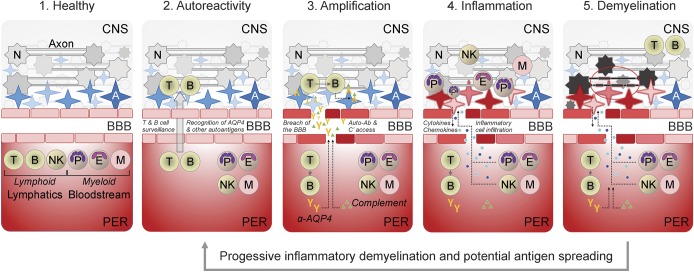
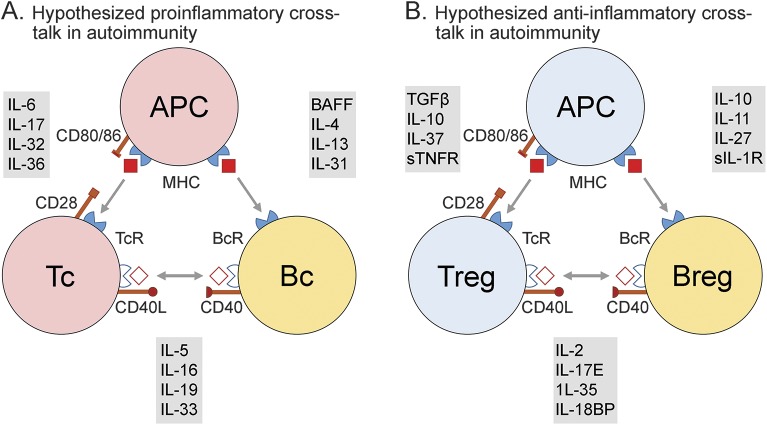
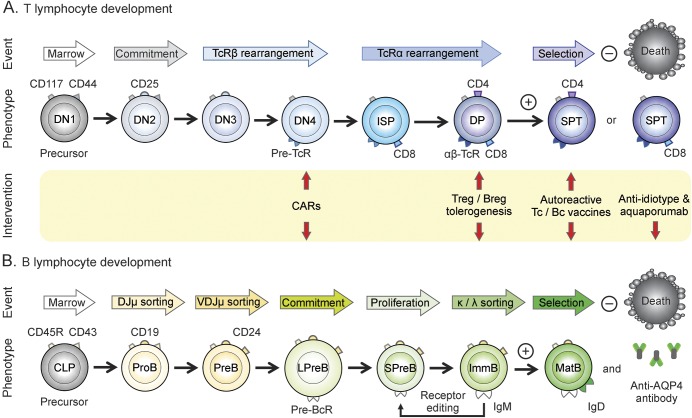
Neuromyelitis optica (NMO) and spectrum disorder (NMO/SD) represent a vexing process and its clinical variants appear to have at their pathogenic core the loss of immune tolerance to the aquaporin-4 water channel protein. This process results in a characteristic pattern of astrocyte dysfunction, loss, and demyelination that predominantly affects the spinal cord and optic nerves. Although several empirical therapies are currently used in the treatment of NMO/SD, none has been proven effective in prospective, adequately powered, randomized trials. Furthermore, most of the current therapies subject patients to long-term immunologic suppression that can cause serious infections and development of cancers. The following is the first of a 2-part description of several key immune mechanisms in NMO/SD that might be amenable to therapeutic restoration of immune tolerance. It is intended to provide a roadmap for how potential immune tolerance restorative techniques might be applied to patients with NMO/SD. This initial installment provides a background rationale underlying attempts at immune tolerization. It provides specific examples of innovative approaches that have emerged recently as a consequence of technical advances. In several autoimmune diseases, these strategies have been reduced to practice. Therefore, in theory, the identification of aquaporin-4 as the dominant autoantigen makes NMO/SD an ideal candidate for the development of tolerizing therapies or cures for this increasingly recognized disease.
视神经脊髓炎(NMO)和谱疾病(NMO/SD)代表一种棘手的疾病过程,其临床变异似乎以其致病核心为丧失对水通道蛋白 4(AQP4)的免疫耐受。这一过程导致星形胶质细胞功能障碍、丧失和脱髓鞘,主要影响脊髓和视神经。尽管目前有几种经验性治疗方法用于治疗 NMO/SD,但在前瞻性、充分有力、随机试验中,没有一种被证明是有效的。此外,目前的大多数治疗方法使患者长期接受免疫抑制,这可能导致严重感染和癌症的发展。以下是 NMO/SD 中几个关键免疫机制的两部分描述中的第一部分,这些机制可能适合于免疫耐受的治疗恢复。它旨在为潜在的免疫耐受恢复技术如何应用于 NMO/SD 患者提供一个路线图。这一初始部分提供了免疫耐受尝试的基本背景。它提供了由于技术进步而最近出现的创新方法的具体例子。在几种自身免疫性疾病中,这些策略已经付诸实践。因此,从理论上讲,将水通道蛋白 4 确定为主要自身抗原,使 NMO/SD 成为开发耐受治疗或治愈这种日益被认识到的疾病的理想候选者。