Omar J, Boix A, Kerckhove G, von Holst C
a European Commission , Joint Research Centre (EC-JRC) , Geel , Belgium.
Food Addit Contam Part A Chem Anal Control Expo Risk Assess. 2016 Dec;33(12):1775-1784. doi: 10.1080/19440049.2016.1239031. Epub 2016 Oct 24.
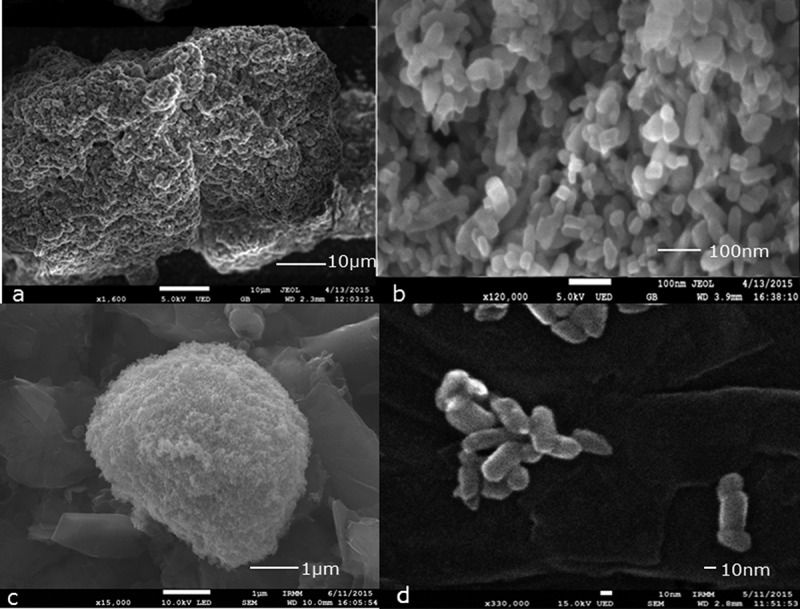
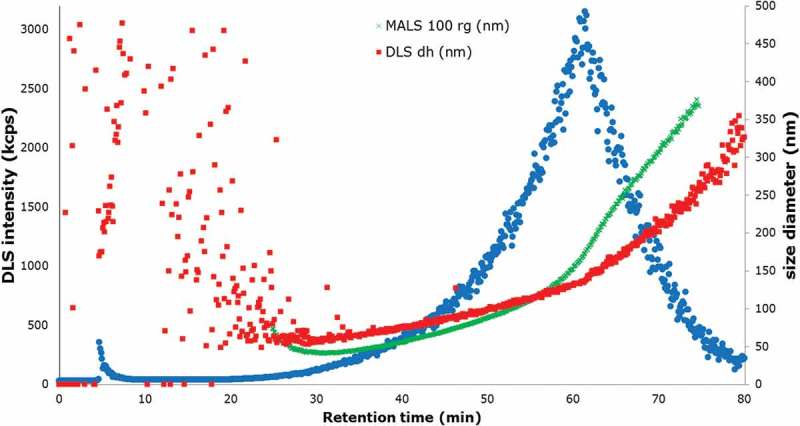
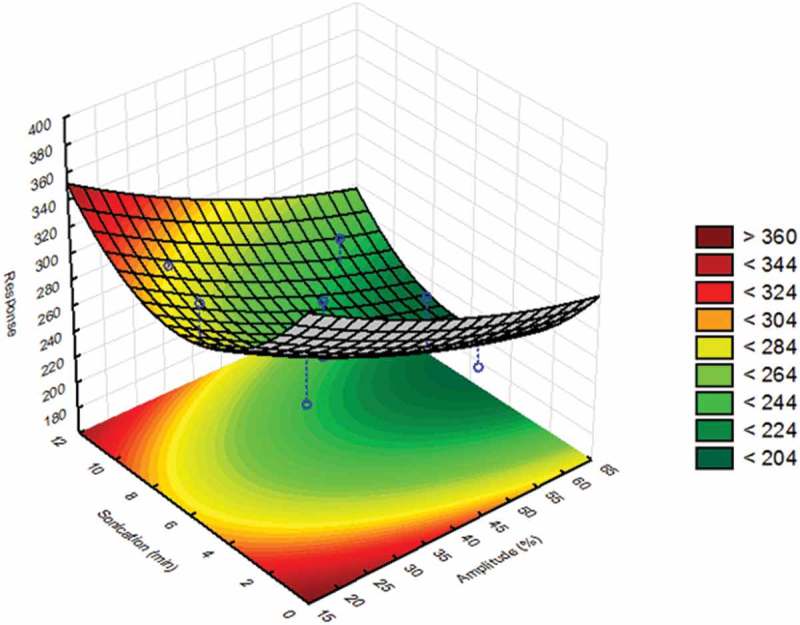
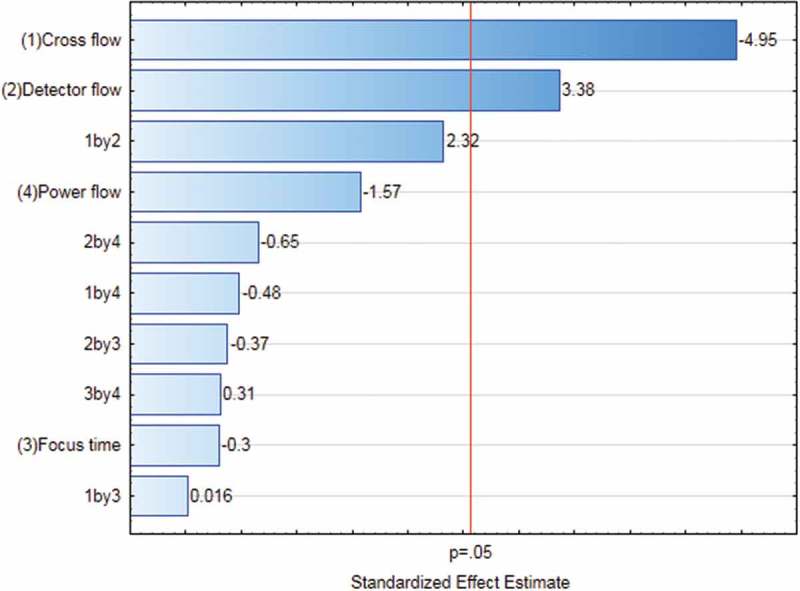
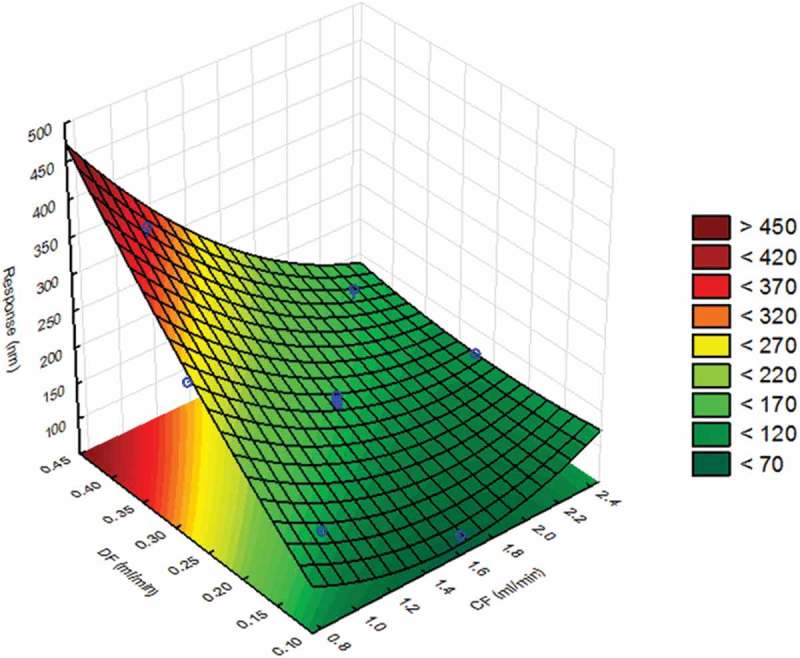
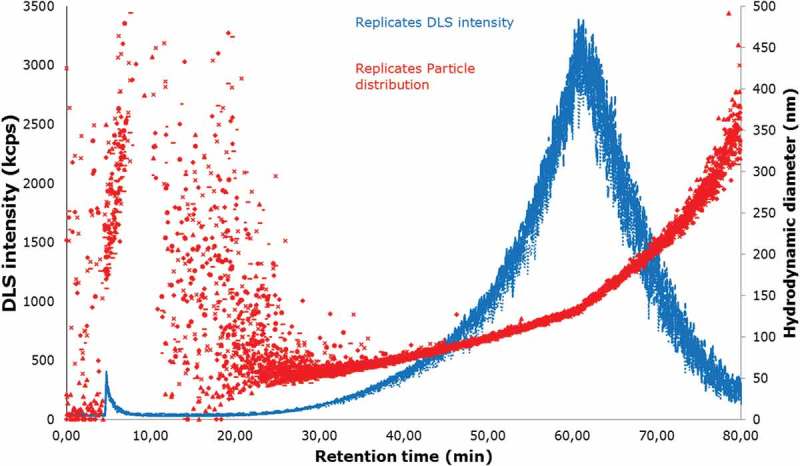
Titanium dioxide (TiO) has various applications in consumer products and is also used as an additive in food and feeding stuffs. For the characterisation of this product, including the determination of nanoparticles, there is a strong need for the availability of corresponding methods of analysis. This paper presents an optimisation process for the characterisation of polydisperse-coated TiO nanoparticles. As a first step, probe ultrasonication was optimised using a central composite design in which the amplitude and time were the selected variables to disperse, i.e., to break up agglomerates and/or aggregates of the material. The results showed that high amplitudes (60%) favoured a better dispersion and time was fixed in mid-values (5 min). In a next step, key factors of asymmetric flow field-flow fraction (AF4), namely cross-flow (CF), detector flow (DF), exponential decay of the cross-flow (CF) and focus time (Ft), were studied through experimental design. Firstly, a full-factorial design was employed to establish the statistically significant factors (p < 0.05). Then, the information obtained from the full-factorial design was utilised by applying a central composite design to obtain the following optimum conditions of the system: CF, 1.6 ml min; DF, 0.4 ml min; Ft, 5 min; and CF, 0.6. Once the optimum conditions were obtained, the stability of the dispersed sample was measured for 24 h by analysing 10 replicates with AF4 in order to assess the performance of the optimised dispersion protocol. Finally, the recovery of the optimised method, particle shape and particle size distribution were estimated.
二氧化钛(TiO)在消费品中有多种应用,也被用作食品和饲料的添加剂。为了对该产品进行表征,包括测定纳米颗粒,迫切需要相应的分析方法。本文介绍了一种用于多分散包覆TiO纳米颗粒表征的优化过程。第一步,使用中心复合设计对探头超声处理进行优化,其中振幅和时间是选定的用于分散的变量,即用于分解材料的团聚体和/或聚集体。结果表明,高振幅(60%)有利于更好的分散,时间固定在中间值(5分钟)。下一步,通过实验设计研究了不对称流场-流分馏(AF4)的关键因素,即错流(CF)、检测器流(DF)、错流(CF)的指数衰减和聚焦时间(Ft)。首先,采用全因子设计来确定具有统计学意义的因素(p<0.05)。然后,通过应用中心复合设计利用从全因子设计中获得的信息,以获得系统的以下最佳条件:CF,1.6毫升/分钟;DF,0.4毫升/分钟;Ft,5分钟;CF,0.6。一旦获得最佳条件,通过用AF4分析10个重复样品来测量分散样品的稳定性24小时,以评估优化分散方案的性能。最后,估计了优化方法的回收率、颗粒形状和粒度分布。