Division of Neuroscience, School of Medicine, University of Dundee, Dundee, DD1 9SY, Scotland, Uk.
Centre for Microsystems and Photonics, Department of Electronic and Electrical Engineering, University of Strathclyde, Glasgow, G1 1XW, Scotland, Uk.
Sci Rep. 2016 Sep 21;6:33746. doi: 10.1038/srep33746.
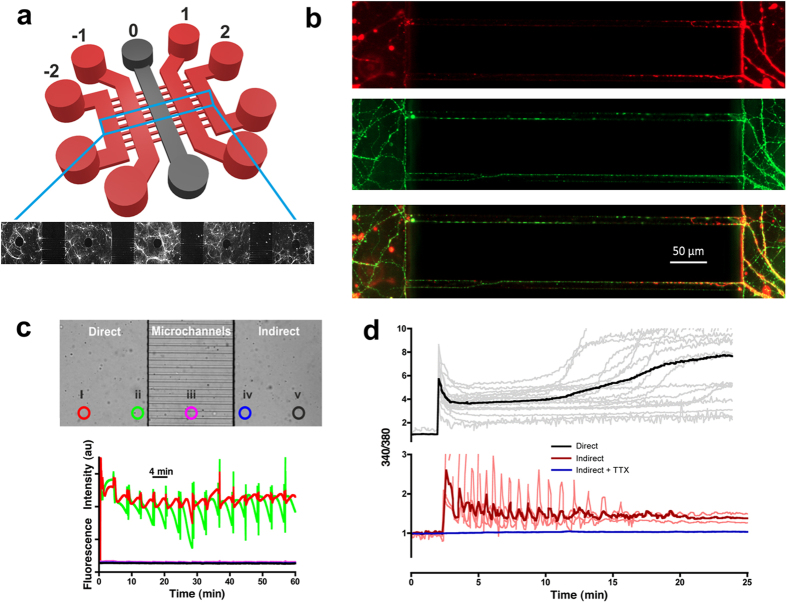
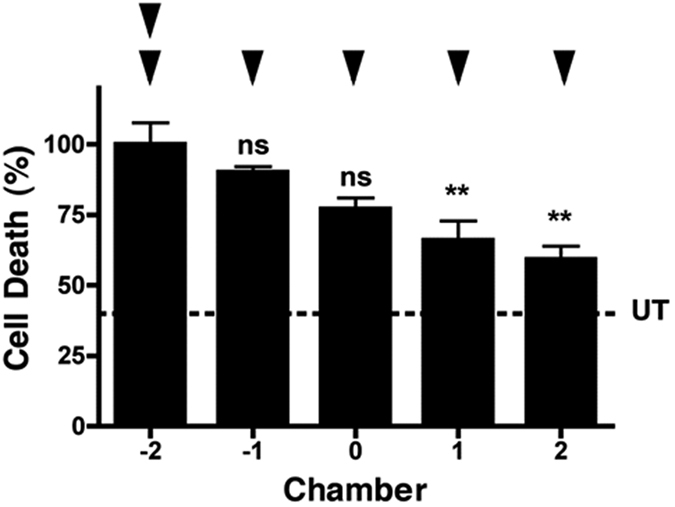
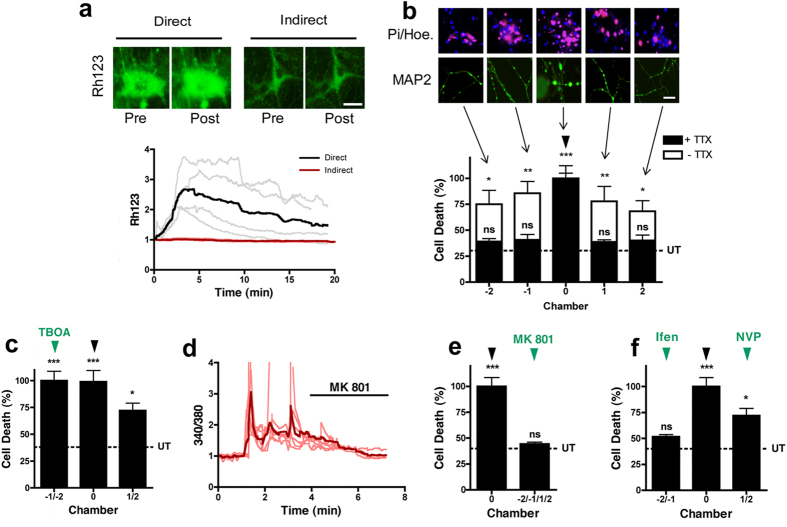
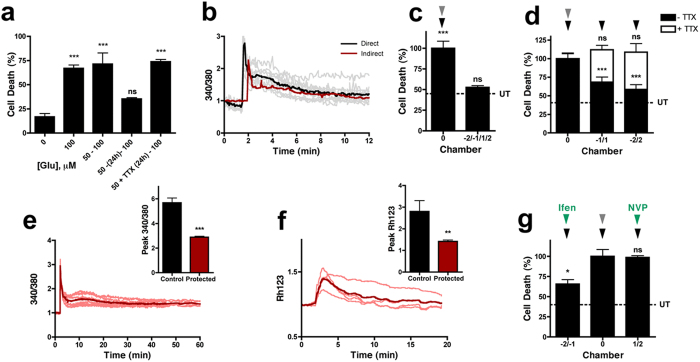
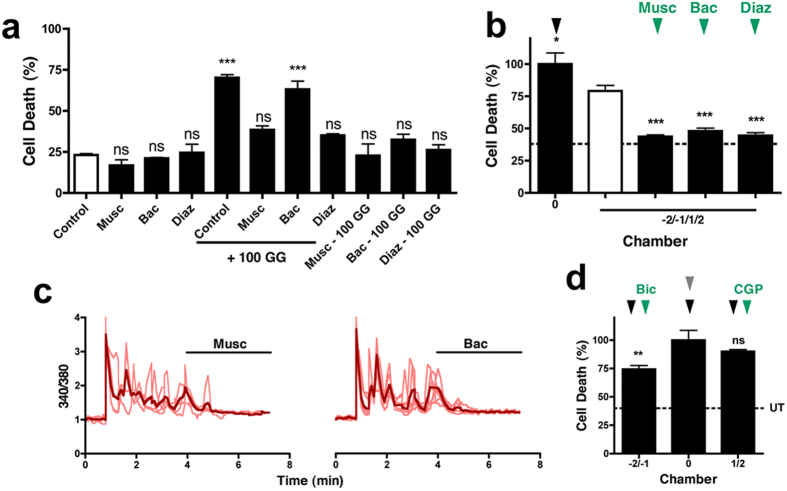
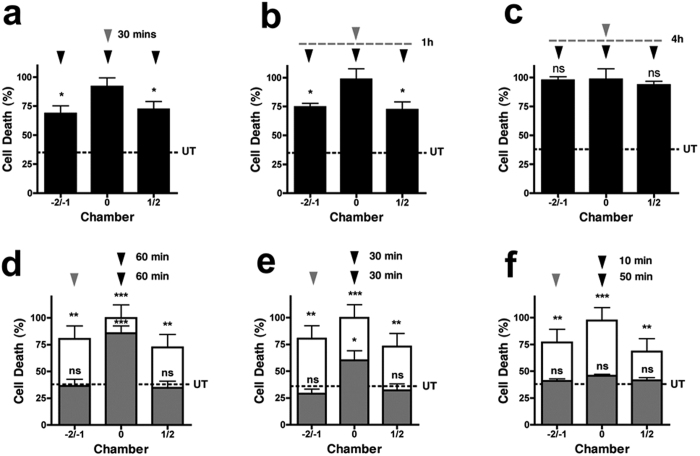
Acute secondary neuronal cell death, as seen in neurodegenerative disease, cerebral ischemia (stroke) and traumatic brain injury (TBI), drives spreading neurotoxicity into surrounding, undamaged, brain areas. This spreading toxicity occurs via two mechanisms, synaptic toxicity through hyperactivity, and excitotoxicity following the accumulation of extracellular glutamate. To date, there are no fast-acting therapeutic tools capable of terminating secondary spreading toxicity within a time frame relevant to the emergency treatment of stroke or TBI patients. Here, using hippocampal neurons (DIV 15-20) cultured in microfluidic devices in order to deliver a localized excitotoxic insult, we replicate secondary spreading toxicity and demonstrate that this process is driven by GluN2B receptors. In addition to the modeling of spreading toxicity, this approach has uncovered a previously unknown, fast acting, GluN2A-dependent neuroprotective signaling mechanism. This mechanism utilizes the innate capacity of surrounding neuronal networks to provide protection against both forms of spreading neuronal toxicity, synaptic hyperactivity and direct glutamate excitotoxicity. Importantly, network neuroprotection against spreading toxicity can be effectively stimulated after an excitotoxic insult has been delivered, and may identify a new therapeutic window to limit brain damage.
急性继发性神经元细胞死亡,如神经退行性疾病、脑缺血(中风)和创伤性脑损伤(TBI)中所见,会导致扩散性神经毒性扩散到周围未受损的脑区。这种扩散毒性通过两种机制发生,即通过过度活跃的突触毒性,以及细胞外谷氨酸积累后的兴奋性毒性。迄今为止,还没有快速作用的治疗工具能够在与中风或 TBI 患者紧急治疗相关的时间范围内终止继发性扩散毒性。在这里,我们使用在微流控设备中培养的海马神经元(DIV 15-20),以局部引发兴奋性损伤,复制了继发性扩散毒性,并证明这一过程是由 GluN2B 受体驱动的。除了模拟扩散毒性之外,这种方法还揭示了一种以前未知的、快速作用的、依赖于 GluN2A 的神经保护信号机制。这种机制利用周围神经网络的固有能力,为两种形式的扩散性神经元毒性(突触过度活跃和直接的谷氨酸兴奋性毒性)提供保护。重要的是,在发生兴奋性毒性损伤后,可以有效地刺激网络对扩散毒性的保护,这可能为限制脑损伤开辟新的治疗窗口。