Das Sayantan, Patel Priyank Pravin, Sengupta Somasis
Department of Geography, Bhairab Ganguly College, 2, Feeder Road, Belghoria, Kolkata, West Bengal 700056 India.
Department of Geography, Presidency University, 86/1, College Street, Kolkata, West Bengal 700073 India.
Springerplus. 2016 Sep 13;5(1):1544. doi: 10.1186/s40064-016-3207-0. eCollection 2016.
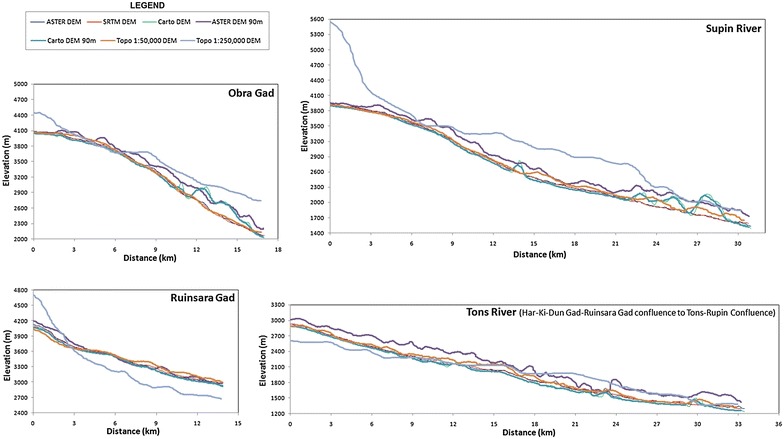
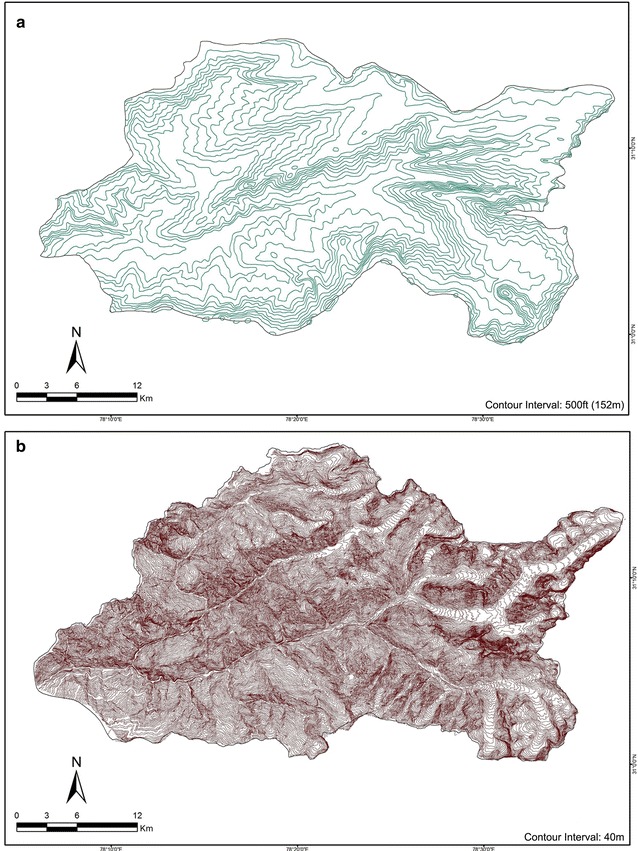
With myriad geospatial datasets now available for terrain information extraction and particularly streamline demarcation, there arises questions regarding the scale, accuracy and sensitivity of the initial dataset from which these aspects are derived, as they influence all other parameters computed subsequently. In this study, digital elevation models (DEM) derived from Advanced Spaceborne Thermal Emission and Reflection Radiometer (ASTER V2), Shuttle Radar Topography Mission (SRTM V4, C-Band, 3 arc-second), Cartosat -1 (CartoDEM 1.0) and topographical maps (R.F. 1:250,000 and 1:50,000), have been used to individually extract and analyze the relief, surface, size, shape and texture properties of a mountainous drainage basin.
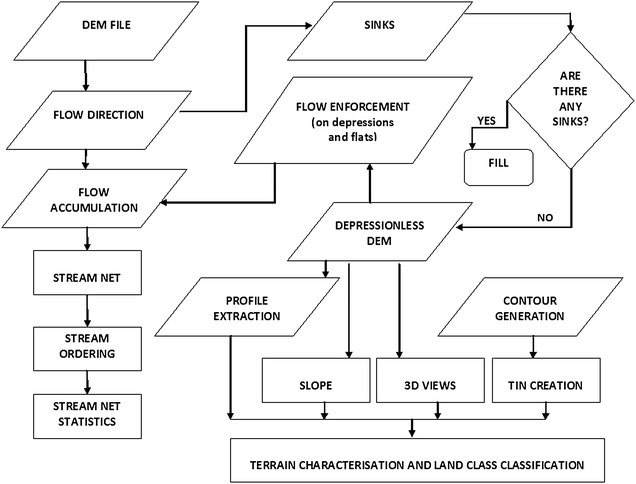
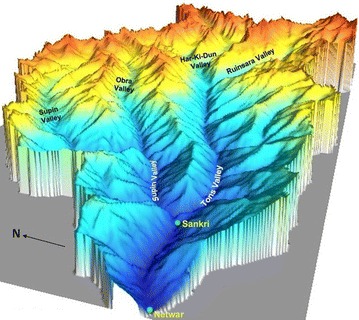
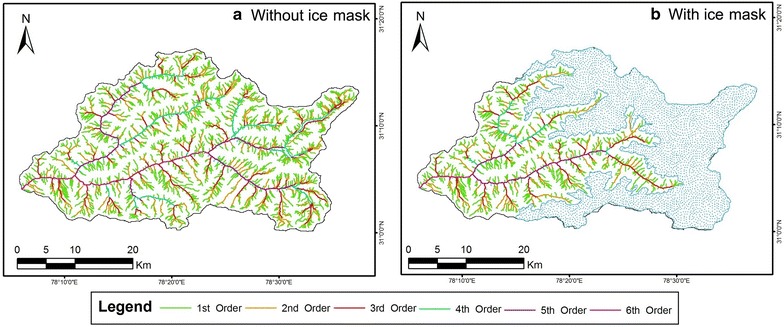
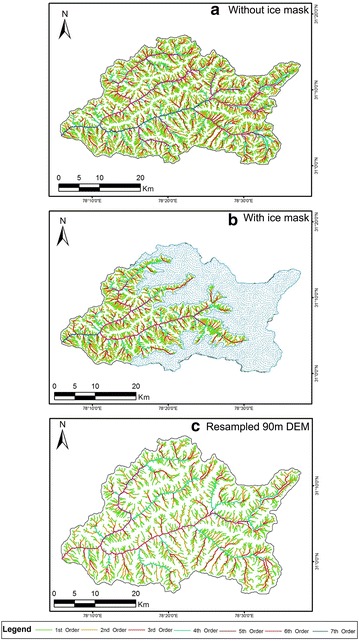
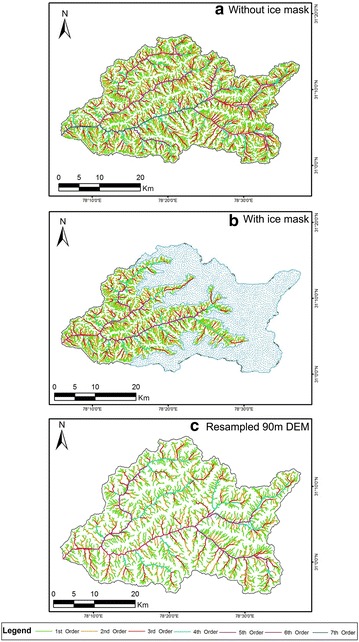
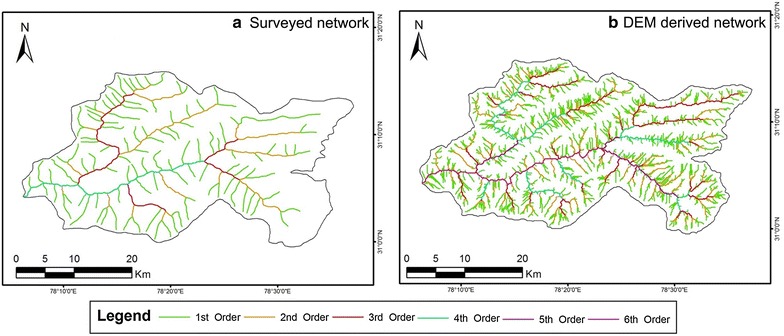
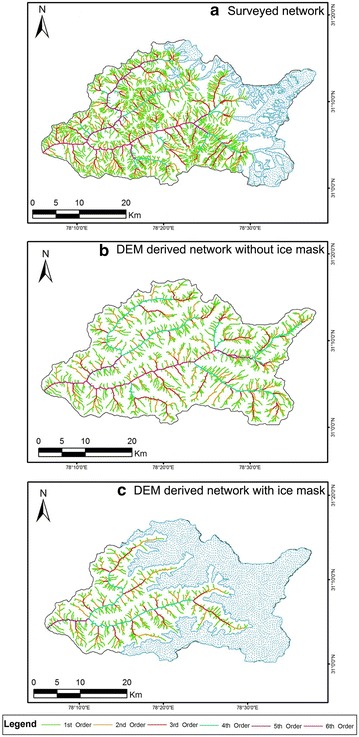
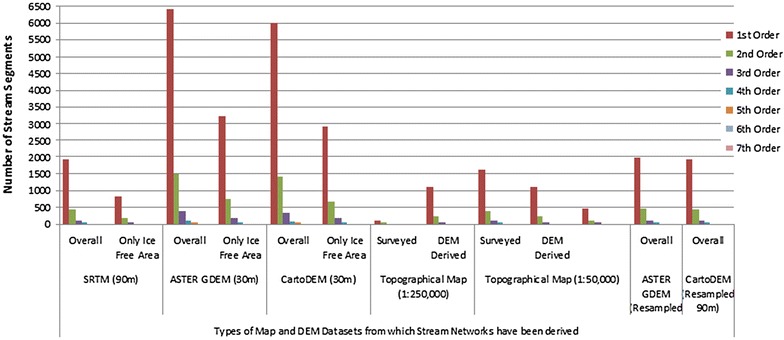
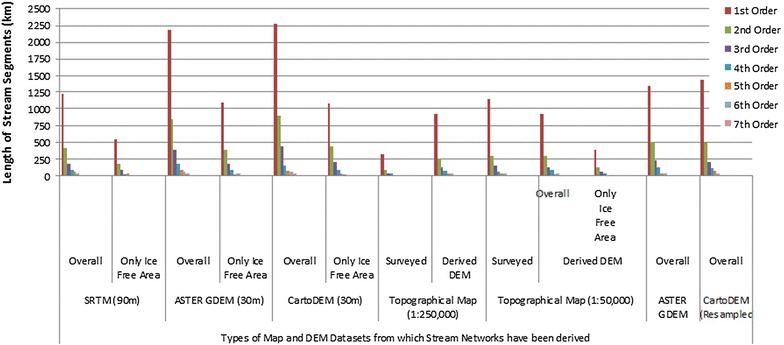
Nestled inside a mountainous setting, the basin is a semi-elongated one with high relief ratio (>90), steep slopes (25°-30°) and high drainage density (>3.5 km/sq km), as computed from the different DEMs. The basin terrain and stream network is extracted from each DEM, whose morphometric attributes are compared with the surveyed stream networks present in the topographical maps, with resampling of finer DEM datasets to coarser resolutions, to reduce scale-implications during the delineation process. Ground truth verifications for altitudinal accuracy have also been done by a GPS survey.
DEMs derived from the 1:50,000 topographical map and ASTER GDEM V2 data are found to be more accurate and consistent in terms of absolute accuracy, than the other generated or available DEM data products, on basis of the morphometric parameters extracted from each. They also exhibit a certain degree of proximity to the surveyed topographical map.
随着现在有大量地理空间数据集可用于地形信息提取,尤其是流线划分,出现了关于从中得出这些方面的初始数据集的规模、准确性和敏感性的问题,因为它们会影响随后计算的所有其他参数。在本研究中,源自先进星载热发射和反射辐射计(ASTER V2)、航天飞机雷达地形测绘任务(SRTM V4,C波段,3弧秒)、Cartosat -1(CartoDEM 1.0)和地形图(比例尺1:250,000和1:50,000)的数字高程模型(DEM)已被分别用于提取和分析一个山区流域的地形起伏、地表、大小、形状和纹理属性。
该流域位于山区内,从不同的DEM计算得出,它是一个半拉长的流域,地形起伏比率高(>90),坡度陡峭(25° - 30°),排水密度高(>3.5平方公里/平方公里)。从每个DEM中提取流域地形和水系网络,并将其形态测量属性与地形图中现有的实测水系网络进行比较,将更精细的DEM数据集重采样到更粗的分辨率,以减少划定过程中的尺度影响。还通过GPS测量对海拔高度准确性进行了实地验证。
根据从每个DEM提取的形态测量参数,发现源自1:50,000地形图和ASTER GDEM V2数据的DEM在绝对准确性方面比其他生成的或可用的DEM数据产品更准确、更一致。它们也与实测地形图有一定程度的接近度。