Lian Sen, Xia Yong, Nguyen Thi Thinh, Ung Trong Thuan, Yoon Hyun Joong, Kim Nam Ho, Kim Kyung Keun, Jung Young Do
Research Institute of Medical Sciences, Chonnam National University Medical School, Gwangju 501-190, Republic of Korea.
PLoS One. 2016 Sep 21;11(9):e0163395. doi: 10.1371/journal.pone.0163395. eCollection 2016.
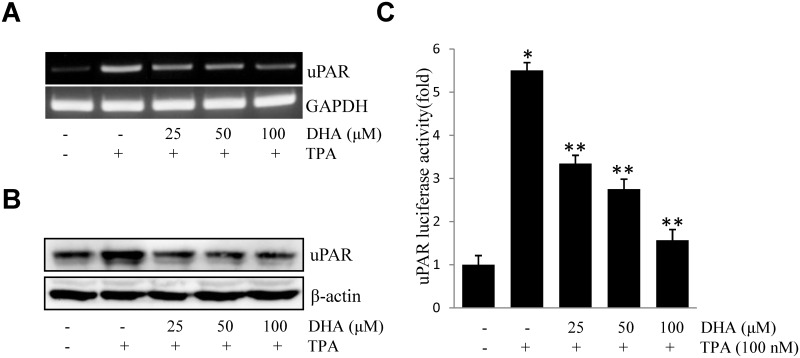
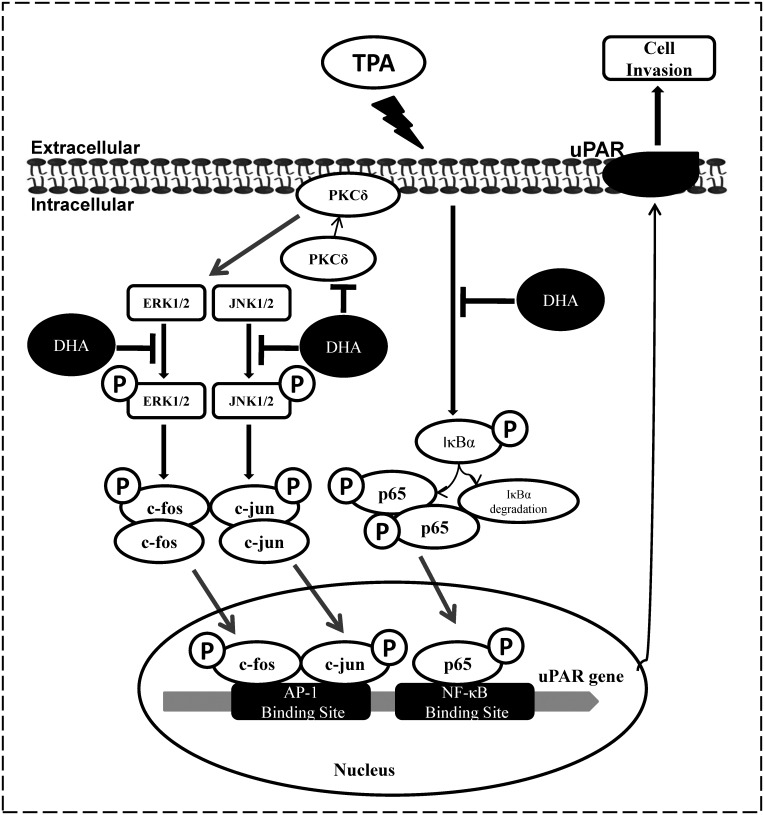
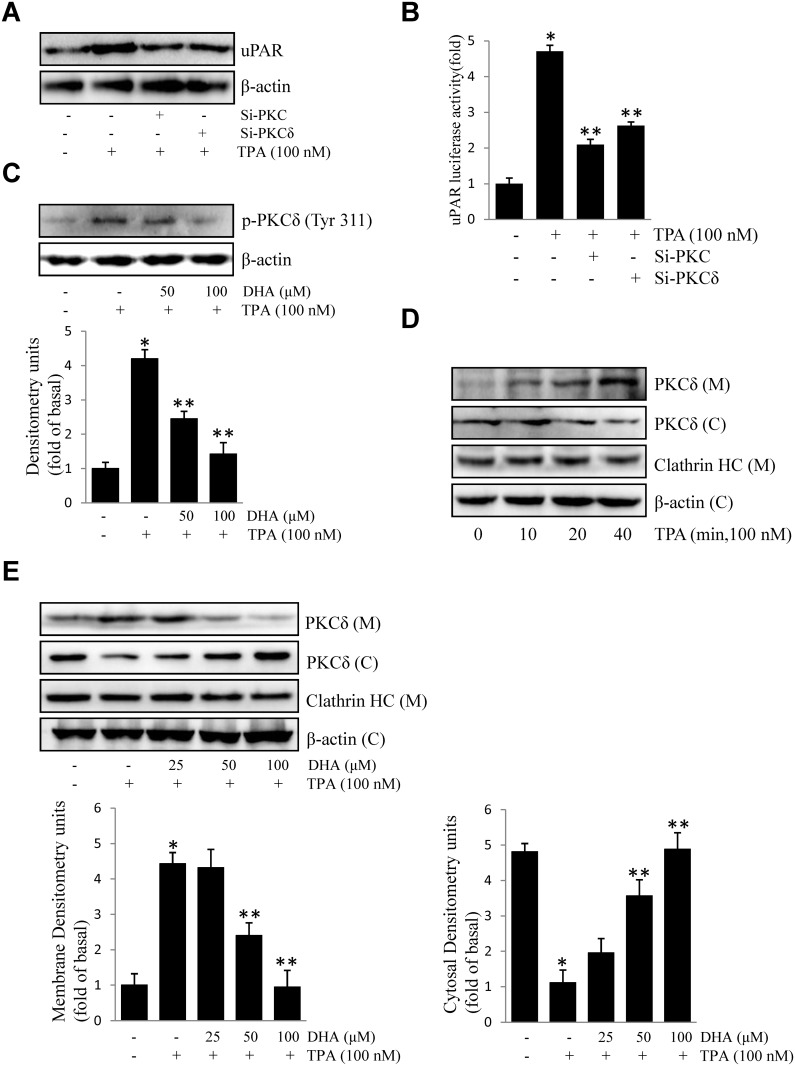
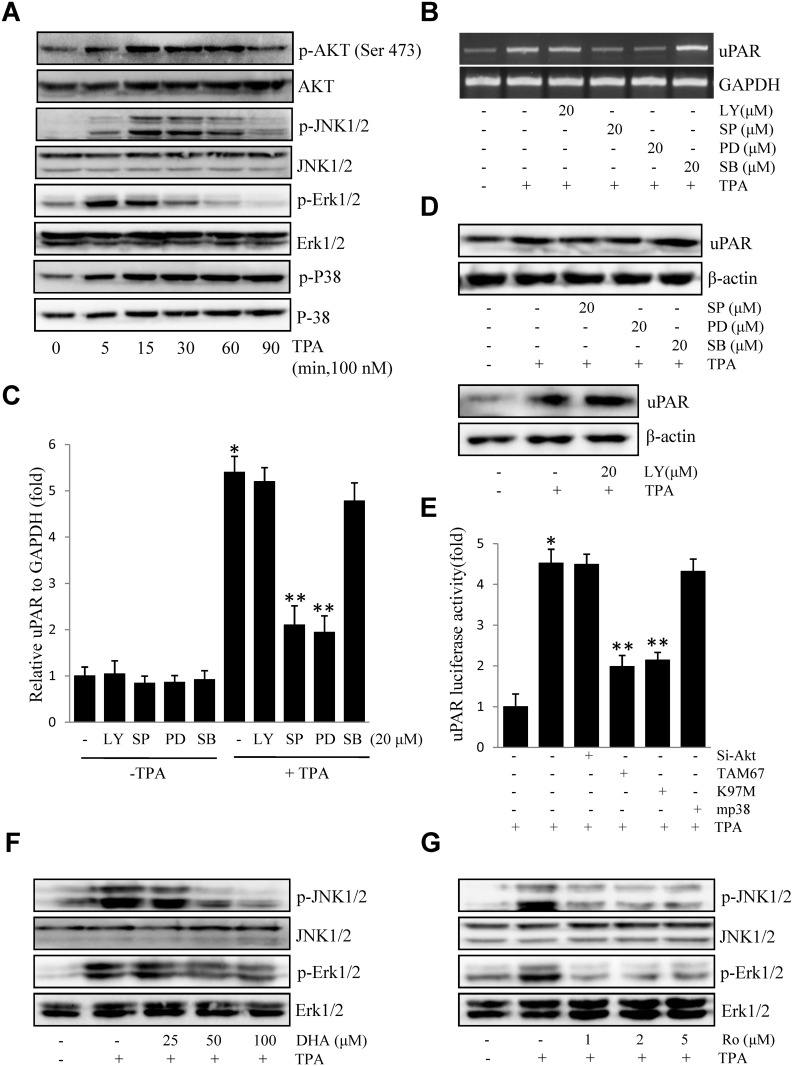
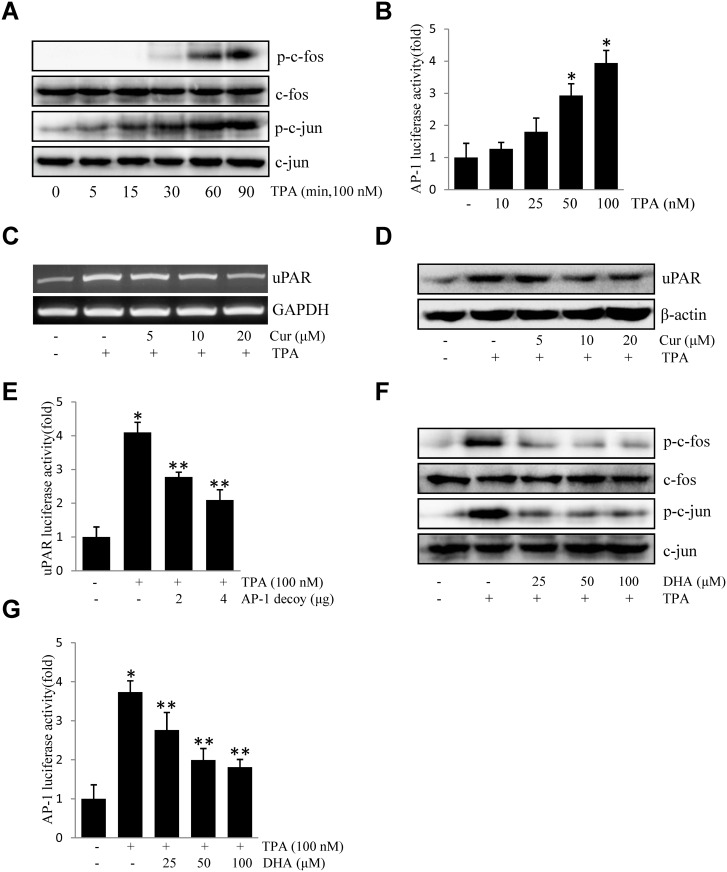
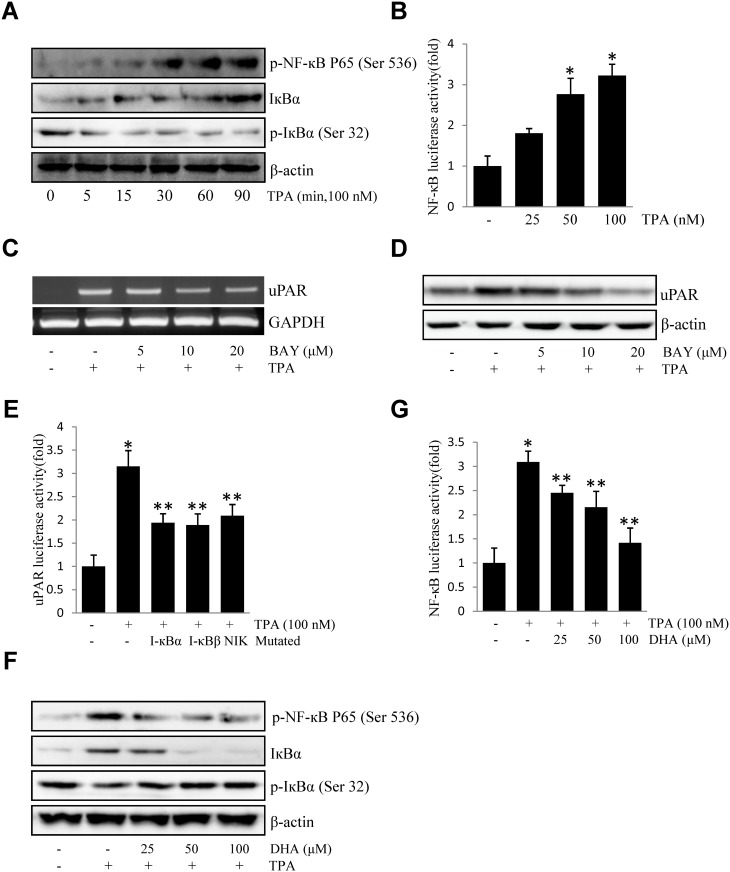
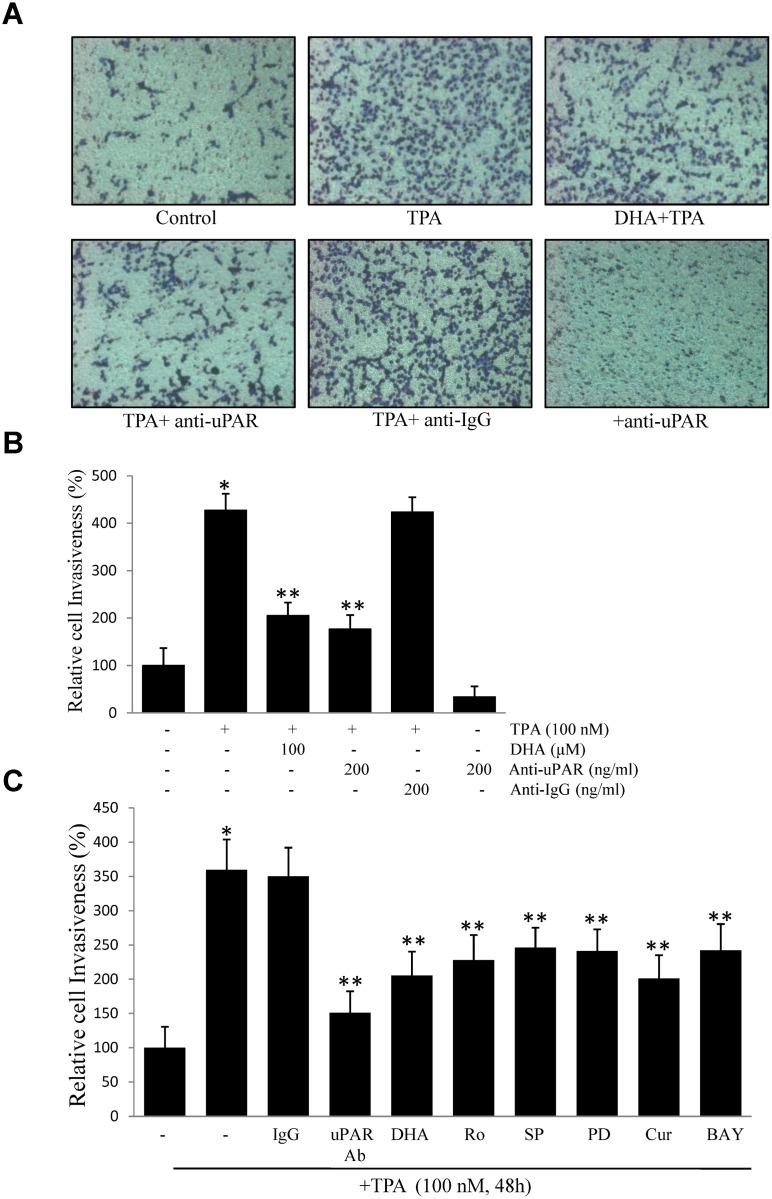
The overexpression of urokinase-type plasminogen activator receptor (uPAR) is associated with inflammation and virtually all human cancers. Despite the fact that docosahexaenoic acid (DHA) has been reported to possess anti-inflammatory and anti-tumor properties, the negative regulation of uPAR by DHA is still undefined. Here, we investigated the effect of DHA on 12-O-tetradecanoylphorbol-13-acetate (TPA)-induced uPAR expression and the underlying molecular mechanisms in ECV304 human endothelial cells. DHA concentration-dependently inhibited TPA-induced uPAR. Specific inhibitors and mutagenesis studies showed that PKCδ, JNK1/2, Erk1/2, NF-κB, and AP-1 were critical for TPA-induced uPAR expression. Application of DHA suppressed TPA-induced translocation of PKCδ, activation of the JNK1/2 and Erk1/2 signaling pathways, and subsequent AP-1 and NF-κB transactivation. In conclusion, these observations suggest a novel role for DHA in reducing uPAR expression and cell invasion by inhibition of PKCδ, JNK1/2, and Erk1/2, and the reduction of AP-1 and NF-κB activation in ECV304 human endothelial cells.
尿激酶型纤溶酶原激活物受体(uPAR)的过表达与炎症以及几乎所有人类癌症相关。尽管已报道二十二碳六烯酸(DHA)具有抗炎和抗肿瘤特性,但DHA对uPAR的负调控作用仍不明确。在此,我们研究了DHA对12 - O - 十四酰佛波醇 - 13 - 乙酸酯(TPA)诱导的人脐静脉内皮细胞系ECV304中uPAR表达的影响及其潜在分子机制。DHA呈浓度依赖性地抑制TPA诱导的uPAR表达。特异性抑制剂和诱变研究表明,蛋白激酶Cδ(PKCδ)、应激活化蛋白激酶1/2(JNK1/2)、细胞外信号调节激酶1/2(Erk1/2)、核因子κB(NF - κB)和激活蛋白 - 1(AP - 1)对TPA诱导的uPAR表达至关重要。DHA的应用抑制了TPA诱导的PKCδ易位、JNK1/2和Erk1/2信号通路的激活以及随后的AP - 1和NF - κB反式激活。总之,这些观察结果表明DHA在通过抑制PKCδ、JNK1/2和Erk1/2以及减少ECV304人内皮细胞中AP - 1和NF - κB激活来降低uPAR表达和细胞侵袭方面具有新作用。