Segev Yifat, Livne Adva, Mints Meshi, Rosenblum Kobi
Sagol Department of Neurobiology, University of Haifa Haifa, Israel.
Sagol Department of Neurobiology, University of HaifaHaifa, Israel; Center for Gene Manipulation in the Brain, University of HaifaHaifa, Israel.
Front Behav Neurosci. 2016 Sep 5;10:170. doi: 10.3389/fnbeh.2016.00170. eCollection 2016.
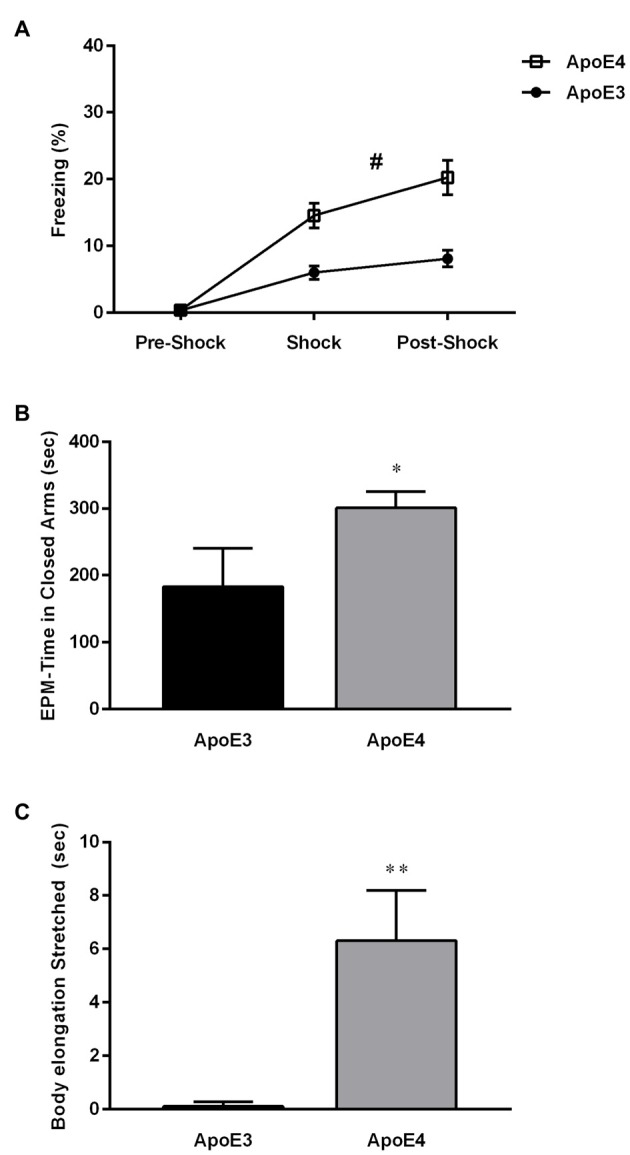
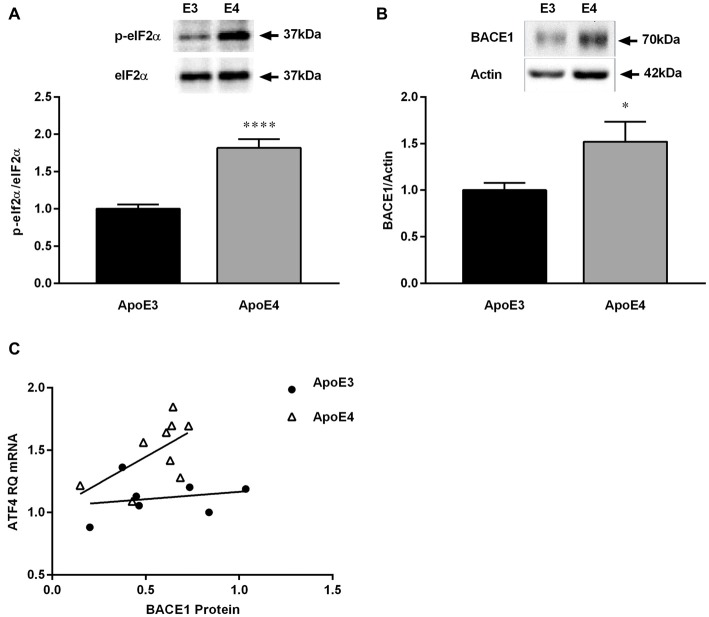
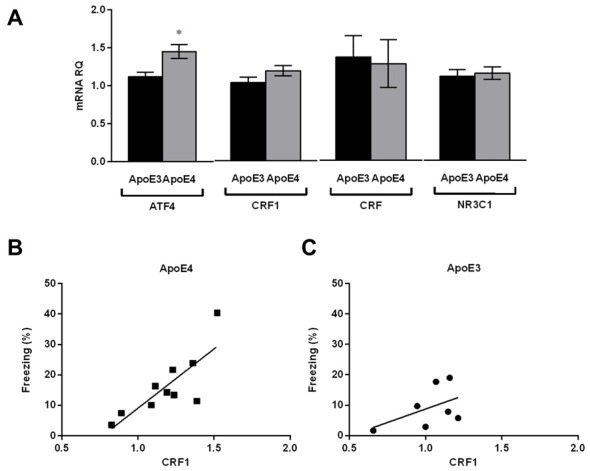
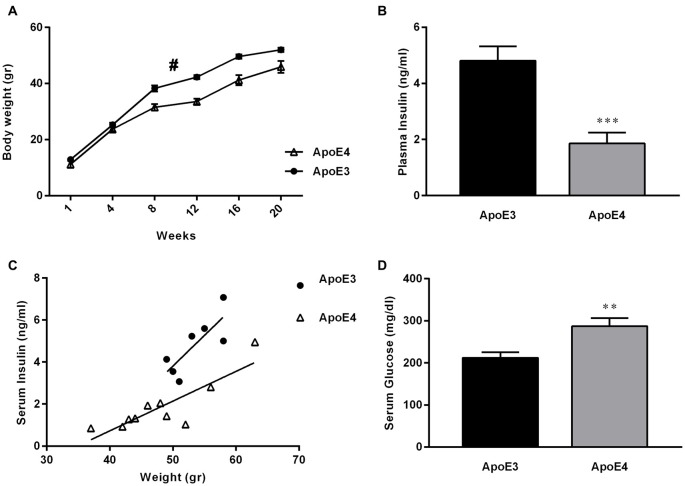
Aging is the main risk factor for neurodegenerative diseases, including Alzheimer's disease (AD). However, evidence indicates that the pathological process begins long before actual cognitive or pathological symptoms are apparent. The long asymptomatic phase and complex integration between genetic, environmental and metabolic factors make it one of the most challenging diseases to understand and cure. In the present study, we asked whether an environmental factor such as high-fat (HF) diet would synergize with a genetic factor to affect the metabolic and cognitive state in the Apolipoprotein E (ApoE4) mouse model of AD. Our data suggest that a HF diet induces diabetes mellitus (DM)-like metabolism in ApoE4 mice, as well as changes in β-site amyloid precursor protein-cleaving enzyme 1 (BACE1) protein levels between the two ApoE strains. Furthermore, HF diet induces anxiety in this AD mouse model. Our results suggest that young ApoE4 carriers are prone to psychological stress and metabolic abnormalities related to AD, which can easily be triggered via HF nutrition.
衰老 是神经退行性疾病的主要风险因素,包括阿尔茨海默病(AD)。然而,有证据表明,病理过程早在实际认知或病理症状出现之前就已开始。漫长的无症状期以及遗传、环境和代谢因素之间的复杂相互作用,使其成为最难理解和治愈的疾病之一。在本研究中,我们探究了诸如高脂(HF)饮食等环境因素是否会与遗传因素协同作用,从而影响AD的载脂蛋白E(ApoE4)小鼠模型的代谢和认知状态。我们的数据表明,高脂饮食在ApoE4小鼠中诱导出类似糖尿病(DM)的代谢,以及两种ApoE品系之间β位点淀粉样前体蛋白裂解酶1(BACE1)蛋白水平的变化。此外,高脂饮食在这种AD小鼠模型中诱发焦虑。我们的结果表明,年轻的ApoE4携带者容易出现与AD相关的心理压力和代谢异常,而通过高脂营养很容易引发这些问题。