Murray Iain A, Nichols Robert G, Zhang Limin, Patterson Andrew D, Perdew Gary H
Center for Molecular Toxicology &Carcinogenesis Department of Veterinary and Biomedical Sciences, The Pennsylvania State University, University Park, PA-16802, USA.
Huck Institutes of the Life Sciences, The Pennsylvania State University, University Park, PA-16802, USA.
Sci Rep. 2016 Sep 23;6:33969. doi: 10.1038/srep33969.
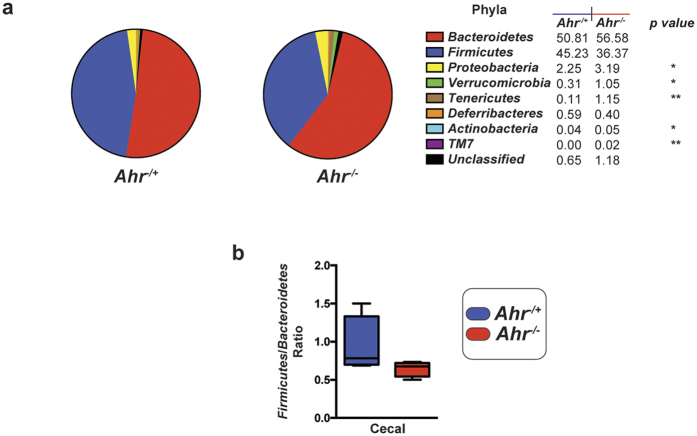
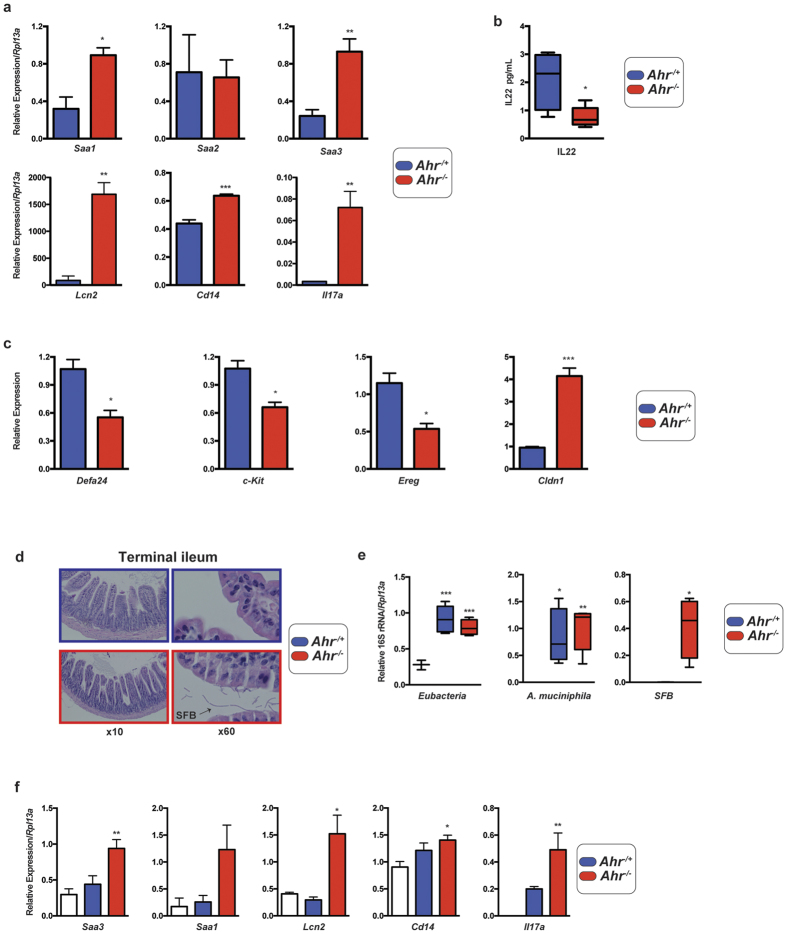
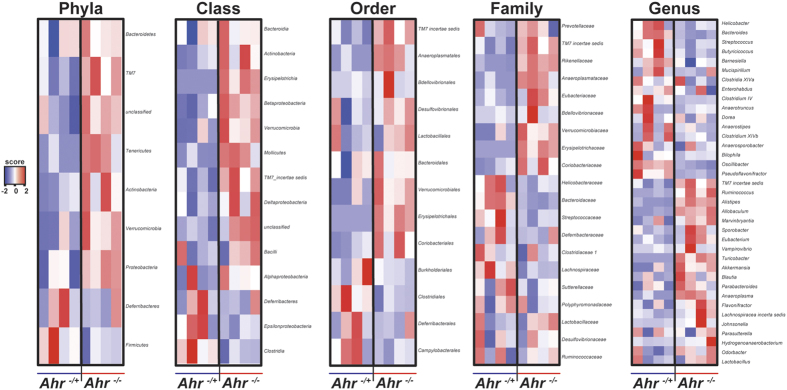
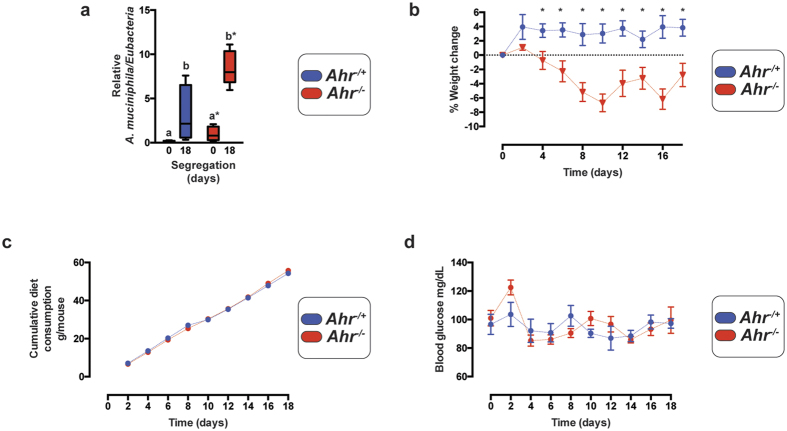
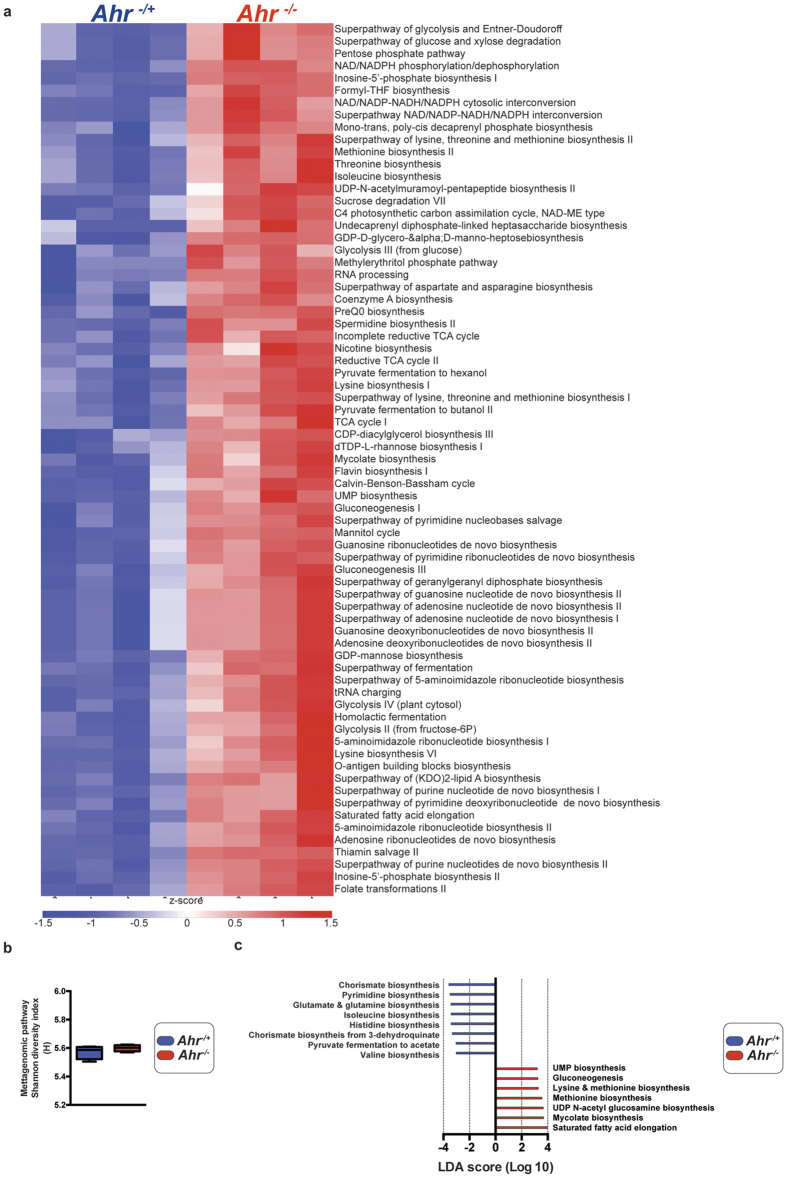
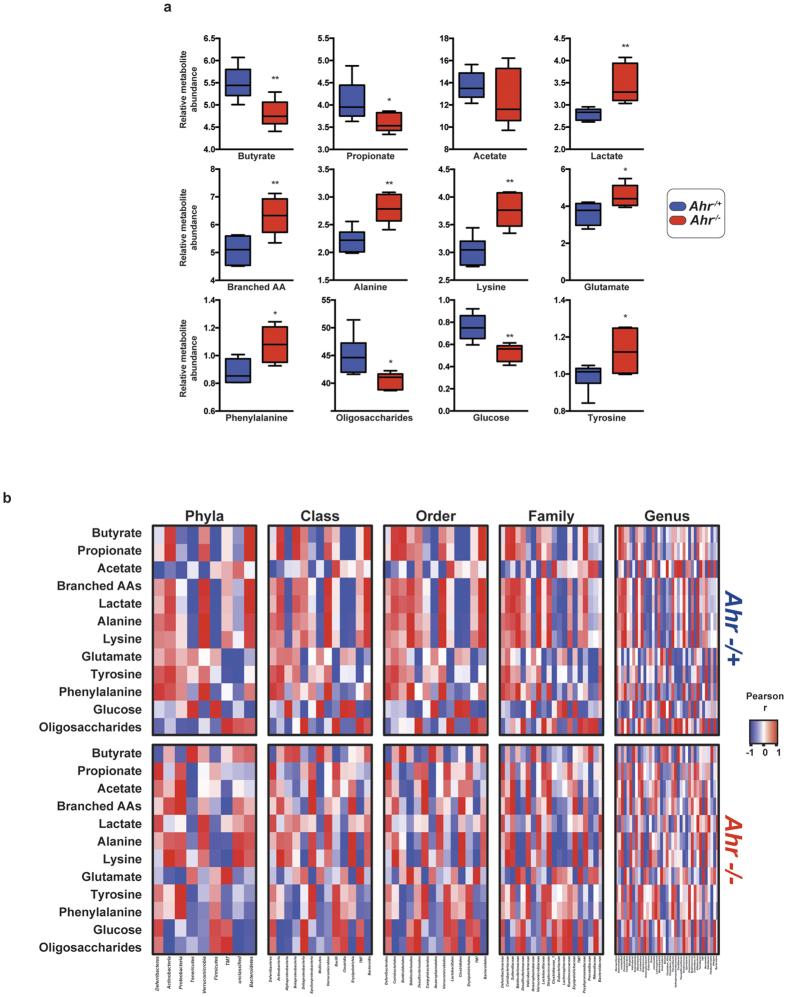
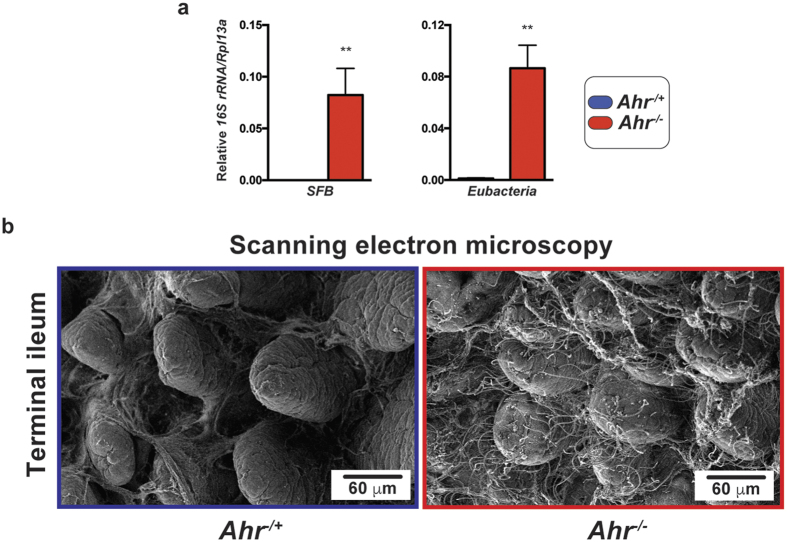
Environmental and genetic factors represent key components in the establishment/maintenance of the intestinal microbiota. The aryl hydrocarbon receptor (AHR) is emerging as a pleiotropic factor, modulating pathways beyond its established role as a xenobiotic sensor. The AHR is known to regulate immune surveillance within the intestine through retention of intraepithelial lymphocytes, functional redistribution of Th17/Treg balance. Consequently, environmental/genetic manipulation of AHR activity likely influences host-microbe homeostasis. Utilizing C57BL6/J Ahr and Ahr co-housed littermates followed by 18 days of genotypic segregation, we examined the influence of AHR expression upon intestinal microbe composition/functionality and host physiology. 16S sequencing/quantitative PCR (qPCR) revealed significant changes in phyla abundance, particularly Verrucomicrobia together with segmented filamentous bacteria, and an increase in species diversity in Ahr mice following genotypic segregation. Metagenomics/metabolomics indicate microbial composition is associated with functional shifts in bacterial metabolism. Analysis identified Ahr-dependent increases in ileal gene expression, indicating increased inflammatory tone. Transfer of Ahr microbiota to wild-type germ-free mice recapitulated the increase Verrucomicrobia and inflammatory tone, indicating Ahr-microbial dependence. These data suggest a role for the AHR in influencing the community structure of the intestinal microbiota.
环境和遗传因素是肠道微生物群建立/维持的关键组成部分。芳烃受体(AHR)正成为一种多效性因子,其调节途径超出了作为外源性物质传感器的既定作用。已知AHR通过保留上皮内淋巴细胞、Th17/Treg平衡的功能重新分布来调节肠道内的免疫监视。因此,对AHR活性的环境/遗传操纵可能会影响宿主-微生物的稳态。利用C57BL6/J Ahr和Ahr同窝饲养的小鼠,随后进行18天的基因分型分离,我们研究了AHR表达对肠道微生物组成/功能和宿主生理的影响。16S测序/定量PCR(qPCR)显示,门丰度有显著变化,特别是疣微菌门和分节丝状细菌,基因分型分离后Ahr小鼠的物种多样性增加。宏基因组学/代谢组学表明微生物组成与细菌代谢的功能转变有关。分析确定Ahr依赖性回肠基因表达增加,表明炎症状态增加。将Ahr微生物群转移到野生型无菌小鼠中,重现了疣微菌门增加和炎症状态,表明Ahr与微生物的依赖性。这些数据表明AHR在影响肠道微生物群的群落结构中发挥作用。