Santiago Ammy M, Clegg Deborah J, Routh Vanessa H
New Jersey Medical School, Rutgers University, 185 South Orange Ave, Newark, NJ 07103, United States.
Cedars-Sinai Medical Center, 8700 Beverly Blvd, Los Angeles, CA 90048, United States.
Physiol Behav. 2016 Dec 1;167:248-254. doi: 10.1016/j.physbeh.2016.09.021. Epub 2016 Sep 22.
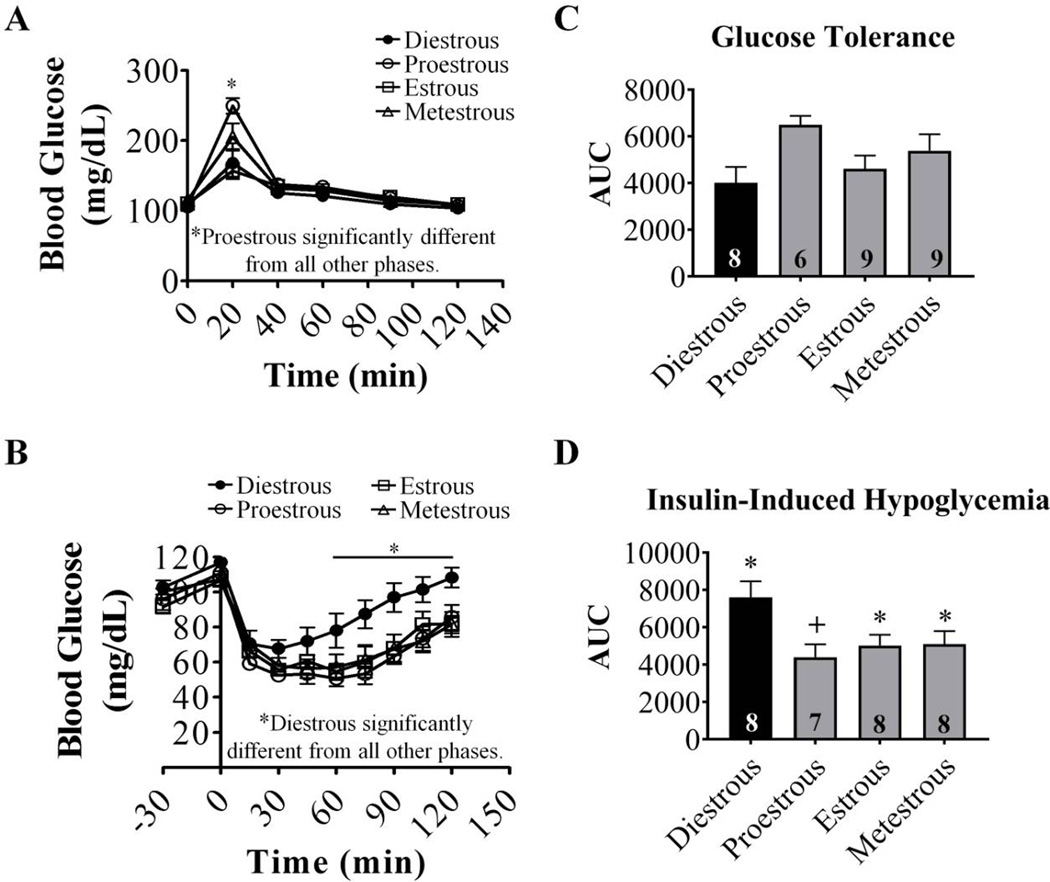
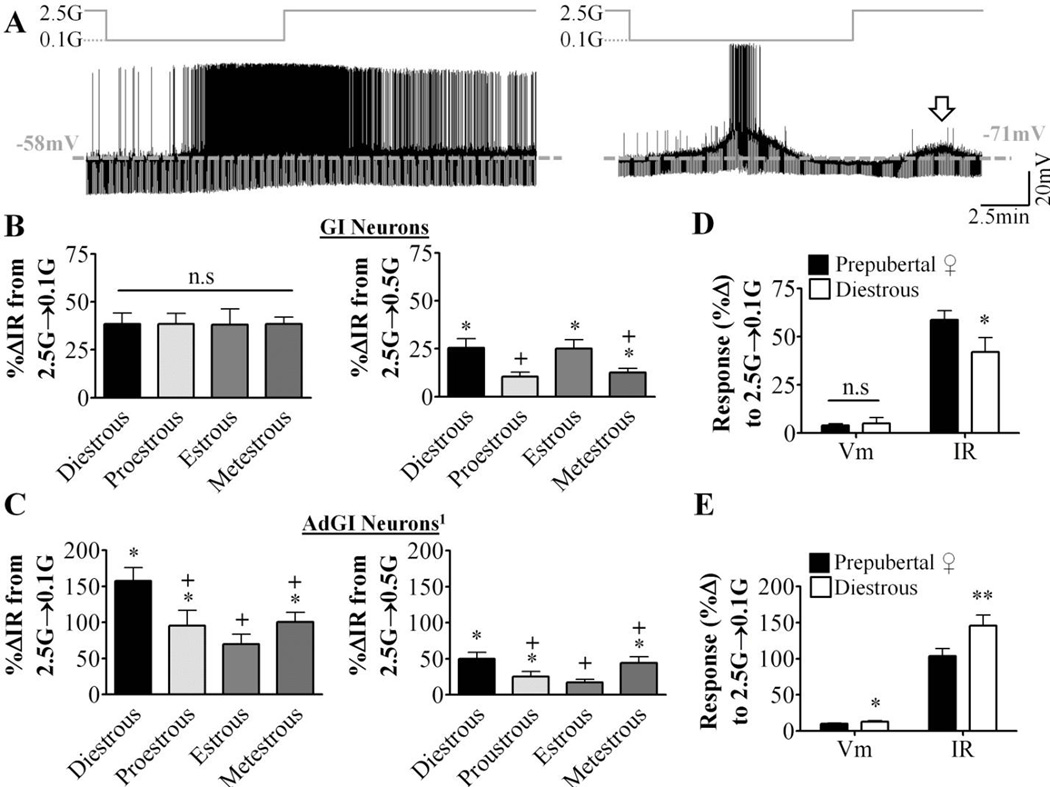
17β-Estradiol (17βE) regulates glucose homeostasis in part by centrally mediated mechanisms. In female rodents, the influence of the ovarian cycle on hypoglycemia counterregulation and glucose tolerance is unclear. We found previously that in prepubertal females, 17βE modulates glucose sensing in nonadapting glucose-inhibited (GI) and adapting GI (AdGI) neurons within the ventrolateral portion of the ventromedial nucleus (VL-VMN). Nonadapting GI neurons persistently decrease their activity as glucose increases while AdGI neurons transiently respond to a glucose increase. To begin to understand if endogenous fluctuations in estrogen levels across the estrous cycle impact hypothalamic glucose sensing and glucose homeostasis, we assessed whether hypoglycemia counterregulation and glucose tolerance differed across the phases of the estrous cycle. We hypothesized that the response to insulin-induced hypoglycemia (IIH) and/or glucose tolerance would vary throughout the estrous cycle according to changes in 17βE availability. Moreover, that these changes would correlate with estrous-dependent changes in the glucose sensitivity of VL-VMN glucose-sensing neurons (GSNs).
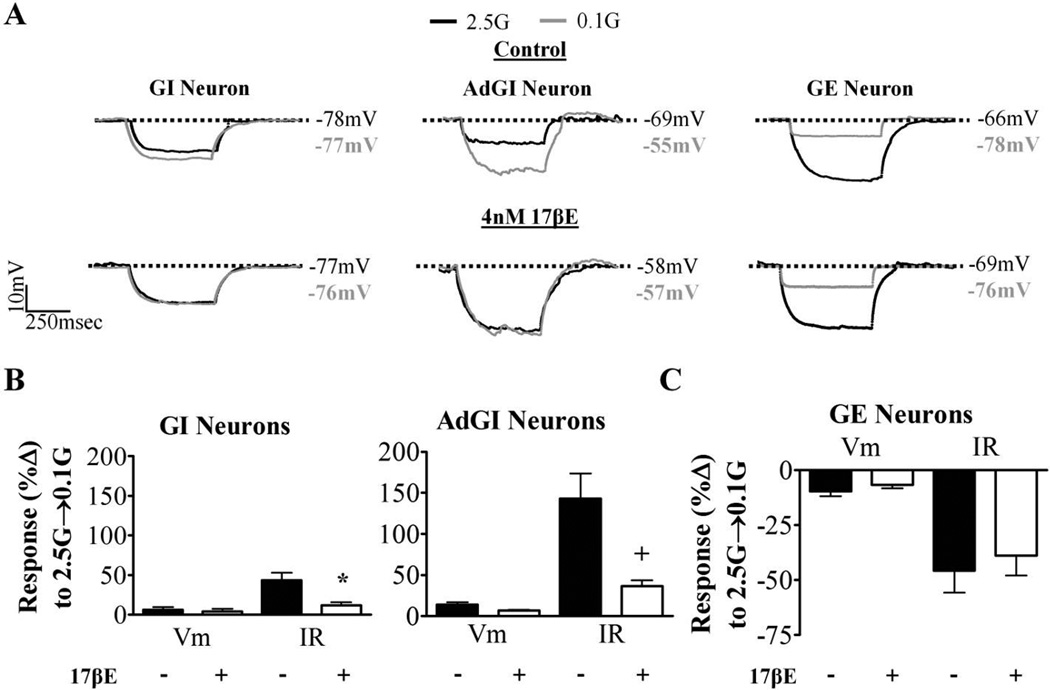
These hypotheses were tested in female mice by measuring the response to IIH, glucose tolerance and the glucose sensitivity of VL-VMN GSNs during each phase of the estrous cycle. Furthermore, a physiological brain concentration of 17βE seen during proestrus was acutely applied to brain slices isolated on the day of diestrous and the response to low glucose in VL-VMN GSNs was assayed.
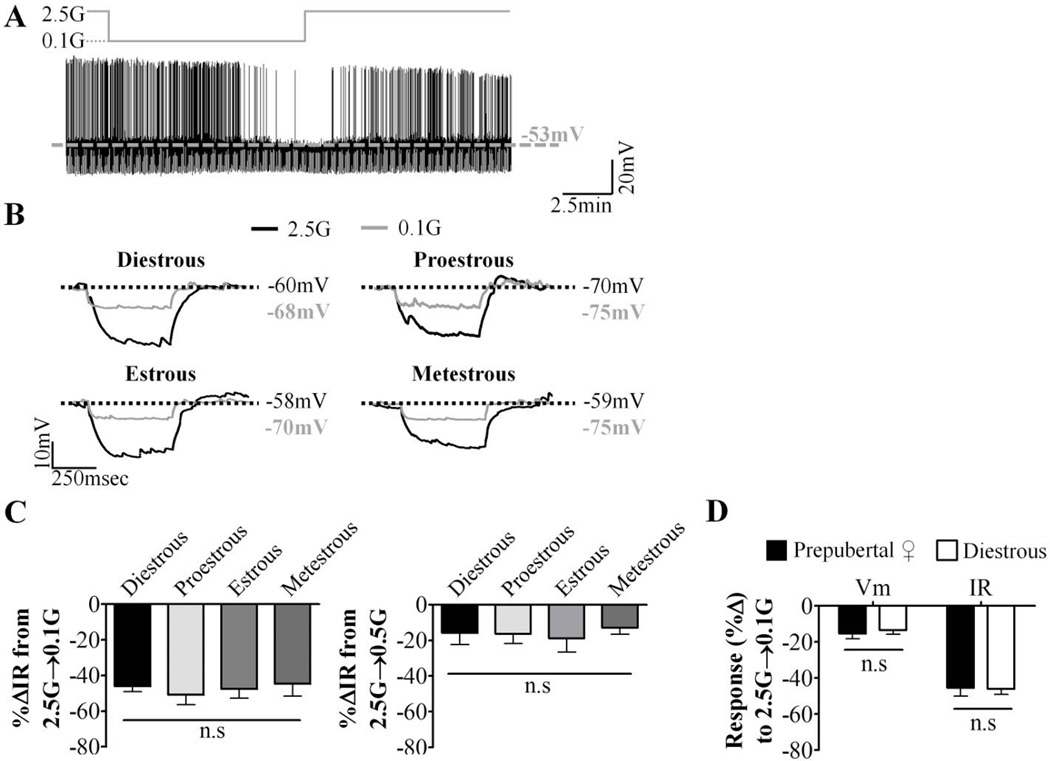
The response to IIH was strongest during diestrous. The response of nonadapting GI and AdGI neurons to a glucose decrease from 2.5 to 0.5mM also peaked during diestrous; an effect which was blunted by the addition of 17βE. In contrast, the glucose sensitivity of the subpopulation of GSNs which are excited by glucose (GE) was not affected by estrous phase or exogenous 17βE application.
These data suggest that physiological fluctuations in circulating 17βE levels across the estrous cycle lead to changes in hypothalamic glucose sensing and the response to IIH.
17β - 雌二醇(17βE)部分通过中枢介导机制调节葡萄糖稳态。在雌性啮齿动物中,卵巢周期对低血糖对抗调节和葡萄糖耐量的影响尚不清楚。我们之前发现,在青春期前雌性动物中,17βE调节腹内侧核腹外侧部分(VL - VMN)内非适应性葡萄糖抑制(GI)神经元和适应性GI(AdGI)神经元的葡萄糖感知。随着葡萄糖水平升高,非适应性GI神经元持续降低其活性,而AdGI神经元对葡萄糖升高产生短暂反应。为了开始了解发情周期中雌激素水平的内源性波动是否影响下丘脑葡萄糖感知和葡萄糖稳态,我们评估了发情周期各阶段的低血糖对抗调节和葡萄糖耐量是否存在差异。我们假设,根据17βE可用性的变化,对胰岛素诱导低血糖(IIH)的反应和/或葡萄糖耐量在整个发情周期中会有所不同。此外,这些变化将与VL - VMN葡萄糖感知神经元(GSN)的葡萄糖敏感性的发情依赖性变化相关。
通过测量发情周期各阶段对IIH的反应、葡萄糖耐量以及VL - VMN GSN的葡萄糖敏感性,在雌性小鼠中验证这些假设。此外,将动情前期所见的生理脑浓度的17βE急性应用于动情后期分离的脑片,并检测VL - VMN GSN对低血糖的反应。
对IIH的反应在动情后期最强。非适应性GI神经元和AdGI神经元对葡萄糖从2.5 mM降至0.5 mM的反应在动情后期也达到峰值;添加17βE可减弱这种效应。相比之下,被葡萄糖激活(GE)的GSN亚群的葡萄糖敏感性不受发情期或外源性17βE应用的影响。
这些数据表明,发情周期中循环17βE水平的生理波动会导致下丘脑葡萄糖感知和对IIH反应的变化。