Negahdar Leila, Gonzalez-Quiroga Arturo, Otyuskaya Daria, Toraman Hilal E, Liu Li, Jastrzebski Johann T B H, Van Geem Kevin M, Marin Guy B, Thybaut Joris W, Weckhuysen Bert M
Inorganic Chemistry and Catalysis, Debye Institute for Nanomaterials Science, Utrecht University , Universiteitsweg 99, 3584 CG Utrecht, The Netherlands.
Laboratory for Chemical Technology, Ghent University , Technologiepark 914, 9052 Ghent, Belgium.
ACS Sustain Chem Eng. 2016 Sep 6;4(9):4974-4985. doi: 10.1021/acssuschemeng.6b01329. Epub 2016 Jul 29.
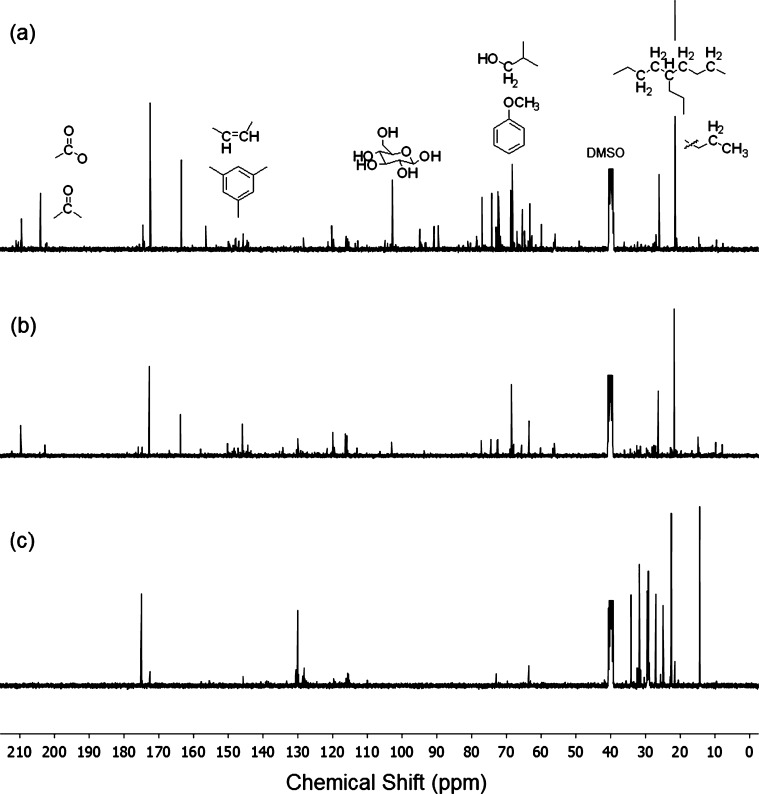
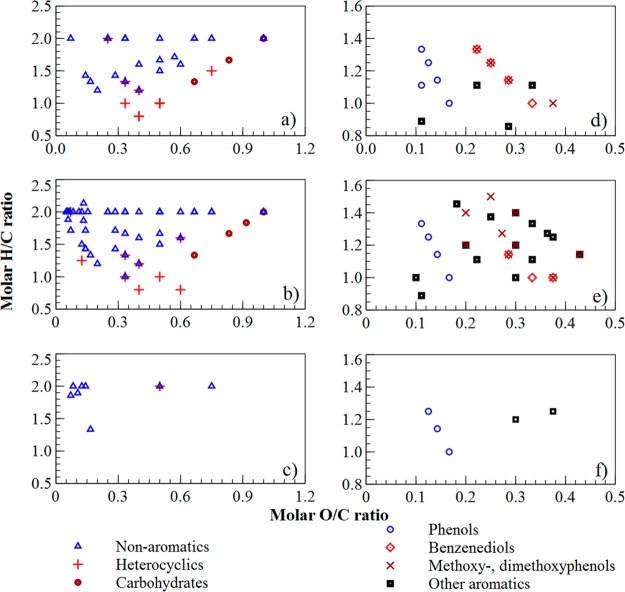
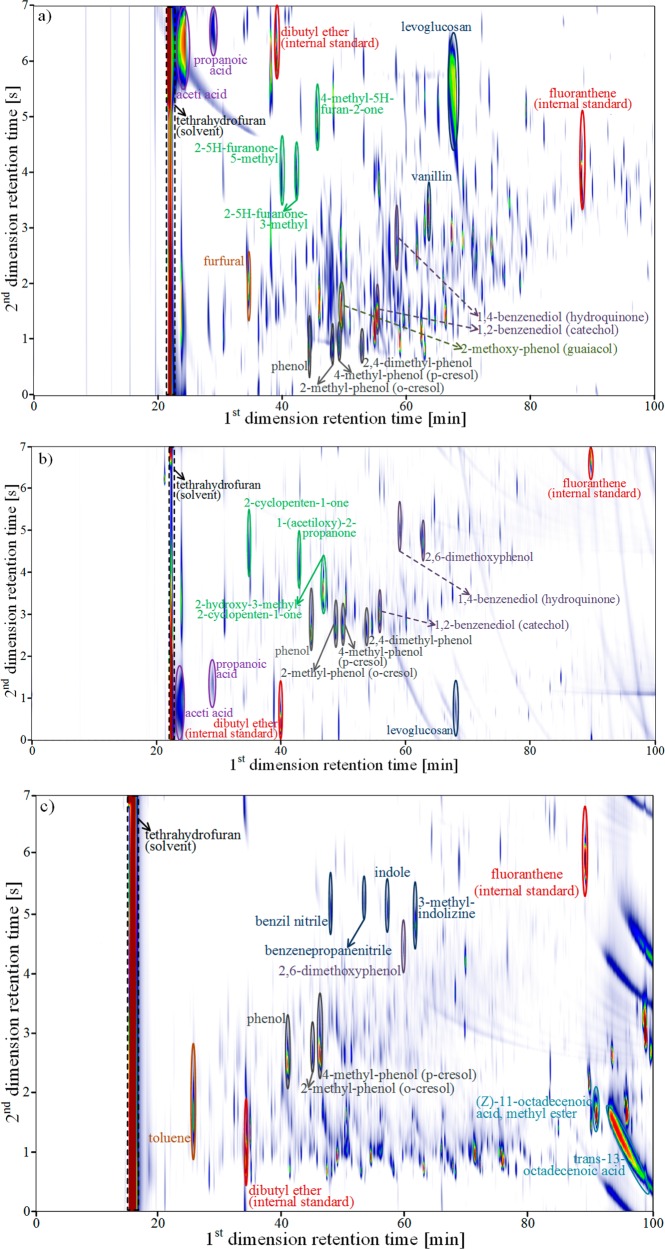
Fast pyrolysis bio-oils are feasible energy carriers and a potential source of chemicals. Detailed characterization of bio-oils is essential to further develop its potential use. In this study, quantitative C nuclear magnetic resonance (C NMR) combined with comprehensive two-dimensional gas chromatography (GC × GC) was used to characterize fast pyrolysis bio-oils originated from pinewood, wheat straw, and rapeseed cake. The combination of both techniques provided new information on the chemical composition of bio-oils for further upgrading. C NMR analysis indicated that pinewood-based bio-oil contained mostly methoxy/hydroxyl (≈30%) and carbohydrate (≈27%) carbons; wheat straw bio-oil showed to have high amount of alkyl (≈35%) and aromatic (≈30%) carbons, while rapeseed cake-based bio-oil had great portions of alkyl carbons (≈82%). More than 200 compounds were identified and quantified using GC × GC coupled to a flame ionization detector (FID) and a time of flight mass spectrometer (TOF-MS). Nonaromatics were the most abundant and comprised about 50% of the total mass of compounds identified and quantified via GC × GC. In addition, this analytical approach allowed the quantification of high value-added phenolic compounds, as well as of low molecular weight carboxylic acids and aldehydes, which exacerbate the unstable and corrosive character of the bio-oil.
快速热解生物油是可行的能量载体和潜在的化学品来源。对生物油进行详细表征对于进一步开发其潜在用途至关重要。在本研究中,采用定量碳核磁共振(C NMR)结合全二维气相色谱(GC×GC)对源自松木、小麦秸秆和菜籽饼的快速热解生物油进行表征。这两种技术的结合为生物油的化学成分提供了新信息,以用于进一步升级。C NMR分析表明,基于松木的生物油主要含有甲氧基/羟基(约30%)和碳水化合物(约27%)碳;小麦秸秆生物油显示含有大量的烷基(约35%)和芳香族(约30%)碳,而基于菜籽饼的生物油含有很大比例的烷基碳(约82%)。使用与火焰离子化检测器(FID)和飞行时间质谱仪(TOF-MS)联用的GC×GC鉴定和定量了200多种化合物。非芳烃是最丰富的,占通过GC×GC鉴定和定量的化合物总质量的约50%。此外,这种分析方法能够对高附加值的酚类化合物以及低分子量羧酸和醛进行定量,这些物质会加剧生物油的不稳定和腐蚀性。