Mora-Bermúdez Felipe, Badsha Farhath, Kanton Sabina, Camp J Gray, Vernot Benjamin, Köhler Kathrin, Voigt Birger, Okita Keisuke, Maricic Tomislav, He Zhisong, Lachmann Robert, Pääbo Svante, Treutlein Barbara, Huttner Wieland B
Max Planck Institute of Molecular Cell Biology and Genetics, Dresden, Germany.
Max Planck Institute for Evolutionary Anthropology, Leipzig, Germany.
Elife. 2016 Sep 26;5:e18683. doi: 10.7554/eLife.18683.
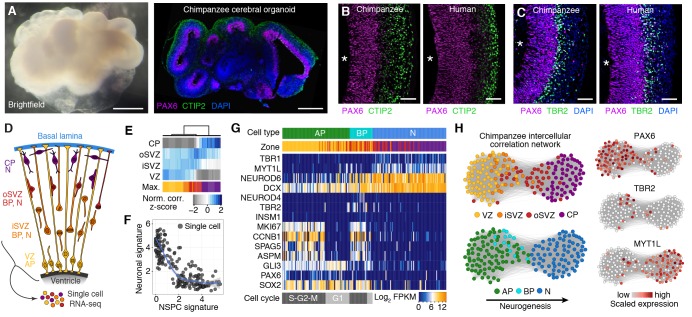
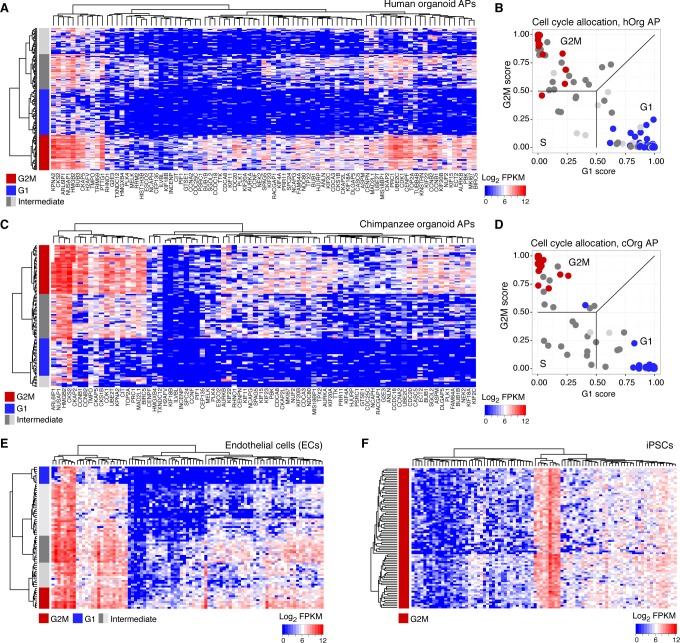
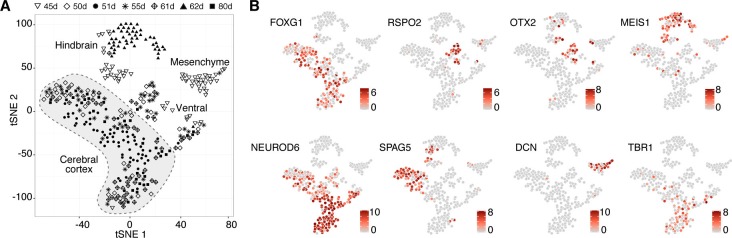
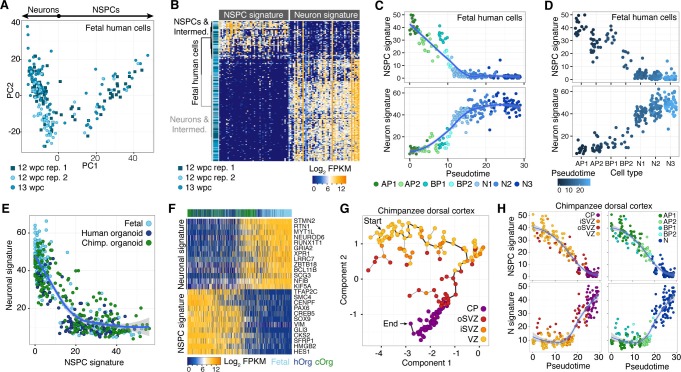
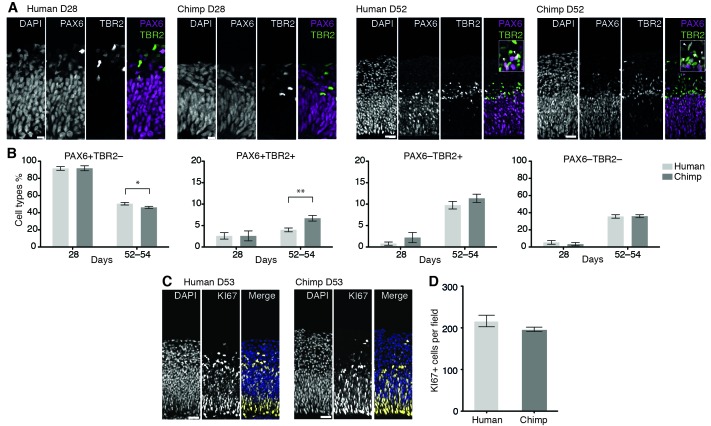
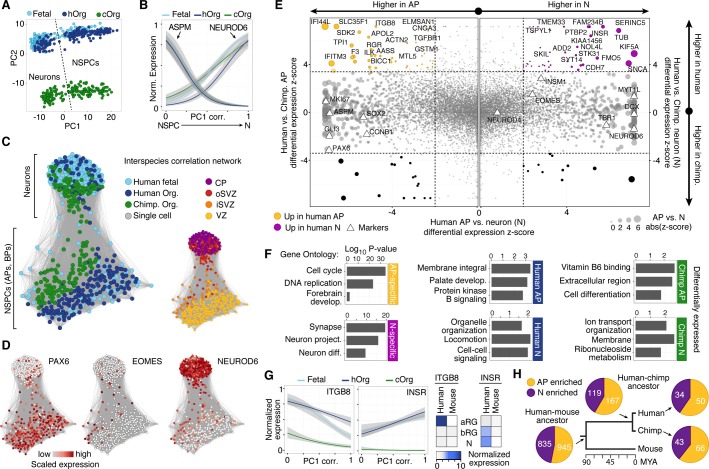
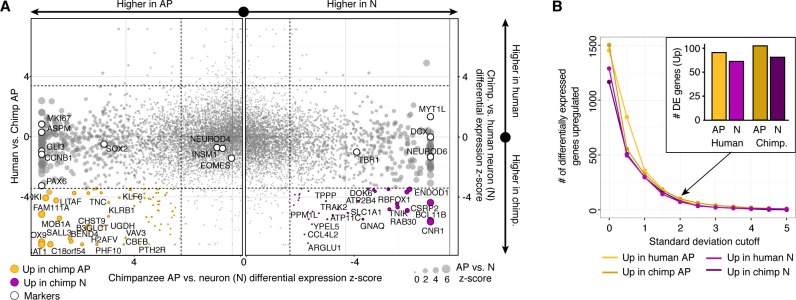
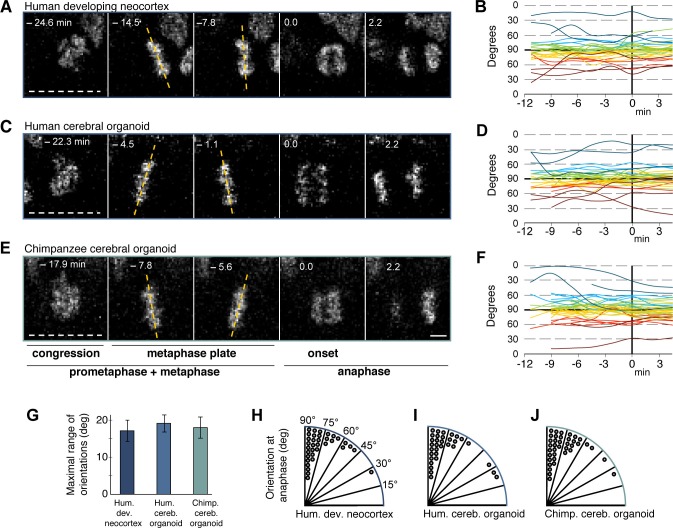
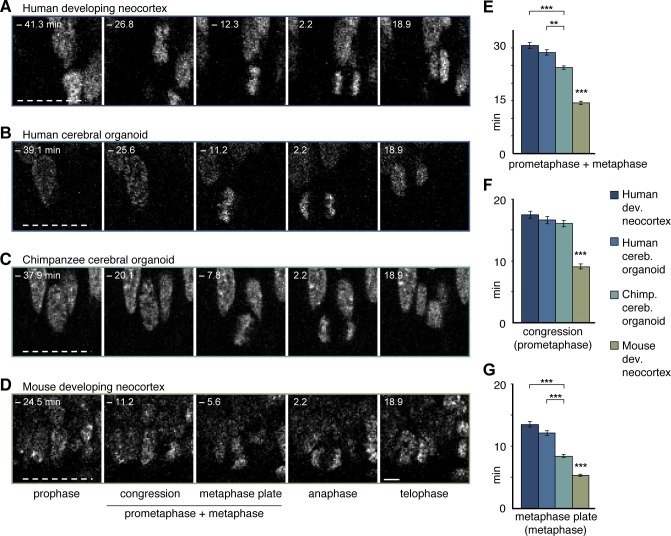
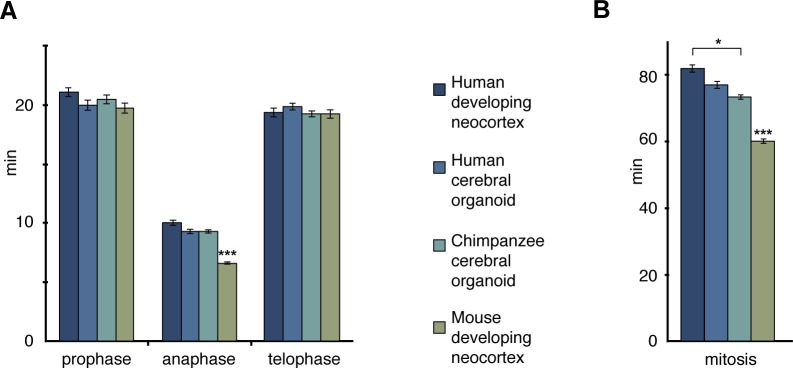
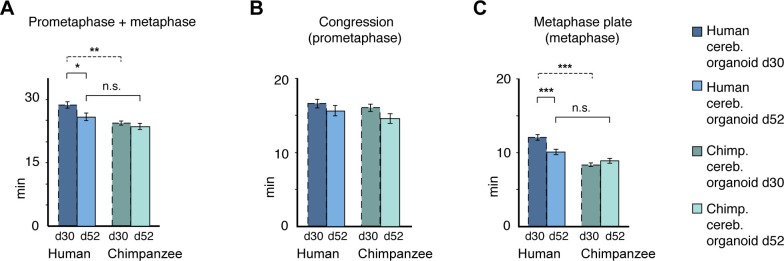
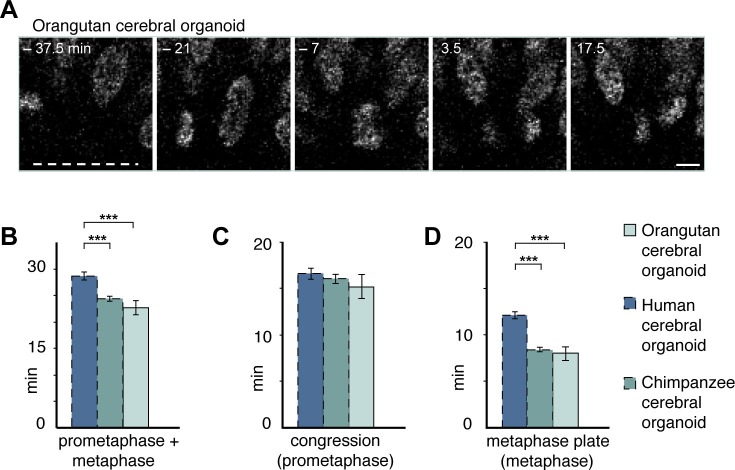
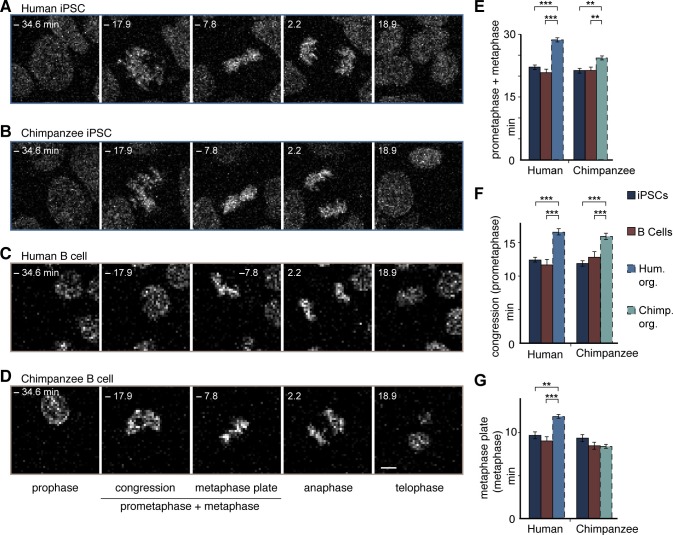
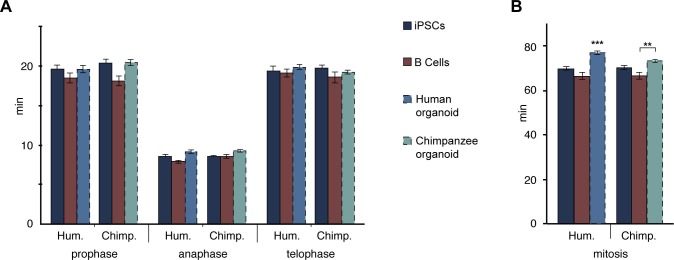
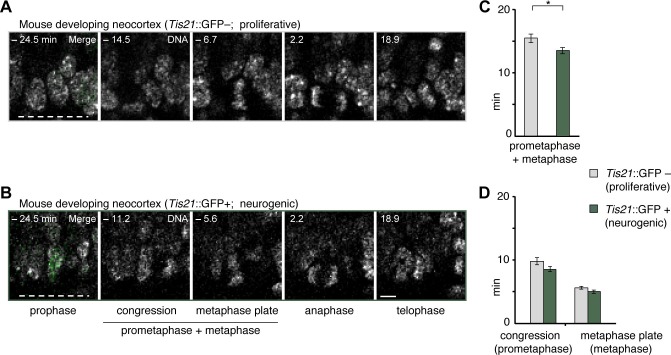
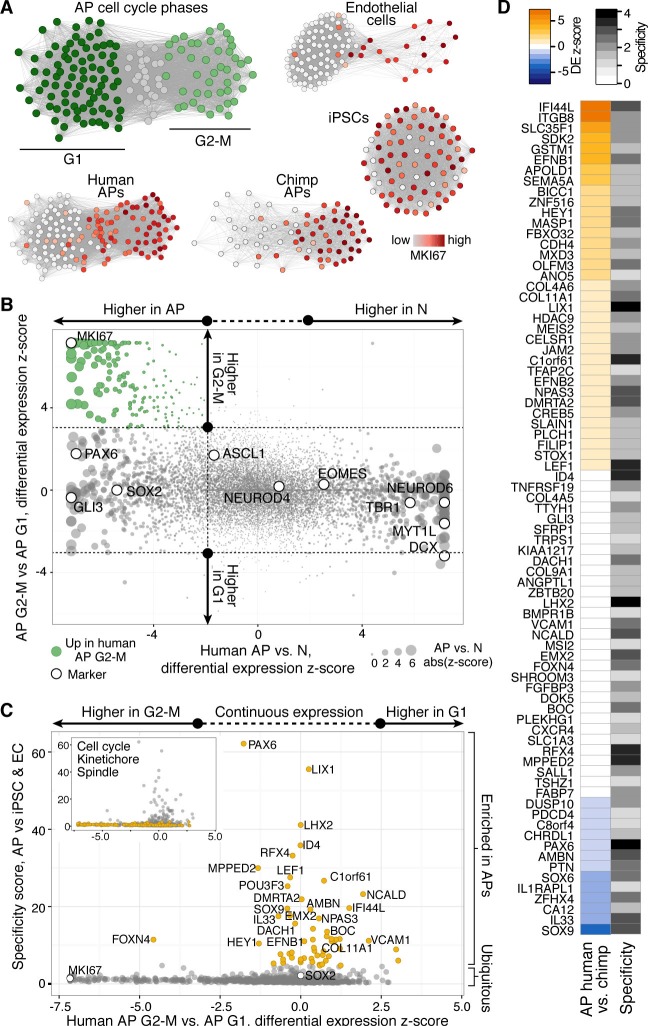
Human neocortex expansion likely contributed to the remarkable cognitive abilities of humans. This expansion is thought to primarily reflect differences in proliferation differentiation of neural progenitors during cortical development. Here, we have searched for such differences by analysing cerebral organoids from human and chimpanzees using immunohistofluorescence, live imaging, and single-cell transcriptomics. We find that the cytoarchitecture, cell type composition, and neurogenic gene expression programs of humans and chimpanzees are remarkably similar. Notably, however, live imaging of apical progenitor mitosis uncovered a lengthening of prometaphase-metaphase in humans compared to chimpanzees that is specific to proliferating progenitors and not observed in non-neural cells. Consistent with this, the small set of genes more highly expressed in human apical progenitors points to increased proliferative capacity, and the proportion of neurogenic basal progenitors is lower in humans. These subtle differences in cortical progenitors between humans and chimpanzees may have consequences for human neocortex evolution.
人类新皮层的扩张可能促成了人类卓越的认知能力。这种扩张被认为主要反映了皮层发育过程中神经祖细胞增殖和分化的差异。在这里,我们通过免疫组织荧光、实时成像和单细胞转录组学分析人类和黑猩猩的类脑器官,来寻找这种差异。我们发现,人类和黑猩猩的细胞结构、细胞类型组成以及神经发生基因表达程序非常相似。然而,值得注意的是,顶端祖细胞有丝分裂的实时成像显示,与黑猩猩相比,人类前中期到中期的时间延长,这一现象特定于增殖祖细胞,在非神经细胞中未观察到。与此一致的是,在人类顶端祖细胞中表达更高的一小部分基因表明增殖能力增强,并且人类中神经源性基底祖细胞的比例较低。人类和黑猩猩皮层祖细胞之间的这些细微差异可能对人类新皮层的进化产生影响。