Saenz Dyana T, Fiskus Warren, Manshouri Taghi, Rajapakshe Kimal, Krieger Stephanie, Sun Baohua, Mill Christopher P, DiNardo Courtney, Pemmaraju Naveen, Kadia Tapan, Parmar Simrit, Sharma Sunil, Coarfa Cristian, Qiu Peng, Verstovsek Srdan, Bhalla Kapil N
Department of Leukemia, The University of Texas M.D. Anderson Cancer Center, Houston TX, 77030.
Department of Molecular and Cellular Biology, Baylor College of Medicine, Houston, TX, 77030.
Leukemia. 2017 Mar;31(3):678-687. doi: 10.1038/leu.2016.260. Epub 2016 Sep 28.
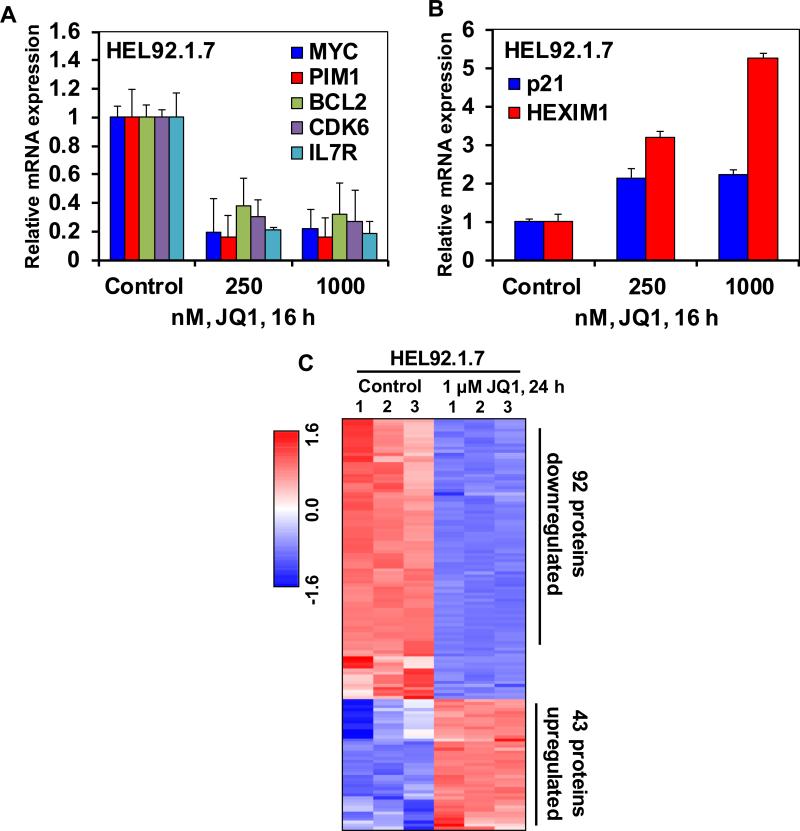
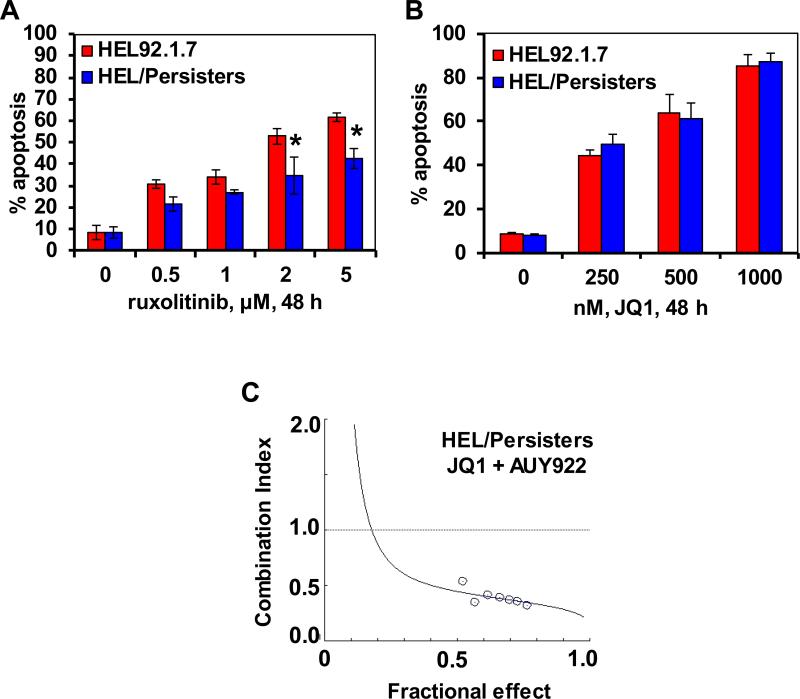
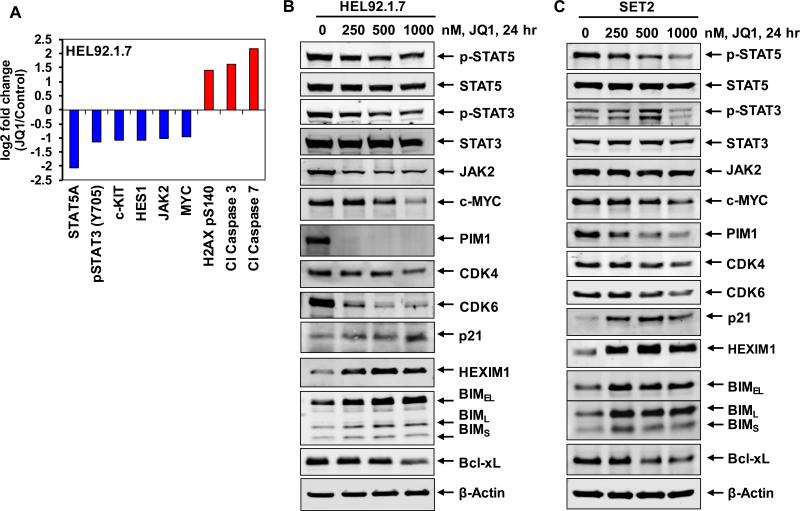
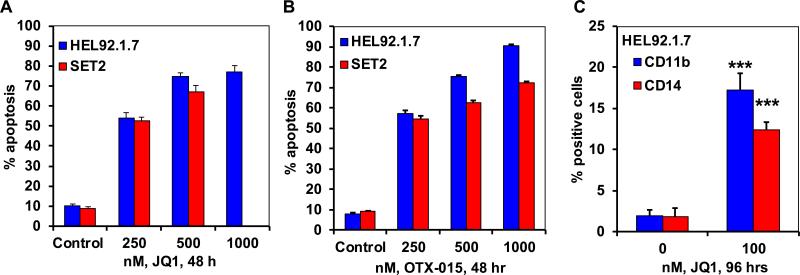
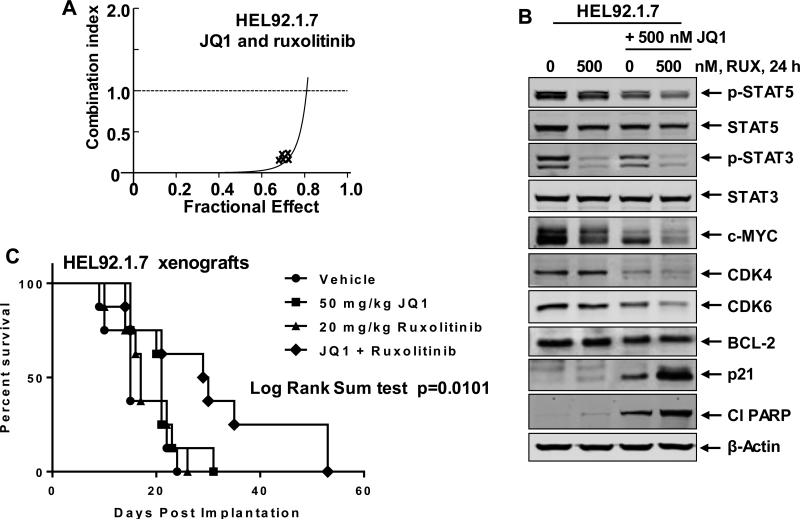
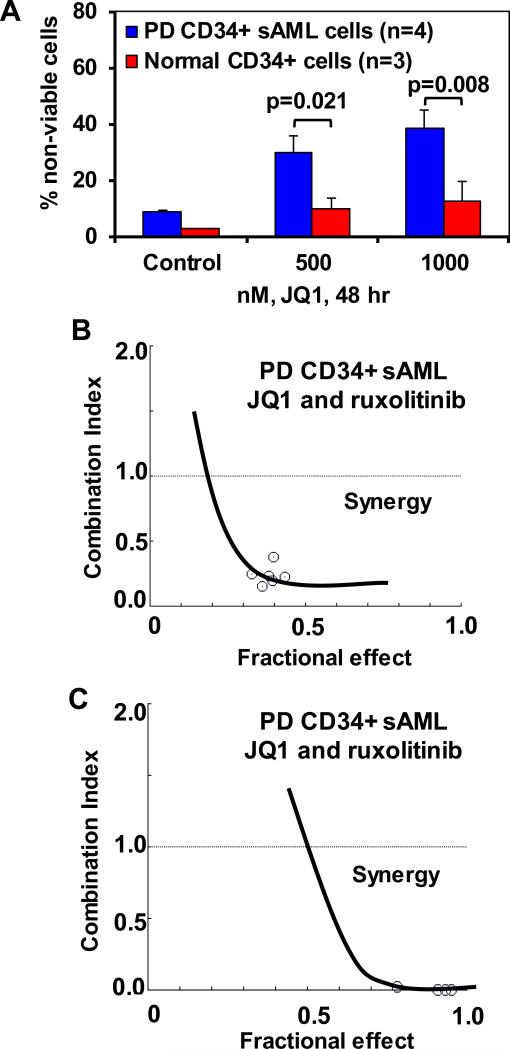
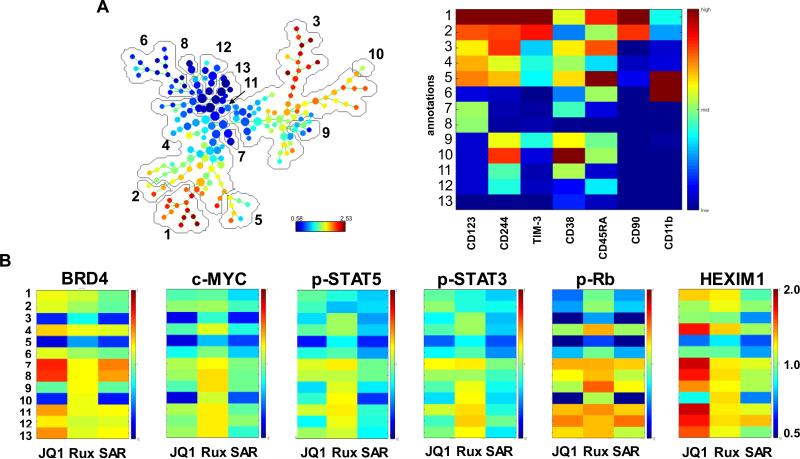
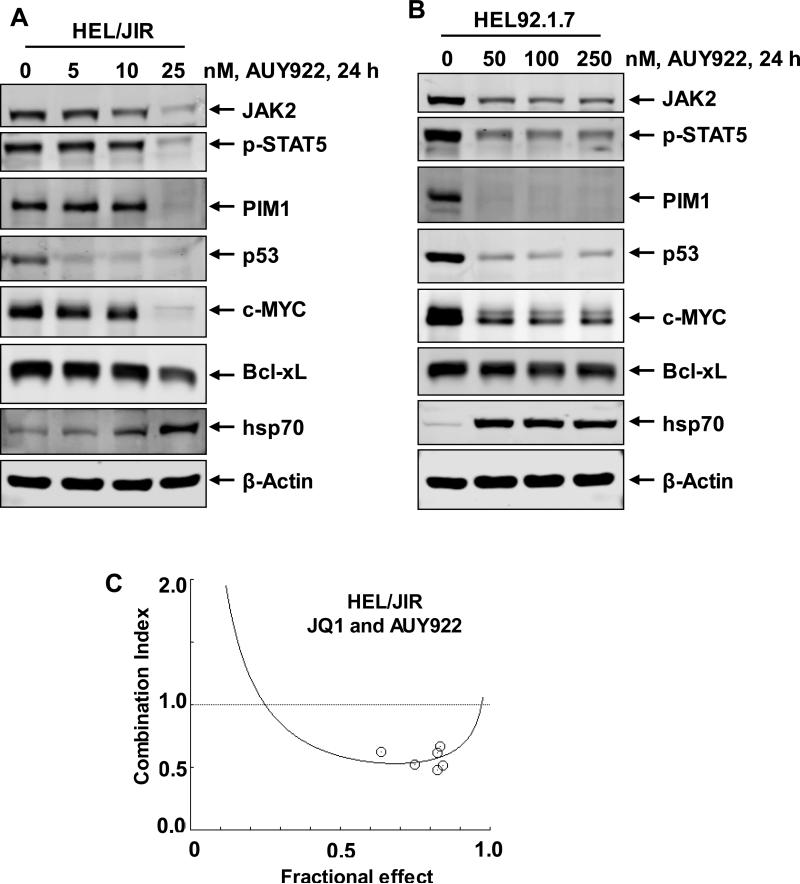
Myeloproliferative neoplasms with myelofibrosis (MPN-MF) demonstrate constitutive activation of Janus kinase/signal transducer and activator of transcription (JAK/STAT) signaling that responds to treatment with the JAK1 and 2 kinase inhibitor (JAKi) ruxolitinib. However, MPN-MF often progresses (~20%) to secondary acute myeloid leukemia (sAML), where standard induction chemotherapy or ruxolitinib is relatively ineffective, necessitating the development of novel therapeutic approaches. In the present studies, we demonstrate that treatment with BET (bromodomain and extraterminal) protein inhibitor (BETi), for example, JQ1, inhibits growth and induces apoptosis of cultured and primary, patient-derived (PD), post-MPN sAML blast progenitor cells. Reverse-phase protein array, mass-cytometry and Western analyses revealed that BETi treatment attenuated the protein expressions of c-MYC, p-STAT5, Bcl-xL, CDK4/6, PIM1 and IL-7R, whereas it concomitantly induced the levels of HEXIM1, p21 and BIM in the sAML cells. Co-treatment with BETi and ruxolitinib synergistically induced apoptosis of cultured and PD sAML cells, as well as significantly improved survival of immune-depleted mice engrafted with human sAML cells. Although BETi or heat shock protein 90 inhibitor (HSP90i) alone exerted lethal activity, cotreatment with BETi and HSP90i was synergistically lethal against the ruxolitinib-persister or ruxolitinib-resistant sAML cells. Collectively, these findings further support in vivo testing of BETi-based combinations with JAKi and HSP90i against post-MPN sAML cells.
伴有骨髓纤维化的骨髓增殖性肿瘤(MPN-MF)表现出Janus激酶/信号转导及转录激活因子(JAK/STAT)信号通路的组成性激活,该通路对JAK1和2激酶抑制剂(JAKi)鲁索替尼的治疗有反应。然而,MPN-MF常进展至(约20%)继发性急性髓系白血病(sAML),在此情况下,标准诱导化疗或鲁索替尼相对无效,因此需要开发新的治疗方法。在本研究中,我们证明,使用BET(溴结构域和额外末端)蛋白抑制剂(BETi),例如JQ1,可抑制培养的以及源自患者的原发性MPN后sAML原始祖细胞的生长并诱导其凋亡。反相蛋白阵列、质谱流式细胞术和蛋白质免疫印迹分析显示,BETi处理可减弱c-MYC、p-STAT5、Bcl-xL、CDK4/6、PIM1和IL-7R的蛋白表达,而同时诱导sAML细胞中HEXIM1、p21和BIM的水平。BETi与鲁索替尼联合处理可协同诱导培养的和源自患者的sAML细胞凋亡,还可显著提高植入人sAML细胞的免疫缺陷小鼠的存活率。虽然单独使用BETi或热休克蛋白90抑制剂(HSP90i)具有致死活性,但BETi与HSP90i联合处理对鲁索替尼持续存在或耐药的sAML细胞具有协同致死作用。总的来说,这些发现进一步支持对基于BETi的与JAKi和HSP90i的联合用药针对MPN后sAML细胞进行体内试验。