Wilms Viviane, Köppl Christine, Söffgen Chris, Hartmann Anna-Maria, Nothwang Hans Gerd
Neurogenetics group, Cluster of Excellence "Hearing4All", School of Medicine and Health Sciences, Carl von Ossietzky University Oldenburg, 26111 Oldenburg, Germany.
Cochlea and Auditory Brainstem Physiology, Cluster of Excellence "Hearing4All", School of Medicine and Health Sciences, Carl von Ossietzky University Oldenburg, 26111 Oldenburg, Germany.
Sci Rep. 2016 Sep 29;6:34203. doi: 10.1038/srep34203.
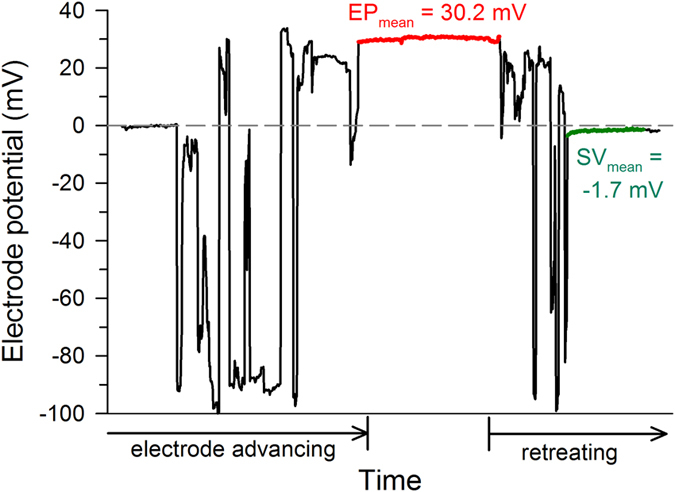
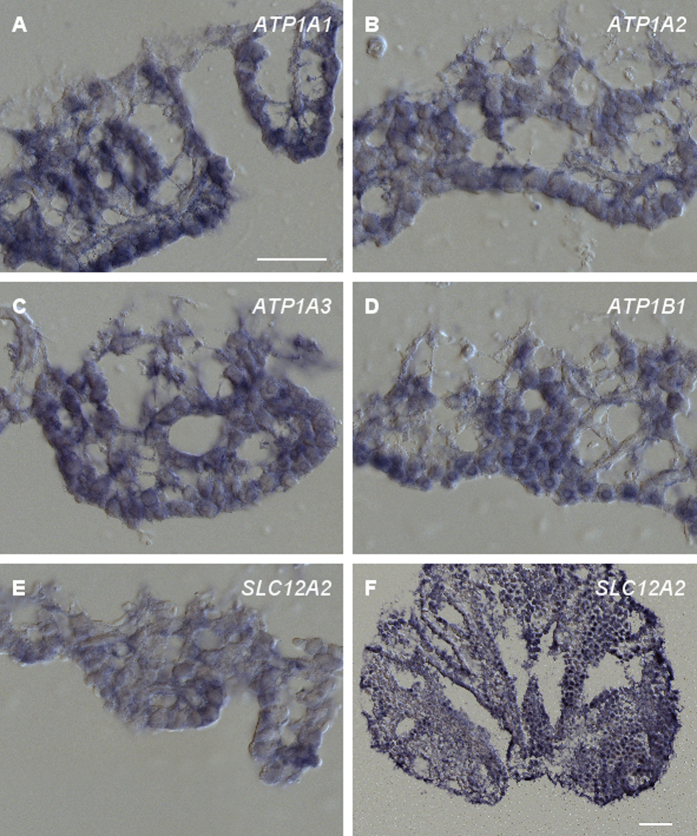
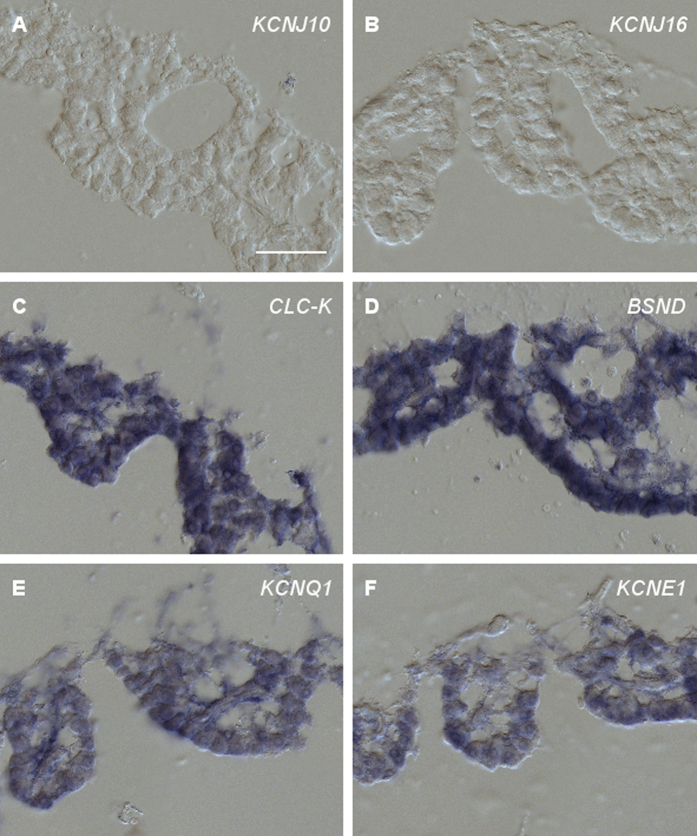
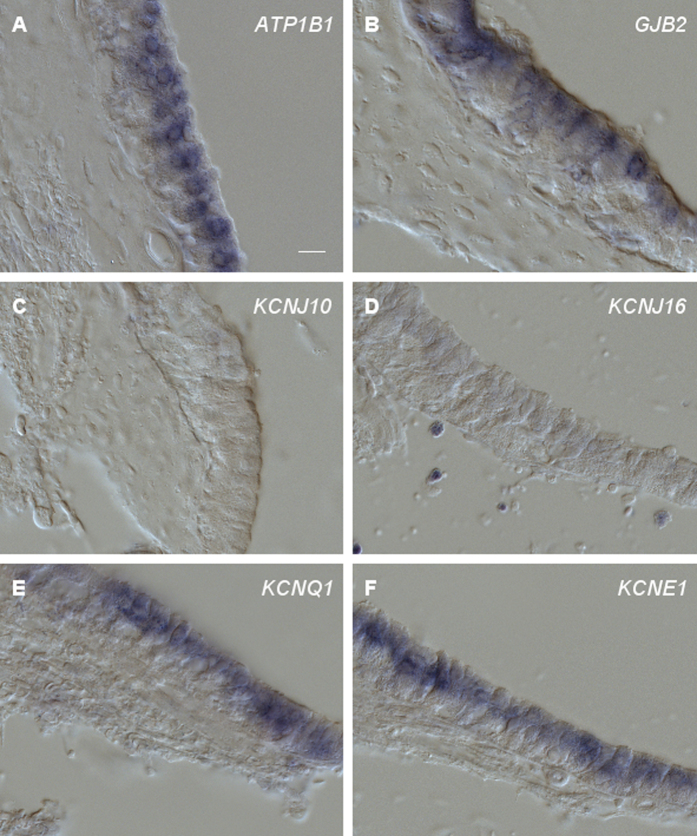
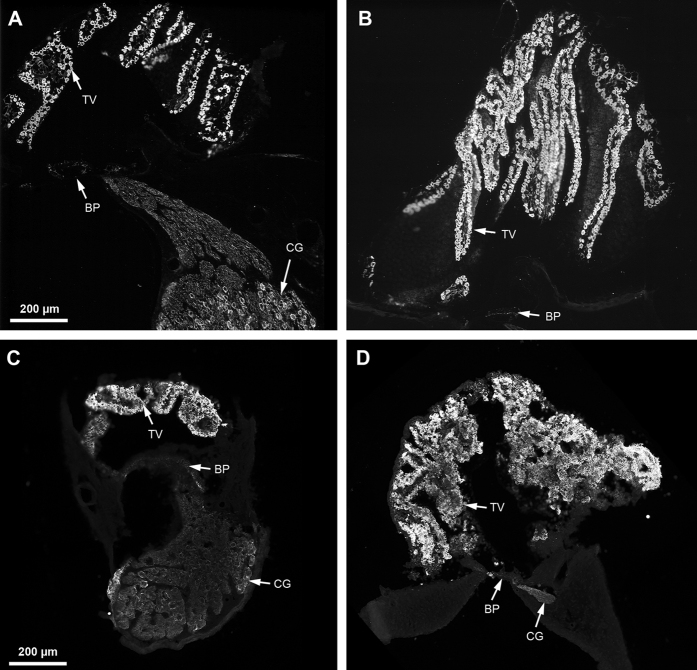
In the cochlea, mammals maintain a uniquely high endolymphatic potential (EP), which is not observed in other vertebrate groups. However, a high [K] is always present in the inner ear endolymph. Here, we show that Kir4.1, which is required in the mammalian stria vascularis to generate the highly positive EP, is absent in the functionally equivalent avian tegmentum vasculosum. In contrast, the molecular repertoire required for K secretion, specifically NKCC1, KCNQ1, KCNE1, BSND and CLC-K, is shared between the tegmentum vasculosum, the vestibular dark cells and the marginal cells of the stria vascularis. We further show that in barn owls, the tegmentum vasculosum is enlarged and a higher EP (~+34 mV) maintained, compared to other birds. Our data suggest that both the tegmentum vasculosum and the stratified stria vascularis evolved from an ancestral vestibular epithelium that already featured the major cell types of the auditory epithelia. Genetic recruitment of Kir4.1 specifically to strial melanocytes was then a crucial step in mammalian evolution enabling an increase in the cochlear EP. An increased EP may be related to high-frequency hearing, as this is a hallmark of barn owls among birds and mammals among amniotes.
在耳蜗中,哺乳动物维持着独特的高内淋巴电位(EP),这在其他脊椎动物类群中并未观察到。然而,内耳内淋巴中始终存在高浓度的[K]。在此,我们表明,哺乳动物血管纹中产生高度正性EP所必需的Kir4.1,在功能上与之等效的鸟类血管盖中并不存在。相反,血管盖、前庭暗细胞和血管纹边缘细胞之间共享钾分泌所需的分子组成,特别是NKCC1、KCNQ1、KCNE1、BSND和CLC-K。我们进一步表明,与其他鸟类相比,仓鸮的血管盖增大且维持着更高的EP(约+34 mV)。我们的数据表明,血管盖和分层的血管纹均由已具有听觉上皮主要细胞类型的祖先前庭上皮进化而来。Kir4.1特异性地在血管纹黑素细胞中的基因招募是哺乳动物进化中的关键一步,使得耳蜗EP得以增加。EP的增加可能与高频听力有关,因为这是鸟类中的仓鸮和羊膜动物中的哺乳动物的一个标志。