Brosson Sébastien, Fontaine Frédéric, Vermeersch Marjorie, Perez-Morga David, Pays Etienne, Bousbata Sabrina, Salmon Didier
Laboratory of Molecular Parasitology, Institute of Molecular Biology and Medicine, Université Libre de Bruxelles, 12 rue des Professeurs Jeener et Brachet, B-6041 Gosselies, Belgium.
Center for Microscopy and Molecular Imaging-CMMI, Université Libre de Bruxelles, 8 rue Adrienne Bolland, B-6041 Gosselies, Belgium.
PLoS One. 2016 Sep 29;11(9):e0163302. doi: 10.1371/journal.pone.0163302. eCollection 2016.
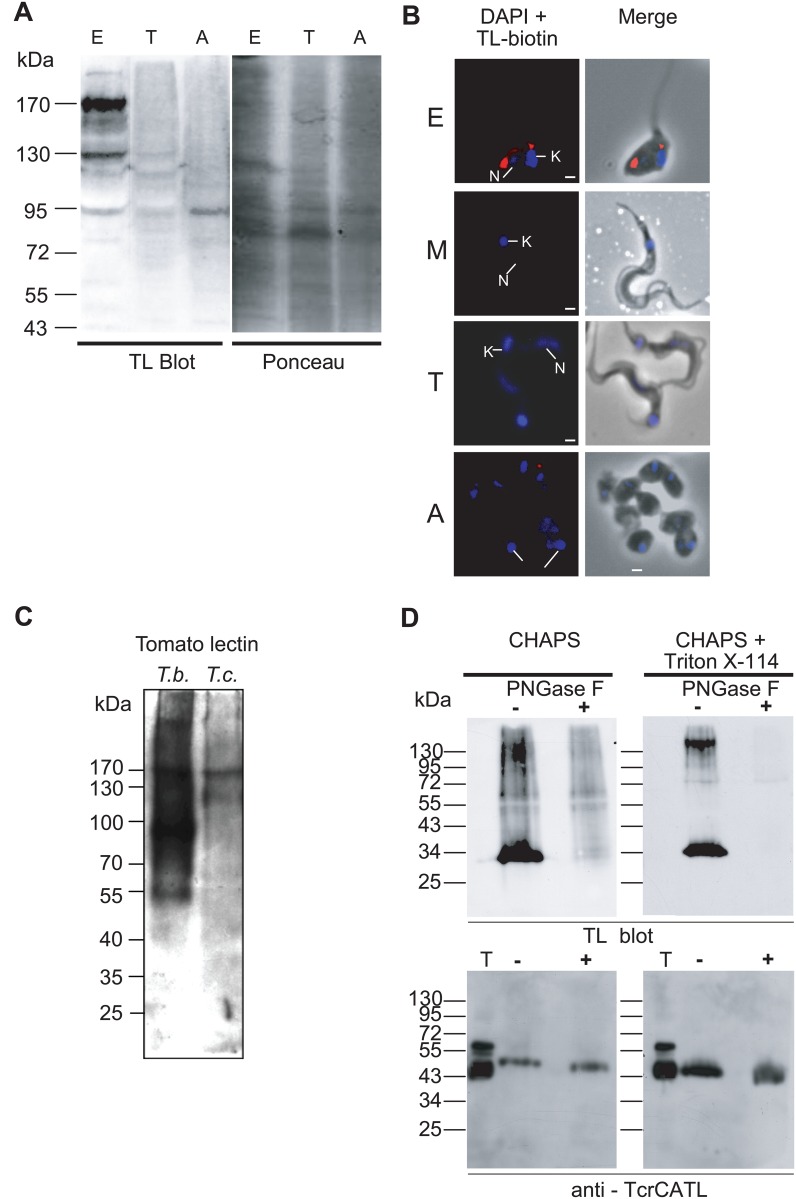
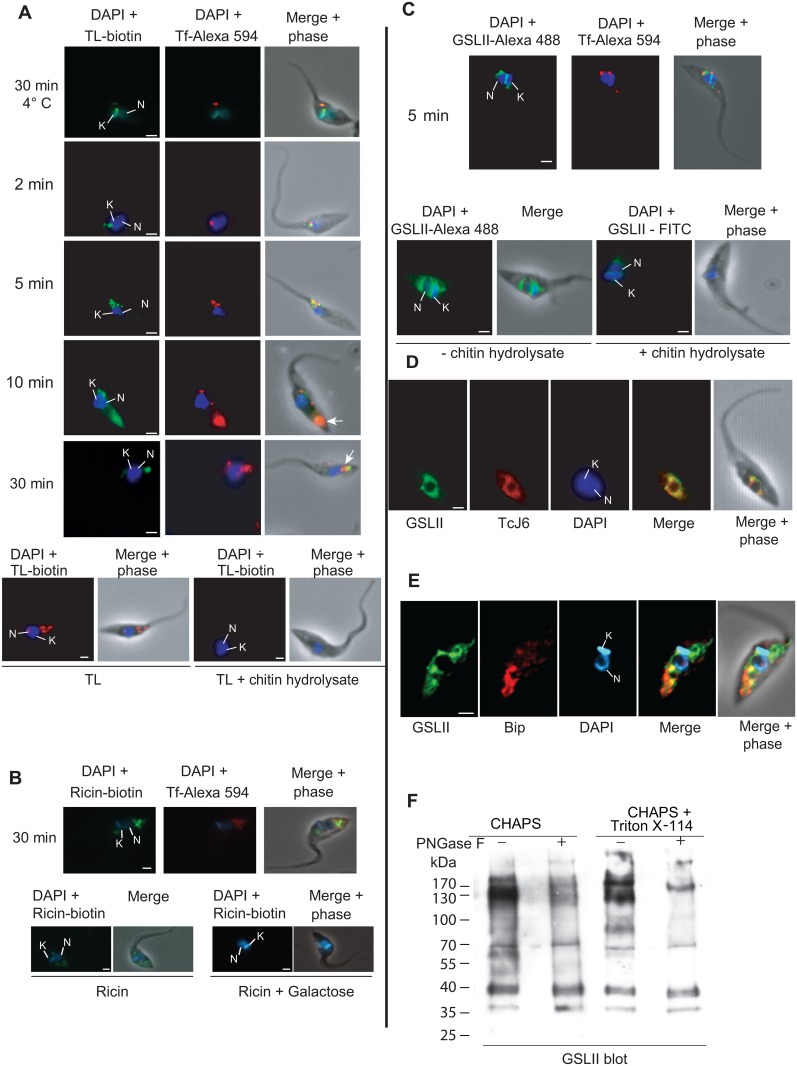
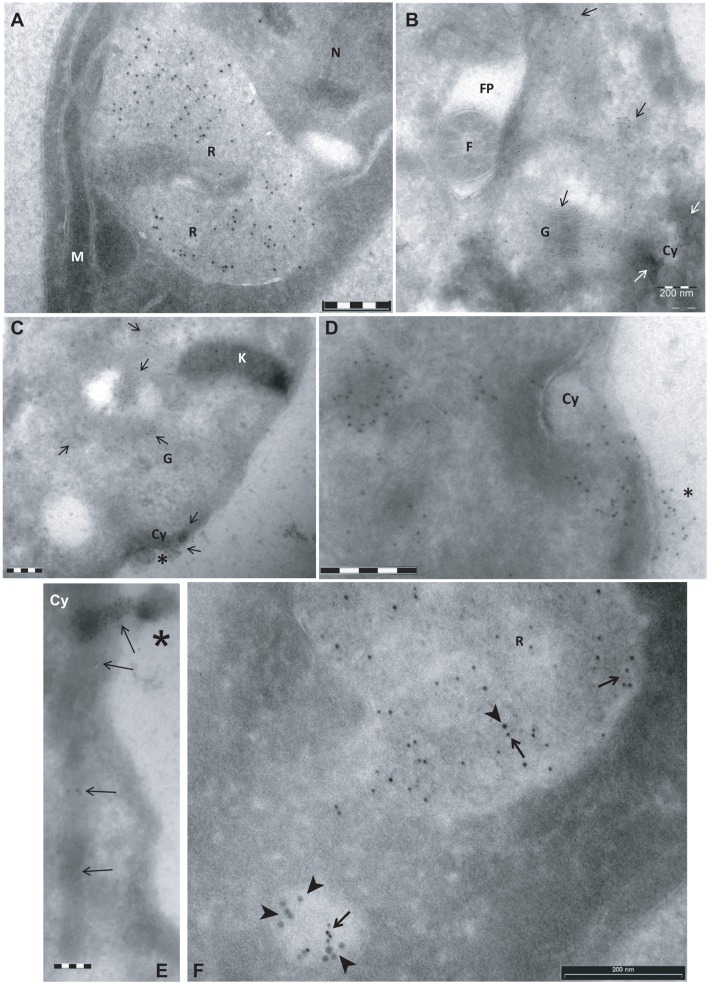
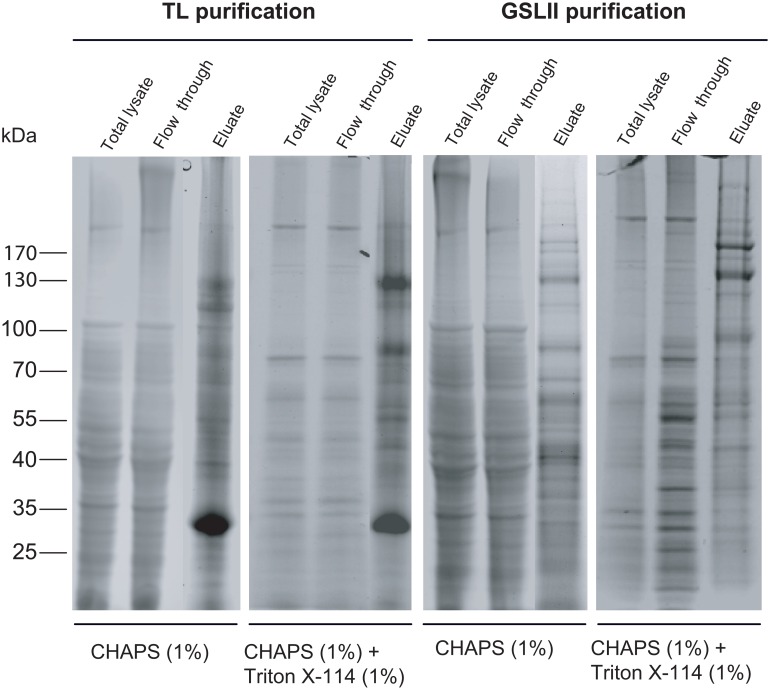
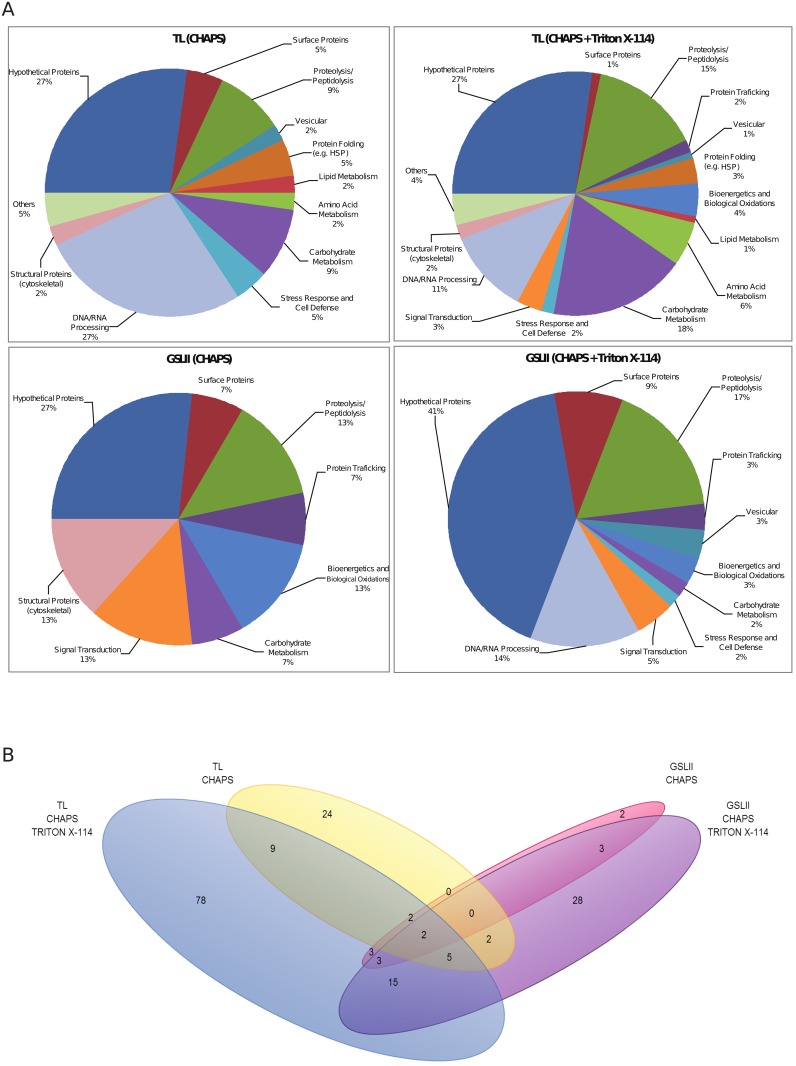
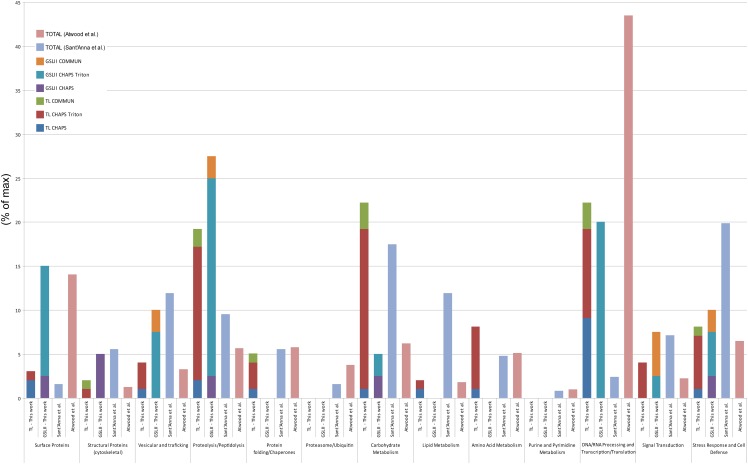
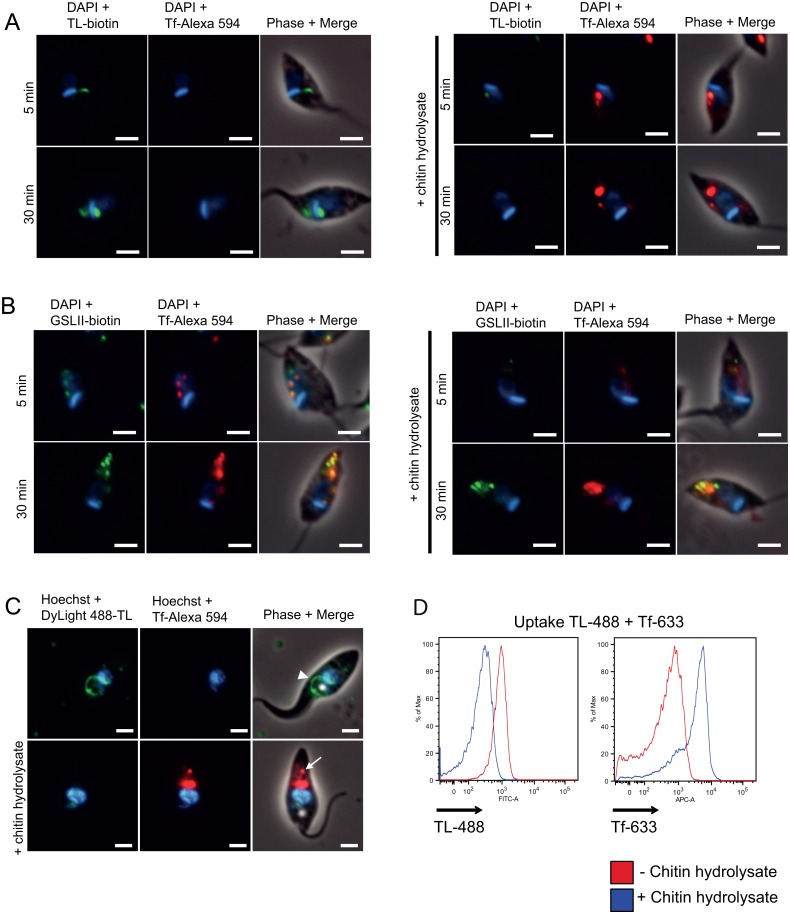
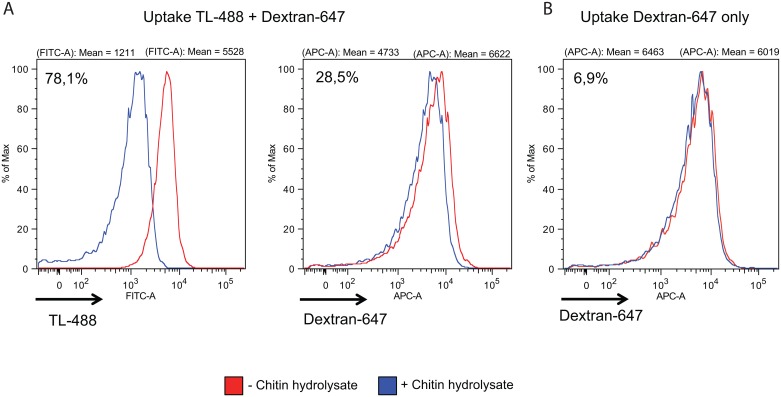
Trypanosoma cruzi is a protozoan parasite transmitted by a triatomine insect, and causing human Chagas disease in South America. This parasite undergoes a complex life cycle alternating between non-proliferative and dividing forms. Owing to their high energy requirement, replicative epimastigotes of the insect midgut display high endocytic activity. This activity is mainly restricted to the cytostome, by which the cargo is taken up and sorted through the endosomal vesicular network to be delivered to reservosomes, the final lysosomal-like compartments. In African trypanosomes tomato lectin (TL) and ricin, respectively specific to poly-N-acetyllactosamine (poly-LacNAc) and β-D-galactose, allowed the identification of giant chains of poly-LacNAc in N-glycoproteins of the endocytic pathway. We show that in T. cruzi epimastigote forms also, glycoproteins of the endocytic pathway are characterized by the presence of N-linked glycans binding to both ricin and TL. Affinity chromatography using both TL and Griffonia simplicifolia lectin II (GSLII), specific to non-reducing terminal residue of N-acetylglucosamine (GlcNAc), led to an enrichment of glycoproteins of the trypanosomal endocytic pathway. Incubation of live parasites with TL, which selectively bound to the cytostome/cytopharynx, specifically inhibited endocytosis of transferrin (Tf) but not dextran, a marker of fluid endocytosis. Taken together, our data suggest that N-glycan modification of endocytic components plays a crucial role in receptor-mediated endocytosis of T. cruzi.
克氏锥虫是一种由锥蝽昆虫传播的原生动物寄生虫,可在南美洲引发人类恰加斯病。这种寄生虫经历复杂的生命周期,在非增殖形式和分裂形式之间交替。由于其高能量需求,昆虫中肠的增殖型上鞭毛体表现出高内吞活性。这种活性主要局限于细胞口,通过细胞口摄取货物并通过内体泡网络进行分选,然后输送到储存体,即最终的溶酶体样区室。在非洲锥虫中,分别对多聚-N-乙酰乳糖胺(多聚-LacNAc)和β-D-半乳糖具有特异性的番茄凝集素(TL)和蓖麻毒素,使得在内吞途径的N-糖蛋白中鉴定出多聚-LacNAc的巨大链。我们表明,在克氏锥虫的上鞭毛体形式中,内吞途径的糖蛋白也具有与蓖麻毒素和TL结合的N-连接聚糖的特征。使用TL和特异于N-乙酰葡糖胺(GlcNAc)非还原末端残基的西非豆凝集素II(GSLII)进行亲和层析,导致锥虫内吞途径的糖蛋白富集。用选择性结合细胞口/细胞咽的TL孵育活寄生虫,特异性抑制转铁蛋白(Tf)的内吞作用,但不抑制流体内吞作用的标记物葡聚糖的内吞作用。综上所述,我们的数据表明内吞成分的N-聚糖修饰在克氏锥虫的受体介导的内吞作用中起关键作用。