Xiang Shizhao, Zhang Ning, Yang Zheng, Bian Zhouyan, Yuan Yuan, Tang Qizhu
Department of Cardiology, Renmin Hospital of Wuhan University, Wuhan, Hubei 430060, P.R. China; Cardiovascular Research Institute of Wuhan University, Wuhan, Hubei 430060, P.R. China.
Exp Ther Med. 2016 Oct;12(4):2027-2038. doi: 10.3892/etm.2016.3570. Epub 2016 Aug 4.
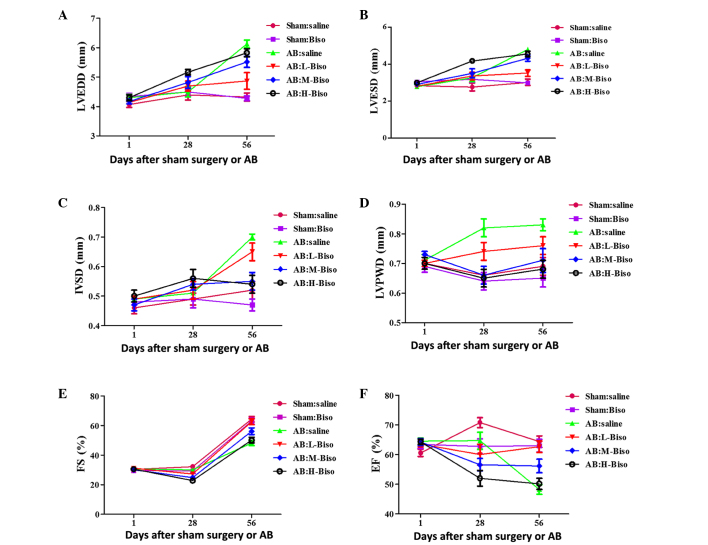
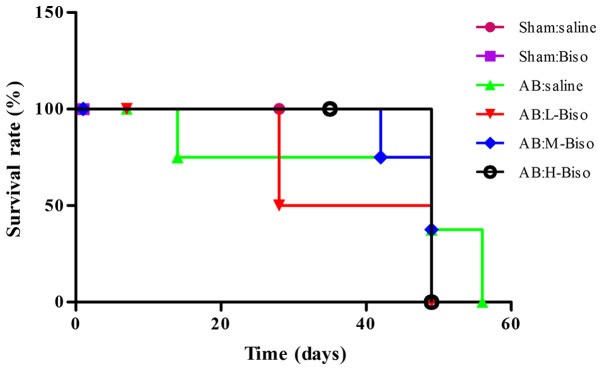
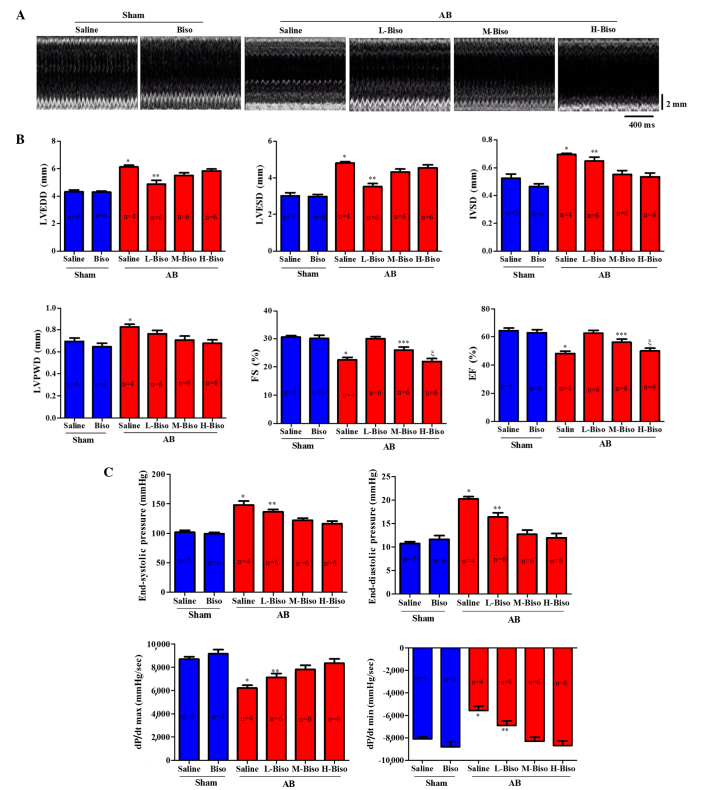
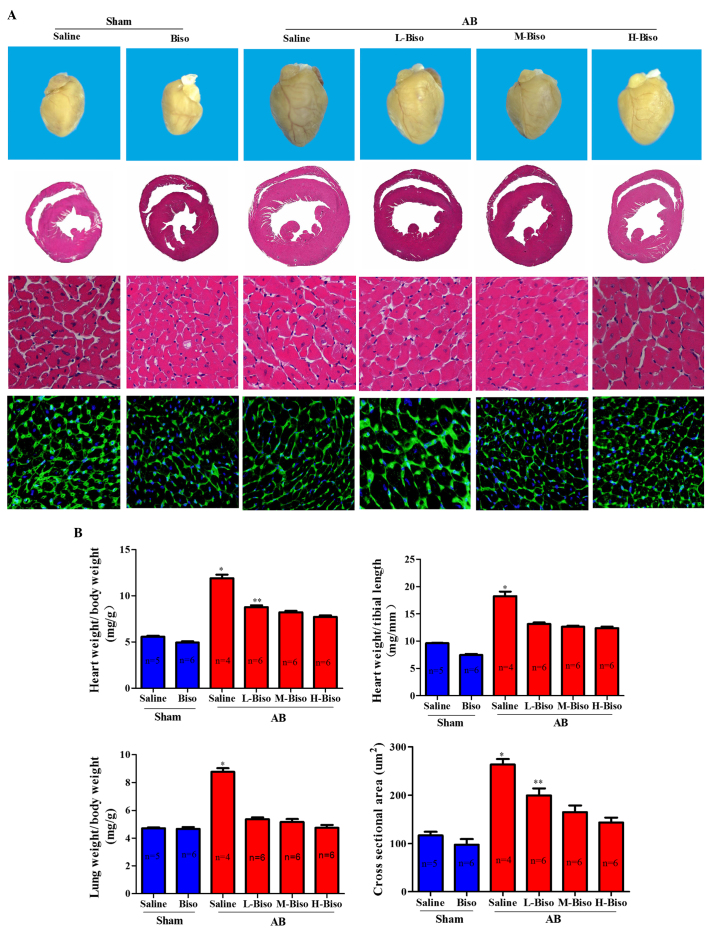
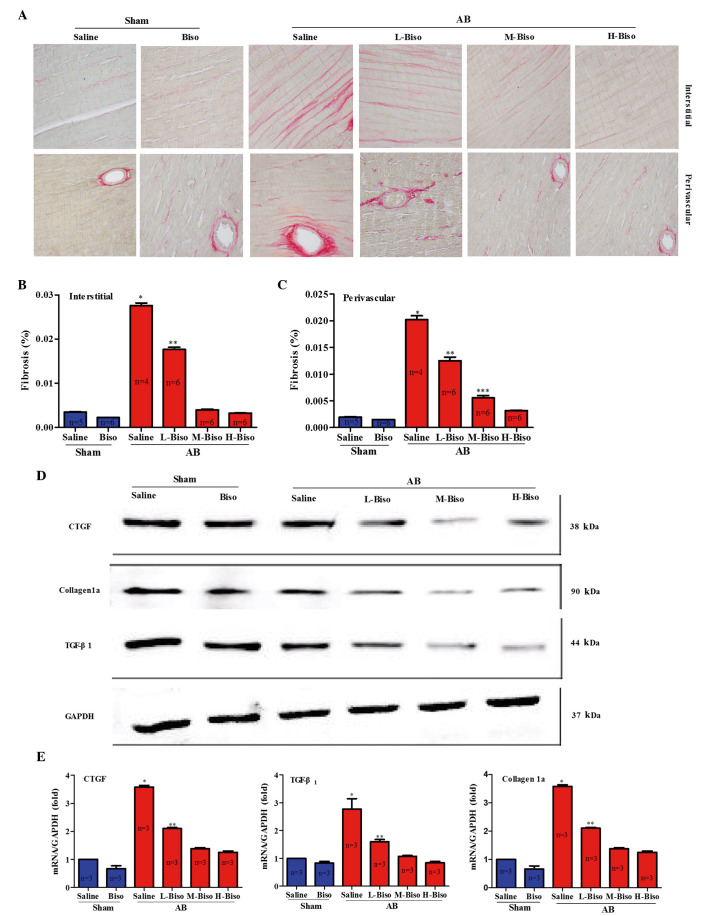
Bisoprolol is a drug that acts via the mechanism of specifically and selectively inhibiting the β-adrenoreceptor in cardiac myocytes, and provides a pure reduction of heart rate without changing other cardiac parameters. It has long been clinically used to treat cerebrovascular and cardiovascular illnesses. However, there is little information available on whether the role of bisoprolol in the attenuation of ventricular remodeling is dependent upon the achievement of a target dose, and whether it must be used as a preferred option. The aim of the present study was to clarify the underlying benefits of bisoprolol in the attenuation of pressure overload-induced cardiac hypertrophy and fibrosis at different doses. C57BL/6J male mice, aged 6-8 weeks, were treated with saline or one of three different doses of bisoprolol (Biso: 2.5, 5 or 10 mg/kg/day) for 8 weeks from day 1 after aortic banding (AB). A number of mice underwent sham surgery and were treated with saline or bisoprolol. The mice were randomly assigned into the sham (n=24) and AB (n=62) groups. The results revealed that bisoprolol had a protective role against the cardiac hypertrophy, fibrosis and dysfunction caused by AB. This was determined on the basis of heart/body and lung/body weight ratios and heart weight/tibia length ratios, as well as echocardiographic and hemodynamic parameters, histological analysis, and the gene expression levels of hypertrophic and fibrotic markers. The present study revealed that administration of bisoprolol for a long time period may enhance its role in the prevention of cardiac hypertrophy and fibrosis induced by AB, whereas no statistically significant difference was observed between the middle- and high-doses. These observations indicated that the function of bisoprolol in protecting against cardiac hypertrophy, fibrosis and dysfunction is time-dependent. Furthermore, it is proposed that a middle dose of bisoprolol may be a better option for patients with cardiovascular illnesses, particularly those undertaking coronary artery bypass graft and cardiac pacemaker surgeries. These promising results require further clinical investigation.
比索洛尔是一种通过特异性和选择性抑制心肌细胞中的β-肾上腺素能受体发挥作用的药物,能单纯降低心率而不改变其他心脏参数。长期以来,它一直被临床用于治疗脑血管和心血管疾病。然而,关于比索洛尔在减轻心室重构中的作用是否依赖于达到目标剂量,以及它是否必须作为首选药物使用,目前几乎没有相关信息。本研究的目的是阐明不同剂量的比索洛尔在减轻压力超负荷诱导的心脏肥大和纤维化方面的潜在益处。6至8周龄的C57BL/6J雄性小鼠在主动脉缩窄(AB)术后第1天开始,用生理盐水或三种不同剂量的比索洛尔(比索:2.5、5或10mg/kg/天)之一治疗8周。一些小鼠接受假手术,并给予生理盐水或比索洛尔治疗。将小鼠随机分为假手术组(n = 24)和AB组(n = 62)。结果显示,比索洛尔对AB引起的心脏肥大、纤维化和功能障碍具有保护作用。这是根据心脏/体重和肺/体重比、心脏重量/胫骨长度比,以及超声心动图和血流动力学参数、组织学分析,以及肥大和纤维化标志物的基因表达水平来确定的。本研究表明,长期给予比索洛尔可能会增强其预防AB诱导的心脏肥大和纤维化的作用,而中剂量和高剂量之间未观察到统计学上的显著差异。这些观察结果表明,比索洛尔在预防心脏肥大、纤维化和功能障碍方面的作用是时间依赖性的。此外,有人提出,对于心血管疾病患者,尤其是那些接受冠状动脉搭桥术和心脏起搏器手术的患者,中等剂量的比索洛尔可能是更好的选择。这些有前景的结果需要进一步的临床研究。