Pharmaceutical Informatics Institute, College of Pharmaceutical Sciences, Zhejiang University, Hangzhou 310058, China.
Department of Pharmacology and Toxicology, Beijing Institute of Radiation Medicine, Beijing 100850, China.
Sci Rep. 2016 Oct 5;6:34225. doi: 10.1038/srep34225.
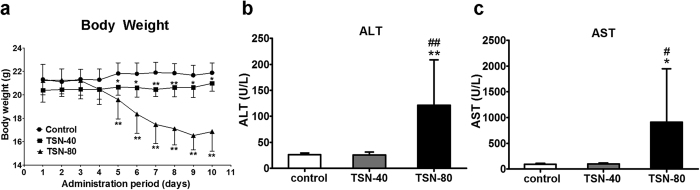
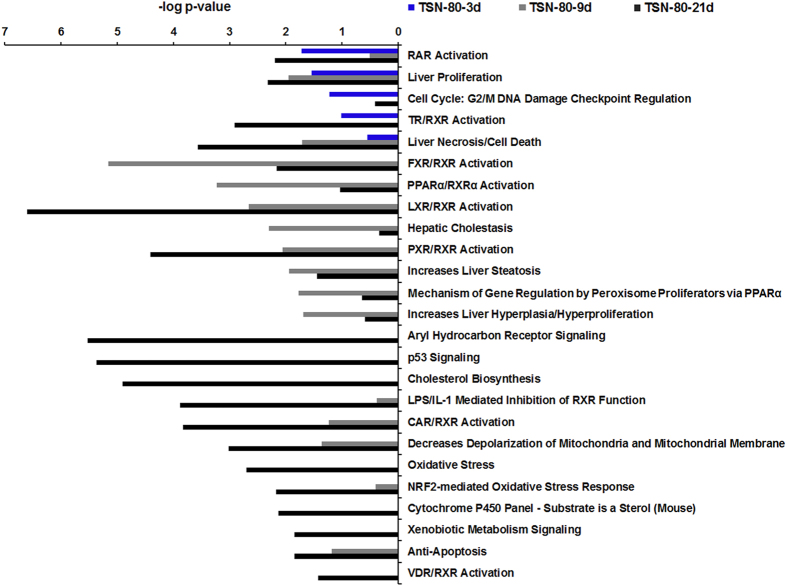
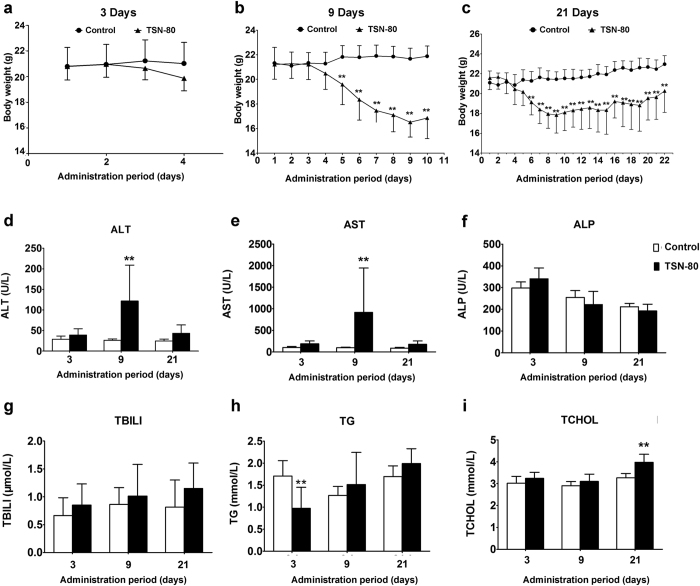
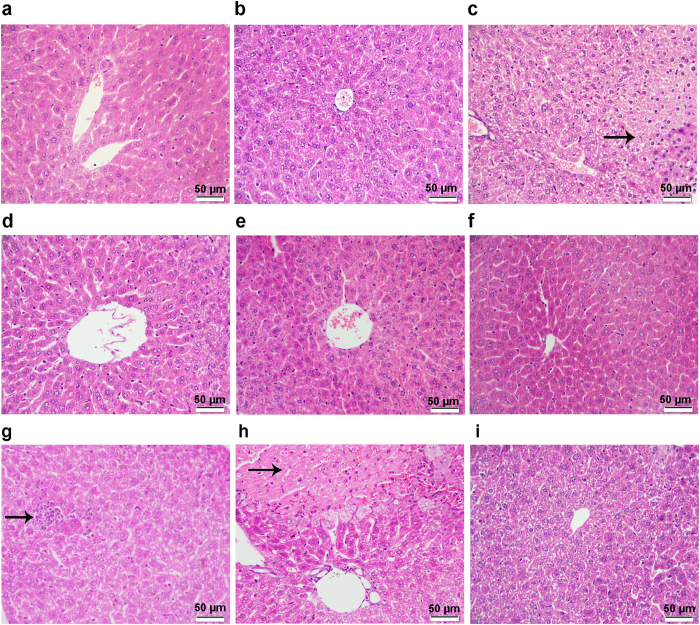
Triterpenoid Toosendanin (TSN) exhibits a plenty of pharmacological effects in human and great values in agriculture. However, the hepatotoxicity caused by TSN or Melia-family plants containing TSN used in traditional Chinese medicine has been reported, and the mechanisms of TSN-induced liver injury (TILI) still remain largely unknown. In this study, the dose- and time-dependent effects of TSN on mice liver were investigated by an integrated microRNA-mRNA approach as well as the general toxicological assessments. As the results, the dose- and time-dependent liver injury and alterations in global microRNA and mRNA expressions were detected. Particularly, 9-days 80 mg/kg TSN exposure caused most serious liver injury in mice, and the hepatic adaptation to TILI was unexpectedly observed after 21-days 80 mg/kg TSN administration. Based on the pathway analysis of the intersections between predicted targets of differentially expressed microRNAs and differentially expressed mRNAs at three time points, it revealed that TILI may be caused by glutathione depletion, mitochondrial dysfunction and lipid dysmetabolism, ultimately leading to hepatocytes necrosis in liver, while liver regeneration may play an important role in the hepatic adaptation to TILI. Our results demonstrated that the integrated microRNA-mRNA approach could provide new insight into the complex and dynamic behavior of TILI.
三萜 Toosendanin(TSN)在人类中表现出多种药理作用,在农业中具有很高的价值。然而,已经报道了 TSN 或含有 TSN 的楝科植物在中药中使用引起的肝毒性,TSN 诱导的肝损伤(TILI)的机制仍在很大程度上未知。在这项研究中,通过整合 microRNA-mRNA 方法以及一般毒理学评估,研究了 TSN 对小鼠肝脏的剂量和时间依赖性影响。结果表明,检测到剂量和时间依赖性肝损伤以及全局 microRNA 和 mRNA 表达的改变。特别是,9 天 80mg/kg TSN 暴露导致小鼠最严重的肝损伤,而在 21 天 80mg/kg TSN 给药后出乎意料地观察到肝对 TILI 的适应。基于三个时间点差异表达 microRNA 和差异表达 mRNAs 的预测靶标之间的通路分析,表明 TILI 可能是由谷胱甘肽耗竭、线粒体功能障碍和脂质代谢紊乱引起的,最终导致肝细胞坏死,而肝再生可能在肝对 TILI 的适应中发挥重要作用。我们的结果表明,整合的 microRNA-mRNA 方法可以为 TILI 的复杂和动态行为提供新的见解。