Ma Ling, Zhu Weiyou, Wang Qiang, Yang Fengming, Qian Jing, Xu Tongpeng, Wang Shouyu, Zhou Jianwei, Shu Yongqian
Department of Oncology, the First Affiliated Hospital of Nanjing Medical University, Nanjing, People's Republic of China.
Department of Molecular Cell Biology and Toxicology, Jiangsu Key Laboratory of Cancer Biomarkers, Prevention and Treatment, Cancer Center, Nanjing Medical University, Nanjing, People's Republic of China.
Oncotarget. 2016 Nov 1;7(44):71790-71801. doi: 10.18632/oncotarget.12374.
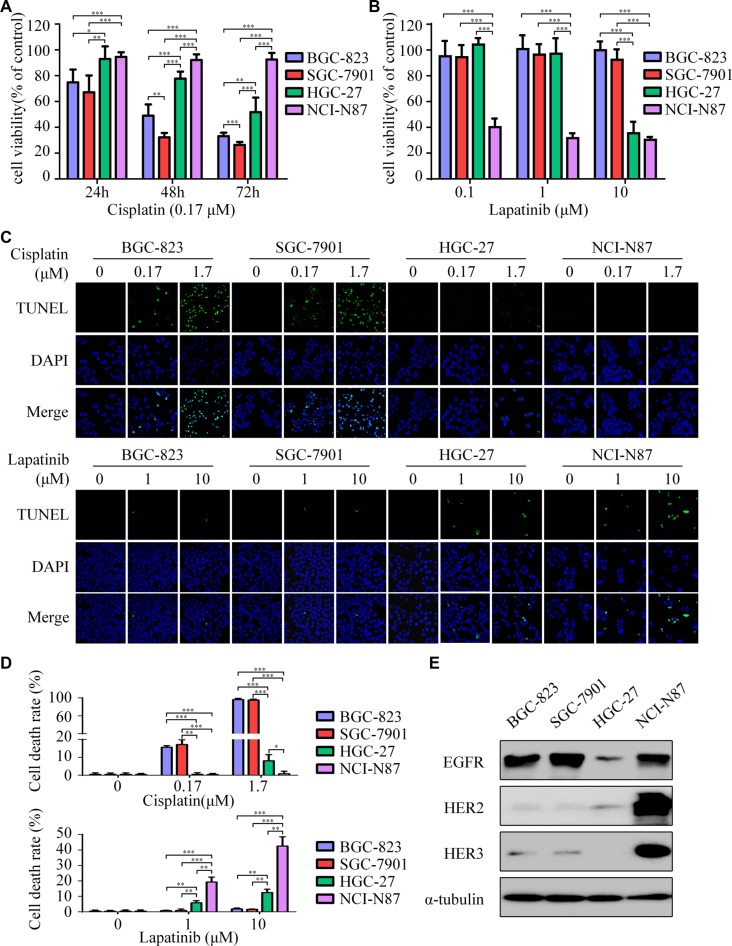
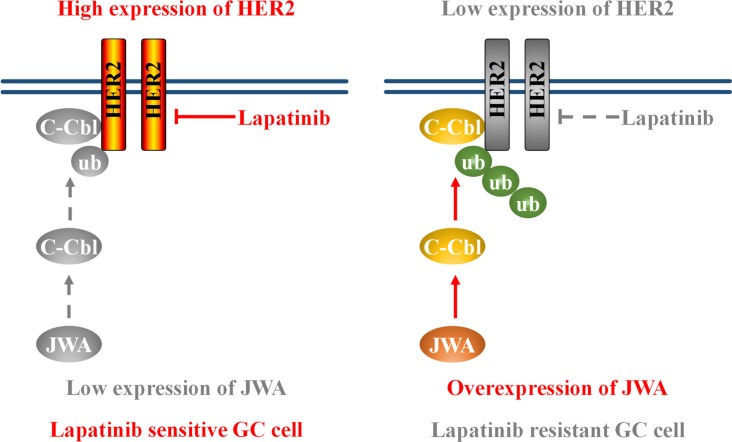
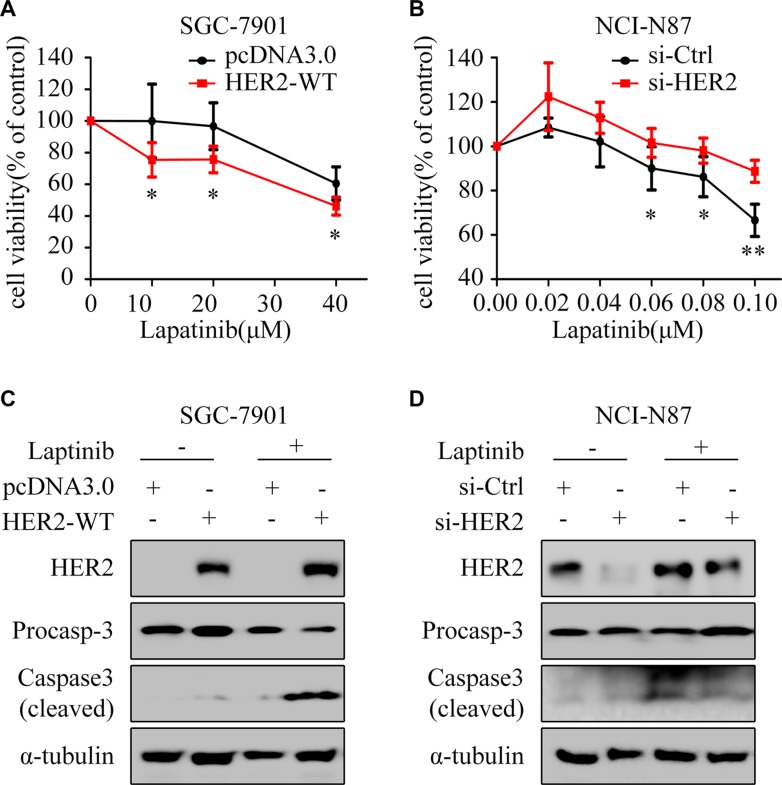
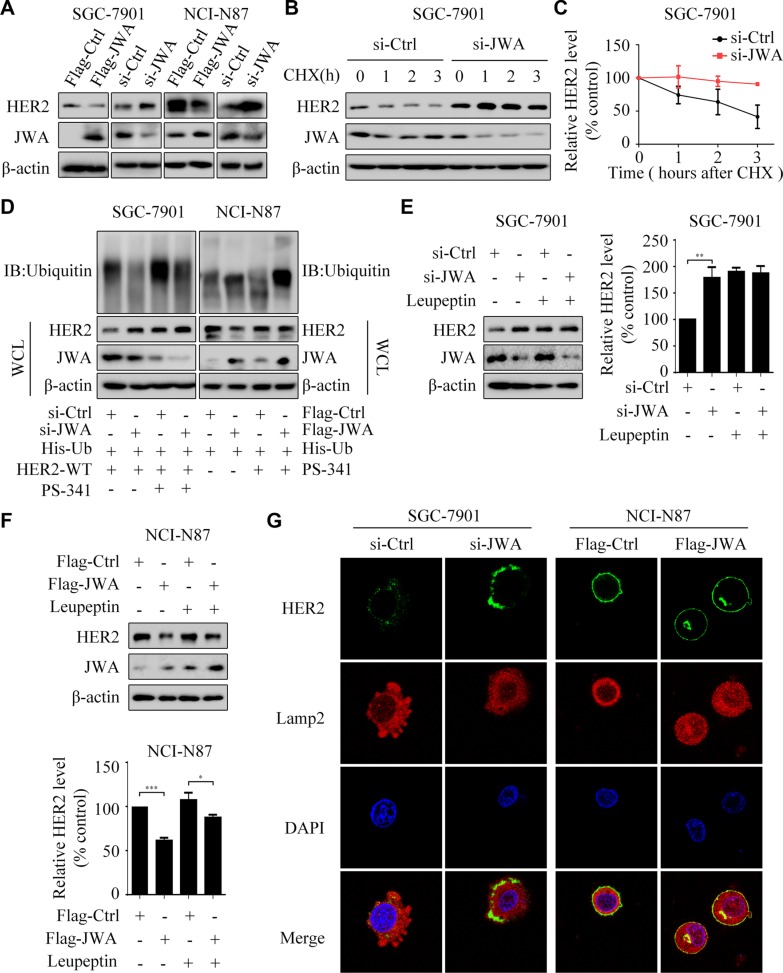
Human epidermal growth factor receptor 2 (HER2) targeted therapy is currently considered as the standard treatment for HER2-positive advanced gastric cancer (GC). However, unsatisfactory results of recent phase III clinical trials involving lapatinib suggested biomarkers for selection of patients. The aim of this study was to identify JWA as a biomarker for lapatinib resistance in GC cells and elucidate the underlying mechanisms. Lapatinib was effective to the intrinsic cisplatin-resistant GC cells. JWA activation conferred lapatinib unresponsiveness, but reversed cisplatin resistance in GC cells. Whereas, deletion of JWA significantly restored lapatinib suppression on proliferation and lapatinib-induced apoptosis. JWA-induced down-regulation of HER2 and activation of ERK phosphorylation led to lapatinib resistance. Furthermore, c-Cbl represented a novel mechanism for HER2 degradation enhanced by JWA in GC cells. Taken together, JWA is a potential predictive marker for lapatinib resistance, targeting the patients that may benefit from lapatinib treatment in human GC.
人表皮生长因子受体2(HER2)靶向治疗目前被认为是HER2阳性晚期胃癌(GC)的标准治疗方法。然而,最近涉及拉帕替尼的III期临床试验结果不尽人意,提示需要生物标志物来选择患者。本研究的目的是确定JWA作为GC细胞中拉帕替尼耐药的生物标志物,并阐明其潜在机制。拉帕替尼对内在顺铂耐药的GC细胞有效。JWA激活导致拉帕替尼无反应,但可逆转GC细胞中的顺铂耐药。而JWA缺失显著恢复了拉帕替尼对增殖的抑制作用以及拉帕替尼诱导的细胞凋亡。JWA诱导的HER2下调和ERK磷酸化激活导致拉帕替尼耐药。此外,c-Cbl代表了JWA增强GC细胞中HER2降解的新机制。综上所述,JWA是拉帕替尼耐药的潜在预测标志物,可针对人类GC中可能从拉帕替尼治疗中获益的患者。