Yang Feng, Liu Wenwei, Yan Xiaojuan, Zhou Hanyun, Zhang Hongshen, Liu Jianfei, Yu Ming, Zhu Xiaoshan, Ma Kezhong
Department of Cardiology, Xiangyang Central Hospital, Affiliated Hospital of Hubei University of Arts and Science, Xiangyang, Hubei, China (mainland).
Department of Respiratory Medicine, Xiangyang Central Hospital, Affiliated Hospital of Hubei University of Arts and Science, Xiangyang, Hubei, China (mainland).
Med Sci Monit. 2016 Oct 6;22:3562-3575. doi: 10.12659/msm.897773.
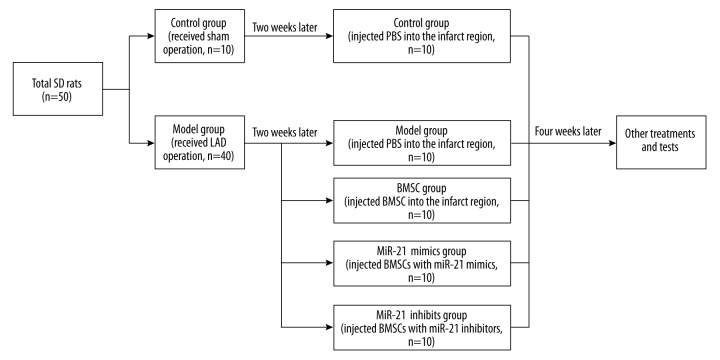
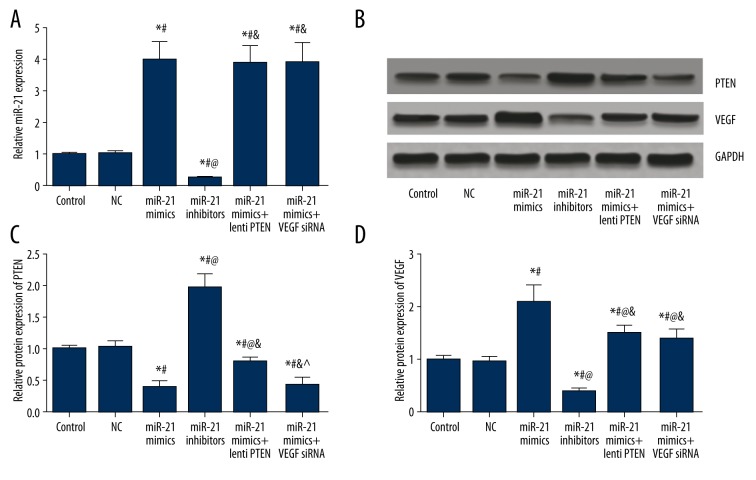
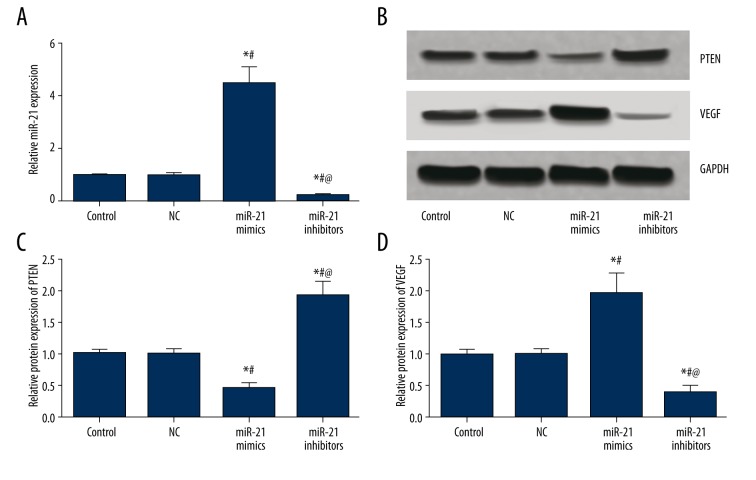
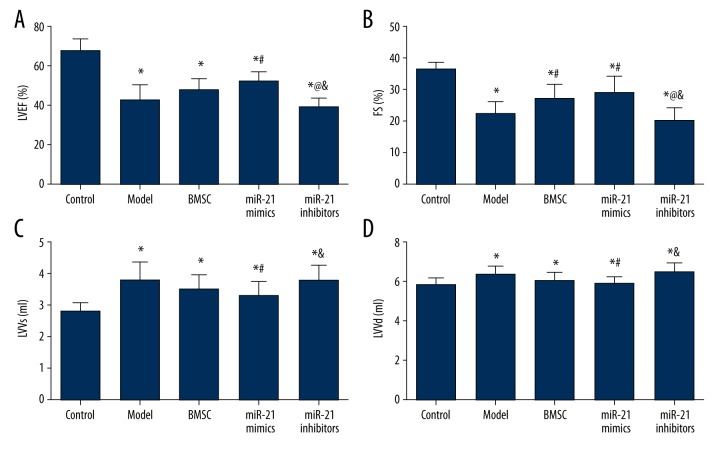
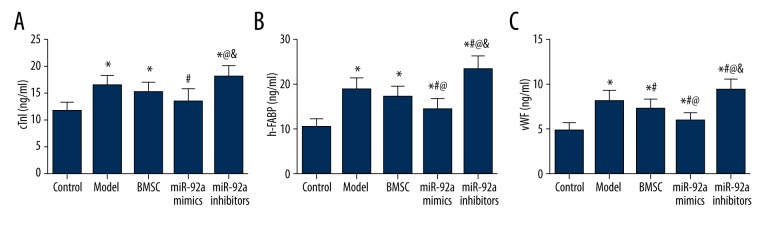
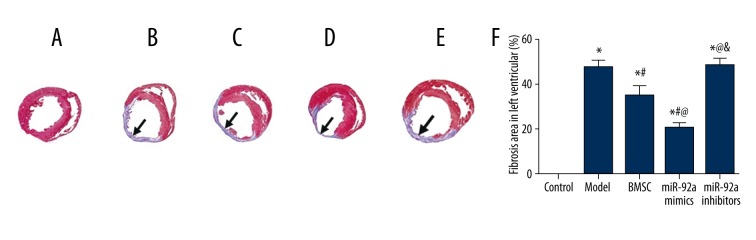
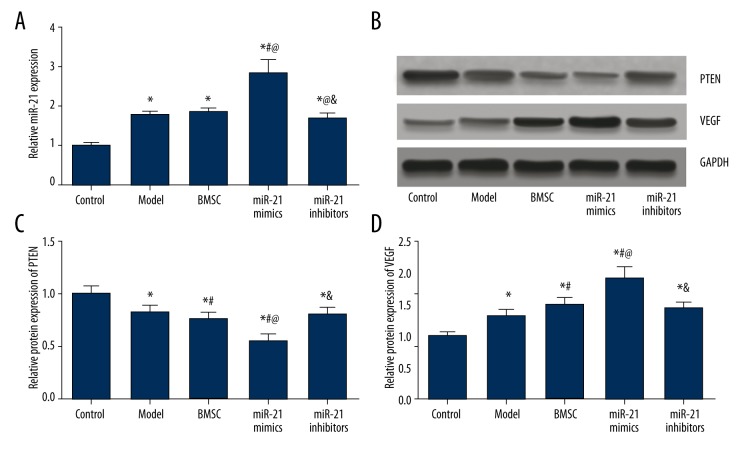
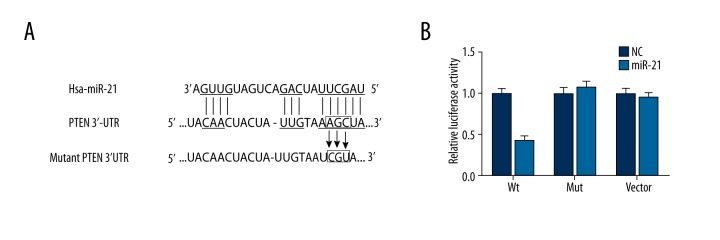
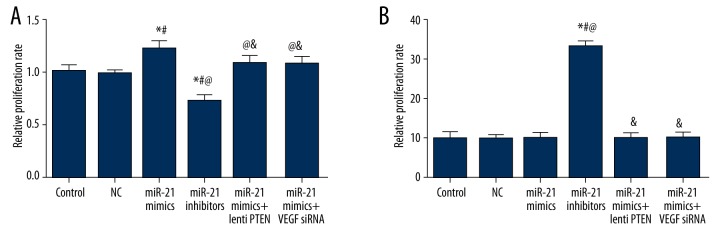
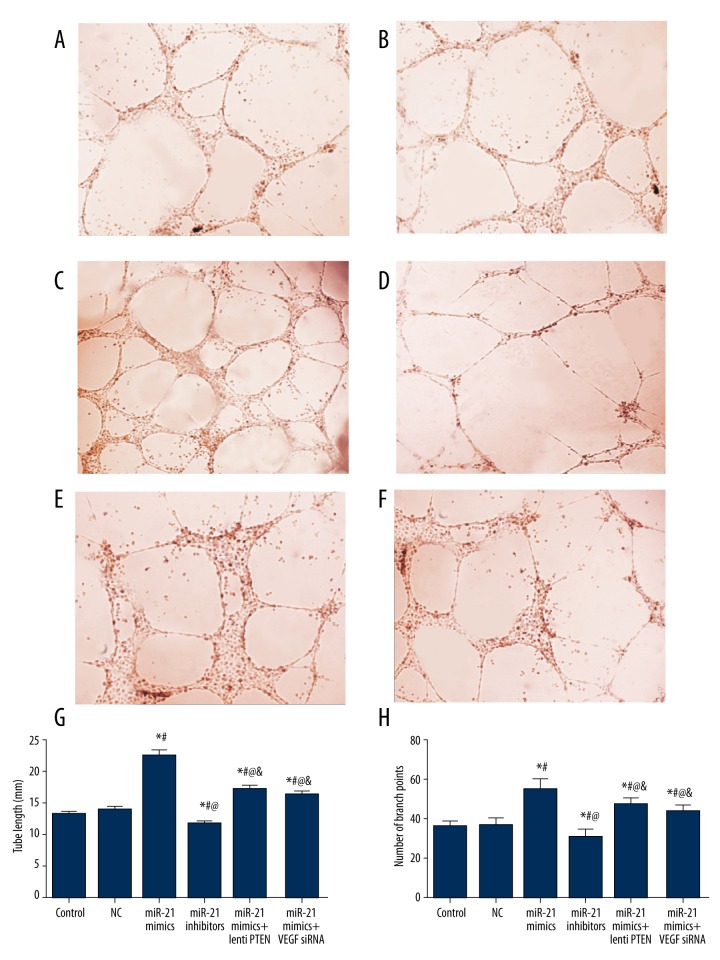
BACKGROUND This study investigated how miR-21 expression is reflected in acute myocardial infarction and explored the role of miR-21 and the PTEN/VEGF signaling pathway in cardiac microvascular endothelial cells. MATERIAL AND METHODS We used an in vivo LAD rat model to simulate acute myocardial infarction. MiR-21 mimics and miR-21 inhibitors were injected and transfected into model rats in order to alter miR-21 expression. Cardiac functions were evaluated using echocardiographic measurement, ELISA, and Masson staining. In addition, lenti-PTEN and VEGF siRNA were transfected into CMEC cells using standard procedures for assessing the effect of PTEN and VEGE on cell proliferation, apoptosis, and angiogenesis. MiR-21, PTEN, and VEGF expressions were examined by RT-PCR and Western blot. The relationship between miR-21 and PTEN was determined by the luciferase activity assay. RESULTS We demonstrated that miR-21 bonded with the 3'-UTR of PTEN and suppressed PTEN expressions. Established models significantly induced cardiac infarct volume and endothelial injury marker expressions as well as miR-21 and PTEN expressions (P<0.05). MiR-21 mimics exhibited significantly protective effects since they down-regulated both infarction size and injury marker expressions by increasing VEGF expression and inhibiting PTEN expression (P<0.05). In addition, results from in vitro research show that lenti-PTEN and VEGF siRNA can notably antagonize the effect of miR-21 on cell proliferation, apoptosis, and angiogenesis (P<0.05). CONCLUSIONS MiR-21 exerts protective effects on endothelial injury through the PTEN/VEGF pathway after acute myocardial infarction.
背景 本研究调查了miR-21表达在急性心肌梗死中的体现,并探讨了miR-21以及PTEN/VEGF信号通路在心脏微血管内皮细胞中的作用。
材料与方法 我们使用体内大鼠左冠状动脉前降支(LAD)模型模拟急性心肌梗死。注射并转染miR-21模拟物和miR-21抑制剂至模型大鼠体内,以改变miR-21表达。使用超声心动图测量、酶联免疫吸附测定(ELISA)和Masson染色评估心脏功能。此外,采用标准程序将慢病毒介导的PTEN(lenti-PTEN)和血管内皮生长因子(VEGF)小干扰RNA(siRNA)转染至心脏微血管内皮细胞(CMEC),以评估PTEN和VEGF对细胞增殖、凋亡和血管生成的影响。通过逆转录聚合酶链反应(RT-PCR)和蛋白质免疫印迹法检测miR-21、PTEN和VEGF的表达。通过荧光素酶活性测定确定miR-21与PTEN之间的关系。
结果 我们证明miR-21与PTEN的3'-非翻译区(3'-UTR)结合并抑制PTEN表达。建立的模型显著诱导心脏梗死体积、内皮损伤标志物表达以及miR-21和PTEN表达增加(P<0.05)。miR-21模拟物表现出显著的保护作用,因为它们通过增加VEGF表达和抑制PTEN表达下调梗死面积和损伤标志物表达(P<0.05)。此外,体外研究结果表明,lenti-PTEN和VEGF siRNA可显著拮抗miR-21对细胞增殖、凋亡和血管生成的影响(P<0.05)。
结论 急性心肌梗死后,miR-21通过PTEN/VEGF途径对内皮损伤发挥保护作用。