Miner Jeffrey N, Tan Philip K, Hyndman David, Liu Sha, Iverson Cory, Nanavati Payal, Hagerty David T, Manhard Kimberly, Shen Zancong, Girardet Jean-Luc, Yeh Li-Tain, Terkeltaub Robert, Quart Barry
Ardea Biosciences, Inc., 9390 Towne Centre Drive, San Diego, CA, 92121, USA.
University of California San Diego, 9500 Gilman Dr, La Jolla, CA, 92093, USA.
Arthritis Res Ther. 2016 Oct 3;18(1):214. doi: 10.1186/s13075-016-1107-x.
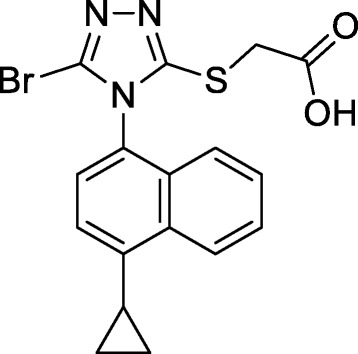
Excess body burden of uric acid promotes gout. Diminished renal clearance of uric acid causes hyperuricemia in most patients with gout, and the renal urate transporter (URAT)1 is important for regulation of serum uric acid (sUA) levels. The URAT1 inhibitors probenecid and benzbromarone are used as gout therapies; however, their use is limited by drug-drug interactions and off-target toxicity, respectively. Here, we define the mechanism of action of lesinurad (Zurampic®; RDEA594), a novel URAT1 inhibitor, recently approved in the USA and Europe for treatment of chronic gout.
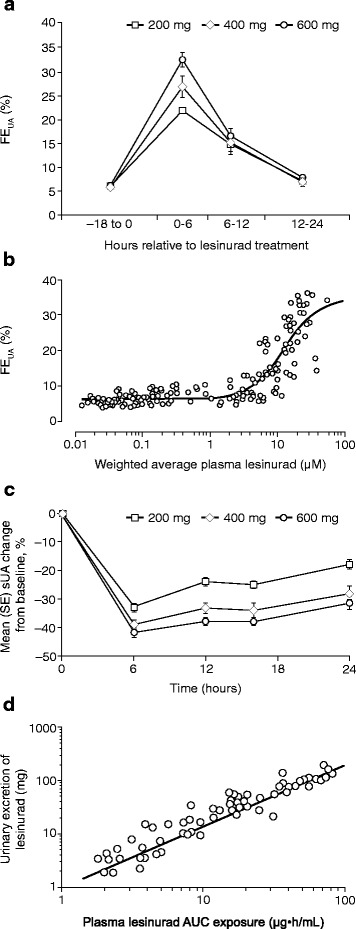
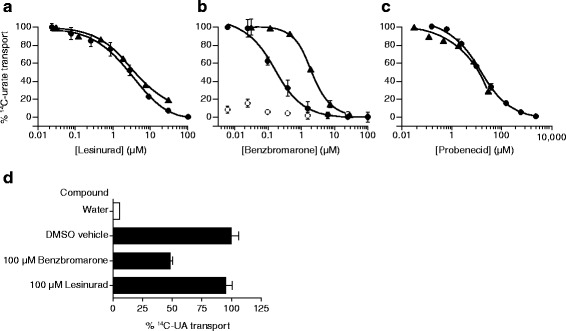
sUA levels, fractional excretion of uric acid (FE), lesinurad plasma levels, and urinary excretion of lesinurad were measured in healthy volunteers treated with lesinurad. In addition, lesinurad, probenecid, and benzbromarone were compared in vitro for effects on urate transporters and the organic anion transporters (OAT)1 and OAT3, changes in mitochondrial membrane potential, and human peroxisome proliferator-activated receptor gamma (PPARγ) activity.
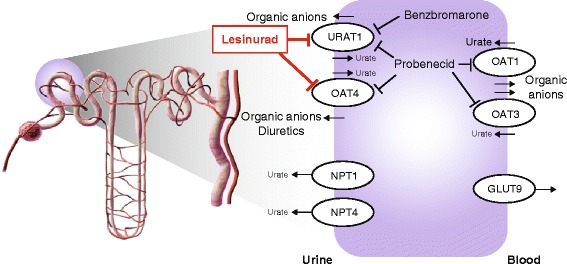
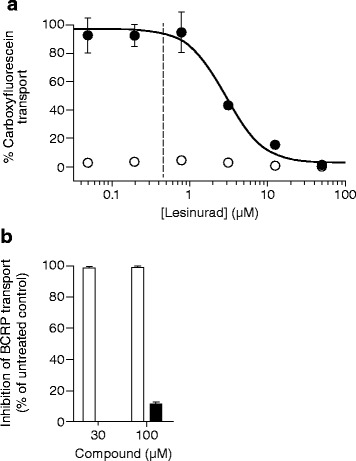
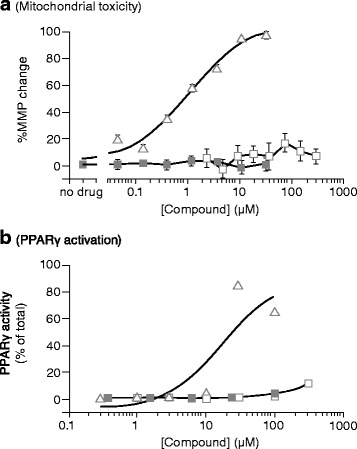
After 6 hours, a single 200-mg dose of lesinurad elevated FE 3.6-fold (p < 0.001) and reduced sUA levels by 33 % (p < 0.001). At concentrations achieved in the clinic, lesinurad inhibited activity of URAT1 and OAT4 in vitro, did not inhibit GLUT9, and had no effect on ABCG2. Lesinurad also showed a low risk for mitochondrial toxicity and PPARγ induction compared to benzbromarone. Unlike probenecid, lesinurad did not inhibit OAT1 or OAT3 in the clinical setting.
The pharmacodynamic effects and in vitro activity of lesinurad are consistent with inhibition of URAT1 and OAT4, major apical transporters for uric acid. Lesinurad also has a favorable selectivity and safety profile, consistent with an important role in sUA-lowering therapy for patients with gout.
体内尿酸负荷过重会引发痛风。大多数痛风患者尿酸肾清除率降低导致高尿酸血症,而肾尿酸转运体(URAT)1对血清尿酸(sUA)水平的调节至关重要。URAT1抑制剂丙磺舒和苯溴马隆被用作痛风治疗药物;然而,它们的使用分别受到药物相互作用和脱靶毒性的限制。在此,我们明确了新型URAT1抑制剂雷西纳德(Zurampic®;RDEA594)的作用机制,该药物最近在美国和欧洲被批准用于治疗慢性痛风。
在接受雷西纳德治疗的健康志愿者中测量sUA水平、尿酸排泄分数(FE)、雷西纳德血浆水平和雷西纳德尿排泄量。此外,在体外比较雷西纳德、丙磺舒和苯溴马隆对尿酸转运体以及有机阴离子转运体(OAT)1和OAT3的影响、线粒体膜电位变化以及人过氧化物酶体增殖物激活受体γ(PPARγ)活性。
单次服用200mg雷西纳德6小时后,FE升高3.6倍(p<0.001),sUA水平降低33%(p<0.001)。在临床达到的浓度下,雷西纳德在体外抑制URAT1和OAT4的活性,不抑制GLUT9,对ABCG2无影响。与苯溴马隆相比,雷西纳德还显示出较低的线粒体毒性和PPARγ诱导风险。与丙磺舒不同,雷西纳德在临床环境中不抑制OAT1或OAT3。
雷西纳德的药效学作用和体外活性与抑制URAT1和OAT4一致,URAT1和OAT4是尿酸的主要顶端转运体。雷西纳德还具有良好的选择性和安全性,这与它在痛风患者降低sUA治疗中的重要作用相符。