Ignacio Rosa Mistica C, Kabir Syeda M, Lee Eun-Sook, Adunyah Samuel E, Son Deok-Soo
Department of Biochemistry and Cancer Biology, Meharry Medical College, Nashville, Tennessee, United States of America.
Department of Pharmaceutical Sciences, College of Pharmacy, Florida A&M University, Tallahassee, Florida, United States of America.
PLoS One. 2016 Oct 10;11(10):e0164189. doi: 10.1371/journal.pone.0164189. eCollection 2016.
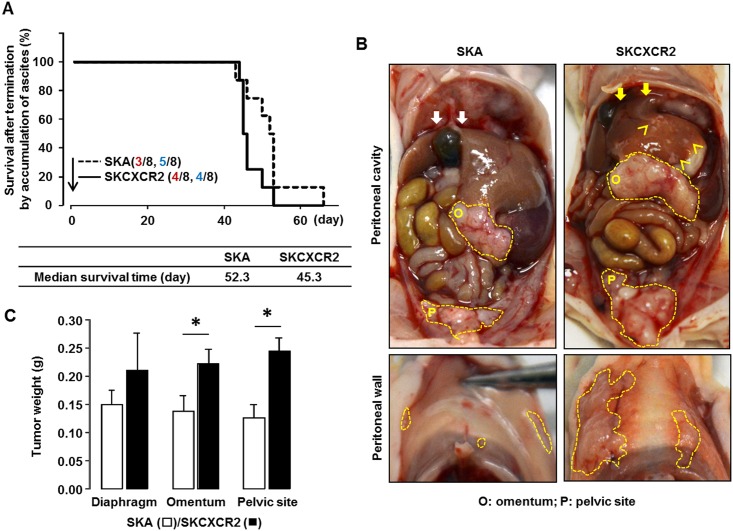
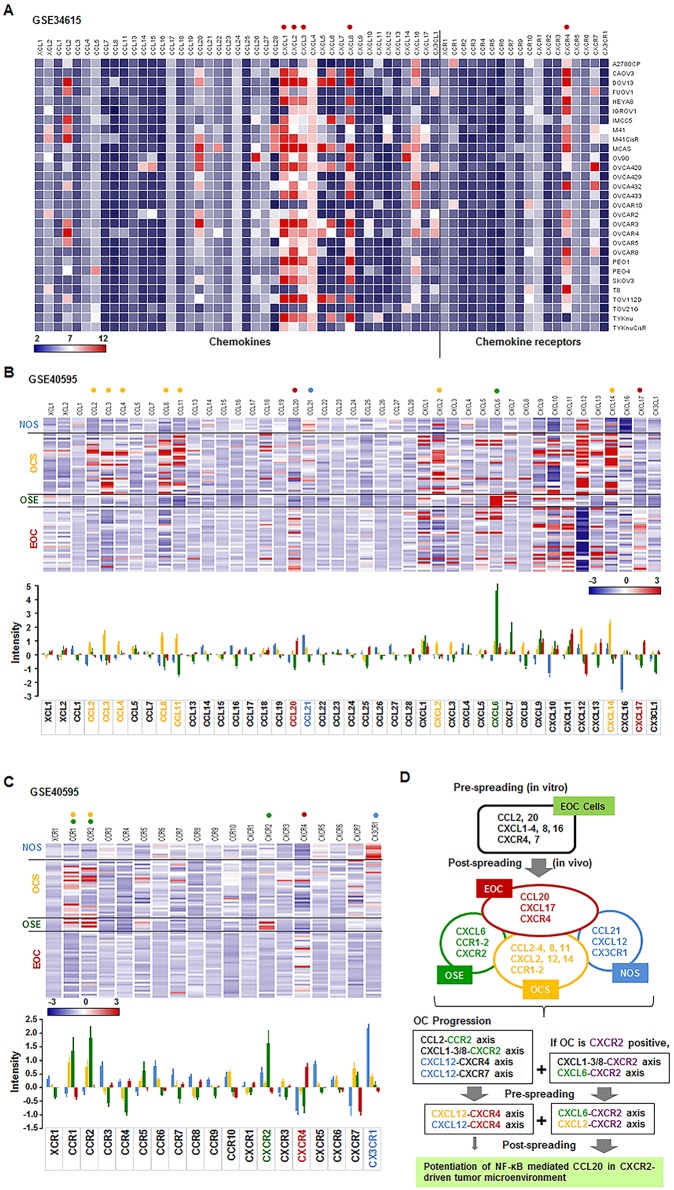
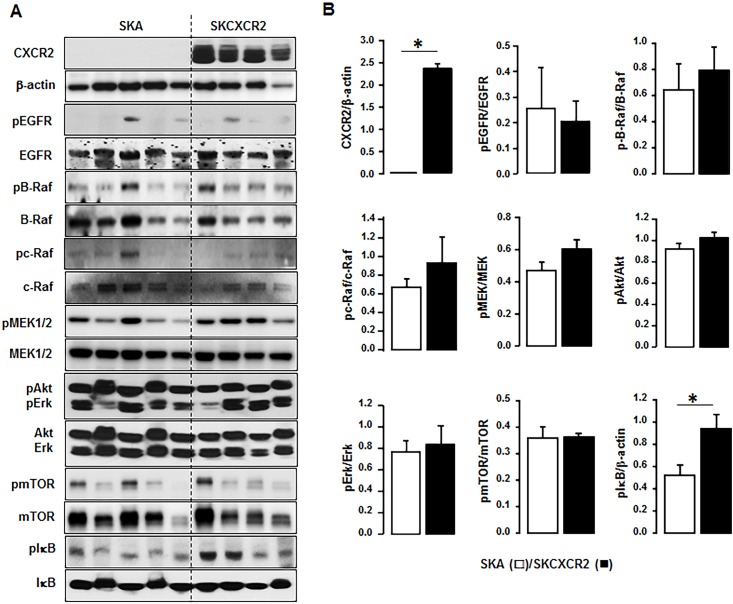
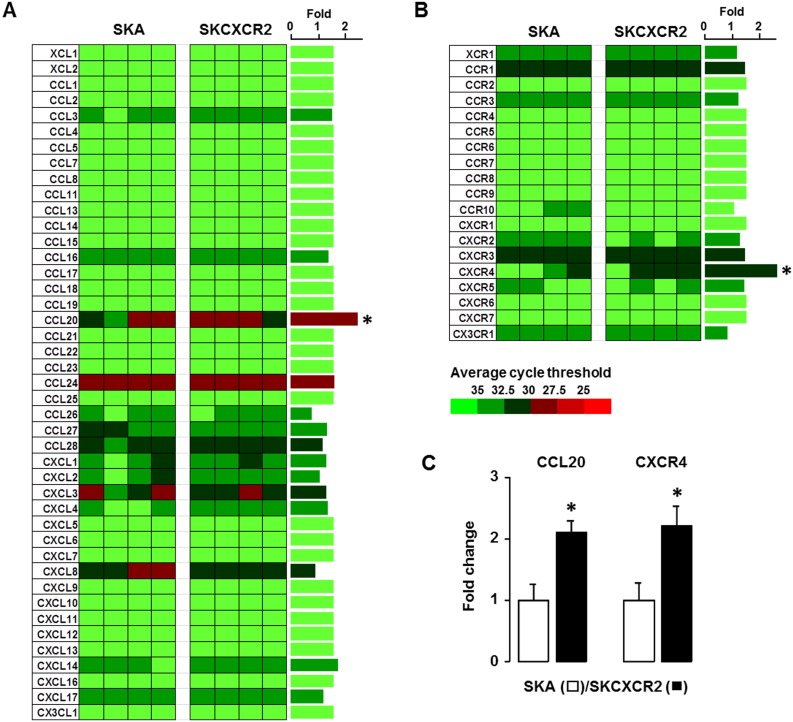
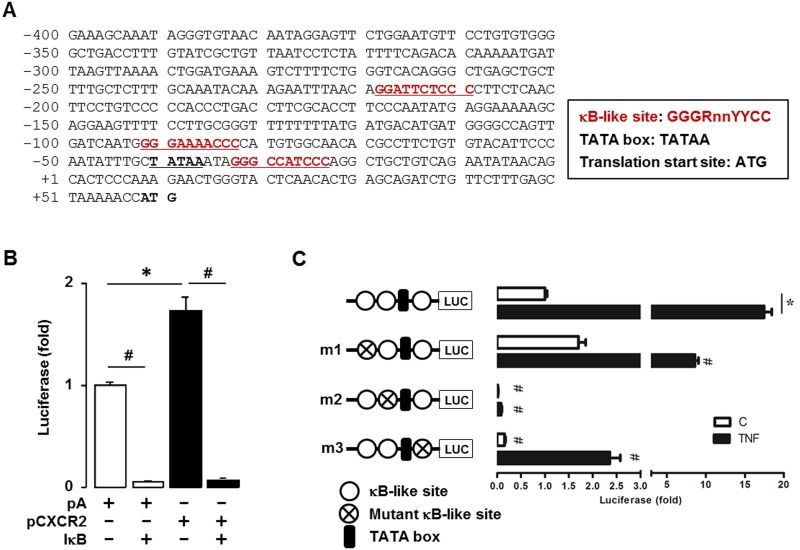
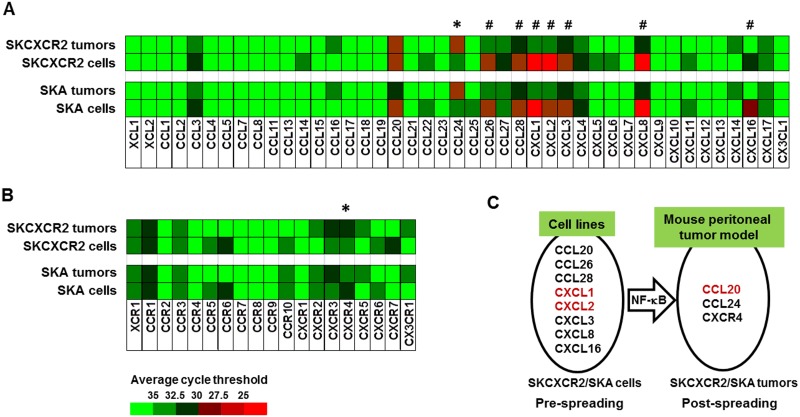
Ovarian cancer is an inflammation-associated malignancy with a high mortality rate. CXCR2 expressing ovarian cancers are aggressive with poorer outcomes. We previously demonstrated that CXCR2-driven ovarian cancer progression potentiated NF-κB activation through EGFR-transactivated Akt. Here, we identified the chemokine signature involved in CXCR2-driven ovarian cancer progression using a mouse peritoneal xenograft model for ovarian cancer spreading with CXCR2-negative (SKA) and positive (SKCXCR2) cells generated previously from parental SKOV-3 cells. Compared to SKA bearing mice, SKCXCR2 bearing mice had the following characteristics: 1) shorter survival time, 2) greater tumor spreading in the peritoneal cavity and 3) higher tumor weight in the omentum and pelvic site. Particularly, SKCXCR2-derived tumor tissues induced higher activation of the NF-κB signaling pathway, while having no change in EGFR-activated signaling such as Raf, MEK, Akt, mTOR and Erk compared to SKA-derived tumors. Chemokine PCR array revealed that CCL20 mRNA levels were significantly increased in SKCXCR2-derived tumor tissues. The CCL20 promoter activity was regulated by NF-κB dependent pathways. Interestingly, all three κB-like sites in the CCL20 promoter were involved in regulating CCL20 and the proximal region between -92 and -83 was the most critical κB-like site. In addition, SKCXCR2-derived tumor tissues maintained high CCL20 mRNA expression and induced greater CCL24 and CXCR4 compared to SKCXCR2 cells, indicating the shift of chemokine network during the peritoneal spreading of tumor cells via interaction with other cell types in tumor microenvironment. Furthermore, we compared expression profiling array between human ovarian cancer cell lines and tumor tissues based on GEO datasets. The expression profiles in comparison with cell lines revealed that dominant chemokines expressed in ovarian tumor tissues are likely shifted from CXCL1-3 and 8 to CCL20. Taken together, the progression of ovarian cancer in the peritoneal cavity involves NF-κB-mediated CCL20 as a main chemokine network, which is potentiated by CXCR2 expression.
卵巢癌是一种与炎症相关的恶性肿瘤,死亡率很高。表达CXCR2的卵巢癌具有侵袭性,预后较差。我们之前证明,CXCR2驱动的卵巢癌进展通过EGFR反式激活的Akt增强了NF-κB的激活。在这里,我们使用小鼠腹膜异种移植模型来确定参与CXCR2驱动的卵巢癌进展的趋化因子特征,该模型用于研究卵巢癌的扩散,使用先前从亲本SKOV-3细胞产生的CXCR2阴性(SKA)和阳性(SKCXCR2)细胞。与携带SKA的小鼠相比,携带SKCXCR2的小鼠具有以下特征:1)生存时间更短,2)腹腔内肿瘤扩散更大,3)大网膜和盆腔部位的肿瘤重量更高。特别地,与源自SKA的肿瘤相比,源自SKCXCR2的肿瘤组织诱导更高的NF-κB信号通路激活,而在诸如Raf、MEK、Akt、mTOR和Erk等EGFR激活的信号方面没有变化。趋化因子PCR阵列显示,源自SKCXCR2的肿瘤组织中CCL20 mRNA水平显著增加。CCL20启动子活性受NF-κB依赖性途径调节。有趣的是,CCL20启动子中的所有三个κB样位点都参与调节CCL20,并且-92至-83之间的近端区域是最关键的κB样位点。此外,与SKCXCR2细胞相比,源自SKCXCR2的肿瘤组织维持高CCL20 mRNA表达,并诱导更高的CCL24和CXCR4,这表明在肿瘤细胞通过与肿瘤微环境中的其他细胞类型相互作用进行腹膜扩散期间趋化因子网络发生了转变。此外,我们基于GEO数据集比较了人卵巢癌细胞系和肿瘤组织之间的表达谱阵列。与细胞系相比的表达谱显示,卵巢肿瘤组织中表达的主要趋化因子可能从CXCL1-3和8转变为CCL20。综上所述,腹腔内卵巢癌进展涉及NF-κB介导的CCL20作为主要趋化因子网络,CXCR2表达可增强该网络。