Qu Yuan, Wu Jing, Deng Jia-Xin, Zhang Yu-Ping, Liang Wan-Yi, Jiang Zhen-Lan, Yu Qing-Hong, Li Juan
Department of Internal Medicine of Traditional Chinese Medicine, College of Traditional Chinese Medicine, Southern Medical University, Guangzhou 510510, Guangdong, P. R. China.
Department of Rheumatology and Clinical Immunology, Zhujiang Hospital of Southern Medical University, Guangzhou 510282, Guangdong, P. R. China.
Oncotarget. 2016 Nov 8;7(45):74217-74226. doi: 10.18632/oncotarget.12487.
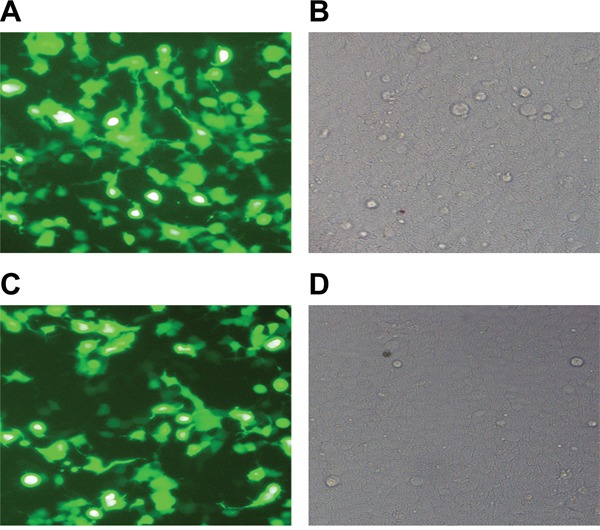
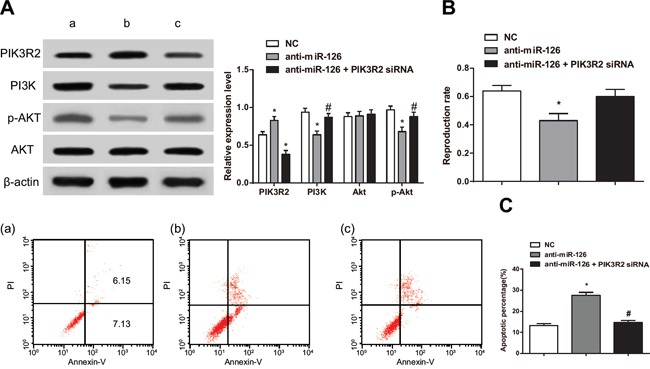
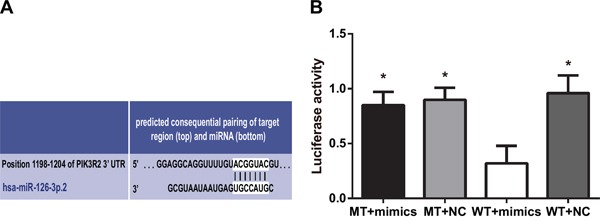
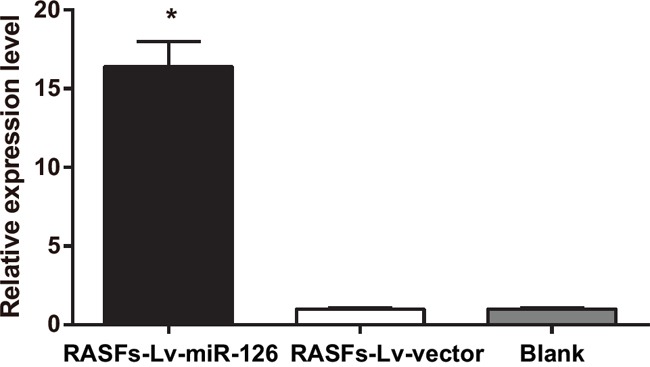
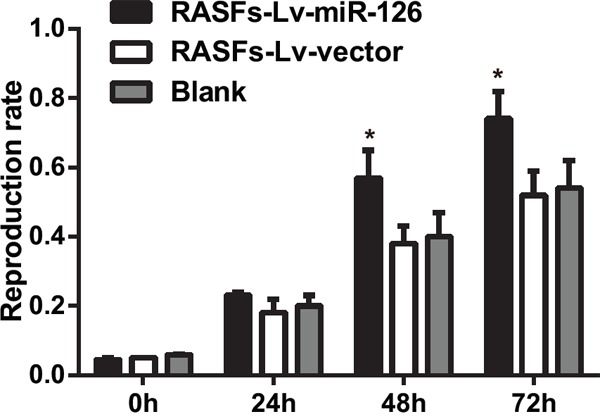
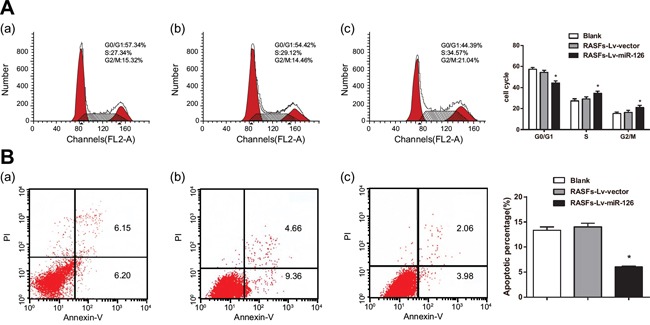
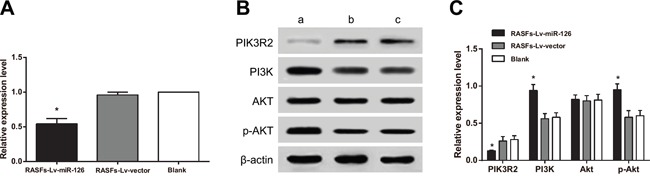
Rheumatoid arthritis (RA) is a chronic autoimmune disease that causes inflammation and destruction of the joints as well as an increased risk of cardiovascular disease. RA synovial fibroblasts (RASFs) are involved in the progression of RA and release pro-inflammatory cytokines. On the other hand, microRNAs (miRs) may help control the inflammatory response of immune and non-immune cells. Therefore, our study used lentiviral expression vectors to test the effects of miR-126 overexpression on RASF proliferation and apoptosis. Luciferase experiments verified the targeting relationship between miR-126 and PIK3R2 gene. The co-transfection of anti-miR-126 and PIK3R2 siRNA to RASFs were used to identify whether PIK3R2 was directly involved in proliferation and apoptosis of miR-126-induced RASFs. Real-time polymerase chain reaction (PCR) was used to detect miR-126 and PIK3R2 expressions. MTT assay was used to detect cell proliferation. Flow cytometry was used to detect cell apoptosis and cell cycle. Western blotting was used to detect PIK3R2, PI3K, AKT and p-AKT proteins. After Lv-miR-126 infected RASFs, the relative expression of miR-126 was significantly enhanced. MiR-126 promoted RASF proliferation and inhibited apoptosis. Levels of PIK3R2 decreased while total PI3K and p-AKT levels increased in RASFs overexpressing miR-126. Co-transfection of anti-miR-126 and PIK3R2 siRNA also increased PI3K and p-AKT levels as well as RASF proliferation and reduced apoptosis, as compared to anti-miR-126 treatment alone. Finally, luciferase reporter assays showed that miR-126 targeted PIK3R2. Our data indicate that miR-126 overexpression in RASFs inhibits PIK3R2 expression and promotes proliferation while inhibiting apoptosis. This suggests inhibiting miR-126 may yield therapeutic benefits in the treatment of RA.
类风湿性关节炎(RA)是一种慢性自身免疫性疾病,可导致关节炎症和破坏,并增加心血管疾病风险。RA滑膜成纤维细胞(RASF)参与RA的进展并释放促炎细胞因子。另一方面,微小RNA(miR)可能有助于控制免疫细胞和非免疫细胞的炎症反应。因此,我们的研究使用慢病毒表达载体来测试miR-126过表达对RASF增殖和凋亡的影响。荧光素酶实验验证了miR-126与PIK3R2基因之间的靶向关系。将抗miR-126和PIK3R2 siRNA共转染到RASF中,以确定PIK3R2是否直接参与miR-126诱导的RASF的增殖和凋亡。实时聚合酶链反应(PCR)用于检测miR-126和PIK3R2的表达。MTT法用于检测细胞增殖。流式细胞术用于检测细胞凋亡和细胞周期。蛋白质印迹法用于检测PIK3R2、PI3K、AKT和p-AKT蛋白。Lv-miR-126感染RASF后,miR-126的相对表达显著增强。miR-126促进RASF增殖并抑制凋亡。在过表达miR-126的RASF中,PIK3R2水平降低,而总PI3K和p-AKT水平升高。与单独使用抗miR-126处理相比,抗miR-126和PIK3R2 siRNA的共转染也增加了PI3K和p-AKT水平以及RASF增殖并减少了凋亡。最后,荧光素酶报告基因检测表明miR-126靶向PIK3R2。我们的数据表明,RASF中miR-126过表达可抑制PIK3R2表达,促进增殖并抑制凋亡。这表明抑制miR-126可能在RA治疗中产生治疗益处。