Owczarczak-Garstecka Sara C, Burman Oliver H P
Institute for Risk and Uncertainty, University of Liverpool, Liverpool, United Kingdom.
School of Life Science, University of Lincoln, Lincoln, United Kingdom.
PLoS One. 2016 Oct 12;11(10):e0163620. doi: 10.1371/journal.pone.0163620. eCollection 2016.
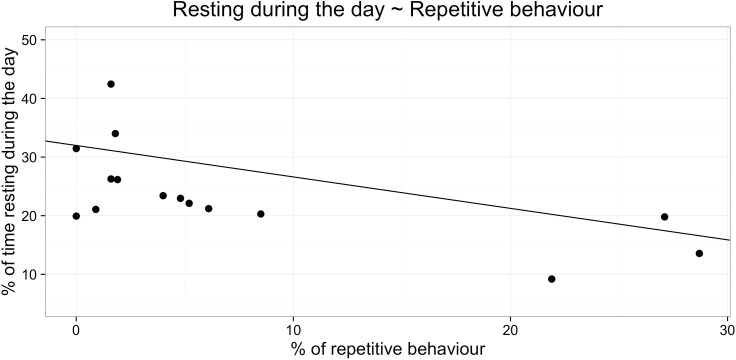
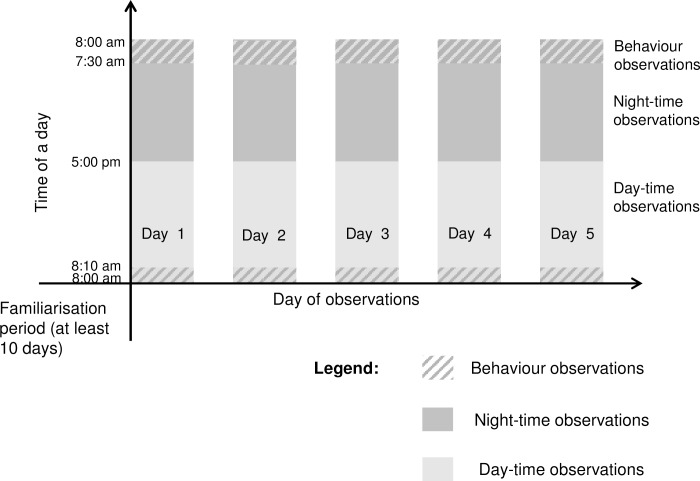
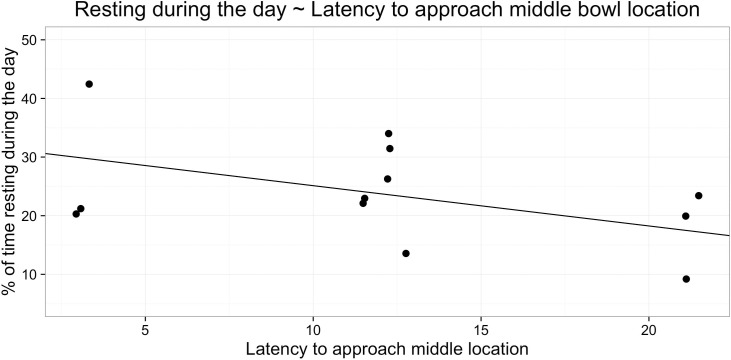
Previous research on humans and animals suggests that the analysis of sleep patterns may reliably inform us about welfare status, but little research of this kind has been carried out for non-human animals in an applied context. This study explored the use of sleep and resting behaviour as indicators of welfare by describing the activity patterns of dogs (Canis lupus familiaris) housed in rescue shelters, and comparing their sleep patterns to other behavioural and cognitive measures of welfare. Sleep and activity patterns were observed over five non-consecutive days in a population of 15 dogs. Subsequently, the characteristics of sleep and resting behaviour were described and the impact of activity on patterns of sleep and resting behaviour analysed. Shelter dogs slept for 2.8% of the day, 14.3% less than previously reported and experienced less sleep fragmentation at night (32 sleep bouts). There were no statistically significant relationships between behaviours exhibited during the day and sleep behaviour. A higher proportion of daytime resting behaviour was significantly associated with a positive judgement bias, less repetitive behaviour and increased time spent coded as 'relaxed' across days by shelter staff. These results suggest that, in the context of a busy shelter environment, the ability to rest more during the day could be a sign of improved welfare. Considering the non-linear relationship between sleep and welfare in humans, the relationship between sleep and behavioural indicators of welfare, including judgement bias, in shelter dogs may be more complex than this study could detect.
先前对人类和动物的研究表明,对睡眠模式的分析可能会可靠地告知我们其福利状况,但在应用环境中针对非人类动物进行的此类研究却很少。本研究通过描述救助收容所中犬类(家犬)的活动模式,并将它们的睡眠模式与其他福利行为和认知指标进行比较,探索了将睡眠和休息行为用作福利指标的方法。在15只犬组成的群体中,连续五天观察它们的睡眠和活动模式。随后,描述了睡眠和休息行为的特征,并分析了活动对睡眠和休息行为模式的影响。收容所的犬类一天中有2.8%的时间在睡觉,比之前报道的少14.3%,且夜间睡眠碎片化程度较低(32次睡眠周期)。白天表现出的行为与睡眠行为之间没有统计学上的显著关系。较高比例的白天休息行为与积极的判断偏差、较少的重复行为以及收容所工作人员记录的一整天中更多“放松”状态的时间显著相关。这些结果表明,在繁忙的收容所环境中,白天有更多休息的能力可能是福利改善的一个迹象。考虑到人类睡眠与福利之间的非线性关系,收容所犬类的睡眠与包括判断偏差在内的福利行为指标之间的关系可能比本研究所能检测到的更为复杂。