The College of Food Science and Nutritional Engineering, China Agricultural University, No. 17 Tsinghua East Road, Beijing 100083, PR China.
Beijing Engineering and Technology Research Center of Food Additives, Beijing Technology and Business University (BTBU), 11 Fucheng Road, Beijing 100048, People's Republic of China.
PLoS One. 2016 Oct 12;11(10):e0164335. doi: 10.1371/journal.pone.0164335. eCollection 2016.
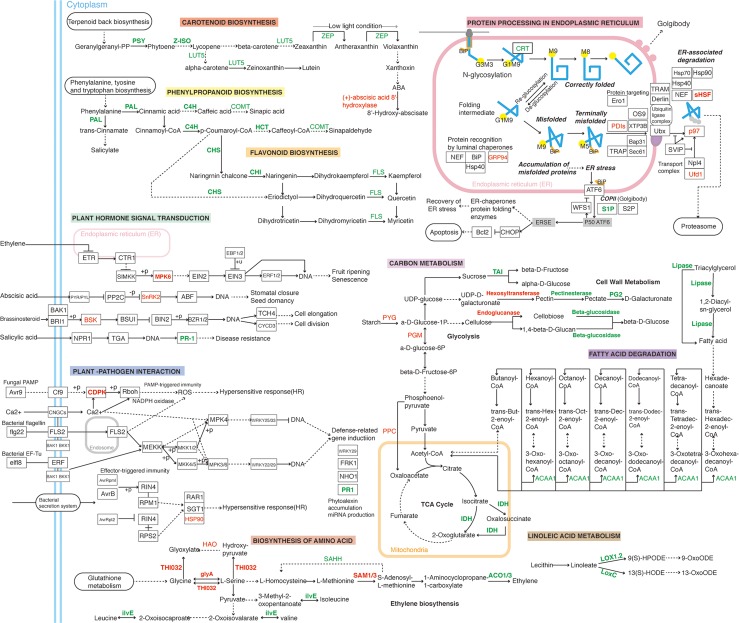
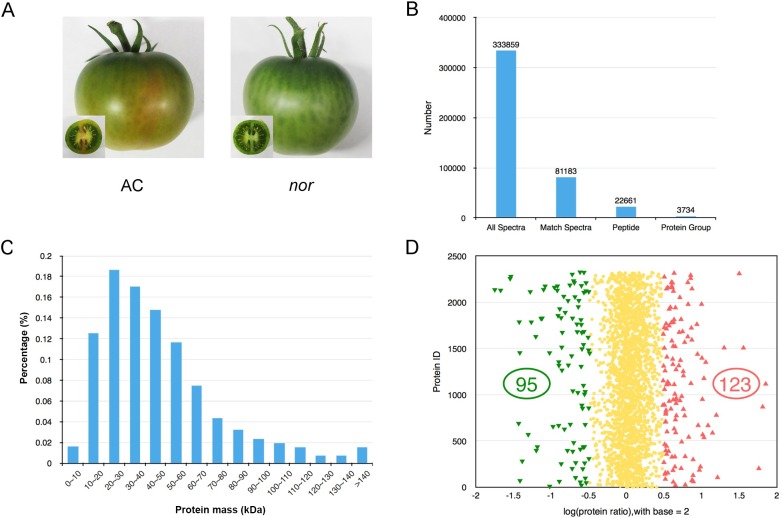
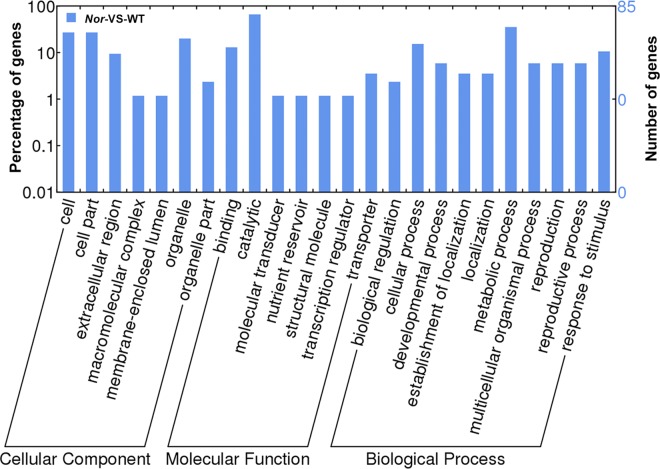
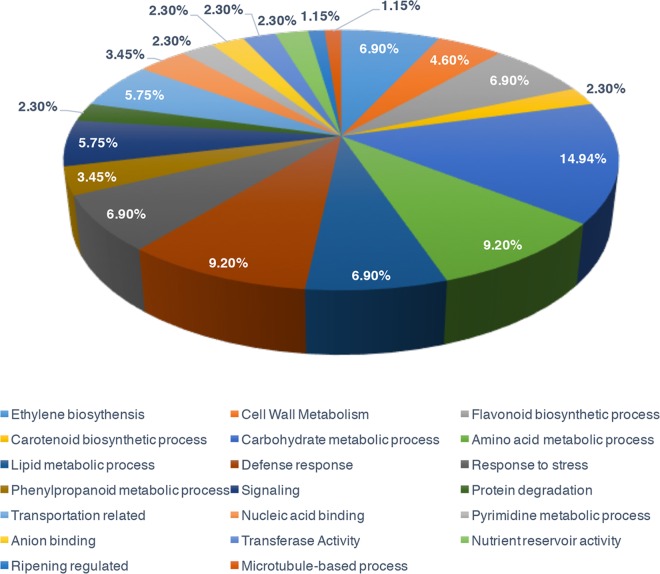
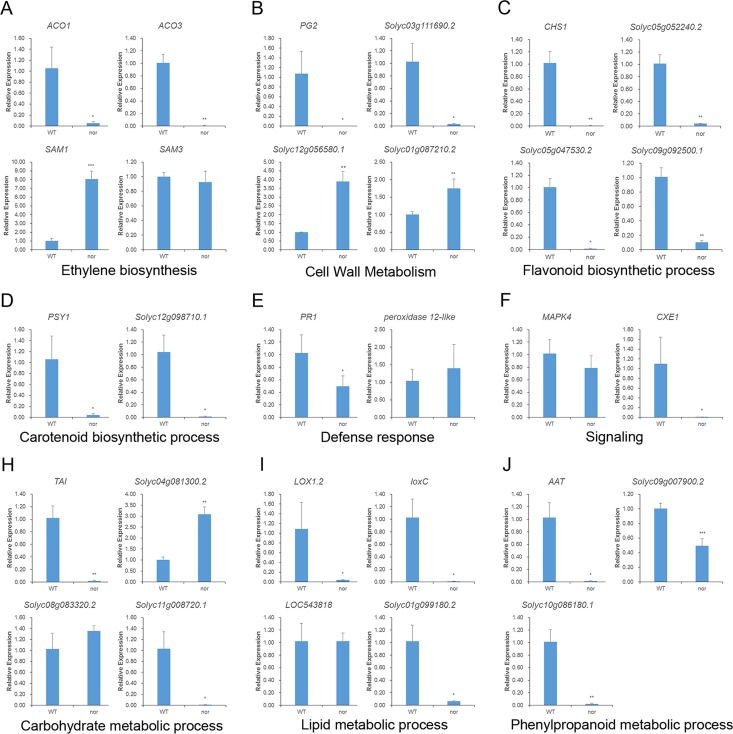
Natural mutants of the Non-ripening (Nor) gene repress the normal ripening of tomato fruit. The molecular mechanism of fruit ripening regulation by the Nor gene is unclear. To elucidate how the Nor gene can affect ripening and fruit quality at the protein level, we used the fruits of Nor mutants and wild-type Ailsa Craig (AC) to perform iTRAQ (isobaric tags for relative and absolute quantitation) analysis. The Nor mutation altered tomato fruit ripening and affected quality in various respects, including ethylene biosynthesis by down-regulating the abundance of 1-aminocyclopropane-1-carboxylic acid oxidase (ACO), pigment biosynthesis by repressing phytoene synthase 1 (PSY1), ζ-carotene isomerase (Z-ISO), chalcone synthase 1 (CHS1) and other proteins, enhancing fruit firmness by increasing the abundance of cellulose synthase protein, while reducing those of polygalacturonase 2 (PG2) and pectate lyase (PL), altering biosynthesis of nutrients such as carbohydrates, amino acids, and anthocyanins. Conversely, Nor mutation also enhanced the fruit's resistance to some pathogens by up-regulating the expression of several genes associated with stress and defense. Therefore, the Nor gene is involved in the regulation of fruit ripening and quality. It is useful in the future as a means to improve fruit quality in tomato.
自然突变的非成熟(Nor)基因抑制番茄果实的正常成熟。Nor 基因调控果实成熟的分子机制尚不清楚。为了阐明 Nor 基因如何在蛋白质水平上影响成熟和果实品质,我们使用 Nor 突变体和野生型 Ailsa Craig(AC)果实进行 iTRAQ(相对和绝对定量同位素标记)分析。Nor 突变改变了番茄果实的成熟度,并在多个方面影响了品质,包括通过下调 1-氨基环丙烷-1-羧酸氧化酶(ACO)的丰度来抑制乙烯生物合成,通过抑制类胡萝卜素生物合成的phytoene synthase 1(PSY1)、ζ-胡萝卜素异构酶(Z-ISO)、查尔酮合酶 1(CHS1)和其他蛋白质来抑制花色苷生物合成,通过增加纤维素合酶蛋白的丰度来增强果实硬度,同时降低多聚半乳糖醛酸酶 2(PG2)和果胶裂解酶(PL)的丰度,改变碳水化合物、氨基酸和花色苷等营养物质的生物合成。相反,Nor 突变也通过上调与应激和防御相关的几个基因的表达来增强果实对一些病原体的抗性。因此,Nor 基因参与了果实成熟和品质的调控。它在未来作为一种改良番茄果实品质的手段是有用的。