Huang Min, Garcia Jacqueline S, Thomas Daniel, Zhu Li, Nguyen Le Xuan Truong, Chan Steven M, Majeti Ravindra, Medeiros Bruno C, Mitchell Beverly S
Stanford Cancer Institute, Stanford University, Stanford, California, USA.
Division of Hematology, Department of Medicine, Stanford University, Stanford, California, USA.
Oncotarget. 2016 Nov 15;7(46):74917-74930. doi: 10.18632/oncotarget.12493.
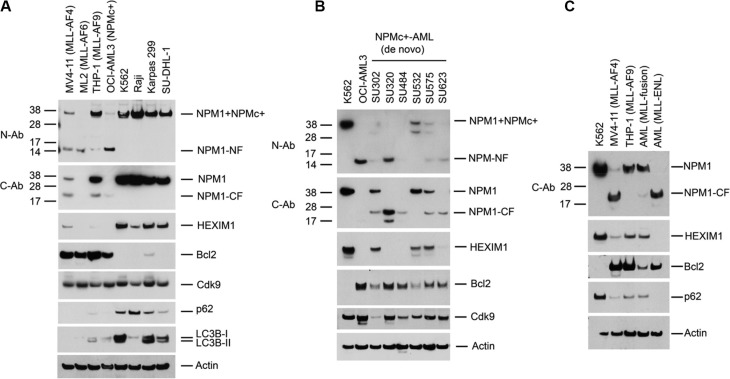
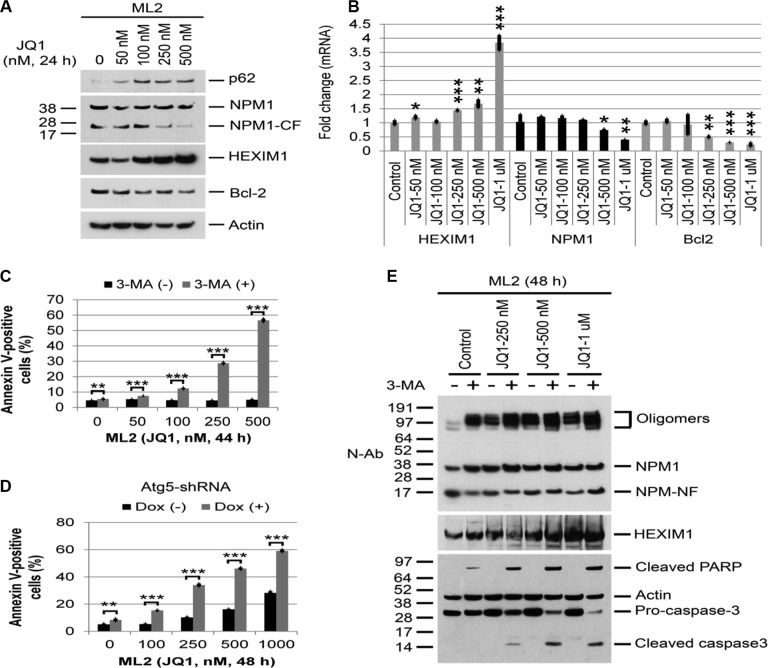
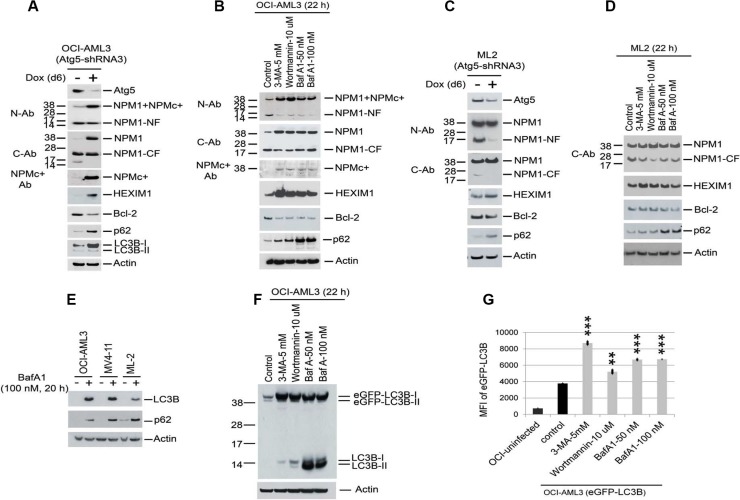
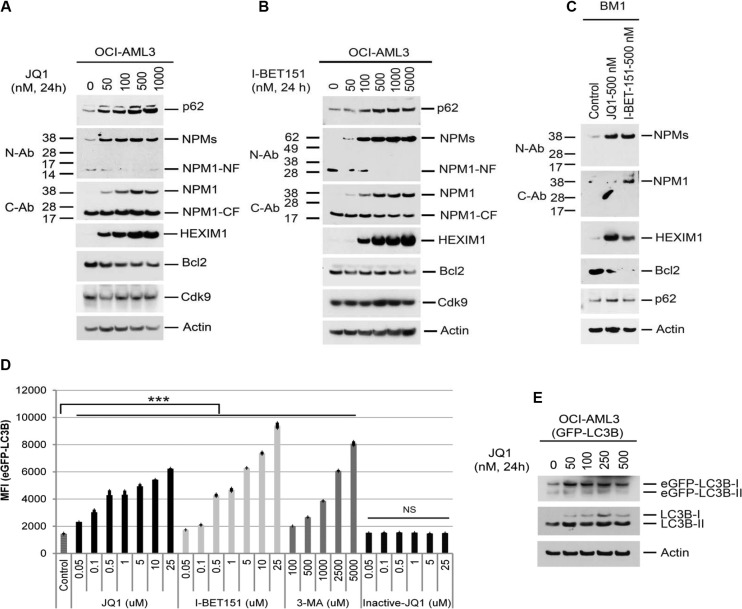
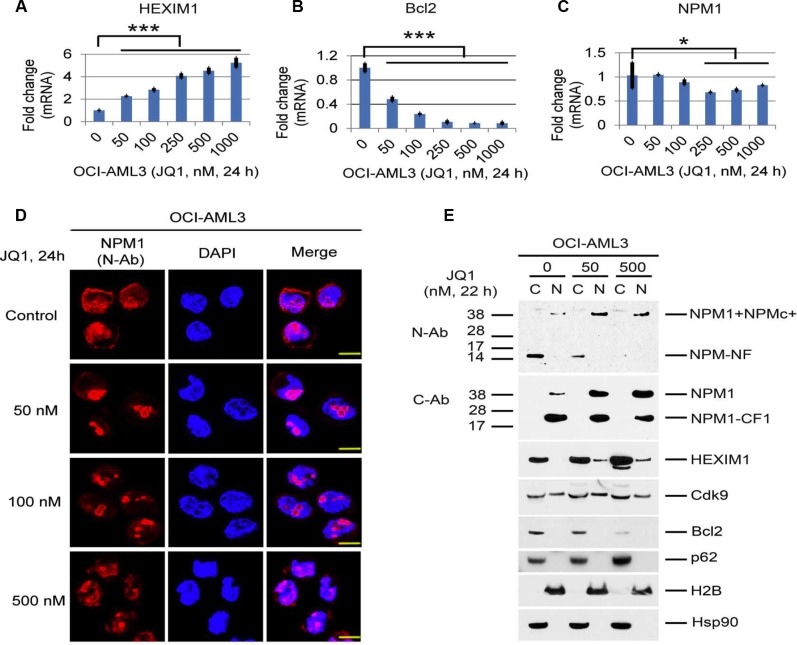
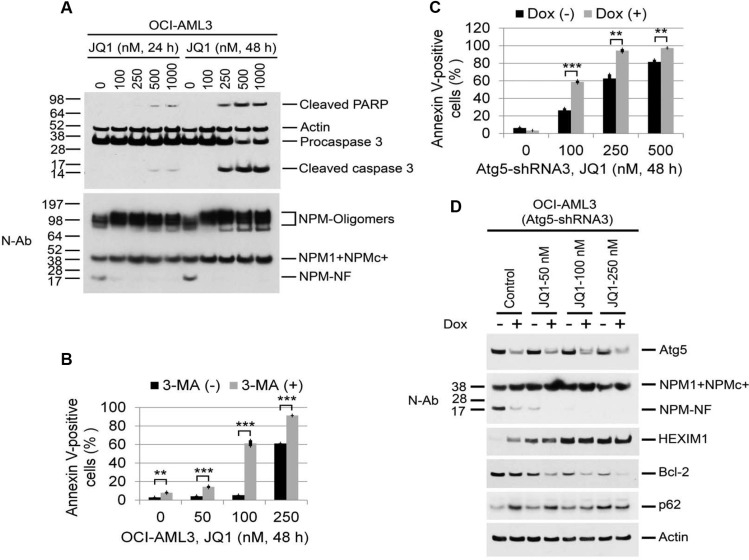
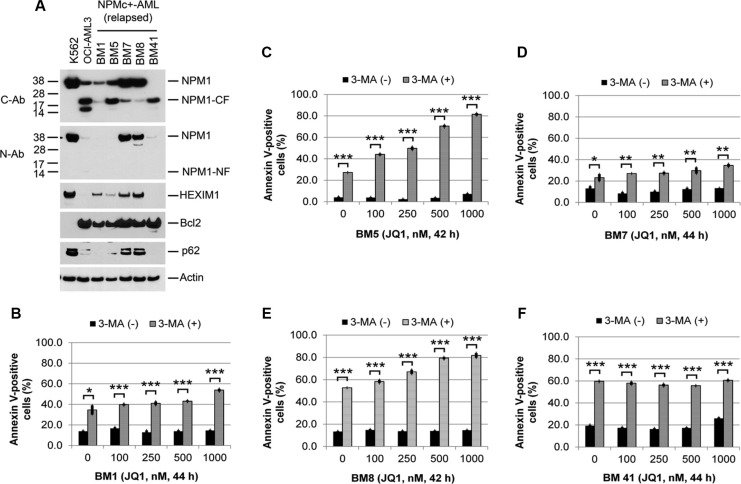
The mechanisms underlying activation of the BET pathway in AML cells remain poorly understood. We have discovered that autophagy is activated in acute leukemia cells expressing mutant nucleophosmin 1 (NPMc+) or MLL-fusion proteins. Autophagy activation results in the degradation of NPM1 and HEXIM1, two negative regulators of BET pathway activation. Inhibition of autophagy with pharmacologic inhibitors or through knocking down autophagy-related gene 5 (Atg5) expression increases the expression of both NPM1 and HEXIM1. The Brd4 inhibitors JQ1 and I-BET-151 also inhibit autophagy and increase NPM1 and HEXIM1 expression. We conclude that the degradation of NPM1 and HEXIM1 through autophagy in certain AML subsets contributes to the activation of the BET pathway in these cells.
急性髓系白血病(AML)细胞中BET信号通路激活的潜在机制仍知之甚少。我们发现,在表达突变型核磷蛋白1(NPMc+)或混合谱系白血病(MLL)融合蛋白的急性白血病细胞中自噬被激活。自噬激活导致BET信号通路激活的两个负调控因子NPM1和HEXIM1降解。用药物抑制剂抑制自噬或通过敲低自噬相关基因5(Atg5)的表达可增加NPM1和HEXIM1的表达。Brd4抑制剂JQ1和I-BET-151也抑制自噬并增加NPM1和HEXIM1的表达。我们得出结论,在某些AML亚群中,通过自噬降解NPM1和HEXIM1有助于这些细胞中BET信号通路的激活。