Sanghvi Gaurav V, Baskaran Praveen, Röseler Waltraud, Sieriebriennikov Bogdan, Rödelsperger Christian, Sommer Ralf J
Max Planck Institute for Developmental Biology, Department of Evolutionary Biology, Spemannstraße 37, Tübingen, Germany.
PLoS One. 2016 Oct 14;11(10):e0164881. doi: 10.1371/journal.pone.0164881. eCollection 2016.
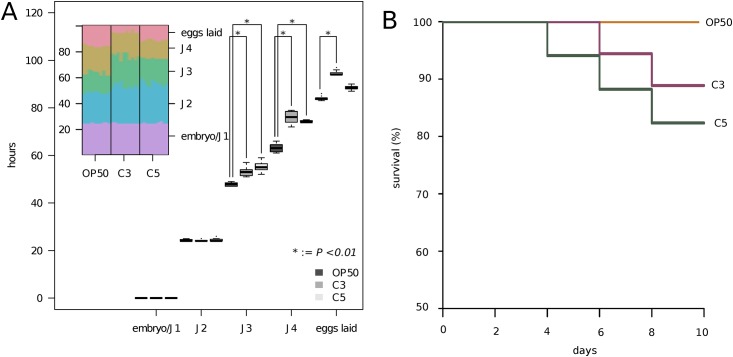
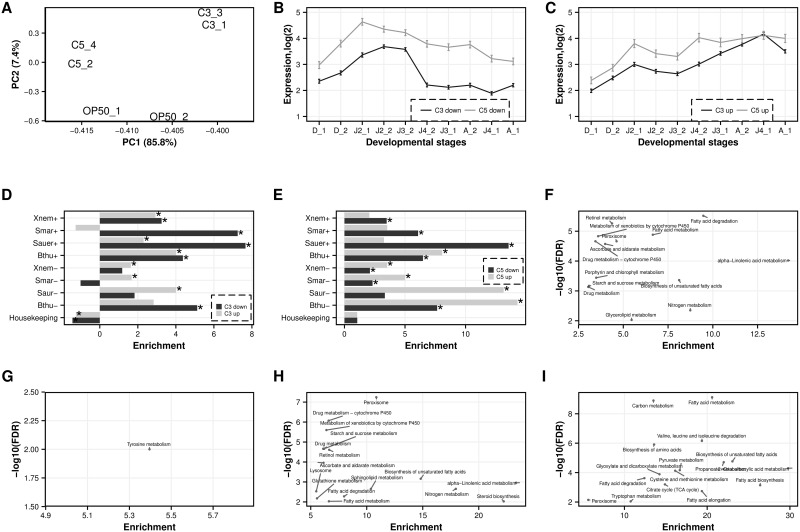
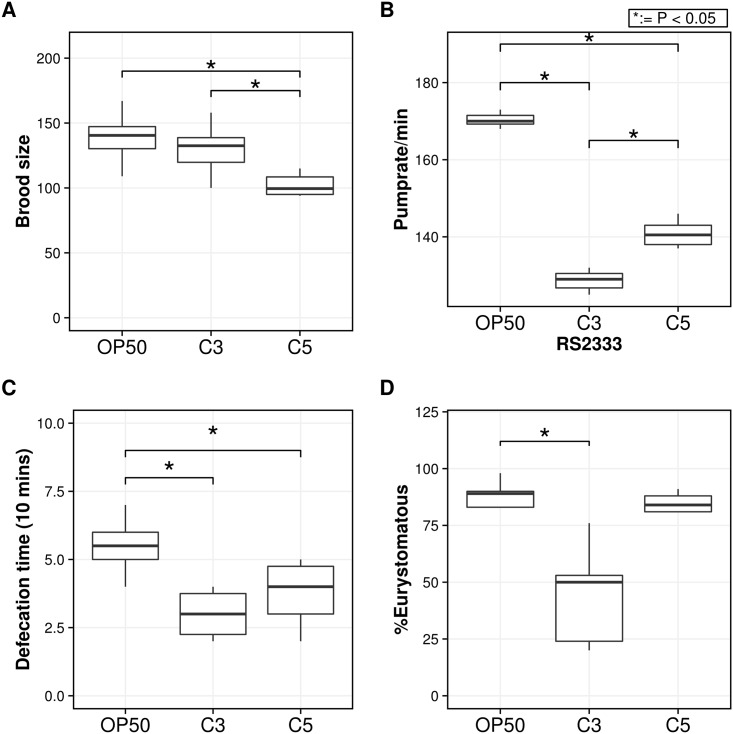
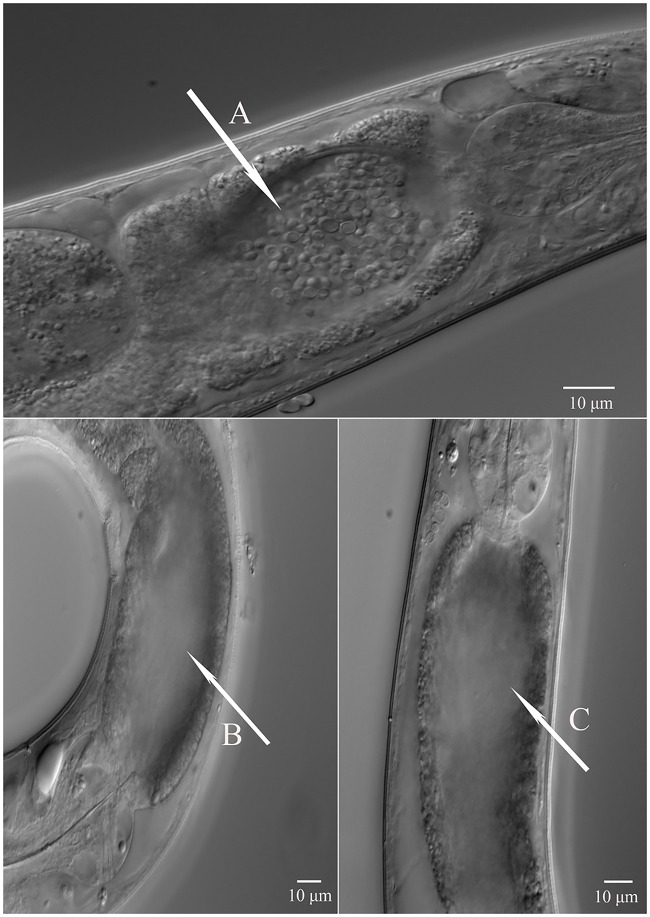
Nematodes, the earth's most abundant metazoa are found in all ecosystems. In order to survive in diverse environments, they have evolved distinct feeding strategies and they can use different food sources. While some nematodes are specialists, including parasites of plants and animals, others such as Pristionchus pacificus are omnivorous feeders, which can live on a diet of bacteria, protozoans, fungi or yeast. In the wild, P. pacificus is often found in a necromenic association with beetles and is known to be able to feed on a variety of microbes as well as on nematode prey. However, in laboratory studies Escherichia coli OP50 has been used as standard food source, similar to investigations in Caenorhabditis elegans and it is unclear to what extent this biases the obtained results and how relevant findings are in real nature. To gain first insight into the variation in traits induced by a non-bacterial food source, we study Pristionchus-fungi interactions under laboratory conditions. After screening different yeast strains, we were able to maintain P. pacificus for at least 50-60 generations on Cryptococcus albidus and Cryptococcus curvatus. We describe life history traits of P. pacificus on both yeast strains, including developmental timing, survival and brood size. Despite a slight developmental delay and problems to digest yeast cells, which are both reflected at a transcriptomic level, all analyses support the potential of Cryptococcus strains as food source for P. pacificus. In summary, our work establishes two Cryptococcus strains as alternative food source for P. pacificus and shows change in various developmental, physiological and morphological traits, including the transcriptomic profiles.
线虫是地球上数量最多的后生动物,存在于所有生态系统中。为了在多样的环境中生存,它们进化出了独特的摄食策略,能够利用不同的食物来源。一些线虫是专性摄食者,包括植物和动物的寄生虫,而其他线虫如太平洋小杆线虫是杂食性摄食者,可以以细菌、原生动物、真菌或酵母为食。在野外,太平洋小杆线虫经常与甲虫形成尸食性共生关系,并且已知它能够以各种微生物以及线虫猎物为食。然而,在实验室研究中,大肠杆菌OP50被用作标准食物来源,这与秀丽隐杆线虫的研究类似,目前尚不清楚这在多大程度上会使所获得的结果产生偏差,以及相关发现在实际自然环境中的相关性如何。为了初步了解非细菌食物来源引起的性状变化,我们在实验室条件下研究了太平洋小杆线虫与真菌的相互作用。在筛选了不同的酵母菌株后,我们能够在白色隐球菌和弯曲隐球菌上使太平洋小杆线虫维持至少50 - 60代。我们描述了太平洋小杆线虫在这两种酵母菌株上的生活史特征,包括发育时间、存活率和产卵量。尽管在转录组水平上都反映出有轻微的发育延迟和消化酵母细胞的问题,但所有分析都支持隐球菌菌株作为太平洋小杆线虫食物来源的潜力。总之,我们的工作确立了两种隐球菌菌株作为太平洋小杆线虫的替代食物来源,并展示了各种发育、生理和形态特征的变化,包括转录组图谱。