David Marion A, Orlowski Stéphane, Prichard Roger K, Hashem Shaima, André François, Lespine Anne
Toxalim (Research Centre in Food Toxicology), Université de Toulouse, INRA, ENVT, INP-Purpan, UPS, Toulouse, France; Institute of Parasitology, McGill University, Sainte-Anne-De-Bellevue, Canada.
Institute for Integrative Biology of the Cell (I2BC), CEA, CNRS UMR 9198, Univ Paris-Sud, Université Paris-Saclay, 91198, Gif-sur-Yvette cedex, France.
Int J Parasitol Drugs Drug Resist. 2016 Dec;6(3):299-313. doi: 10.1016/j.ijpddr.2016.09.001. Epub 2016 Sep 15.
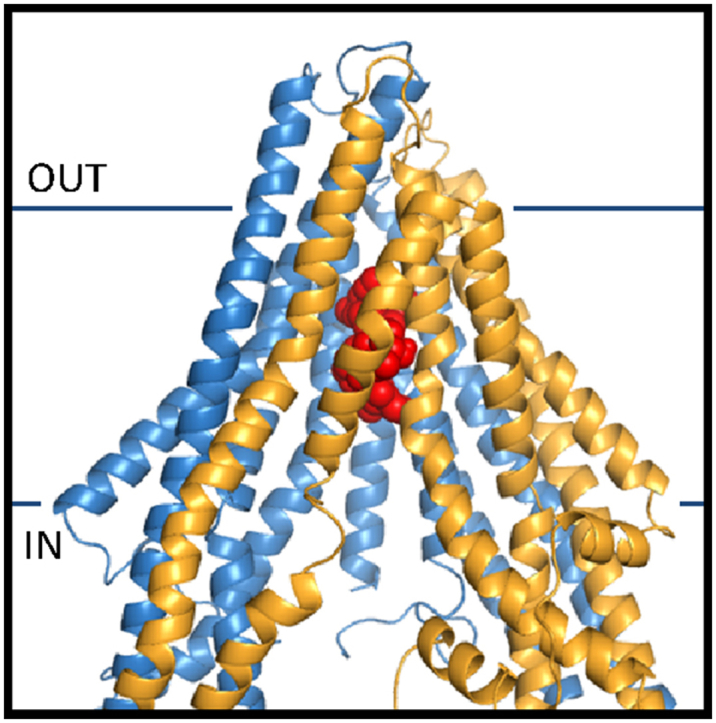
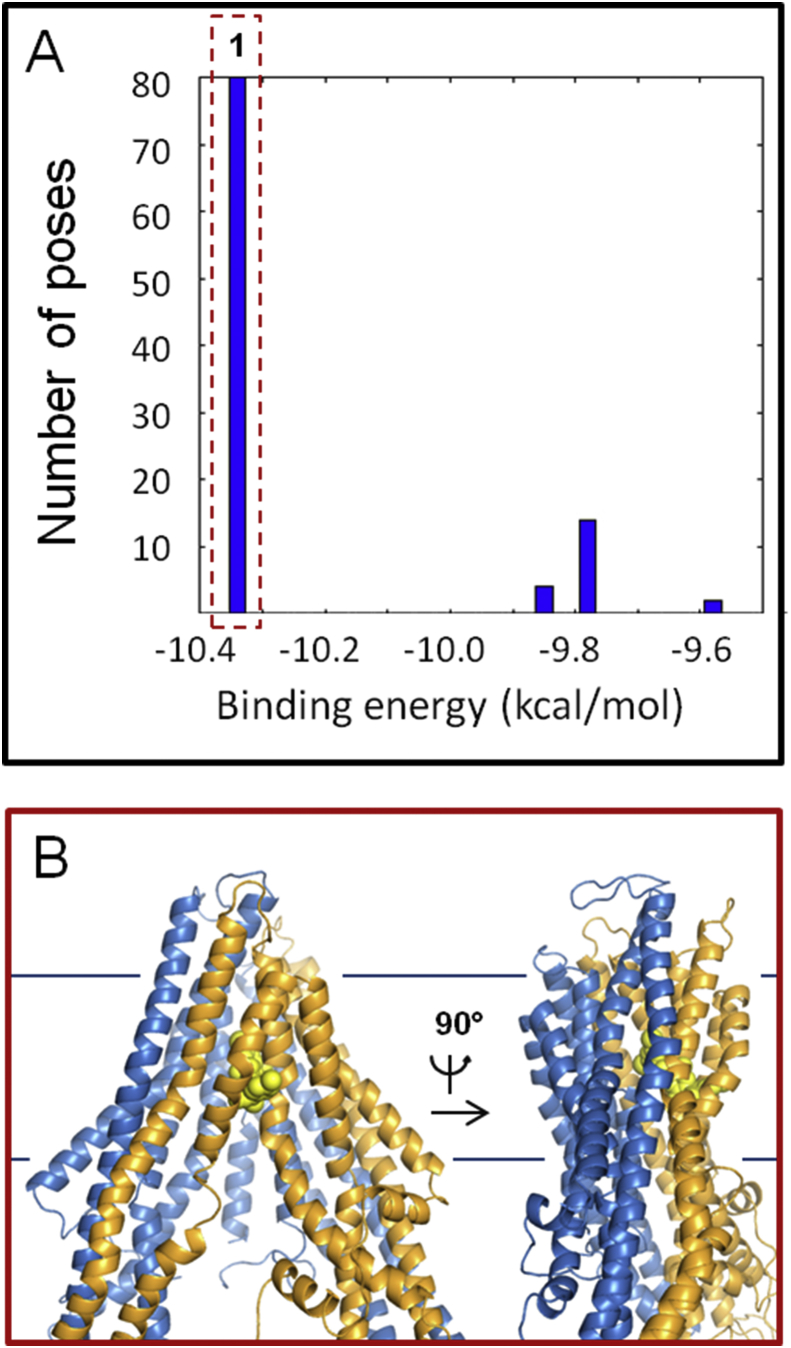
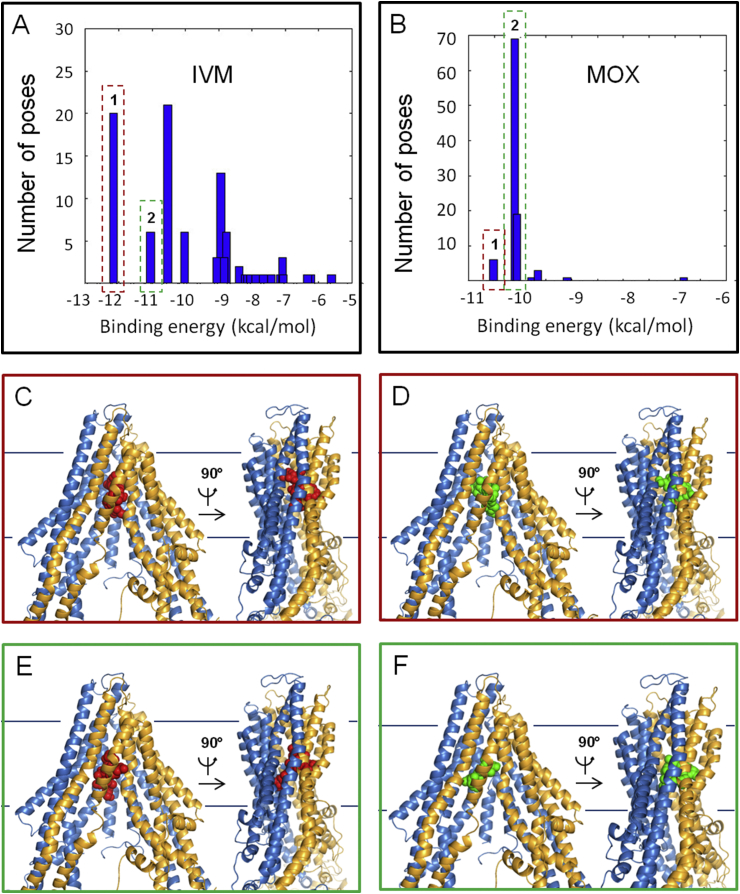
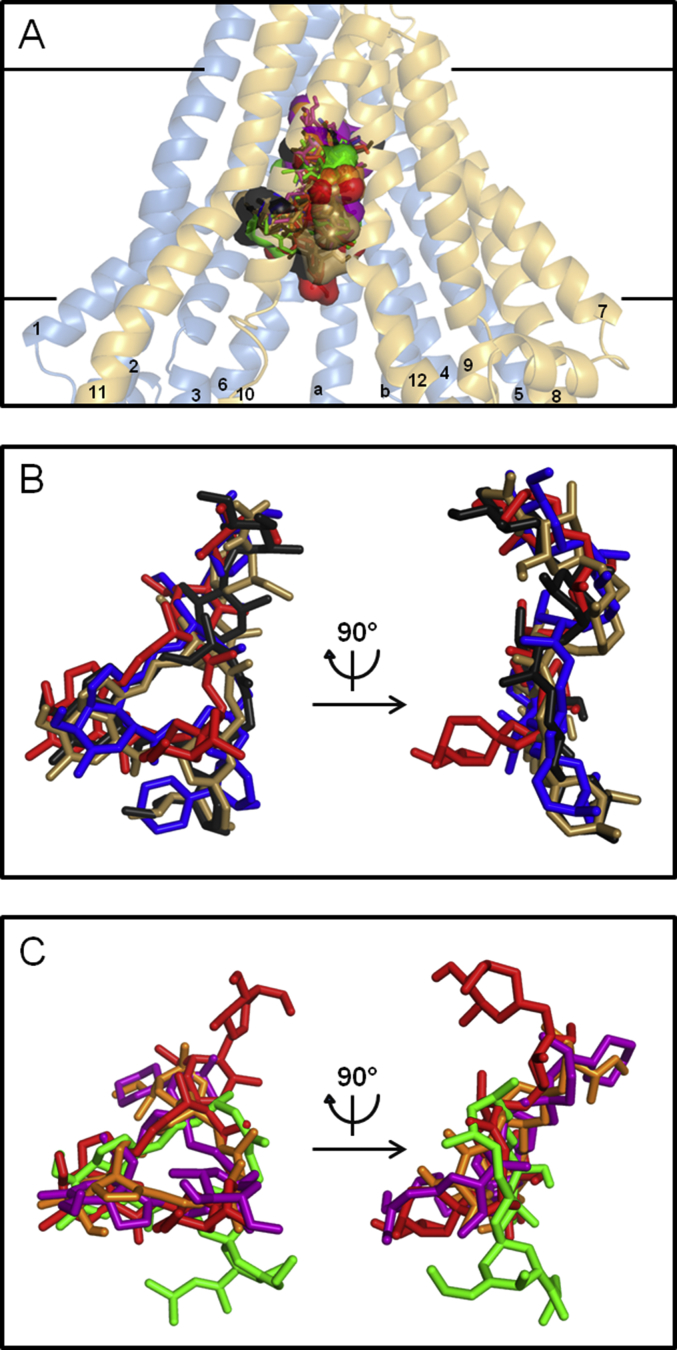
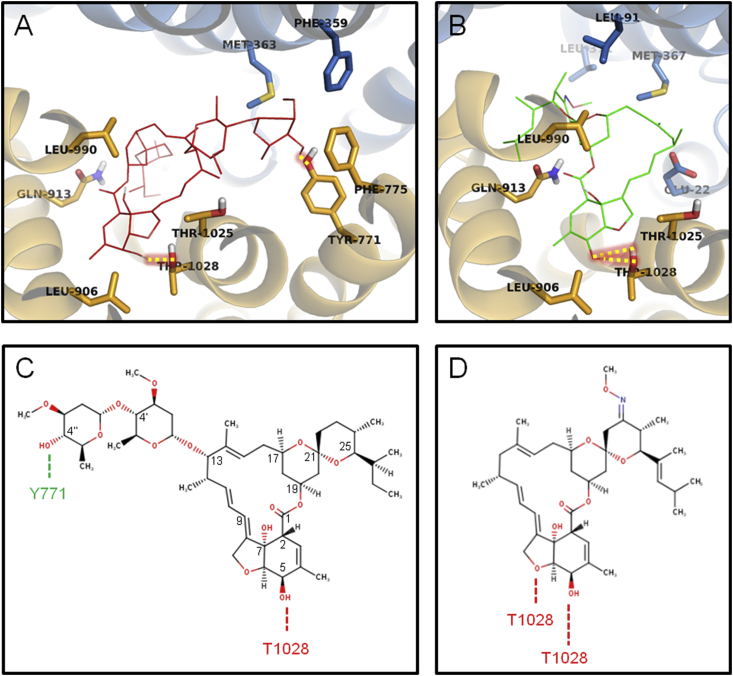
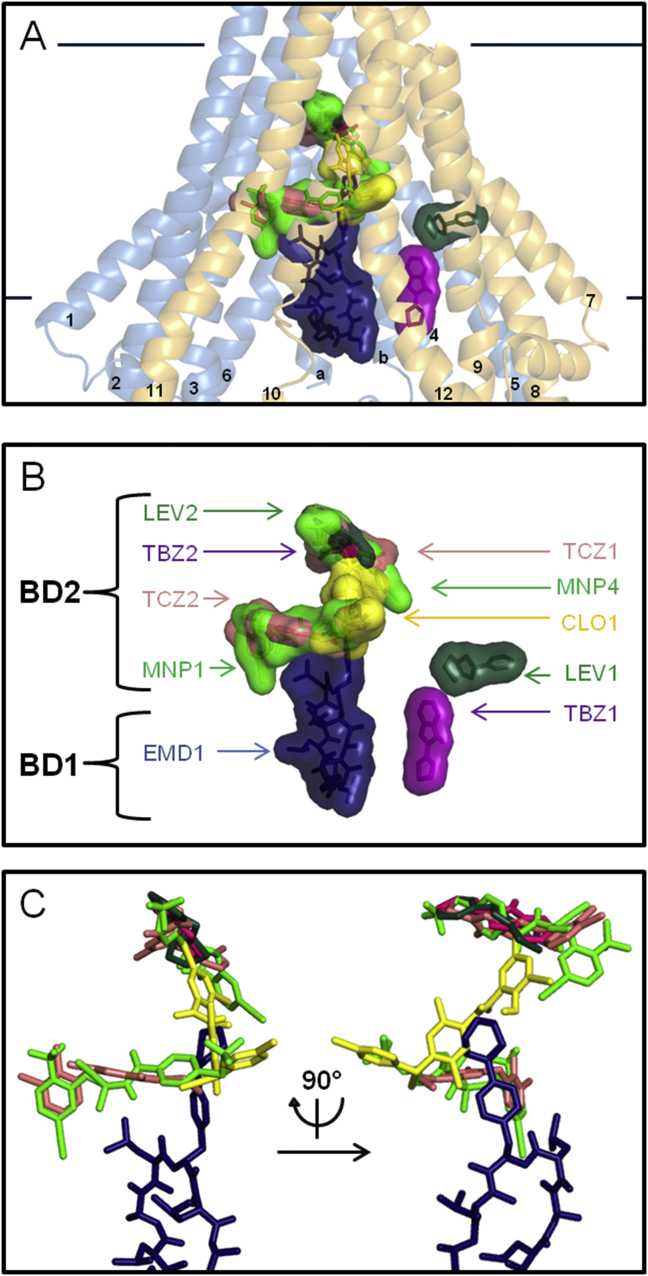
Macrocyclic lactones (ML) are important anthelmintics used in animals and humans against parasite nematodes, but their therapeutic success is compromised by the spread of ML resistance. Some ABC transporters, such as p-glycoproteins (Pgps), are selected and overexpressed in ML-resistant nematodes, supporting a role for some drug efflux proteins in ML resistance. However, the role of such proteins in ML transport remains to be clarified at the molecular level. Recently, Caenorhabditis elegans Pgp-1 (Cel-Pgp-1) has been crystallized, and its drug-modulated ATPase function characterized in vitro revealed Cel-Pgp-1 as a multidrug transporter. Using this crystal structure, we have developed an in silico drug docking model in order to study the binding of ML and other anthelmintic drugs to Cel-Pgp-1. All tested ML bound with high affinity in a unique site, within the inner chamber of the protein, supporting that ML may be transported by Cel-Pgp-1. Interestingly, interacting residues delineate a ML specific fingerprint involving H-bonds, including T1028. In particular, benzofurane and spiroketal moieties bound to specific sub-sites. When compared with the aglycone ML, such as moxidectin and ivermectin aglycone, avermectin anthelmintics have significant higher affinity for Cel-Pgp-1, likely due to the sugar substituent(s) that bind to a specific area involving H-bonds at Y771. Triclabendazole, closantel and emodepside bound with good affinities to different sub-sites in the inner chamber, partially overlapping with the ML binding site, suggesting that they could compete for Cel-Pgp-1-mediated ML transport. In conclusion, this work provides novel information on the role of nematode Pgps in transporting anthelmintics, and a valuable tool to predict drug-drug interactions and to rationally design new competitive inhibitors of clinically-relevant nematode Pgps, to improve anthelmintic therapeutics.
大环内酯类药物(ML)是用于人和动物对抗寄生线虫的重要驱虫药,但其治疗效果因ML耐药性的传播而受到影响。一些ABC转运蛋白,如P-糖蛋白(Pgps),在对ML耐药的线虫中被选择并过度表达,这表明某些药物外排蛋白在ML耐药中起作用。然而,此类蛋白在ML转运中的作用在分子水平上仍有待阐明。最近,秀丽隐杆线虫Pgp-1(Cel-Pgp-1)已被结晶,其在体外表征的药物调节ATP酶功能表明Cel-Pgp-1是一种多药转运蛋白。利用该晶体结构,我们开发了一种计算机辅助药物对接模型,以研究ML和其他驱虫药与Cel-Pgp-1的结合。所有测试的ML都在蛋白内腔的一个独特位点以高亲和力结合,这支持ML可能由Cel-Pgp-1转运。有趣的是,相互作用的残基勾勒出一个涉及氢键的ML特异性指纹,包括T1028。特别是,苯并呋喃和螺环缩酮部分与特定亚位点结合。与莫西菌素和伊维菌素苷元等苷元ML相比,阿维菌素类驱虫药对Cel-Pgp-1具有显著更高的亲和力,这可能是由于与Y771处涉及氢键的特定区域结合的糖取代基。三氯苯达唑、氯氰碘柳胺和埃莫昔班以良好的亲和力结合到内腔的不同亚位点,部分与ML结合位点重叠,这表明它们可能竞争Cel-Pgp-1介导的ML转运。总之,这项工作提供了关于线虫Pgps在驱虫药转运中作用的新信息,以及一个有价值的工具,用于预测药物-药物相互作用和合理设计临床相关线虫Pgps的新型竞争性抑制剂,以改善驱虫治疗。