Elong Ngono Annie, Chen Hui-Wen, Tang William W, Joo Yunichel, King Kevin, Weiskopf Daniela, Sidney John, Sette Alessandro, Shresta Sujan
Division of Inflammation Biology, La Jolla Institute for Allergy and Immunology, La Jolla, CA, United States.
Department of Veterinary Medicine, National Taiwan University, Taiwan.
EBioMedicine. 2016 Nov;13:284-293. doi: 10.1016/j.ebiom.2016.10.006. Epub 2016 Oct 7.
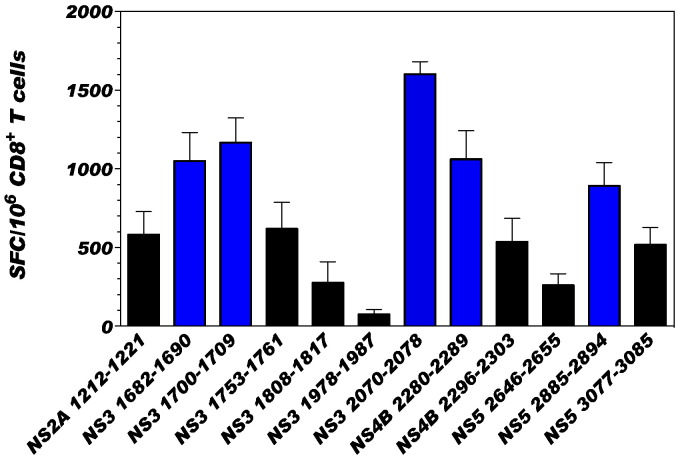
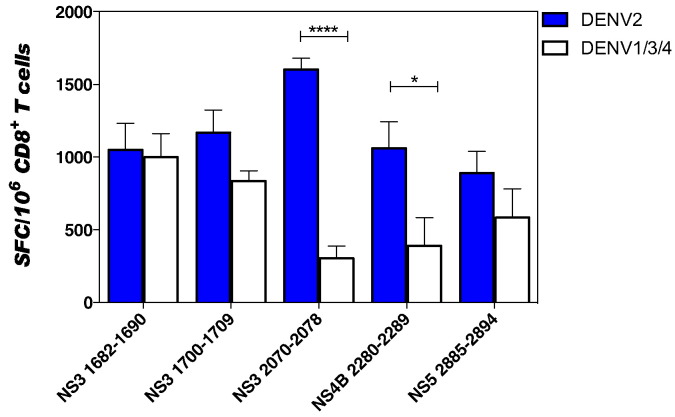
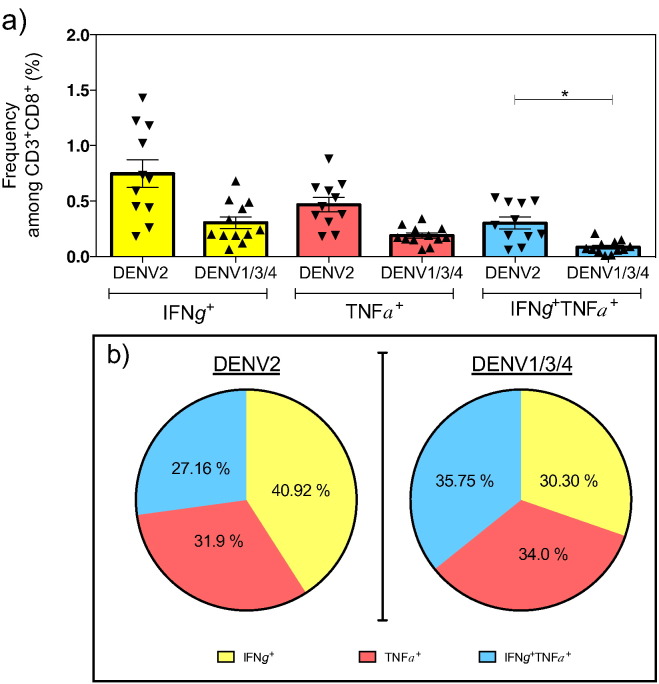
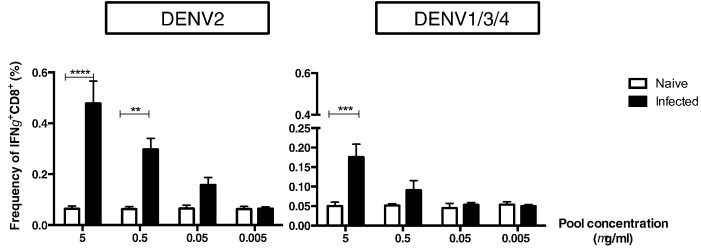
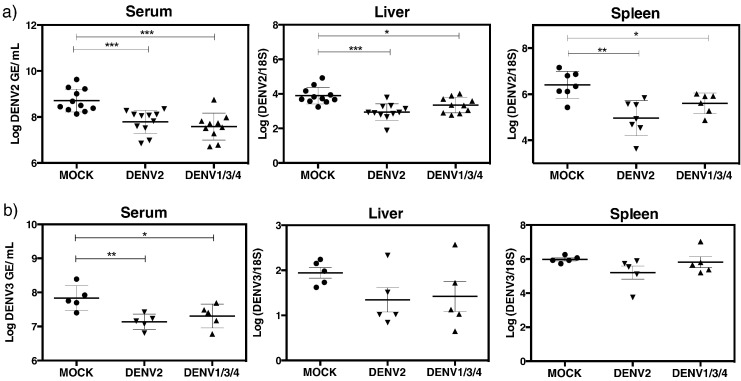
Infection with one of the four dengue virus serotypes (DENV1-4) presumably leads to lifelong immunity against the infecting serotype but not against heterotypic reinfection, resulting in a greater risk of developing Dengue Hemorrhagic Fever/Dengue Shock Syndrome (DHF/DSS) during secondary infection. Both antibodies and T cell responses have been implicated in DHF/DSS pathogenesis. According to the T cell-based hypothesis termed "original antigenic sin," secondary DENV infection is dominated by non-protective, cross-reactive T cells that elicit an aberrant immune response. The goal of our study was to compare the roles of serotype-specific and cross-reactive T cells in protection vs. pathogenesis during DENV infection in vivo. Specifically, we utilized IFN-α/βR HLAB0702 transgenic mice in the context of peptide vaccination with relevant human CD8 T cell epitopes. IFN-α/βR HLAB0702 transgenic mice were immunized with DENV serotype 2 (DENV2)-specific epitopes or variants found in any of the other three serotypes (DENV1, DENV3 or DENV4), followed by challenge with DENV. Although cross-reactive T cell responses were lower than responses elicited by serotype-specific T cells, immunization with either serotype-specific or variant peptide epitopes enhanced viral clearance, demonstrating that both serotype-specific and cross-reactive T cells can contribute to protection in vivo against DENV infection.
感染四种登革病毒血清型(DENV1 - 4)之一可能会导致对感染血清型产生终身免疫,但对异型再感染则无免疫力,这使得二次感染期间发生登革出血热/登革休克综合征(DHF/DSS)的风险更高。抗体和T细胞反应都与DHF/DSS的发病机制有关。根据基于T细胞的“原始抗原罪”假说,二次登革病毒感染主要由非保护性的交叉反应性T细胞主导,这些T细胞会引发异常的免疫反应。我们研究的目的是比较血清型特异性和交叉反应性T细胞在登革病毒体内感染期间的保护作用与发病机制中的作用。具体而言,我们在使用相关人类CD8 T细胞表位进行肽疫苗接种的背景下,利用IFN-α/βR HLAB0702转基因小鼠。用登革病毒2型(DENV2)特异性表位或在其他三种血清型(DENV1、DENV3或DENV4)中发现的变体对IFN-α/βR HLAB0702转基因小鼠进行免疫,然后用登革病毒进行攻击。尽管交叉反应性T细胞反应低于血清型特异性T细胞引发的反应,但用血清型特异性或变体肽表位进行免疫均可增强病毒清除,这表明血清型特异性和交叉反应性T细胞都有助于在体内抵御登革病毒感染。