Udagawa Yukio, Ohno Shinya, Nakagawa Shintaro, Sugimoto Kazutaka, Mochizuki Joji
Drug Safety Division, Chugai Pharmaceutical Co., Ltd., 1-1 Nihonbashi-Muromachi 2-Chome, Chuo-ku, Tokyo, Japan.
Project and Lifecycle Management Unit, Chugai Pharmaceutical Co., Ltd, Tokyo, Japan.
Drugs Real World Outcomes. 2015 Sep;2(3):227-237. doi: 10.1007/s40801-015-0034-5.
Measures of the effectiveness of risk minimization activities are necessary for the appropriate use of drugs, and clinical databases are a low-cost method of quickly producing such results.
The aim of this study was to explore the secondary application of clinical databases in verifying the impact of risk minimization activities; specifically, whether such databases could be used to identify changes in hepatitis B virus testing behavior after an alert from the Pharmaceuticals and Medical Devices Agency (PMDA) in Japan.
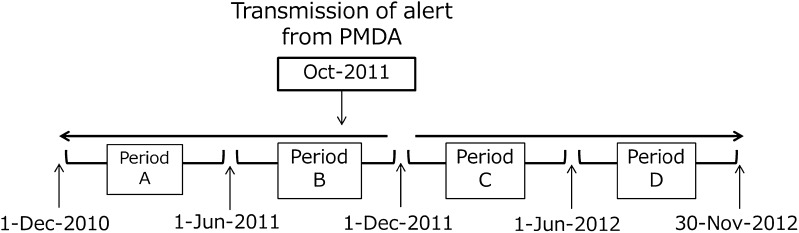
Patient data from December 1, 2010 to November 30, 2012 were extracted from the Medical Data Vision clinical database. The percentages of patients tested for hepatitis B virus DNA (HBV-DNA), hepatitis B surface antigen (HBsAg), and hepatitis B surface antibody (HBsAb)/hepatitis B core antibody (HBcAb) were compared 1 year before (consecutive 6-month periods A and B) and 1 year after (consecutive 6-month periods C and D) a PMDA alert regarding viral reactivation in patients receiving immunosuppressive agents.
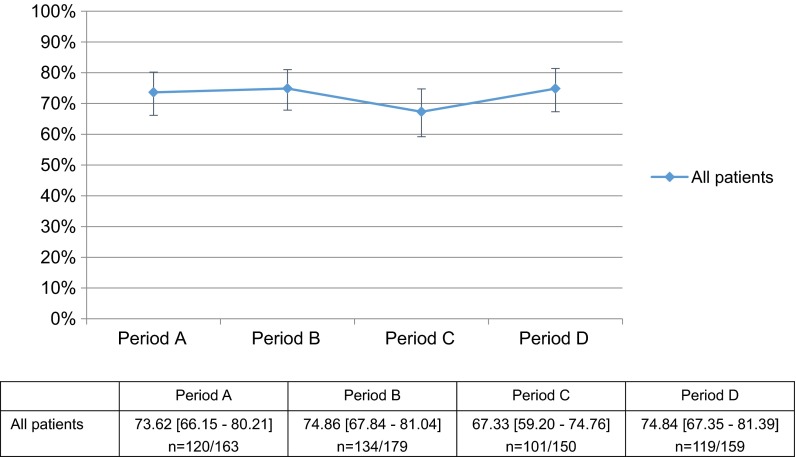
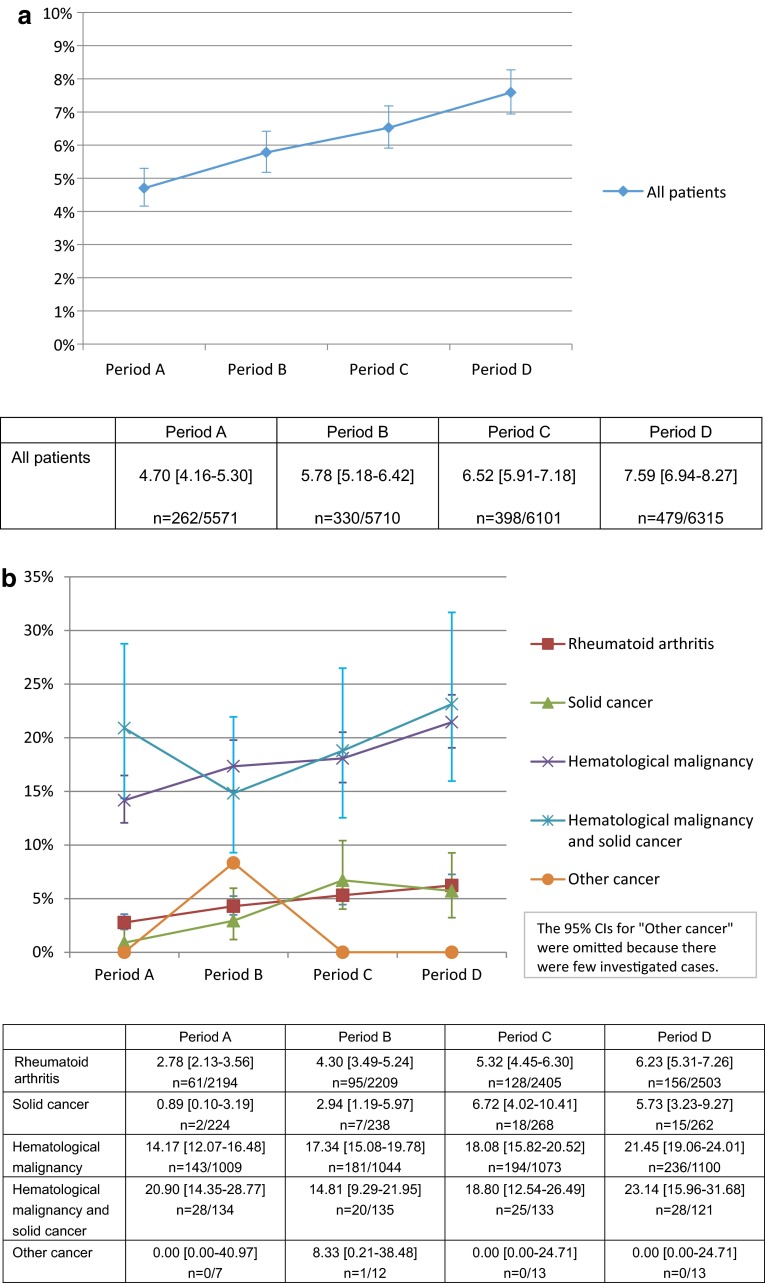
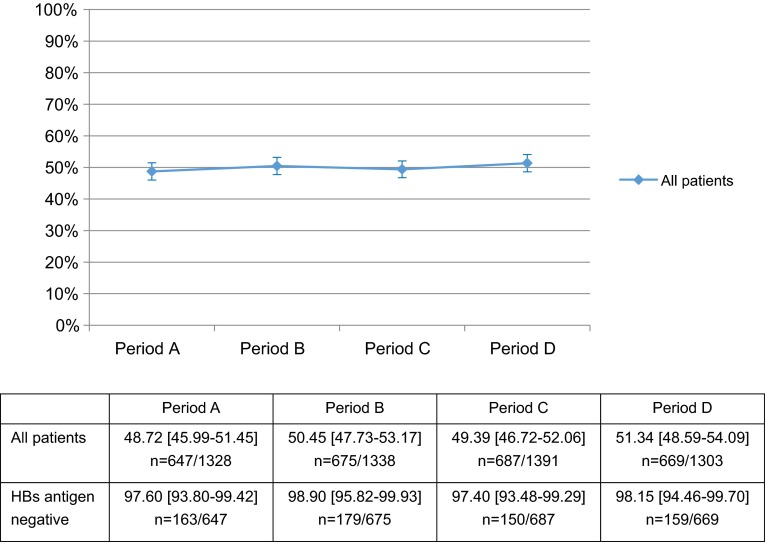
Data for 9866 patients in the clinical database were analyzed. After the PMDA alert, the percentage of patients tested for HBV-DNA linearly increased in periods A to D: 4.70 % (n = 262/5571), 5.78 % (n = 330/5710), 6.52 % (n = 398/6101), and 7.59 % (n = 479/6315). However, no changes were observed in the rates of HBsAg and HBcAb/HBsAb testing (around 50 and 70 %, respectively). Overall testing rates appeared to differ depending on disease and drug type.
These findings suggest that the PMDA alert was effective at recommending HBV-DNA testing. This secondary application of clinical databases may be effective for verifying the impact of risk minimization activities.
对于合理用药而言,风险最小化活动有效性的衡量指标是必要的,而临床数据库是快速得出此类结果的低成本方法。
本研究旨在探讨临床数据库在验证风险最小化活动影响方面的二次应用;具体而言,此类数据库是否可用于识别日本药品和医疗器械管理局(PMDA)发出警报后乙肝病毒检测行为的变化。
从医疗数据视觉临床数据库中提取2010年12月1日至2012年11月30日的患者数据。比较在PMDA发出关于接受免疫抑制剂治疗患者病毒再激活警报前1年(连续6个月期间A和B)和警报后1年(连续6个月期间C和D)进行乙肝病毒DNA(HBV-DNA)、乙肝表面抗原(HBsAg)以及乙肝表面抗体(HBsAb)/乙肝核心抗体(HBcAb)检测的患者百分比。
对临床数据库中的9866例患者数据进行了分析。在PMDA发出警报后,A至D期进行HBV-DNA检测的患者百分比呈线性增加:4.70%(n = 262/5571)、5.78%(n = 330/5710)、6.52%(n = 398/6101)和7.59%(n = 479/6315)。然而,HBsAg和HBcAb/HBsAb检测率未观察到变化(分别约为50%和70%)。总体检测率似乎因疾病和药物类型而异。
这些发现表明PMDA警报在推荐HBV-DNA检测方面是有效的。临床数据库的这种二次应用可能对验证风险最小化活动的影响有效。