Nishtala Prasad S, Oh Sekbong, Kim Daniel, Chun Natalie, Binti Kamis Siti Fatimah, Kiu Kuan-Cia
School of Pharmacy, University of Otago, PO Box 56, Dunedin, 9054, New Zealand.
Drugs Real World Outcomes. 2015 Jun;2(2):177-185. doi: 10.1007/s40801-015-0026-5.
Older people (aged 65 years and above) consume more analgesics compared with other age groups. Because of the aging of the New Zealand population, it is important to ascertain the trends of analgesic use at a population-level.
The aim of this population-based study was to describe and characterize the utilization of analgesic medicines in older people in New Zealand from 2005 to 2013.
Repeated cross-sectional analysis of population-level dispensing data was conducted from 2005 to 2013. Dispensing data were obtained from Pharmaceutical Claims Data Mart (Pharms), Ministry of Health, extracted using encrypted national health index numbers as unique identifiers and categorized by the World Health Organization Collaborating Centre for Drug Statistics Methodology (WHOCC) Anatomical Therapeutic Chemical (ATC) classification system. Utilization of analgesics was measured in defined daily dose (DDD) per 1000 older people per day (TOPD).
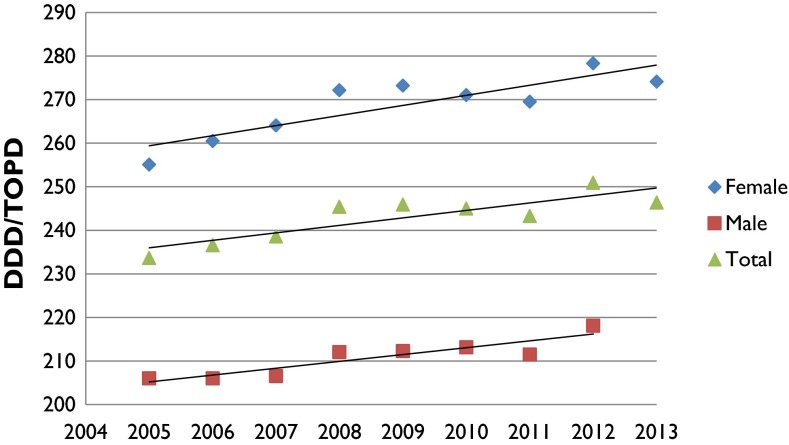
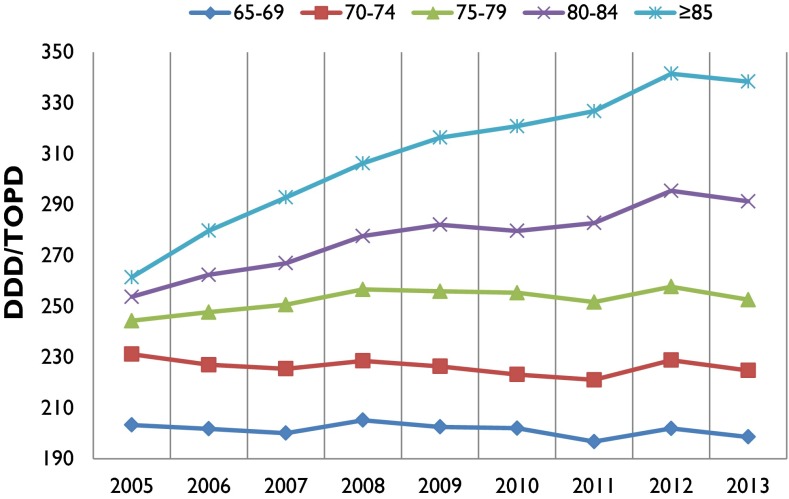
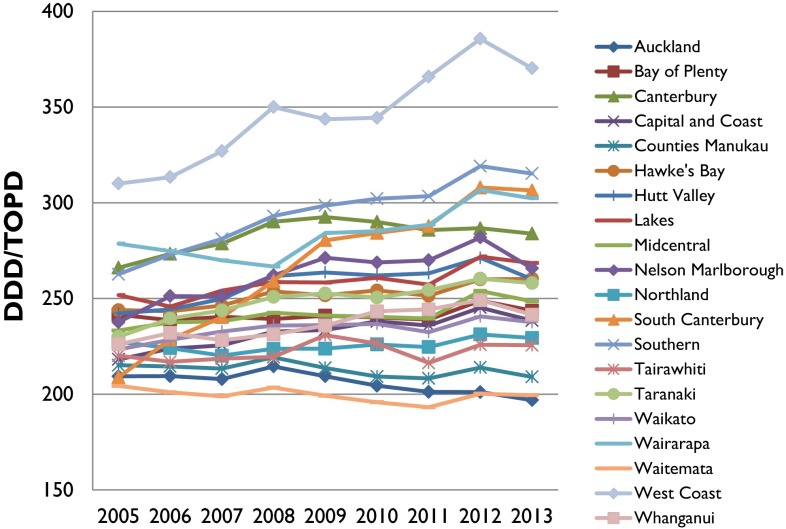
Overall, analgesic medicine utilization increased by 5.44 % from 2005 to 2013. Analgesic utilization increased from 233.66 to 246.36 DDD/TOPD. The increased utilization was mainly driven by analgesics and antipyretics. An increased utilization of analgesics was seen in the 85+ age group. Females consumed more analgesics compared with males. Differences in analgesic utilization across the District Health Boards (DHBs) persisted over the 9-year period. Utilization of anti-migraines was stable over the 9-year period.
This population-level utilization study showed a 5.44 % increase in utilization of analgesic medicines in older people in New Zealand from 2005 to 2013. Important findings were that (1) females utilized more analgesics compared with males; (2) non-steroidal anti-inflammatory drug (NSAID) utilization decreased over the years; and (3) the highest utilization was reported in the 85+ group. Further research is warranted to examine the drivers influencing analgesic use in New Zealand.
与其他年龄组相比,老年人(65岁及以上)服用的镇痛药更多。由于新西兰人口老龄化,在人群层面确定镇痛药使用趋势很重要。
这项基于人群的研究旨在描述和表征2005年至2013年新西兰老年人镇痛药的使用情况。
对2005年至2013年人群层面的配药数据进行重复横断面分析。配药数据来自卫生部的药品索赔数据集市(Pharms),使用加密的国家健康指数编号作为唯一标识符进行提取,并按照世界卫生组织药物统计方法合作中心(WHOCC)的解剖治疗化学(ATC)分类系统进行分类。镇痛药的使用量以每1000名老年人每天的限定日剂量(DDD)来衡量(TOPD)。
总体而言,2005年至2013年镇痛药的使用量增加了5.44%。镇痛药的使用量从233.66 DDD/TOPD增加到246.36 DDD/TOPD。使用量的增加主要由镇痛药和解热药推动。85岁及以上年龄组的镇痛药使用量有所增加。女性服用的镇痛药比男性多。在9年期间,各地区卫生委员会(DHBs)的镇痛药使用差异持续存在。抗偏头痛药物的使用在9年期间保持稳定。
这项人群层面的使用研究表明,2005年至2013年新西兰老年人镇痛药的使用量增加了5.44%。重要发现包括:(1)女性使用的镇痛药比男性多;(2)多年来非甾体抗炎药(NSAID)的使用量有所下降;(3)85岁及以上年龄组的使用量最高。有必要进行进一步研究以探讨影响新西兰镇痛药使用的驱动因素。