Ecosystem Dynamics Research Group, Research Centre for Global Change, JAMSTEC, Yokohama, Japan.
Institute of Marine Sciences (CSIC), 08003 Barcelona, Catalonia, Spain.
Sci Rep. 2016 Oct 17;6:34170. doi: 10.1038/srep34170.
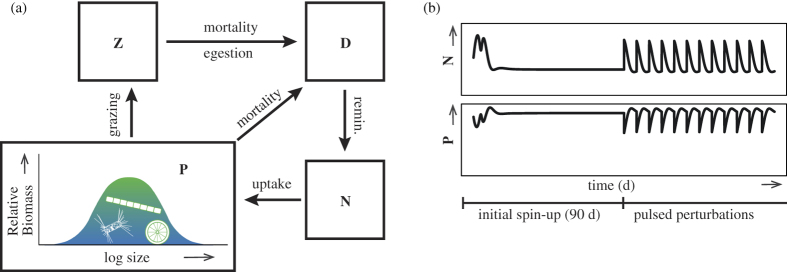
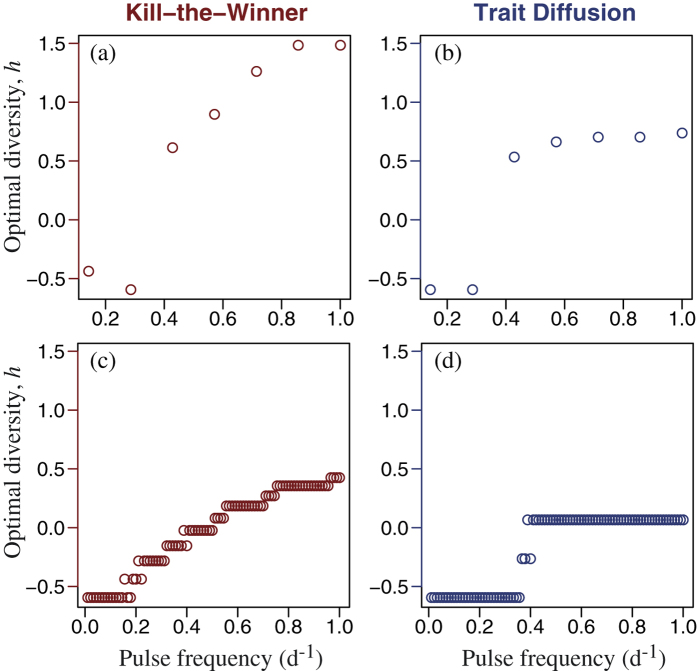
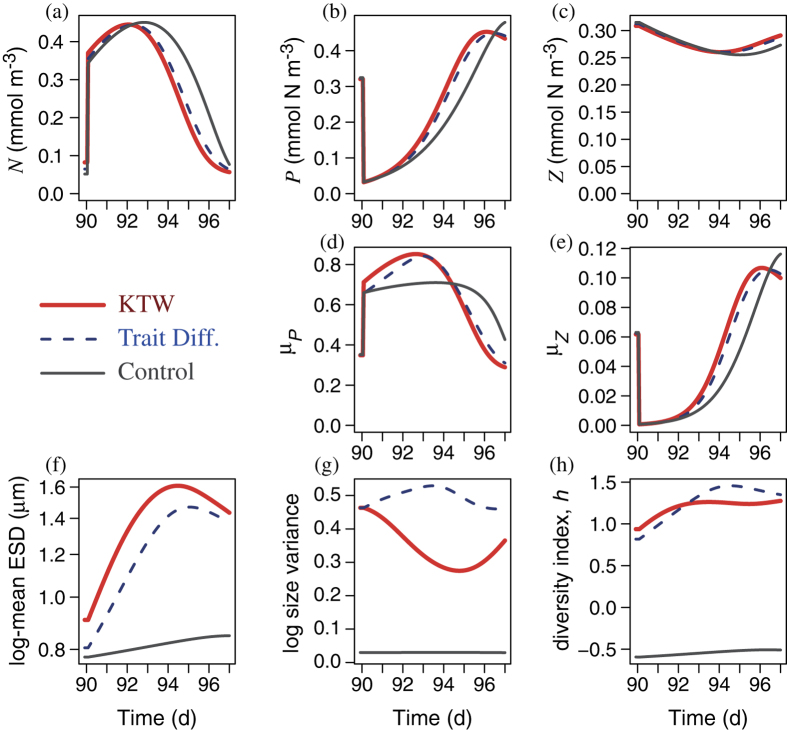
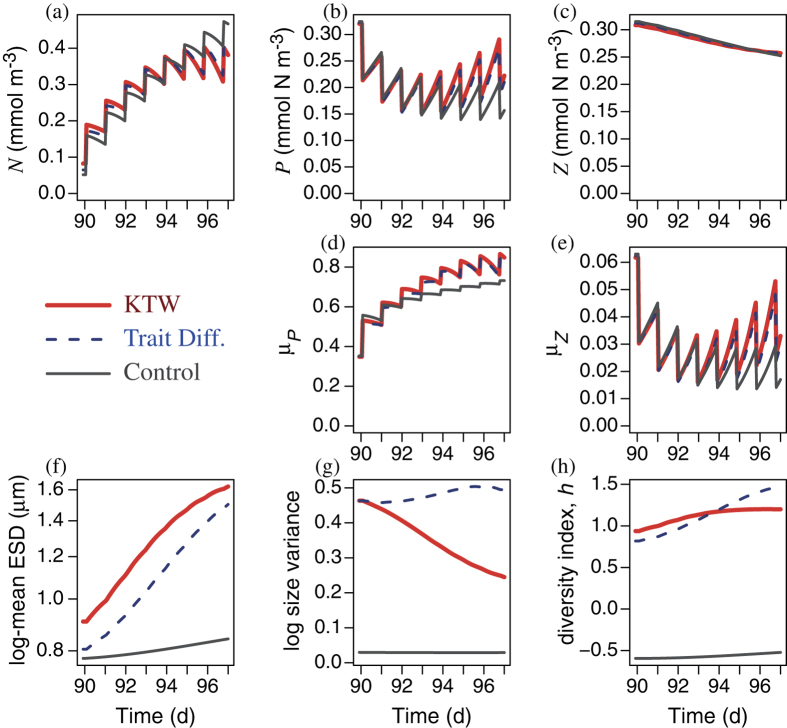
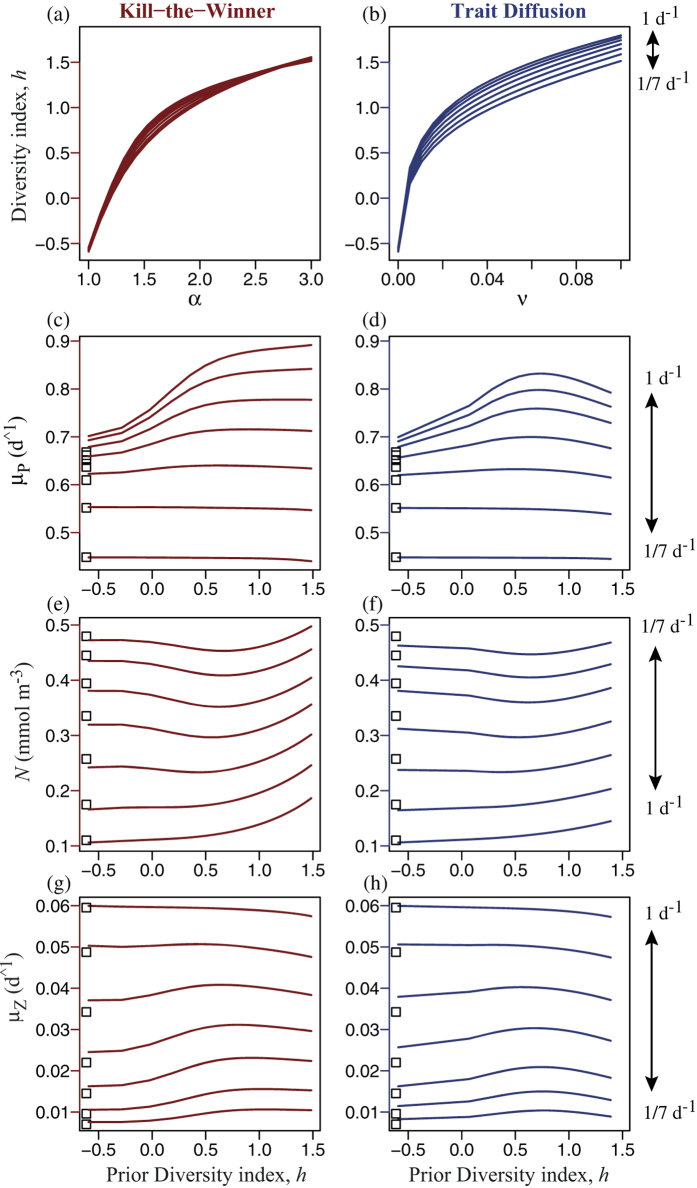
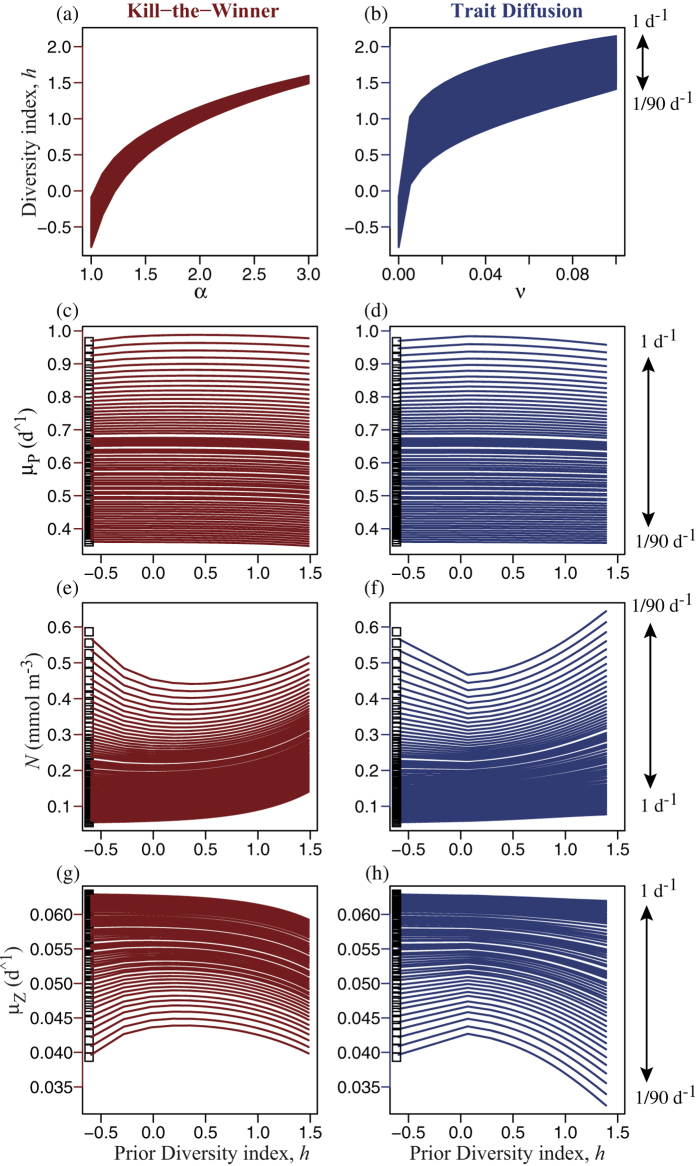
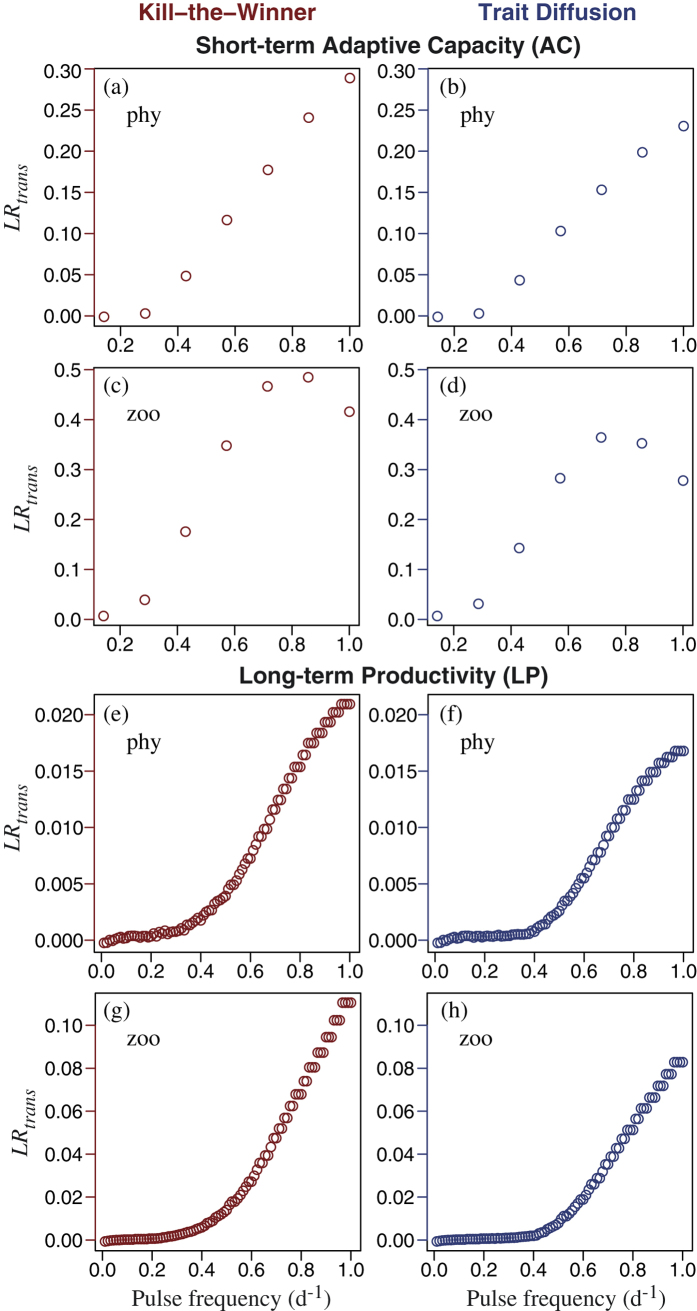
Biodiversity is known to be an important determinant of ecosystem-level functions and processes. Although theories have been proposed to explain the generally positive relationship between, for example, biodiversity and productivity, it remains unclear which mechanisms underlie the observed variations in Biodiversity-Ecosystem Function (BEF) relationships. Using a continuous trait-distribution model for a phytoplankton community of gleaners competing with opportunists, and subjecting it to differing frequencies of disturbance, we find that species selection tends to enhance temporal species complementarity, which is maximised at high disturbance frequency and intermediate functional diversity. This leads to the emergence of a trade-off whereby increasing diversity tends to enhance short-term adaptive capacity under frequent disturbance while diminishing long-term productivity under infrequent disturbance. BEF relationships therefore depend on both disturbance frequency and the timescale of observation.
生物多样性被认为是生态系统水平功能和过程的重要决定因素。尽管已经提出了一些理论来解释生物多样性与生产力之间的一般正相关关系,但仍不清楚是什么机制导致了生物多样性-生态系统功能(BEF)关系的观察到的变化。本研究使用一个连续的浮游植物群落特质分布模型,其中包括竞争机会主义者的收割者,并对其施加不同频率的干扰,结果发现,物种选择往往会增强时间上的物种互补性,而在高干扰频率和中等功能多样性下达到最大值。这导致了一种权衡的出现,即在频繁干扰下,多样性的增加往往会增强短期的适应性能力,而在不频繁干扰下则会降低长期生产力。因此,BEF 关系既取决于干扰频率,也取决于观察的时间尺度。