Laurent Michaël R, Hammond Geoffrey L, Blokland Marco, Jardí Ferran, Antonio Leen, Dubois Vanessa, Khalil Rougin, Sterk Saskia S, Gielen Evelien, Decallonne Brigitte, Carmeliet Geert, Kaufman Jean-Marc, Fiers Tom, Huhtaniemi Ilpo T, Vanderschueren Dirk, Claessens Frank
Laboratory of Molecular Endocrinology, Department of Cellular and Molecular Medicine, KU Leuven, Herestraat 49 PO box 901, 3000 Leuven, Belgium.
Gerontology and Geriatrics, Department of Clinical and Experimental Medicine, KU Leuven, Herestraat 49 PO box 7003, Leuven, Belgium.
Sci Rep. 2016 Oct 17;6:35539. doi: 10.1038/srep35539.
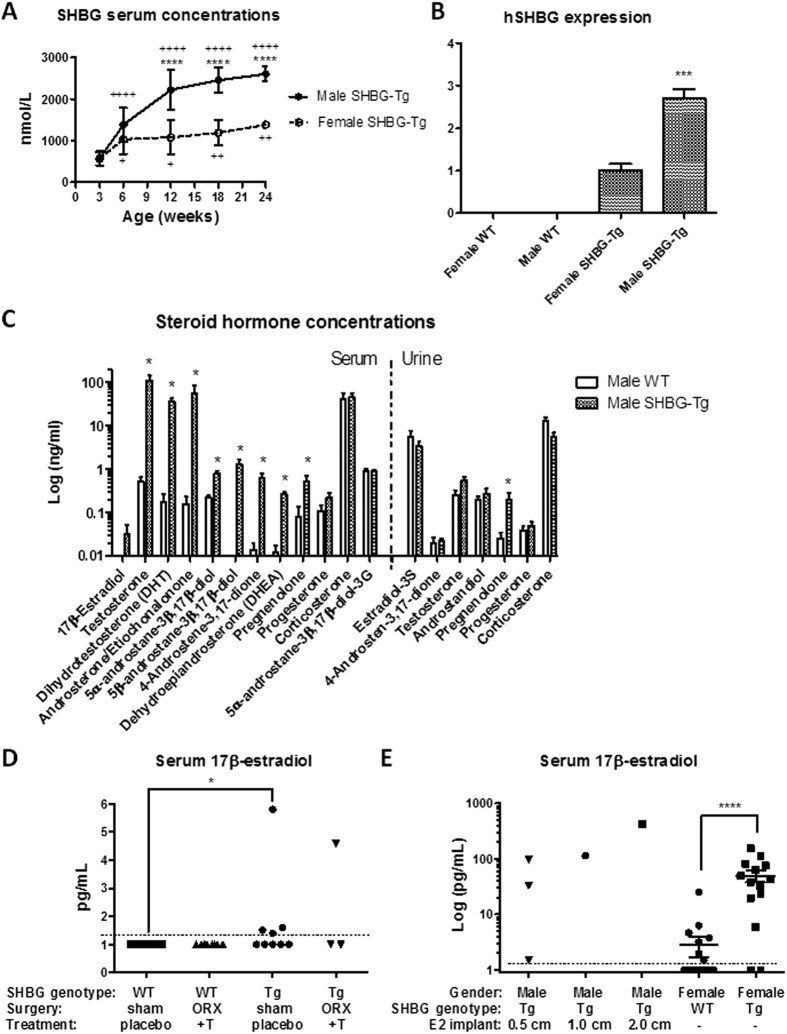
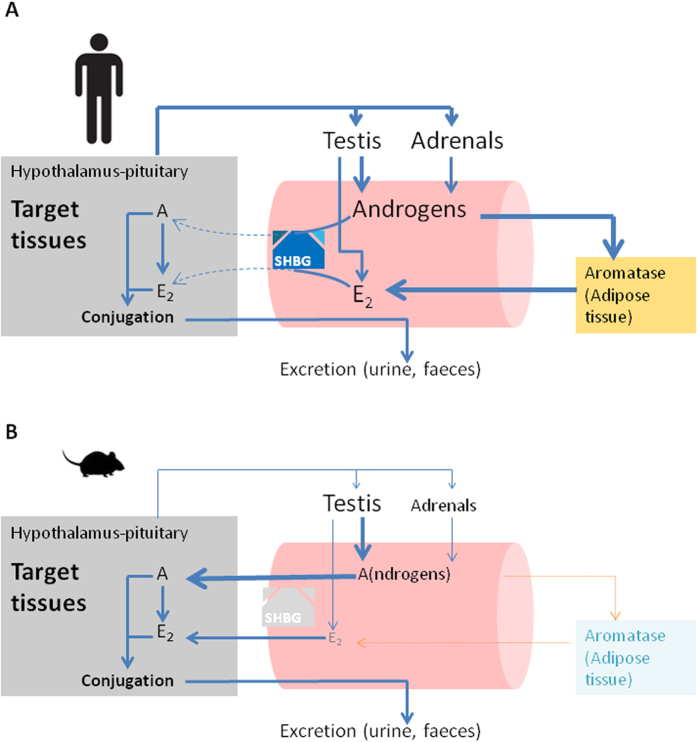
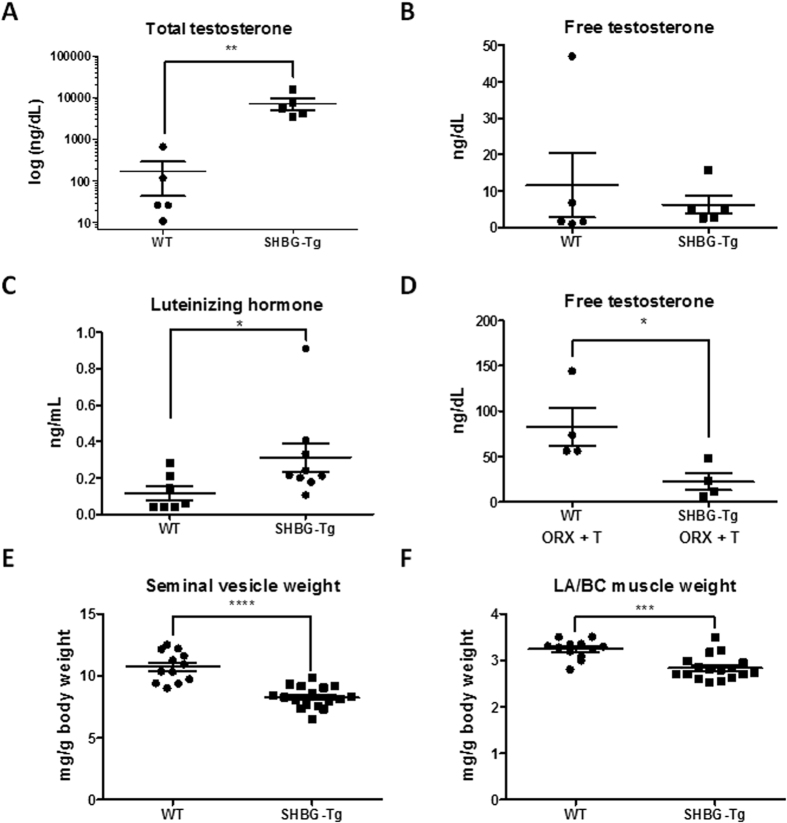
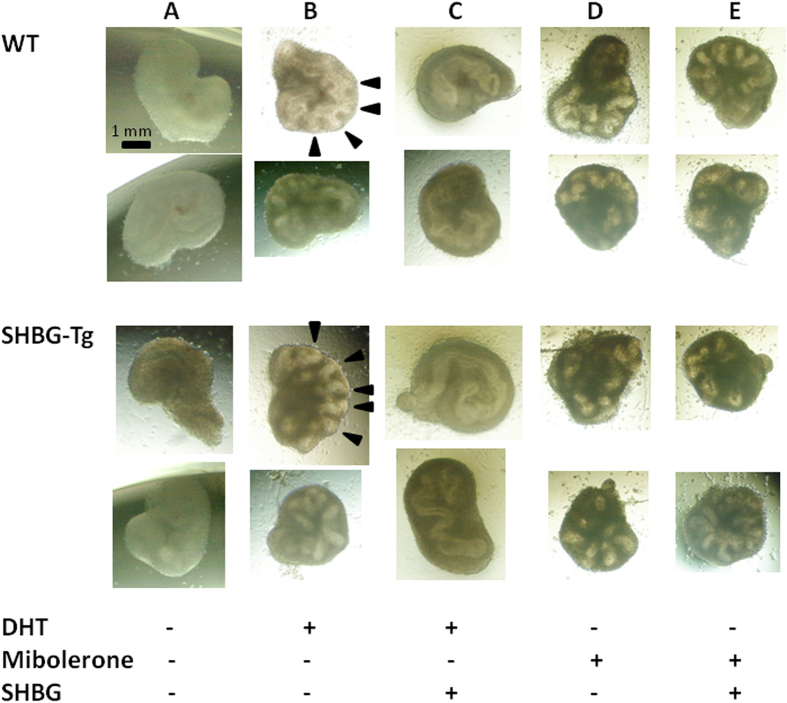
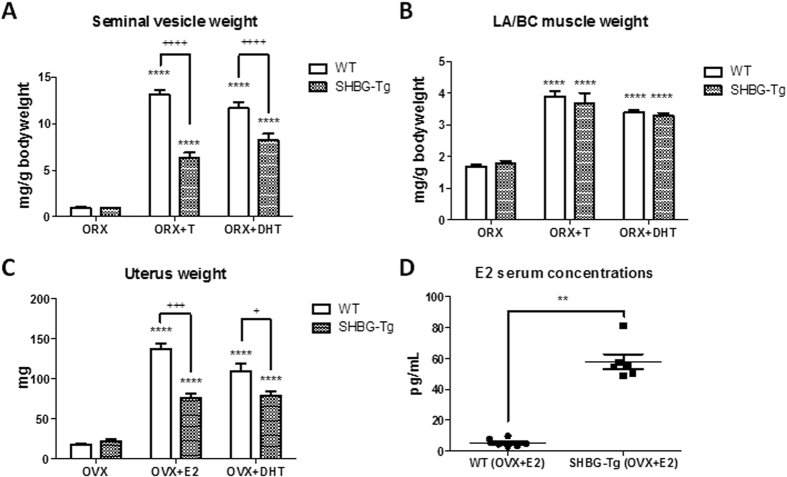
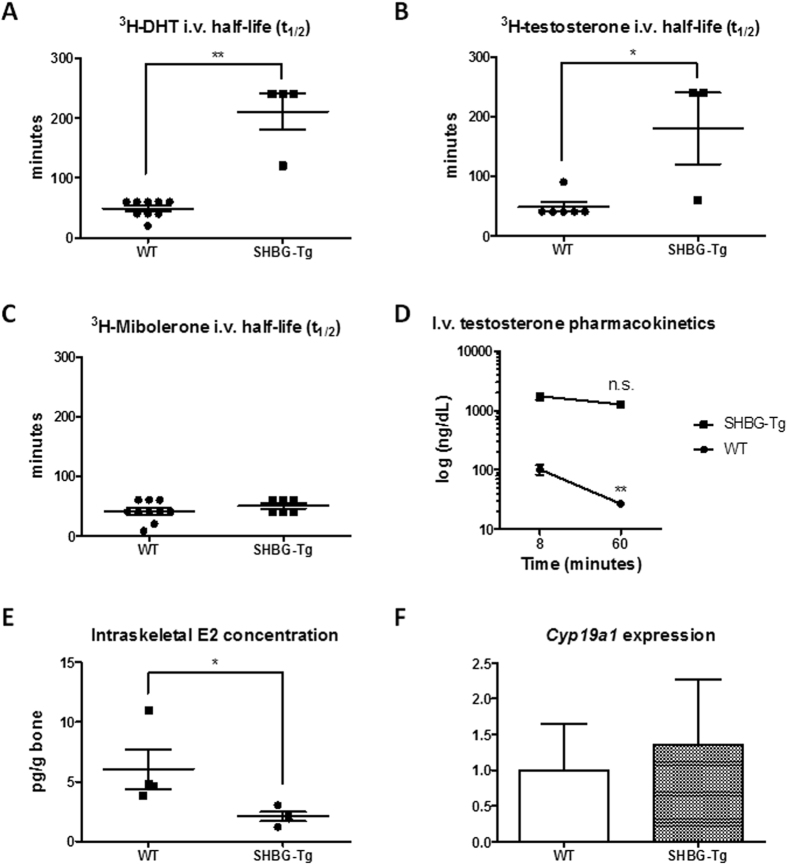
Sex hormone-binding globulin (SHBG) is the high-affinity binding protein for androgens and estrogens. According to the free hormone hypothesis, SHBG modulates the bioactivity of sex steroids by limiting their diffusion into target tissues. Still, the in vivo physiological role of circulating SHBG remains unclear, especially since mice and rats lack circulating SHBG post-natally. To test the free hormone hypothesis in vivo, we examined total and free sex steroid concentrations and bioactivity on target organs in mice expressing a human SHBG transgene. SHBG increased total androgen and estrogen concentrations via hypothalamic-pituitary feedback regulation and prolonged ligand half-life. Despite markedly raised total sex steroid concentrations, free testosterone was unaffected while sex steroid bioactivity on male and female reproductive organs was attenuated. This occurred via a ligand-dependent, genotype-independent mechanism according to in vitro seminal vesicle organ cultures. These results provide compelling support for the determination of free or bioavailable sex steroid concentrations in medicine, and clarify important comparative differences between translational mouse models and human endocrinology.
性激素结合球蛋白(SHBG)是雄激素和雌激素的高亲和力结合蛋白。根据游离激素假说,SHBG通过限制性激素扩散到靶组织中来调节其生物活性。然而,循环中SHBG在体内的生理作用仍不清楚,尤其是因为小鼠和大鼠出生后缺乏循环中的SHBG。为了在体内验证游离激素假说,我们检测了表达人SHBG转基因的小鼠体内总性激素和游离性激素的浓度以及它们对靶器官的生物活性。SHBG通过下丘脑-垂体反馈调节增加了雄激素和雌激素的总浓度,并延长了配体的半衰期。尽管总性激素浓度显著升高,但游离睾酮未受影响,而性激素对雄性和雌性生殖器官的生物活性却减弱了。根据体外精囊器官培养结果,这是通过一种依赖配体、不依赖基因型的机制发生的。这些结果为医学上测定游离或生物可利用性激素浓度提供了有力支持,并阐明了转化小鼠模型与人类内分泌学之间重要的比较差异。