Sethi Kriti, Palani Saravanan, Cortés Juan C G, Sato Mamiko, Sevugan Mayalagu, Ramos Mariona, Vijaykumar Shruthi, Osumi Masako, Naqvi Naweed I, Ribas Juan Carlos, Balasubramanian Mohan
Temasek Life Sciences Laboratory, National University of Singapore, 1 Research Link, Singapore.
Department of Biological Sciences, National University of Singapore, Singapore.
PLoS Genet. 2016 Oct 17;12(10):e1006383. doi: 10.1371/journal.pgen.1006383. eCollection 2016 Oct.
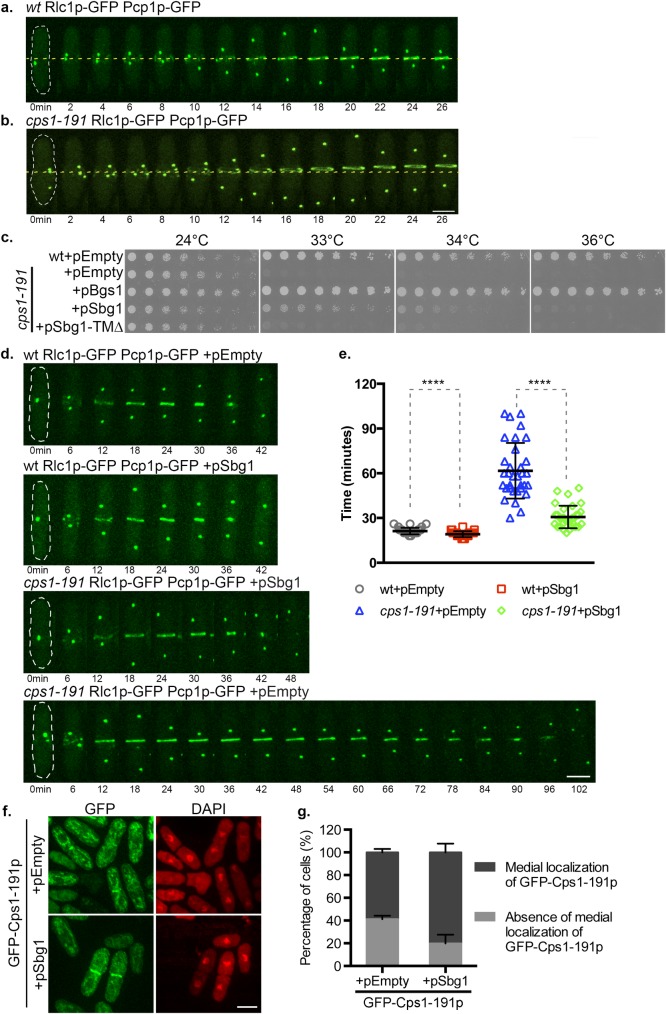
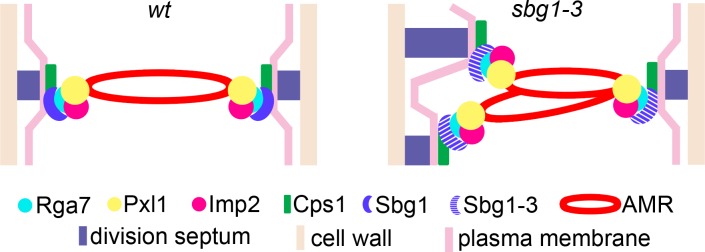
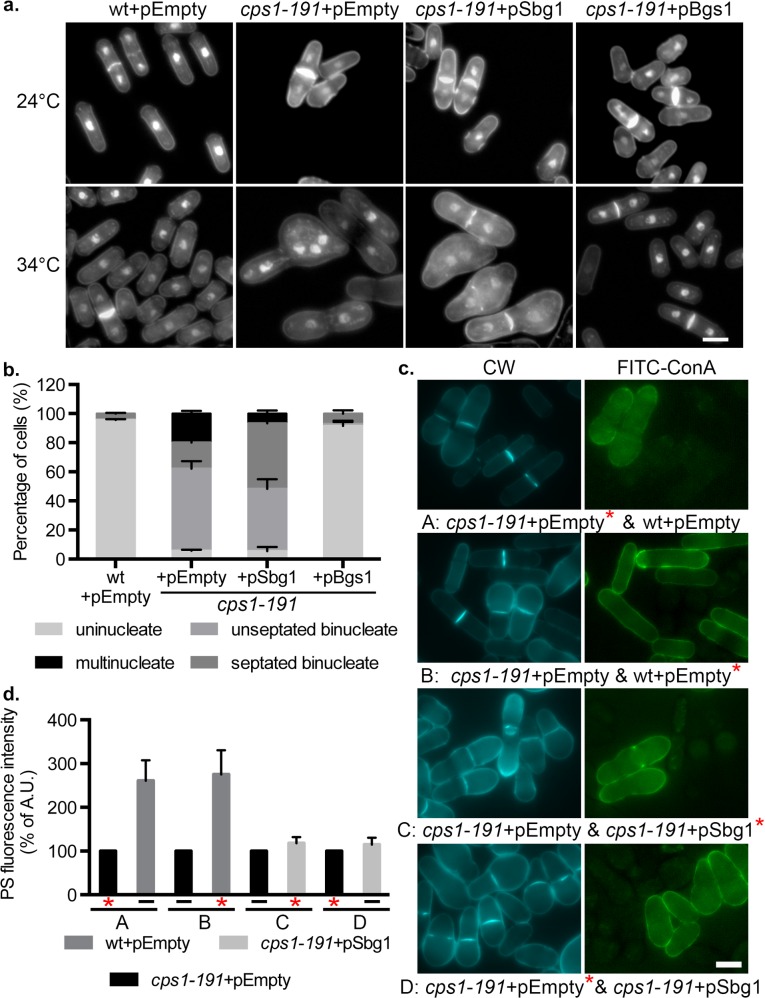
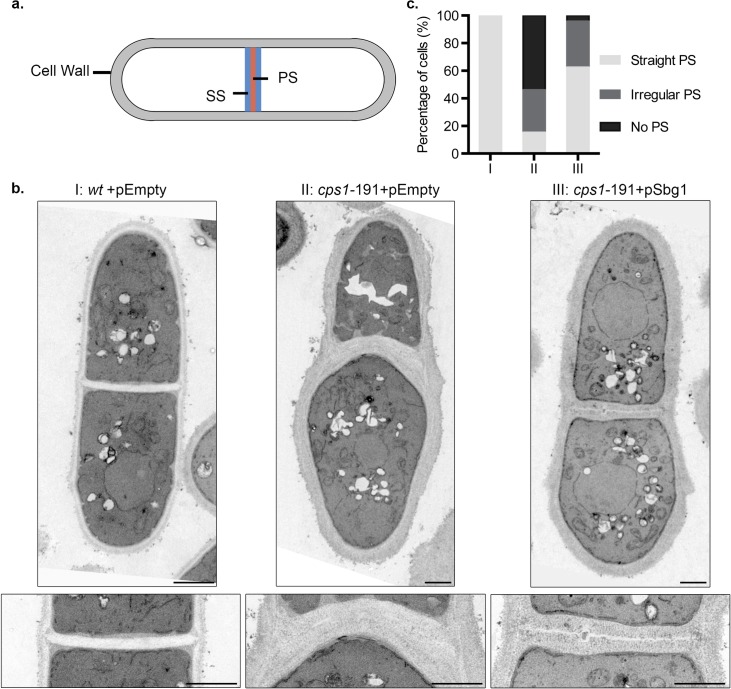
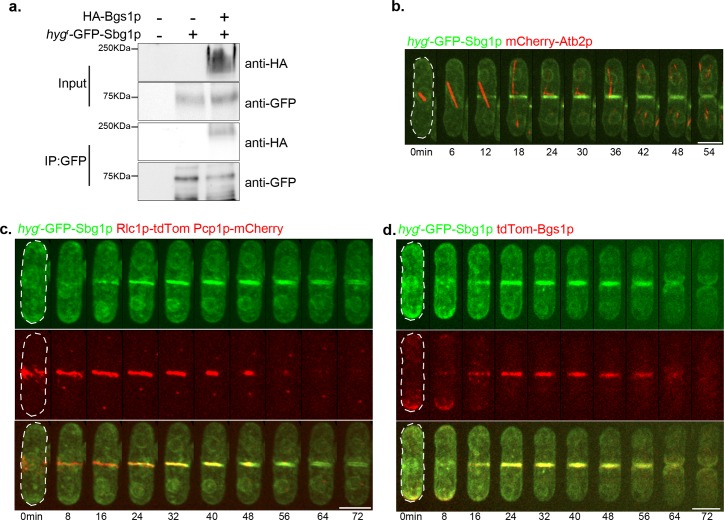
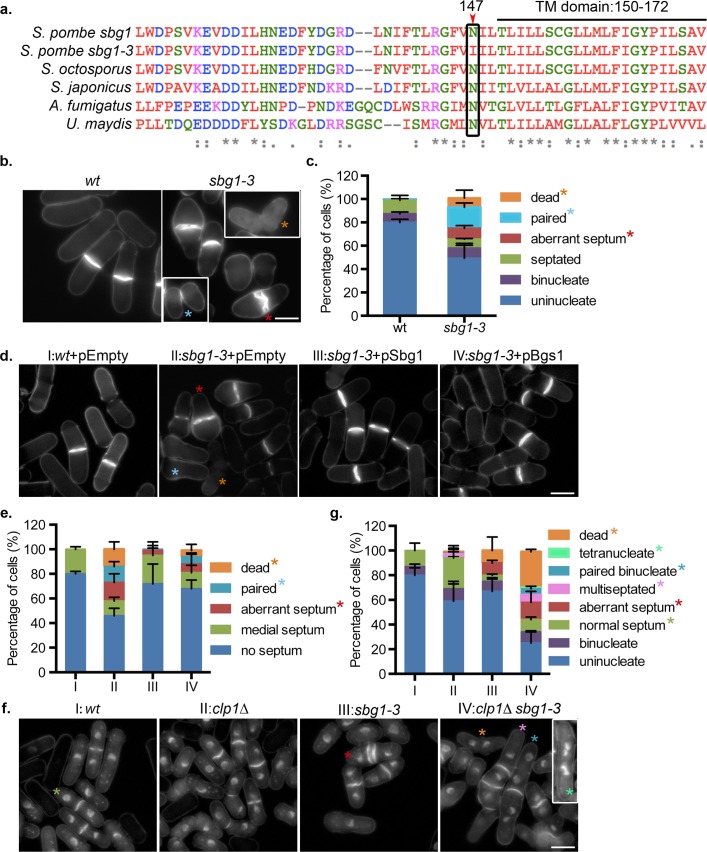
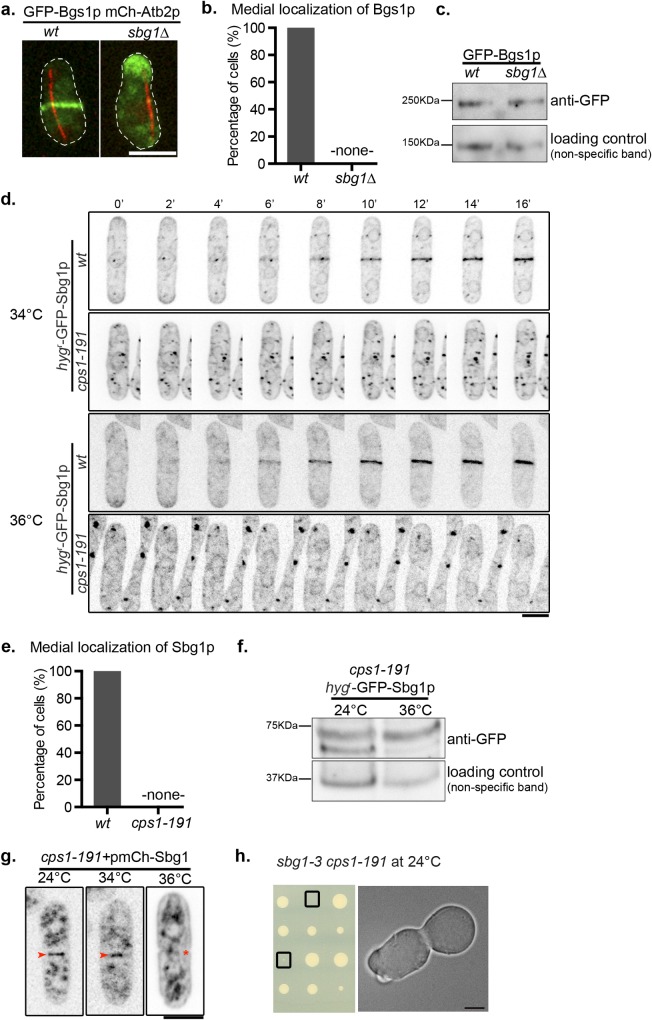
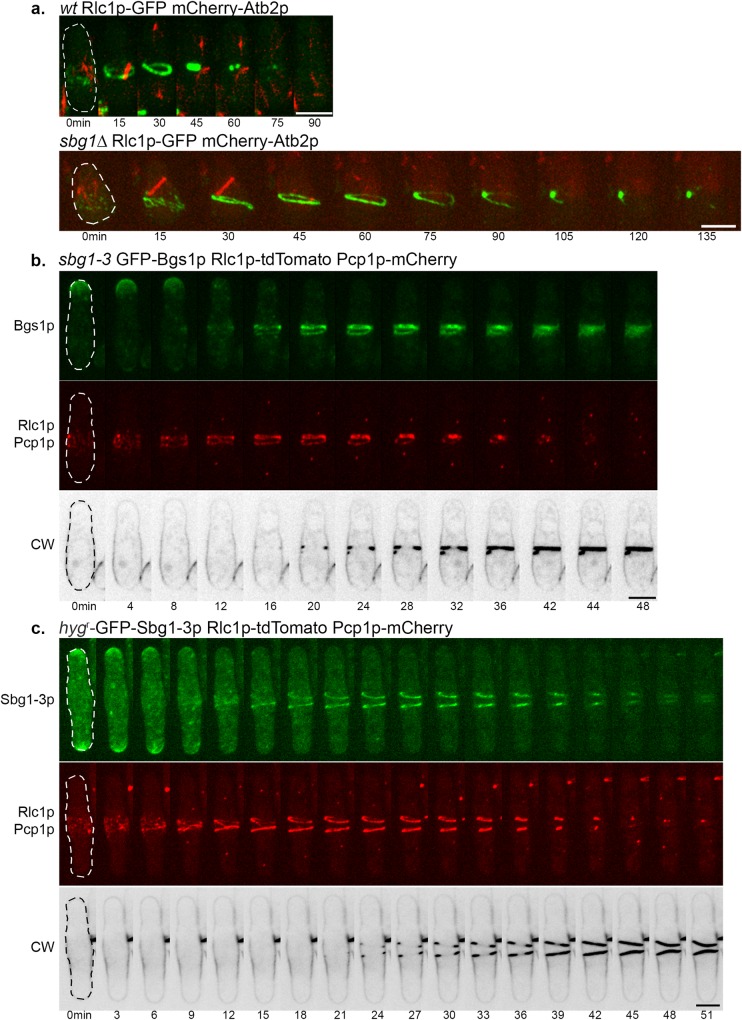
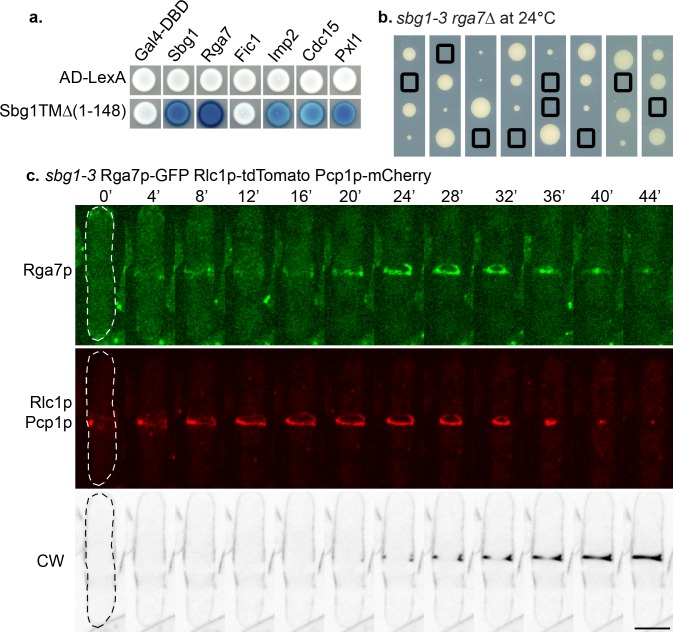
Cytokinesis in many organisms requires a plasma membrane anchored actomyosin ring, whose contraction facilitates cell division. In yeast and fungi, actomyosin ring constriction is also coordinated with division septum assembly. How the actomyosin ring interacts with the plasma membrane and the plasma membrane-localized septum synthesizing machinery remains poorly understood. In Schizosaccharomyces pombe, an attractive model organism to study cytokinesis, the β-1,3-glucan synthase Cps1p / Bgs1p, an integral membrane protein, localizes to the plasma membrane overlying the actomyosin ring and is required for primary septum synthesis. Through a high-dosage suppressor screen we identified an essential gene, sbg1+ (suppressor of beta glucan synthase 1), which suppressed the colony formation defect of Bgs1-defective cps1-191 mutant at higher temperatures. Sbg1p, an integral membrane protein, localizes to the cell ends and to the division site. Sbg1p and Bgs1p physically interact and are dependent on each other to localize to the division site. Loss of Sbg1p results in an unstable actomyosin ring that unravels and slides, leading to an inability to deposit a single contiguous division septum and an important reduction of the β-1,3-glucan proportion in the cell wall, coincident with that observed in the cps1-191 mutant. Sbg1p shows genetic and / or physical interaction with Rga7p, Imp2p, Cdc15p, and Pxl1p, proteins known to be required for actomyosin ring integrity and efficient septum synthesis. This study establishes Sbg1p as a key member of a group of proteins that link the plasma membrane, the actomyosin ring, and the division septum assembly machinery in fission yeast.
许多生物体中的胞质分裂需要一个锚定在质膜上的肌动球蛋白环,其收缩促进细胞分裂。在酵母和真菌中,肌动球蛋白环的收缩也与分裂隔膜的组装相协调。目前人们对肌动球蛋白环如何与质膜以及位于质膜上的隔膜合成机制相互作用仍知之甚少。在用于研究胞质分裂的有吸引力的模式生物粟酒裂殖酵母中,β-1,3-葡聚糖合酶Cps1p / Bgs1p是一种整合膜蛋白,定位于覆盖肌动球蛋白环的质膜上,是初级隔膜合成所必需的。通过高剂量抑制子筛选,我们鉴定出一个必需基因sbg1 +(β-葡聚糖合酶1的抑制子),它在较高温度下抑制了Bgs1缺陷型cps1-191突变体的菌落形成缺陷。Sbg1p是一种整合膜蛋白,定位于细胞末端和分裂位点。Sbg1p和Bgs1p发生物理相互作用,并且相互依赖才能定位于分裂位点。Sbg1p的缺失导致肌动球蛋白环不稳定,解聚并滑动,导致无法沉积单个连续的分裂隔膜,并且细胞壁中β-1,3-葡聚糖比例显著降低,这与在cps1-191突变体中观察到的情况一致。Sbg1p与Rga7p、Imp2p、Cdc15p和Pxl1p表现出遗传和/或物理相互作用,这些蛋白是肌动球蛋白环完整性和有效隔膜合成所必需的。这项研究确立了Sbg1p作为连接裂殖酵母中质膜、肌动球蛋白环和分裂隔膜组装机制的一组蛋白质中的关键成员。