Balata Gehan F, Zidan Ahmad S, Abourehab Mohamad As, Essa Ebtessam A
Department of Pharmaceutics, Faculty of Pharmacy, Umm Al-Qura University, Makkah, Saudi Arabia; Department of Pharmaceutics, Faculty of Pharmacy, Zagazig University, Zagazig.
Department of Pharmaceutics, Faculty of Pharmacy, Zagazig University, Zagazig.
Drug Des Devel Ther. 2016 Oct 3;10:3211-3223. doi: 10.2147/DDDT.S114724. eCollection 2016.
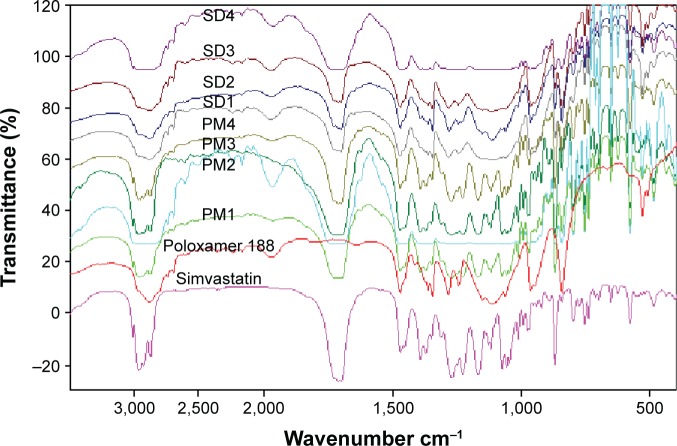
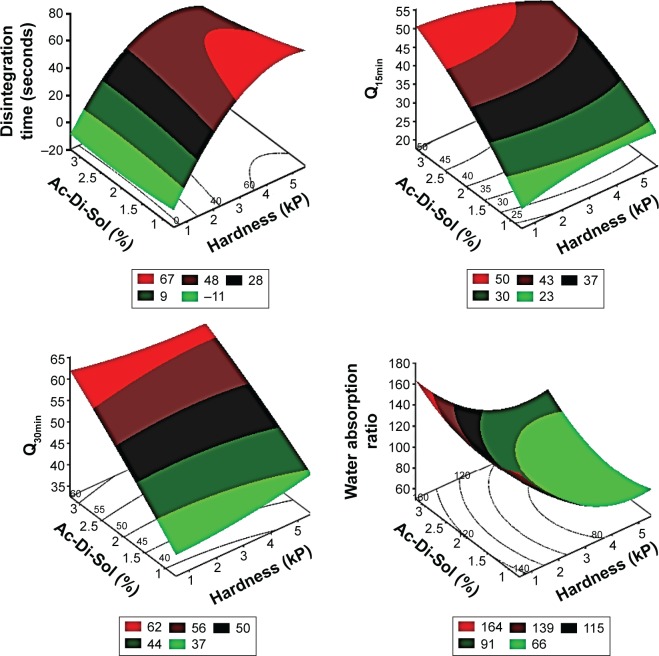
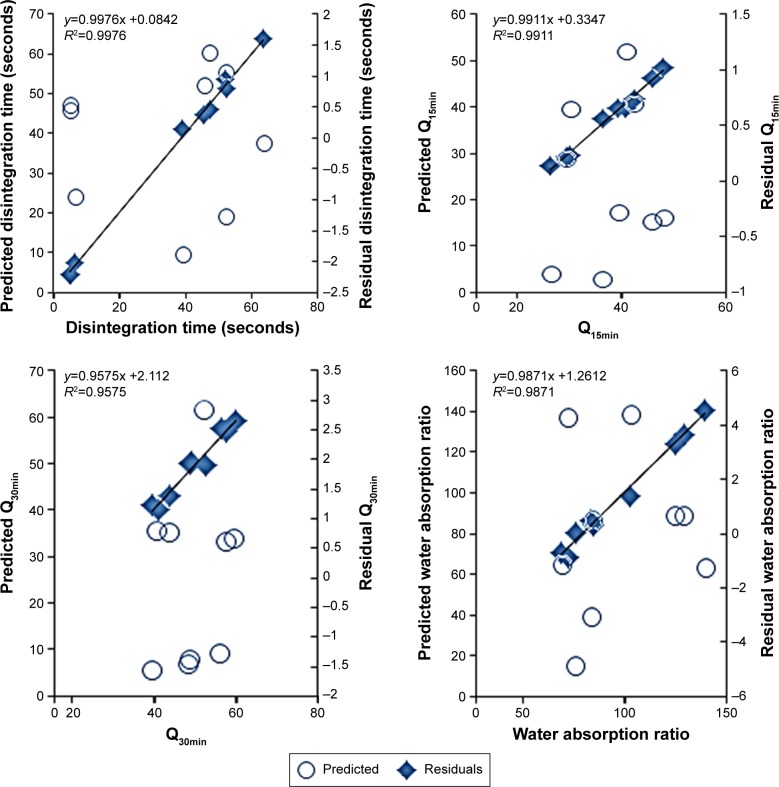
The objective of this research was to improve the dissolution of simvastatin and to incorporate it in rapid disintegrating tablets (RDTs) with an optimized disintegration and dissolution characteristics. Polyoxyethylene-polypropylene block copolymer (poloxamer 188) was employed as a hydrophilic carrier to prepare simvastatin solid dispersions (SDs). Fourier transform infrared spectroscopy, differential scanning calorimetry (DSC) and X-ray diffractometry were employed to understand the interaction between the drug and the carrier in the solid state. The results obtained from Fourier transform infrared spectroscopy showed absence of any chemical interaction between the drug and poloxamer. The results of differential scanning calorimetry and X-ray diffractometry confirmed the conversion of simvastatin to distorted crystalline state. The SD of 1:2 w/w drug to carrier ratio showed the highest dissolution; hence, it was incorporated in RDT formulations using a 3 full factorial design and response surface methodology. The initial assessments of RDTs demonstrated an acceptable flow, hardness, and friability to indicate good mechanical strength. The interaction and Pareto charts indicated that percentage of croscarmellose sodium incorporated was the most important factor affecting the disintegration time and dissolution parameter followed by the hardness value and their interaction effect. Compression force showed a superior influence to increase RDT's porosity and to fasten disintegration rather than swelling action by croscarmellose sodium. On the other hand, croscarmellose sodium was most important for the initial simvastatin release. The results suggest the potential use of poloxamer 188-based SD in RDT for the oral delivery of poor water-soluble antihyperlipidemic drug, simvastatin.
本研究的目的是提高辛伐他汀的溶出度,并将其制成具有优化崩解和溶出特性的快速崩解片(RDT)。采用聚氧乙烯-聚丙二醇嵌段共聚物(泊洛沙姆188)作为亲水性载体来制备辛伐他汀固体分散体(SD)。利用傅里叶变换红外光谱、差示扫描量热法(DSC)和X射线衍射法来了解药物与载体在固态下的相互作用。傅里叶变换红外光谱的结果表明药物与泊洛沙姆之间不存在任何化学相互作用。差示扫描量热法和X射线衍射法的结果证实辛伐他汀转变为扭曲的结晶状态。药物与载体比例为1:2 (w/w)的固体分散体溶出度最高;因此,采用三因素全因子设计和响应面法将其纳入RDT制剂中。对RDT的初步评估显示其流动性、硬度和脆碎度均可接受,表明具有良好的机械强度。交互作用图和帕累托图表明,交联羧甲基纤维素钠的用量百分比是影响崩解时间和溶出参数的最重要因素,其次是硬度值及其交互作用。压缩力对增加RDT的孔隙率和加快崩解的影响大于交联羧甲基纤维素钠的膨胀作用。另一方面,交联羧甲基纤维素钠对辛伐他汀的初始释放最为重要。结果表明基于泊洛沙姆188的固体分散体在RDT中具有潜在应用价值,可用于口服递送水溶性差的抗高血脂药物辛伐他汀。