Wang Mengmeng, Kussrow Amanda K, Ocana Mireia Fernandez, Chabot Jeffrey R, Lepsy Christopher S, Bornhop Darryl J, O'Hara Denise M
Pharmacokinetics, Dynamics and Metabolism, Pfizer Inc, Andover, MA, USA.
Department of Chemistry, Vanderbilt Institute for Chemical Biology, Vanderbilt University, Nashville, TN, USA.
Br J Pharmacol. 2017 Jan;174(1):70-81. doi: 10.1111/bph.13654. Epub 2016 Nov 30.
A monoclonal antibody (PF-00547659) against mucosal addressin cell adhesion molecule (MAdCAM), expressed as both soluble (sMAdCAM) and trans-membrane (mMAdCAM) target forms, showed over 30-fold difference in antibody-target K between in vitro (Biacore) and clinically derived (K ) values. Back-scattering interferometry (BSI) was applied to acquire physiologically relevant K values which were used to establish in vitro and in vivo correlation (IVIVC).
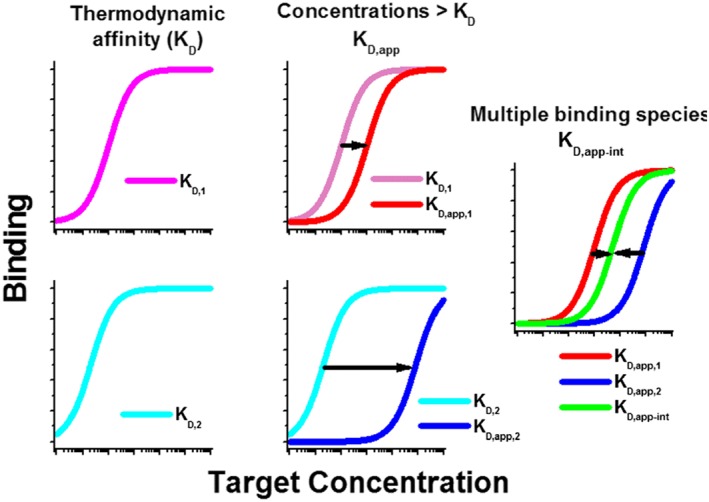
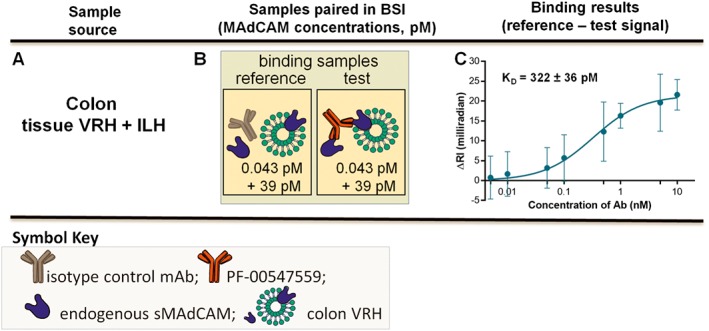
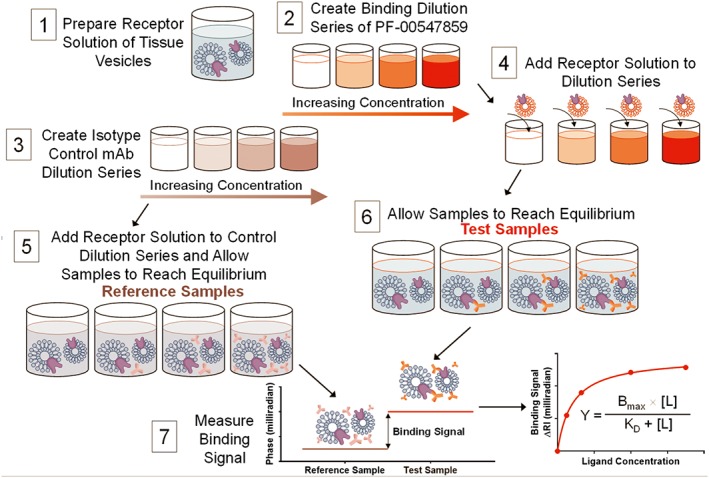
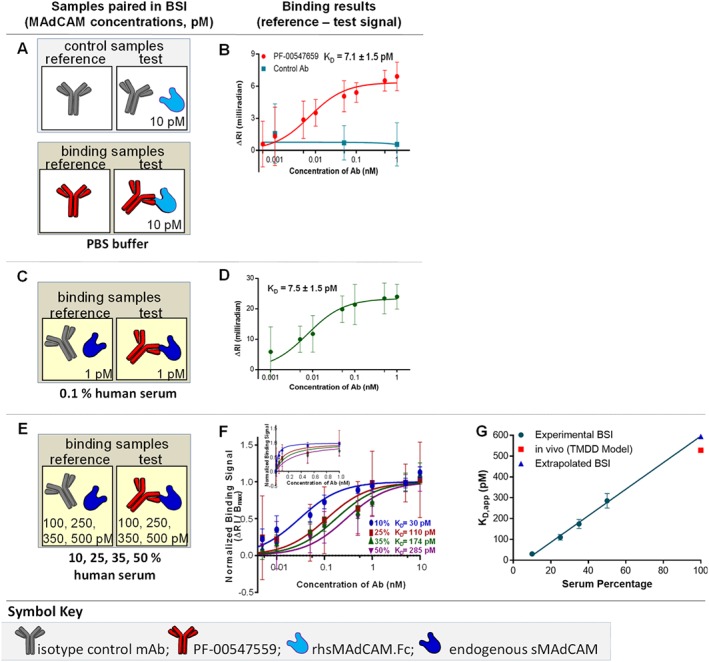
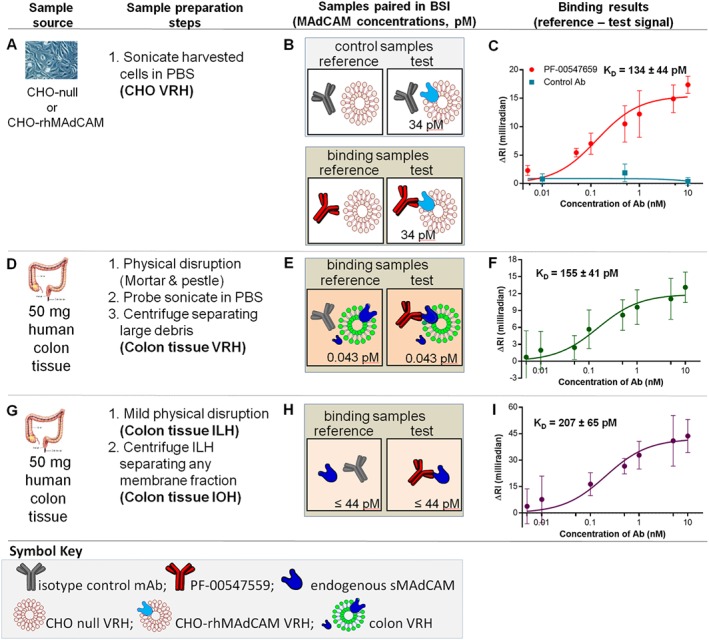
BSI was applied to obtain K values between PF-00547659 and recombinant human MAdCAM in buffer or CHO cells and endogenous MAdCAM in human serum or colon tissue. CHO cells and tissue were minimally processed to yield homogenate containing membrane vesicles and soluble proteins. A series of binding affinities in serum with various dilution factors was used to estimate both K and target concentrations; MAdCAM concentrations were also measured using LC-MS/MS.
BSI measurements revealed low K values (higher affinity) for sMAdCAM in buffer and serum, yet a 20-fold higher K value (lower affinity) for mMAdCAM in CHO, mMAdCAM and sMAdCAM in tissue. BSI predicted K in serum was similar to clinically derived K , and the BSI-estimated serum sMAdCAM concentration also matched the measured concentration by LC-MS/MS.
Our results successfully demonstrated that BSI measurements of physiologically relevant K values can be used to establish IVIVC, for PF-00547659 to MAdCAM despite the lack of correlation when using Biacore measured K and accurately estimates endogenous target concentrations. The application of BSI would greatly enhance successful basic pharmacological research and drug development.
一种针对黏膜地址素细胞黏附分子(MAdCAM)的单克隆抗体(PF-00547659),其靶标形式包括可溶性(sMAdCAM)和跨膜(mMAdCAM)两种,体外(Biacore)与临床来源(K)的抗体-靶标亲和力(K)值相差30多倍。采用背散射干涉测量法(BSI)获取生理相关的K值,用于建立体外与体内相关性(IVIVC)。
应用BSI测定PF-00547659与缓冲液或CHO细胞中的重组人MAdCAM以及人血清或结肠组织中的内源性MAdCAM之间的K值。对CHO细胞和组织进行最少处理以产生包含膜囊泡和可溶性蛋白的匀浆。使用一系列具有不同稀释因子的血清中的结合亲和力来估计K值和靶标浓度;还使用液相色谱-串联质谱法(LC-MS/MS)测量MAdCAM浓度。
BSI测量显示,缓冲液和血清中sMAdCAM的K值较低(亲和力较高),而CHO细胞中mMAdCAM、组织中mMAdCAM和sMAdCAM的K值高20倍(亲和力较低)。BSI预测的血清K值与临床来源的K值相似,并且BSI估计的血清sMAdCAM浓度也与LC-MS/MS测量的浓度相符。
我们的结果成功表明,尽管使用Biacore测量的K值缺乏相关性,但生理相关K值的BSI测量可用于建立PF-00547659与MAdCAM之间的IVIVC,并能准确估计内源性靶标浓度。BSI的应用将大大提高基础药理学研究和药物开发的成功率。