Lallous Nada, Leblanc Eric, Munuganti Ravi S N, Hassona Mohamed D H, Nakouzi Nader Al, Awrey Shannon, Morin Helene, Roshan-Moniri Mani, Singh Kriti, Lawn Sam, Yamazaki Takeshi, Adomat Hans H, Andre Christophe, Daugaard Mads, Young Robert N, Guns Emma S Tomlinson, Rennie Paul S, Cherkasov Artem
Vancouver Prostate Centre, University of British Columbia, Vancouver, BC, Canada.
Department of Chemistry, Simon Fraser University, Burnaby, BC, Canada.
Mol Cancer Ther. 2016 Dec;15(12):2936-2945. doi: 10.1158/1535-7163.MCT-16-0354. Epub 2016 Oct 7.
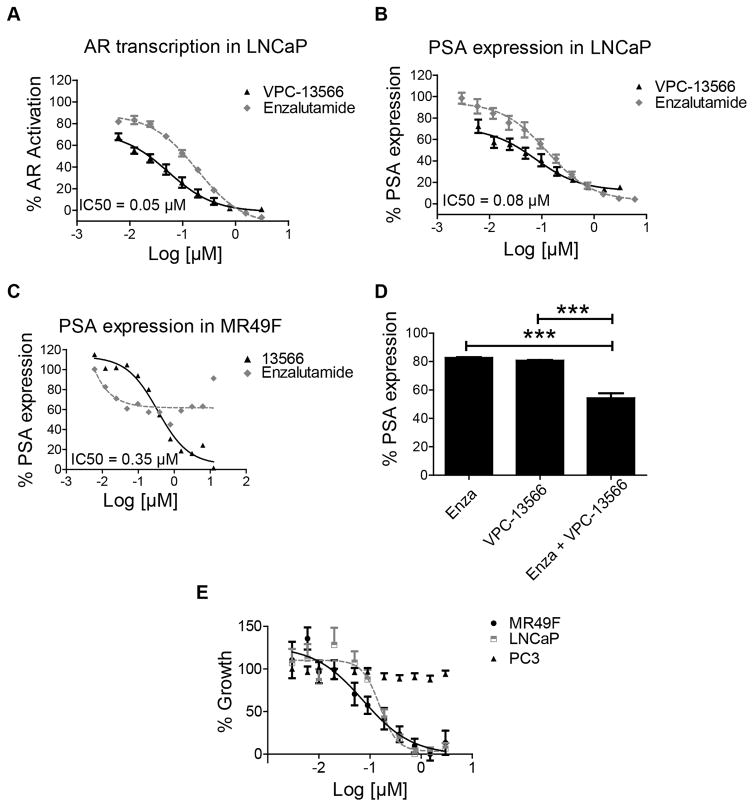
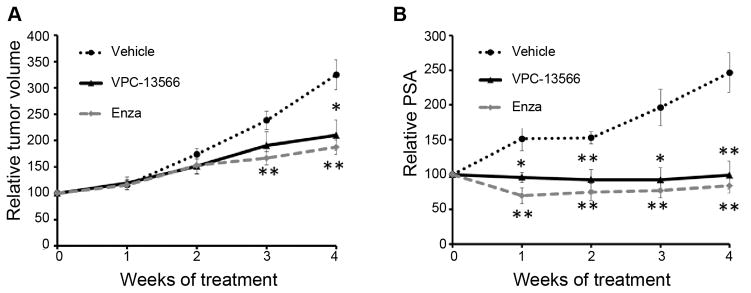
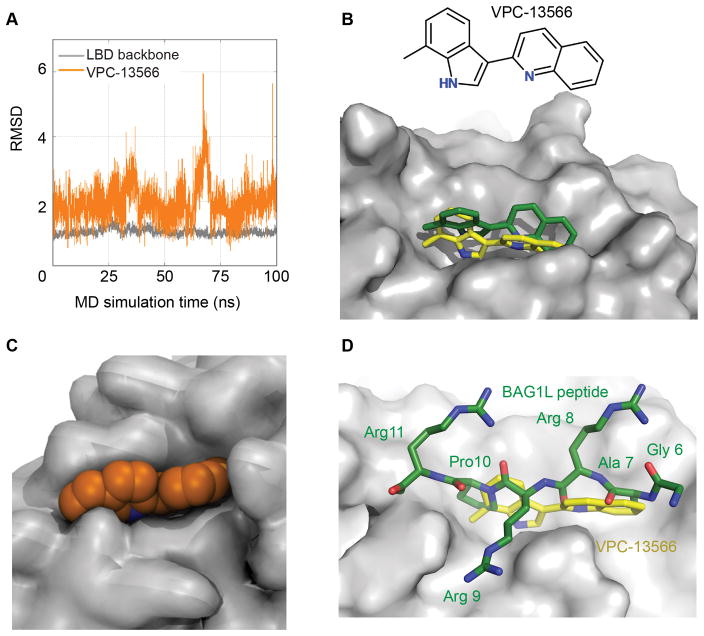
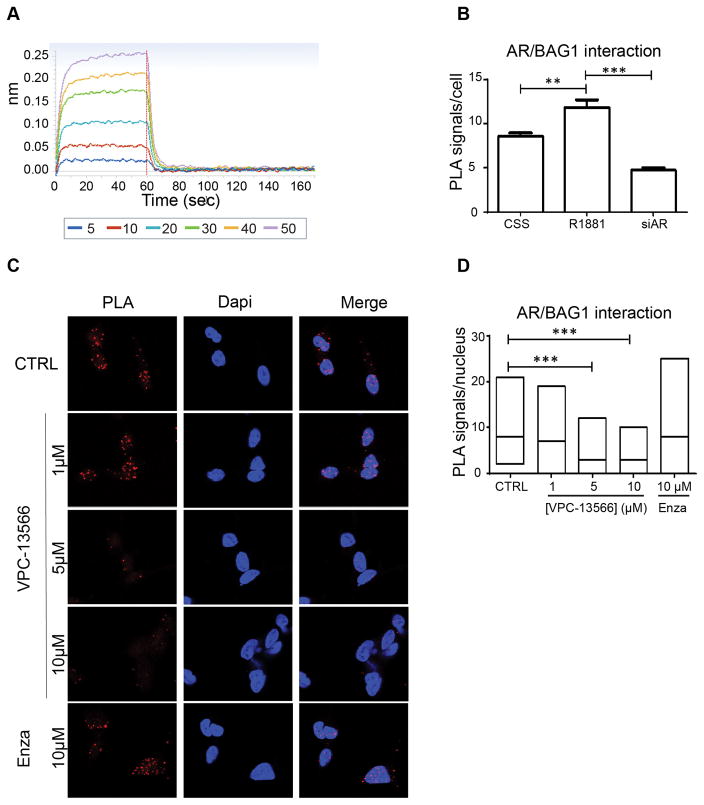
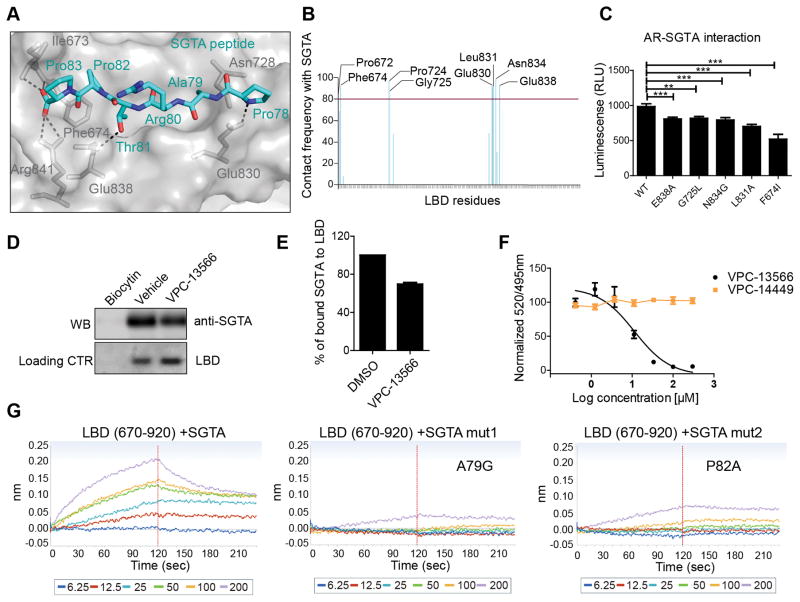
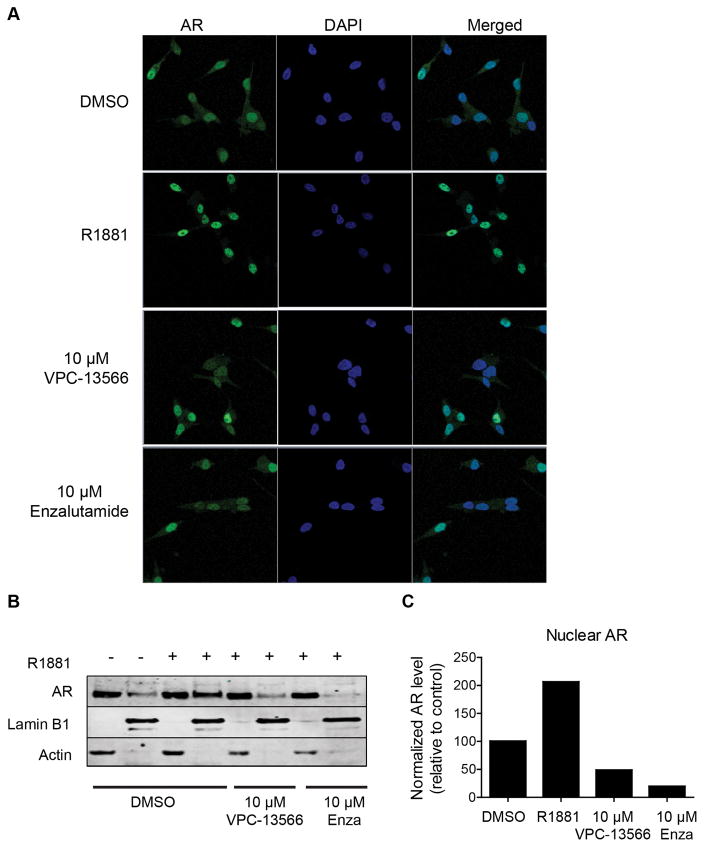
The development of new antiandrogens, such as enzalutamide, or androgen synthesis inhibitors like abiraterone has improved patient outcomes in the treatment of advanced prostate cancer. However, due to the development of drug resistance and tumor cell survival, a majority of these patients progress to the refractory state of castration-resistant prostate cancer (CRPC). Thus, newer therapeutic agents and a better understanding of their mode of action are needed for treating these CRPC patients. We demonstrated previously that targeting the Binding Function 3 (BF3) pocket of the androgen receptor (AR) has great potential for treating patients with CRPC. Here, we explore the functional activity of this site by using an advanced BF3-specific small molecule (VPC-13566) that was previously reported to effectively inhibit AR transcriptional activity and to displace the BAG1L peptide from the BF3 pocket. We show that VPC-13566 inhibits the growth of various prostate cancer cell lines, including an enzalutamide-resistant cell line, and reduces the growth of AR-dependent prostate cancer xenograft tumors in mice. Importantly, we have used this AR-BF3 binder as a chemical probe and identified a co-chaperone, small glutamine-rich tetratricopeptide repeat (TPR)-containing protein alpha (SGTA), as an important AR-BF3 interacting partner. Furthermore, we used this AR-BF3-directed small molecule to demonstrate that inhibition of AR activity through the BF3 functionality can block translocation of the receptor into the nucleus. These findings suggest that targeting the BF3 site has potential clinical importance, especially in the treatment of CRPC and provide novel insights on the functional role of the BF3 pocket. Mol Cancer Ther; 15(12); 2936-45. ©2016 AACR.
新型抗雄激素药物(如恩杂鲁胺)或雄激素合成抑制剂(如阿比特龙)的研发改善了晚期前列腺癌患者的治疗效果。然而,由于耐药性的产生和肿瘤细胞的存活,这些患者中的大多数会进展为去势抵抗性前列腺癌(CRPC)的难治状态。因此,需要更新的治疗药物以及对其作用模式有更深入的了解来治疗这些CRPC患者。我们之前证明,靶向雄激素受体(AR)的结合功能3(BF3)口袋在治疗CRPC患者方面具有巨大潜力。在此,我们通过使用一种先进的BF3特异性小分子(VPC - 13566)来探索该位点的功能活性,该小分子先前报道可有效抑制AR转录活性并从BF3口袋中置换出BAG1L肽。我们发现VPC - 13566可抑制多种前列腺癌细胞系的生长,包括对恩杂鲁胺耐药的细胞系,并减少小鼠体内AR依赖性前列腺癌异种移植瘤的生长。重要的是,我们已将这种AR - BF3结合剂用作化学探针,并鉴定出一种共伴侣蛋白,即富含谷氨酰胺的小三聚体重复序列(TPR)的α蛋白(SGTA),作为重要的AR - BF3相互作用伴侣。此外,我们使用这种靶向AR - BF3的小分子来证明通过BF3功能抑制AR活性可阻断受体向细胞核的转运。这些发现表明靶向BF3位点具有潜在的临床重要性,尤其是在CRPC的治疗中,并为BF3口袋的功能作用提供了新的见解。《分子癌症治疗》;15(12);2936 - 45。©2016美国癌症研究协会。