Argun Baris Serap, Tuncel Dilek, Ozerdem Cigdem, Kutlu Huseyin, Onyilmaz Tugba, Basyigit Ilknur, Boyaci Hasim, Yildiz Fusun
Department of Pulmonary Diseases, Kocaeli University School of Medicine, Umuttepe, İzmit, Kocaeli Turkey.
Department of Neurology, Derince Training and Research Hospital, İzmit, Kocaeli Turkey.
Multidiscip Respir Med. 2016 Oct 11;11:35. doi: 10.1186/s40248-016-0071-2. eCollection 2016.
The aim of this study is to evaluate the presence of neurocognitive dysfunctions, depression and anxiety and the effect of positive airway pressure (PAP) therapy on these alterations in Obesity Hypoventilation Syndrome (OHS) patients.
Ten healthy normal and obese controls, 10 OHS and 10 OSAS patients were included in the study. Short form-36, Beck Depression Scale and State-Trade Anxiety Inventory (STAI 1-2) were performed. Wisconsin Card Sorting Test (WCST), Montreal Cognitive Assessment Scale (MOCA), Enhanced Cued Recall (ECR) and Mini Mental Test (MMT) were used for neurocognitive evaluation. All tests were repeated after one night PAP therapy in OHS and OSAS groups.
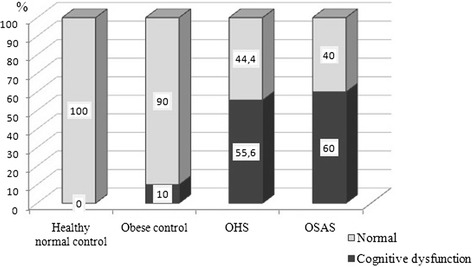
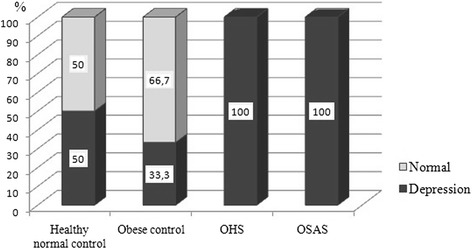
OHS patients had the lowest scores of physical (PF) and social functioning (SF) in SF-36. The total number of persistent errors and incorrect answers were the highest in OHS group in WCST. The scores of MOCA, ECR and MMT were lower; depression and anxiety scores were higher in OHS group than in controls ( = 0,00). There was a significant increase in the completed categories in OHS after PAP therapy ( = 0,03). There were also significant increases in MOCA, ECR and MMT scores and significant decreases in depression and anxiety scores with respect to PAP therapy.
Cognitive dysfunction, depression and anxiety are important under-recognized comorbidities in OHS. It is suggested that short term PAP therapy had positive effects on neurocognitive functions, depression and anxiety but further multicentre, prospective studies with large number of cases are needed to evaluate the effect of long term PAP therapy on these parameters.
本研究旨在评估肥胖低通气综合征(OHS)患者神经认知功能障碍、抑郁和焦虑的存在情况,以及气道正压通气(PAP)治疗对这些改变的影响。
本研究纳入了10名健康正常和肥胖对照者、10名OHS患者和10名阻塞性睡眠呼吸暂停低通气综合征(OSAS)患者。进行了简明健康调查问卷36项(Short form-36)、贝克抑郁量表和状态-特质焦虑量表(STAI 1-2)评估。使用威斯康星卡片分类测验(WCST)、蒙特利尔认知评估量表(MOCA)、增强线索回忆测验(ECR)和简易精神状态检查表(MMT)进行神经认知评估。OHS组和OSAS组在接受一晚的PAP治疗后重复所有测试。
OHS患者在简明健康调查问卷36项中的身体功能(PF)和社会功能(SF)得分最低。WCST中,OHS组的持续错误和错误答案总数最高。OHS组的MOCA、ECR和MMT得分较低;抑郁和焦虑得分高于对照组(P = 0.00)。PAP治疗后,OHS组的完成分类数有显著增加(P = 0.03)。与PAP治疗相关的MOCA、ECR和MMT得分也有显著增加,抑郁和焦虑得分显著降低。
认知功能障碍、抑郁和焦虑是OHS中未得到充分认识的重要合并症。建议短期PAP治疗对神经认知功能、抑郁和焦虑有积极作用,但需要进一步进行多中心、大样本的前瞻性研究来评估长期PAP治疗对这些参数的影响。