Nabissi Massimo, Morelli Maria Beatrice, Offidani Massimo, Amantini Consuelo, Gentili Silvia, Soriani Alessandra, Cardinali Claudio, Leoni Pietro, Santoni Giorgio
School of Pharmacy, Experimental Medicine Section, University of Camerino, Camerino, Italy.
Department of Molecular Medicine, Sapienza University, Rome, Italy.
Oncotarget. 2016 Nov 22;7(47):77543-77557. doi: 10.18632/oncotarget.12721.
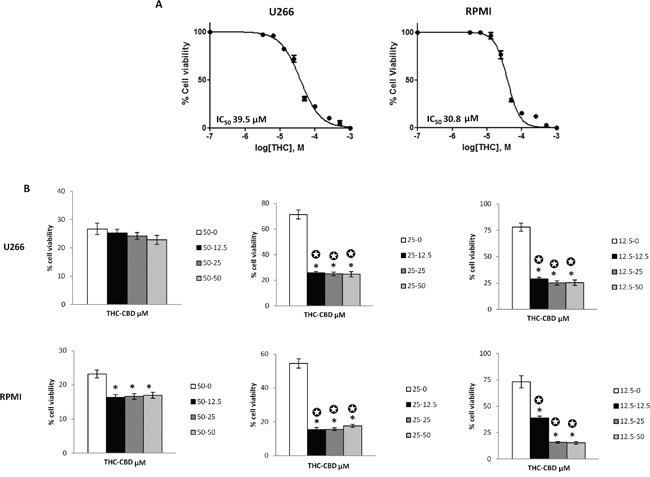
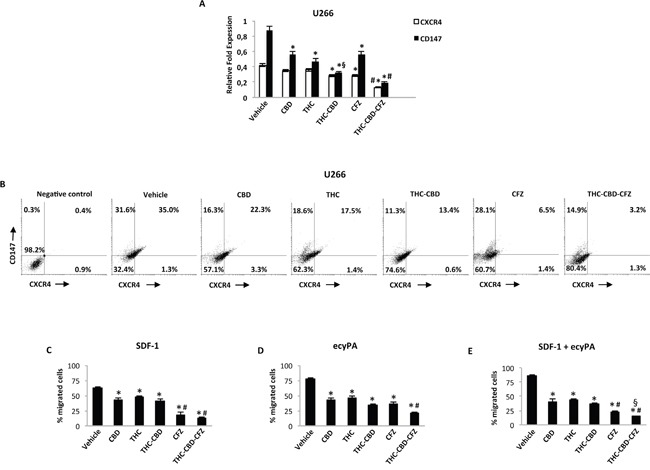
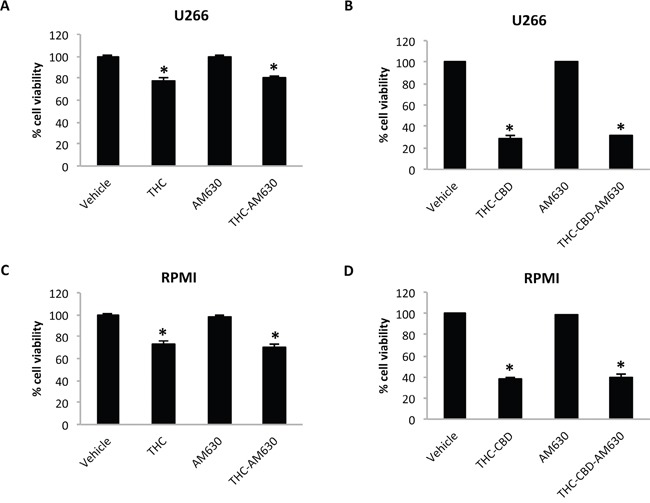
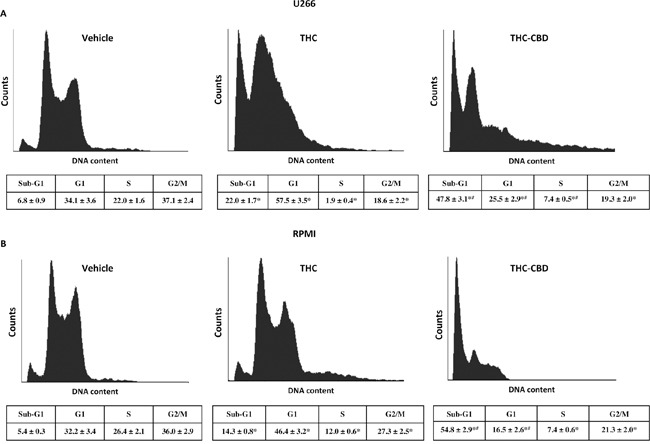
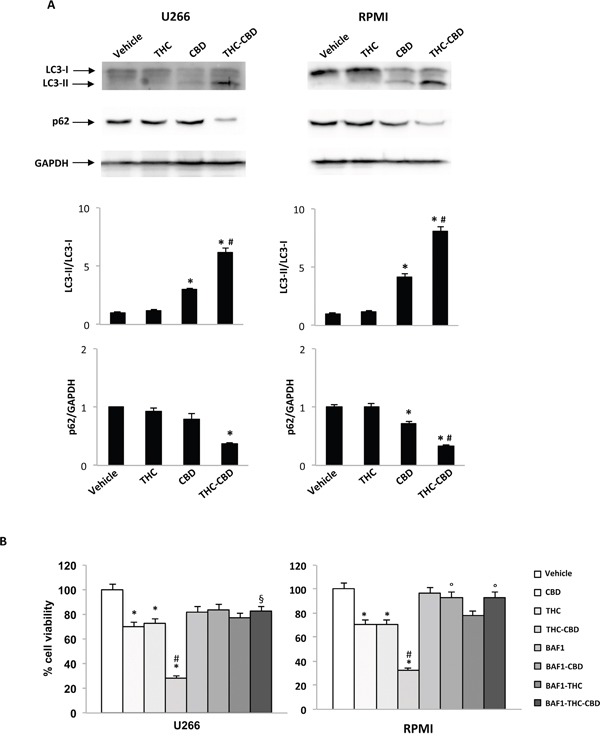
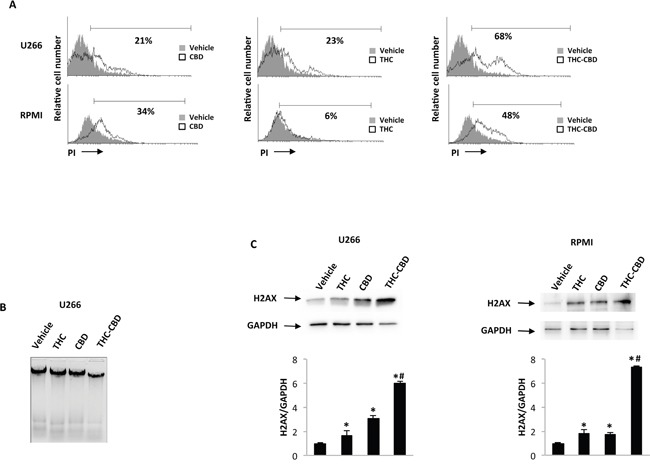
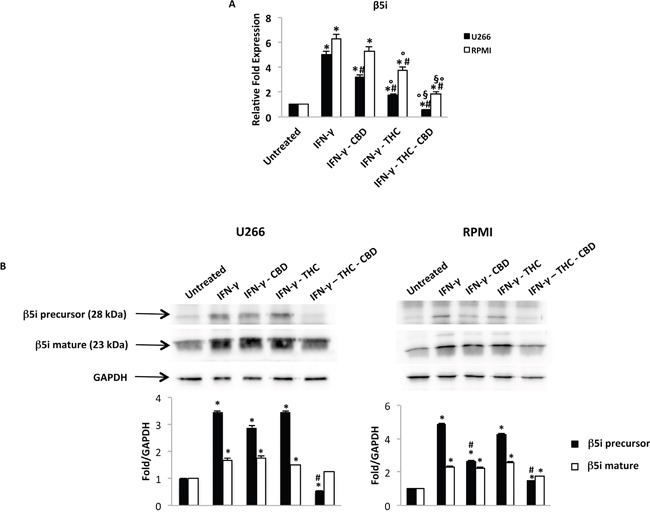
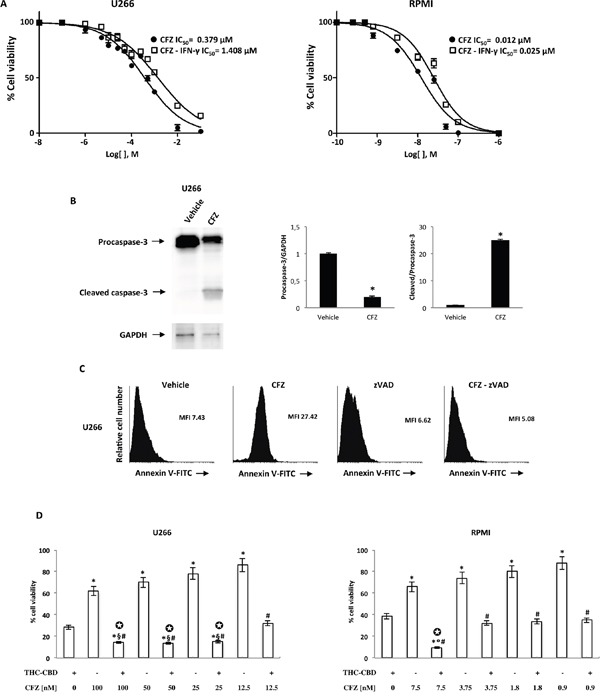
Several studies showed a potential anti-tumor role for cannabinoids, by modulating cell signaling pathways involved in cancer cell proliferation, chemo-resistance and migration. Cannabidiol (CBD) was previously noted in multiple myeloma (MM), both alone and in synergy with the proteasome inhibitor bortezomib, to induce cell death. In other type of human cancers, the combination of CBD with Δ9-tetrahydrocannabinol (THC) was found to act synergistically with other chemotherapeutic drugs suggesting their use in combination therapy. In the current study, we evaluated the effects of THC alone and in combination with CBD in MM cell lines. We found that CBD and THC, mainly in combination, were able to reduce cell viability by inducing autophagic-dependent necrosis. Moreover, we showed that the CBD-THC combination was able to reduce MM cells migration by down-regulating expression of the chemokine receptor CXCR4 and of the CD147 plasma membrane glycoprotein. Furthermore, since the immuno-proteasome is considered a new target in MM and also since carfilzomib (CFZ) is a new promising immuno-proteasome inhibitor that creates irreversible adducts with the β5i subunit of immuno-proteasome, we evaluated the effect of CBD and THC in regulating the expression of the β5i subunit and their effect in combination with CFZ. Herein, we also found that the CBD and THC combination is able to reduce expression of the β5i subunit as well as to act in synergy with CFZ to increase MM cell death and inhibits cell migration. In summary, these results proved that this combination exerts strong anti-myeloma activities.
多项研究表明,大麻素通过调节参与癌细胞增殖、化疗耐药性和迁移的细胞信号通路,具有潜在的抗肿瘤作用。先前在多发性骨髓瘤(MM)中已注意到,大麻二酚(CBD)单独使用或与蛋白酶体抑制剂硼替佐米协同使用时,均可诱导细胞死亡。在其他类型的人类癌症中,发现CBD与Δ9-四氢大麻酚(THC)联合使用可与其他化疗药物协同作用,提示它们可用于联合治疗。在本研究中,我们评估了THC单独使用以及与CBD联合使用对MM细胞系的影响。我们发现,CBD和THC主要是联合使用时,能够通过诱导自噬依赖性坏死来降低细胞活力。此外,我们表明,CBD-THC联合使用能够通过下调趋化因子受体CXCR4和CD147质膜糖蛋白的表达来减少MM细胞的迁移。此外,由于免疫蛋白酶体被认为是MM中的一个新靶点,并且卡非佐米(CFZ)是一种有前景的新型免疫蛋白酶体抑制剂,可与免疫蛋白酶体的β5i亚基形成不可逆加合物,因此我们评估了CBD和THC在调节β 5i亚基表达方面的作用以及它们与CFZ联合使用的效果。在此,我们还发现,CBD和THC联合使用能够降低β5i亚基的表达,并且与CFZ协同作用可增加MM细胞死亡并抑制细胞迁移。总之,这些结果证明了这种联合使用具有强大的抗骨髓瘤活性。