Tang Ying, Chen Aiqin, Chen Yu, Guo Lixia, Dai Hengfen, Huang Yang, Chen Qianqian, Lin Chun
Fujian Medical University, Basic Medical College, Laboratory of Pain Research, Key Laboratory of Brain Aging and Neurodegenerative Diseases, Neuroscience Research Center, Fuzhou City, Fujian Province 350108, PR China.
Department of Pathology, Pingxiang People's Hospital, Pingxiang 337000, Jiangxi, PR China.
PLoS One. 2016 Oct 24;11(10):e0163324. doi: 10.1371/journal.pone.0163324. eCollection 2016.
The pathogenesis of multiple chronic visceral pain syndromes, such as irritable bowel syndrome (IBS), is not well known, and as a result current therapies are ineffective. The objective of this study was to investigate the effect of spinal protein kinase M zeta (PKMζ) on visceral pain sensitivity in rats with IBS to better understand the pathogenesis and investigate the effect of zeta inhibitory peptide (ZIP) as a therapy for chronic visceral pain.
Visceral hypersensitivity rats were produced by neonatal maternal separation (NMS). Visceral pain sensitivity was assessed by electromyographic (EMG) responses of abdominal muscles to colorectal distention (CRD). Spinal PKMζ and phosphorylated PKMζ (p-PKMζ) were detected by western blot. Varying doses of ZIP were intrathecally administered to investigate the role of spinal PKMζ in chronic visceral hypersensitivity. The open field test was used to determine if ZIP therapy causes spontaneous motor activity side effects.
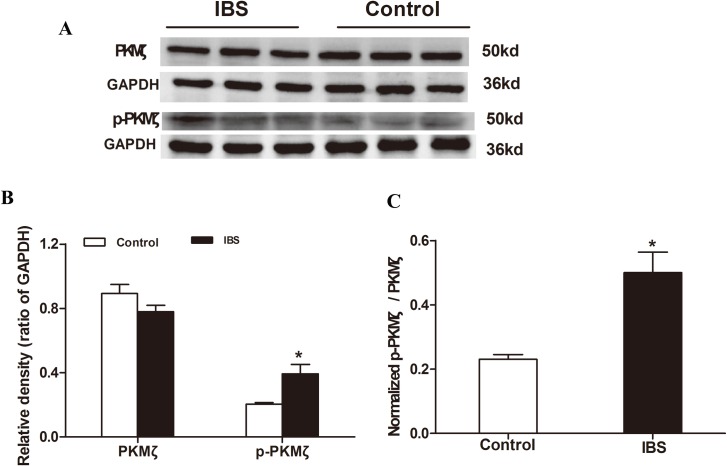
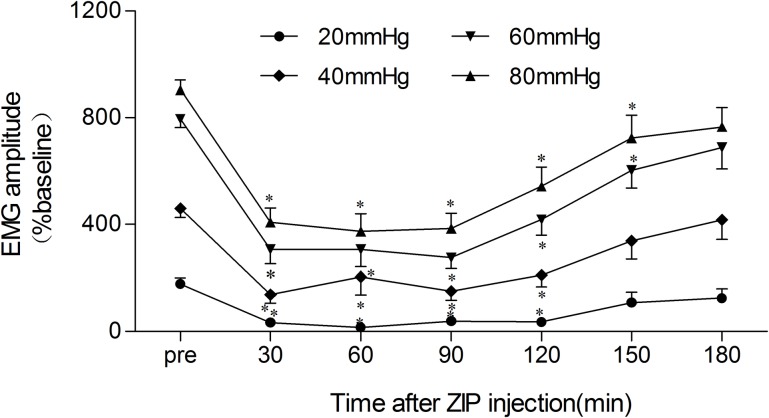
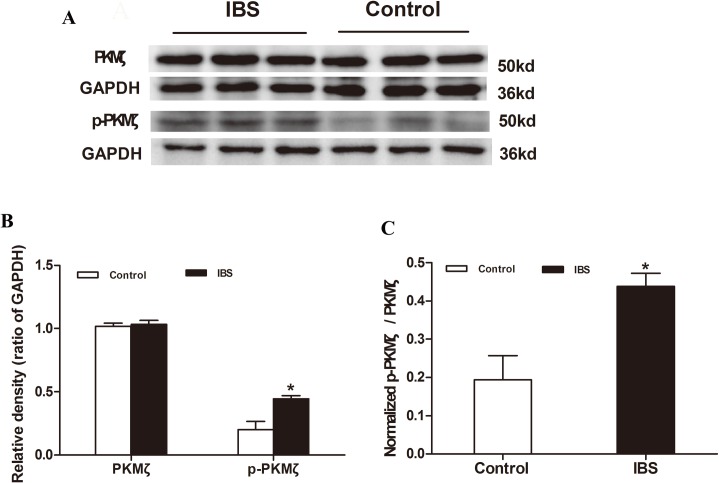
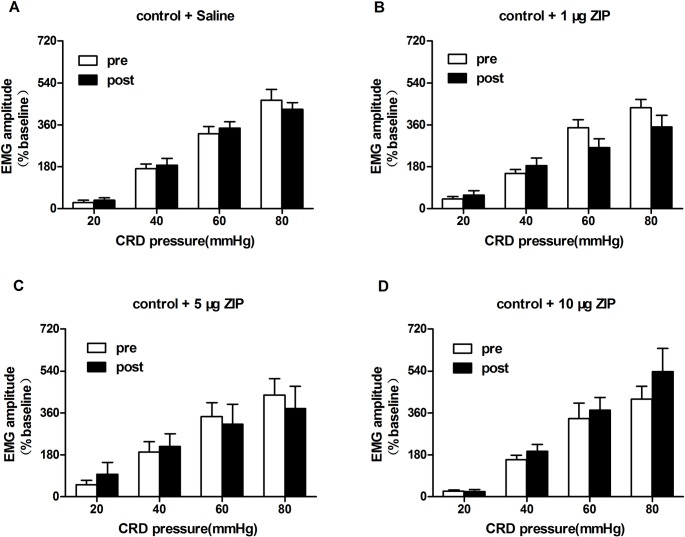
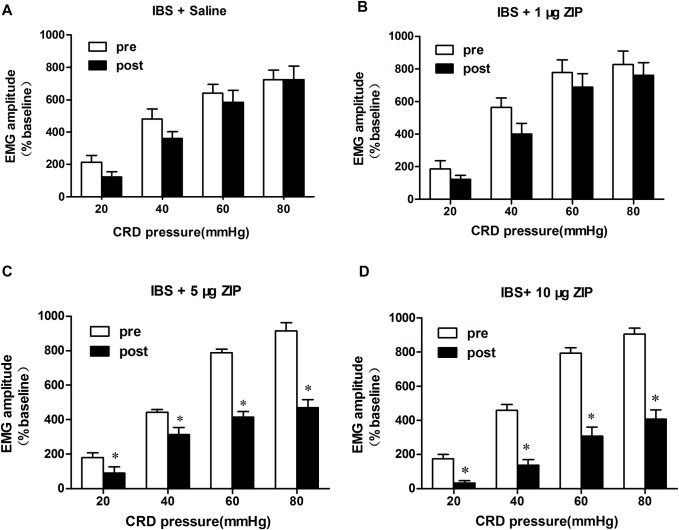
Graded CRD pressure significantly increased EMG responses in NMS rats compared to control rats (p < 0.05). p-PKMζ expression increased in the thoracolumbar and lumbosacral spinal cord in the IBS-like rats with notable concomitant chronic visceral pain compared to control rats (p < 0.05). EMG data revealed that intrathecal ZIP injection (1, 5, and 10 μg) dose-dependently attenuated visceral pain hypersensitivity in IBS-like rats.
Phosphorylated PKMζ may be involved in the spinal central sensitization of chronic visceral hypersensitivity in IBS, and administration of ZIP could effectively treat chronic visceral pain with good outcomes in rat models.
多种慢性内脏疼痛综合征,如肠易激综合征(IBS)的发病机制尚不清楚,因此目前的治疗方法效果不佳。本研究的目的是探讨脊髓蛋白激酶Mζ(PKMζ)对IBS大鼠内脏疼痛敏感性的影响,以更好地理解其发病机制,并研究ζ抑制肽(ZIP)作为慢性内脏疼痛治疗方法的效果。
通过新生鼠母婴分离(NMS)制备内脏超敏大鼠。通过腹部肌肉对结肠扩张(CRD)的肌电图(EMG)反应评估内脏疼痛敏感性。采用蛋白质免疫印迹法检测脊髓PKMζ和磷酸化PKMζ(p-PKMζ)。鞘内注射不同剂量的ZIP,以研究脊髓PKMζ在慢性内脏超敏反应中的作用。采用旷场试验确定ZIP治疗是否会引起自发运动活动副作用。
与对照大鼠相比,分级CRD压力显著增加了NMS大鼠的EMG反应(p<0.05)。与对照大鼠相比,在伴有明显慢性内脏疼痛的IBS样大鼠中,胸腰段和腰骶段脊髓中的p-PKMζ表达增加(p<0.05)。EMG数据显示,鞘内注射ZIP(1、5和10μg)剂量依赖性地减轻了IBS样大鼠的内脏疼痛超敏反应。
磷酸化PKMζ可能参与IBS中慢性内脏超敏反应的脊髓中枢敏化,ZIP给药可有效治疗慢性内脏疼痛,在大鼠模型中效果良好。