Kong Jinfeng, Du Juan, Wang Yunling, Yang Mingzi, Gao Jianchao, Wei Xiaofan, Fang Weigang, Zhan Jun, Zhang Hongquan
Key Laboratory of Carcinogenesis and Translational Research (Ministry of Education), State Key Laboratory of Natural and Biomimetic Drugs, Department of Anatomy, Histology and Embryology, Peking University Health Science Center, Beijing 100191, China.
Department Pathology, Peking University Health Science Center, Beijing 100191, China.
Oncotarget. 2016 Nov 15;7(46):76224-76237. doi: 10.18632/oncotarget.12779.
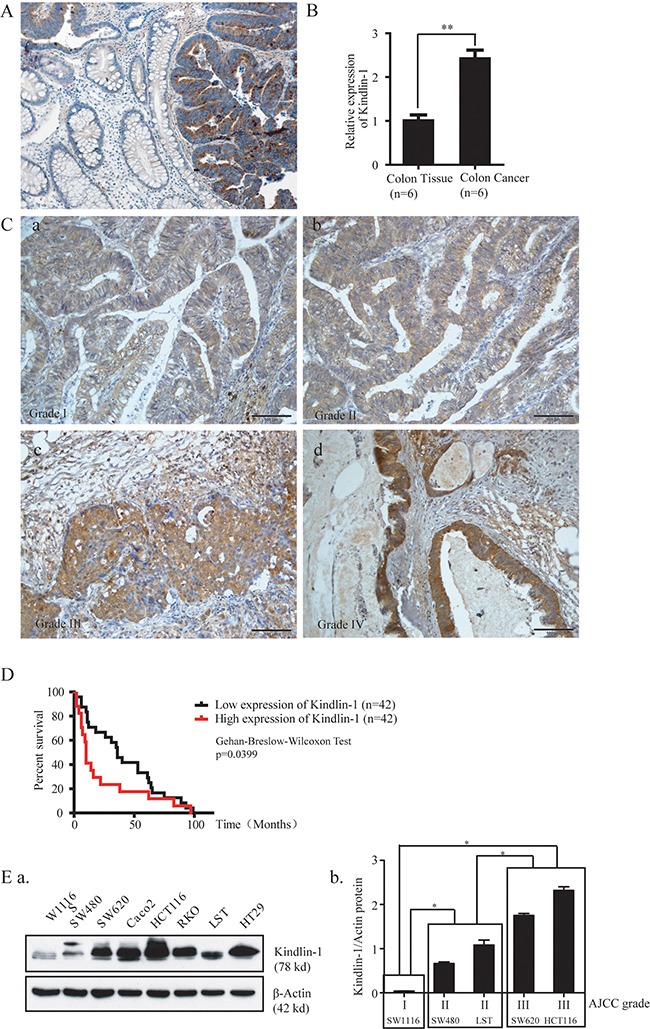
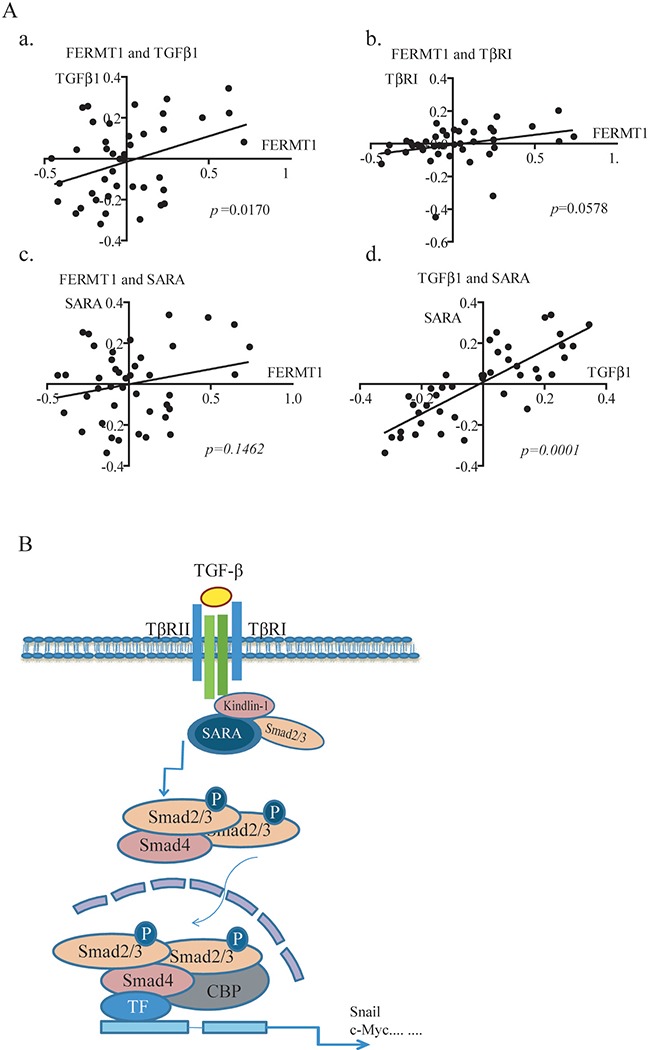
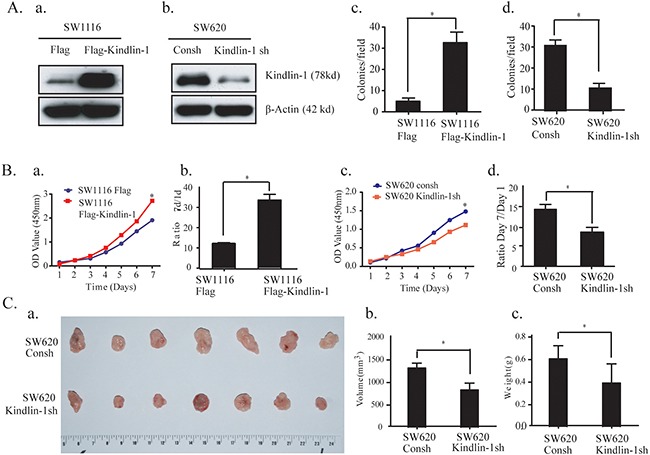
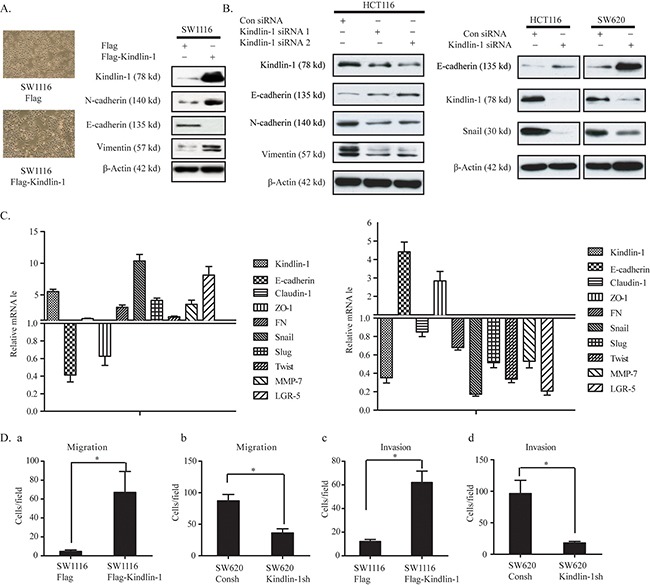
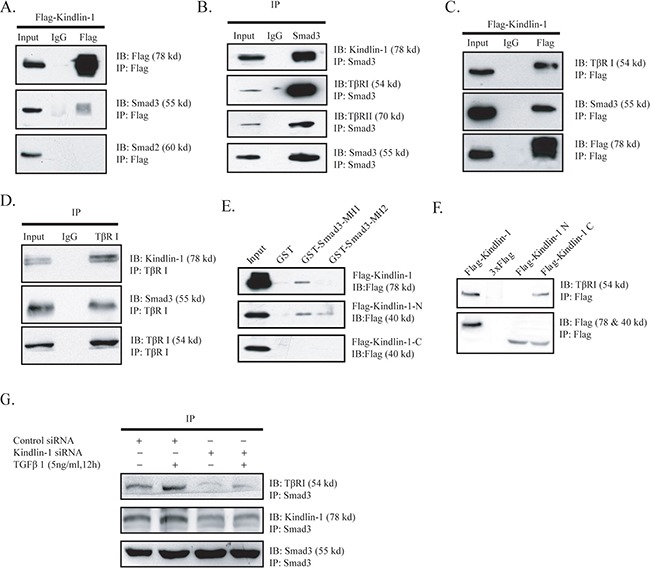
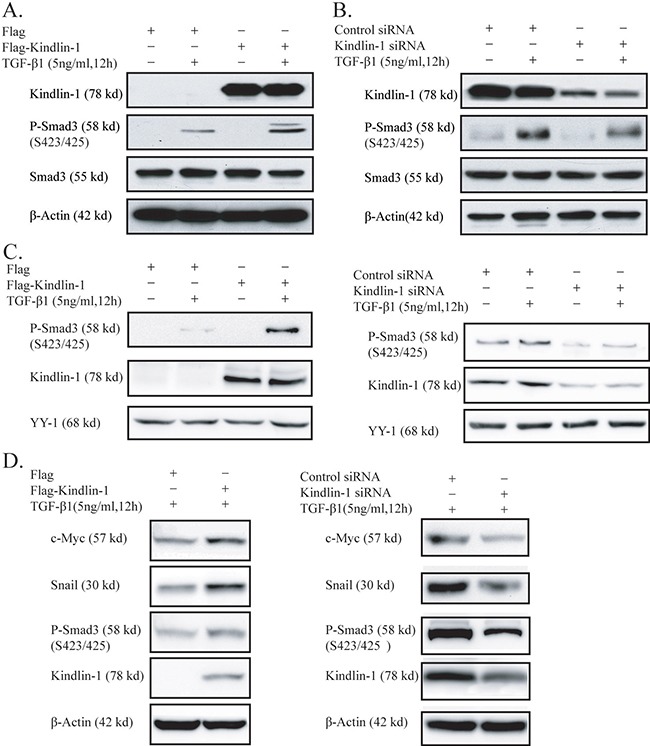
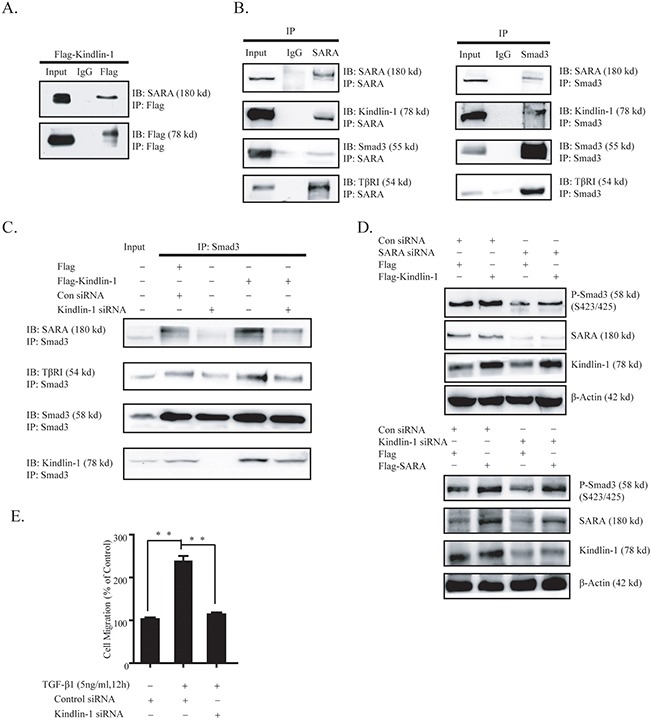
Kindlin-1, an integrin-interacting protein, has been implicated in TGF-β/Smad3 signaling. However, the molecular mechanism underlying Kindlin-1 regulation of TGF-β/Smad3 signaling remains elusive. Here, we reported that Kindlin-1 is an important mediator of TGF-β/Smad3 signaling by showing that Kindlin-1 physically interacts with TGF-β receptor I (TβRI), Smad anchor for receptor activation (SARA) and Smad3. Kindlin-1 is required for the interaction of Smad3 with TβRI, Smad3 phosphorylation, nuclear translocation, and finally the activation of TGF-β/Smad3 signaling pathway. Functionally, Kindlin-1 promoted colorectal cancer (CRC) cell proliferation in vitro and tumor growth in vivo, and was also required for CRC cell migration and invasion via an epithelial to mesenchymal transition. Kindlin-1 was found to be increased with the CRC progression from stages I to IV. Importantly, raised expression level of Kindlin-1 correlates with poor outcome in CRC patients. Taken together, we demonstrated that Kindlin-1 promotes CRC progression by recruiting SARA and Smad3 to TβRI and thereby activates TGF-β/Smad3 signaling. Thus, Kindlin-1 is a novel regulator of TGF-β/Smad3 signaling and may also be a potential target for CRC therapeutics.
Kindlin-1是一种与整合素相互作用的蛋白质,与转化生长因子-β(TGF-β)/Smad3信号通路有关。然而,Kindlin-1调控TGF-β/Smad3信号通路的分子机制仍不清楚。在此,我们报告Kindlin-1是TGF-β/Smad3信号通路的重要介质,因为Kindlin-1与TGF-β受体I(TβRI)、受体激活的Smad锚定蛋白(SARA)和Smad3存在物理相互作用。Smad3与TβRI的相互作用、Smad3磷酸化、核转位以及最终TGF-β/Smad3信号通路的激活都需要Kindlin-1。在功能上,Kindlin-1在体外促进结直肠癌(CRC)细胞增殖和体内肿瘤生长,并且CRC细胞通过上皮-间质转化进行迁移和侵袭也需要Kindlin-1。研究发现,从I期到IV期,Kindlin-1随着CRC进展而增加。重要的是,Kindlin-1表达水平升高与CRC患者的不良预后相关。综上所述,我们证明Kindlin-1通过将SARA和Smad3招募到TβRI从而激活TGF-β/Smad3信号通路来促进CRC进展。因此,Kindlin-1是TGF-β/Smad3信号通路的新型调节因子,也可能是CRC治疗的潜在靶点。