Shimozaki Shingo, Yamamoto Norio, Domoto Takahiro, Nishida Hideji, Hayashi Katsuhiro, Kimura Hiroaki, Takeuchi Akihiko, Miwa Shinji, Igarashi Kentaro, Kato Takashi, Aoki Yu, Higuchi Takashi, Hirose Mayumi, Hoffman Robert M, Minamoto Toshinari, Tsuchiya Hiroyuki
Department of Orthopedic Surgery, Graduate School of Medical Sciences, Kanazawa University, Kanazawa, Japan.
Division of Translational and Clinical Oncology, Cancer Research Institute, Kanazawa University, Kanazawa, Japan.
Oncotarget. 2016 Nov 22;7(47):77038-77051. doi: 10.18632/oncotarget.12781.
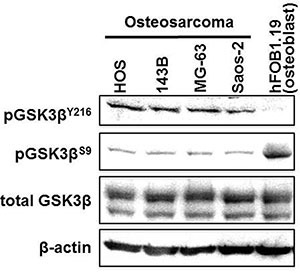
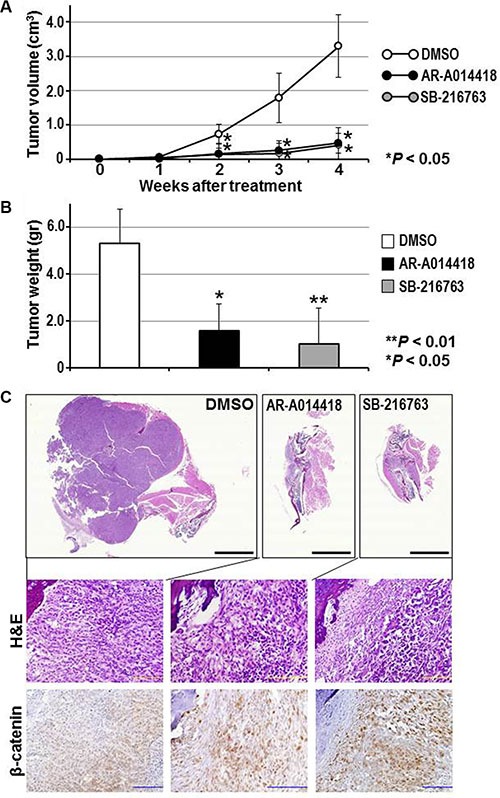
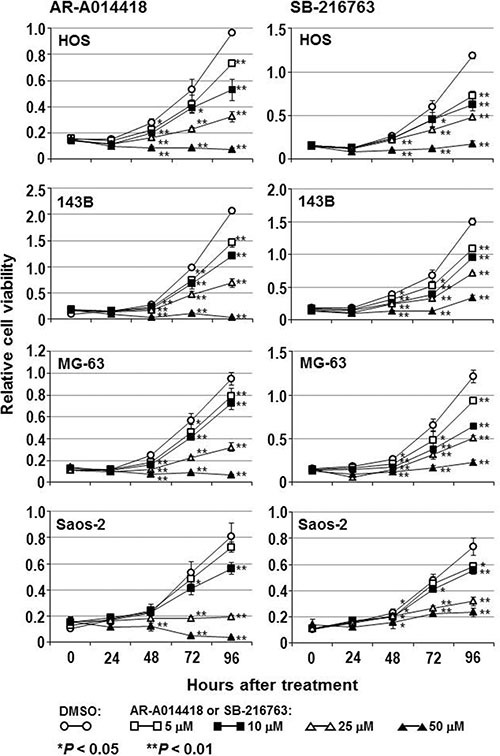
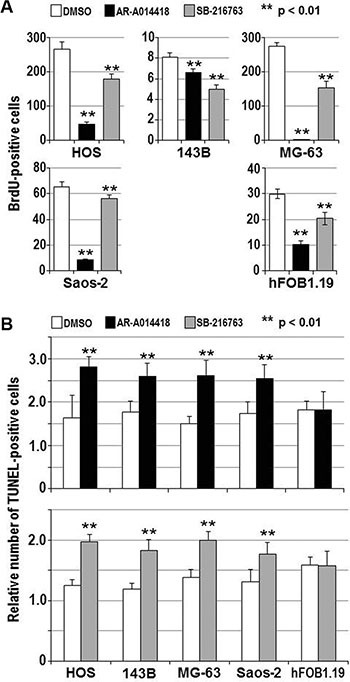
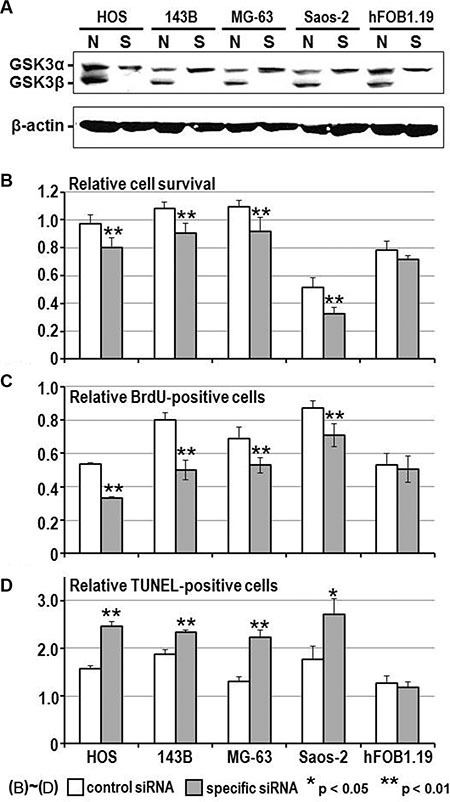
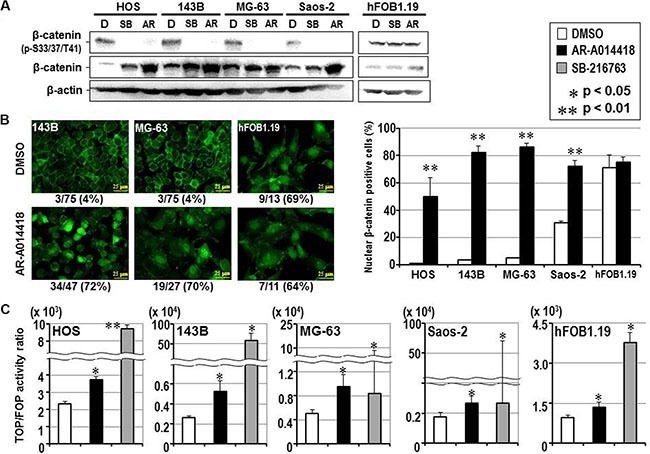
Development of innovative more effective therapy is required for refractory osteosarcoma patients. We previously established that glycogen synthase kinase-3β (GSK- 3β) is a therapeutic target in various cancer types. In the present study, we explored the therapeutic efficacy of GSK-3β inhibition against osteosarcoma and the underlying molecular mechanisms in an orthotopic mouse model. Expression and phosphorylation of GSK-3β in osteosarcoma and normal osteoblast cell lines was examined, together with efficacy of GSK-3β inhibition on cell survival, proliferation and apoptosis and on the growth of orthotopically-transplanted human osteosarcoma in nude mice. We also investigated changes in expression, phosphorylation and co-transcriptional activity of β-catenin in osteosarcoma cells following GSK-3β inhibition. Expression of the active form of GSK- 3β (tyrosine 216-phosphorylated) was higher in osteosarcoma than osteoblast cells. Inhibition of GSK-3β activity by pharmacological inhibitors or of its expression by RNA interference suppressed proliferation of osteosarcoma cells and induced apoptosis. Treatment with GSK-3β-specific inhibitors attenuated the growth of orthotopic osteosaroma in mice. Inhibition of GSK-3β reduced phosphorylation at GSK- 3β-phospho-acceptor sites in β-catenin and increased β-catenin expression, nuclear localization and co-transcriptional activity. These results suggest the efficacy of GSK-3β inhibitors is associated with activation of β-catenin, a putative tumor suppressor in bone and soft tissue sarcoma and an important component of osteogenesis. Our study thereby demonstrates a critical role for GSK-3β in sustaining survival and proliferation of osteosarcoma cells, and identifies this kinase as a potential therapeutic target against osteosarcoma.
难治性骨肉瘤患者需要开发创新的、更有效的治疗方法。我们之前已经确定糖原合酶激酶-3β(GSK-3β)是多种癌症类型的治疗靶点。在本研究中,我们在原位小鼠模型中探讨了GSK-3β抑制对骨肉瘤的治疗效果及其潜在的分子机制。检测了骨肉瘤和正常成骨细胞系中GSK-3β的表达和磷酸化情况,以及GSK-3β抑制对细胞存活、增殖和凋亡以及对裸鼠原位移植人骨肉瘤生长的影响。我们还研究了GSK-3β抑制后骨肉瘤细胞中β-连环蛋白的表达、磷酸化和共转录活性的变化。GSK-3β活性形式(酪氨酸216磷酸化)在骨肉瘤中的表达高于成骨细胞。用药物抑制剂抑制GSK-3β活性或用RNA干扰抑制其表达可抑制骨肉瘤细胞的增殖并诱导凋亡。用GSK-3β特异性抑制剂治疗可减弱小鼠原位骨肉瘤的生长。抑制GSK-3β可降低β-连环蛋白中GSK-3β磷酸化位点的磷酸化水平,并增加β-连环蛋白的表达、核定位和共转录活性。这些结果表明,GSK-3β抑制剂的疗效与β-连环蛋白的激活有关,β-连环蛋白是骨和软组织肉瘤中一种假定的肿瘤抑制因子,也是骨生成的重要组成部分。我们的研究因此证明了GSK-3β在维持骨肉瘤细胞存活和增殖中起关键作用,并确定该激酶是骨肉瘤的潜在治疗靶点。