Martinelli Marcella, Parra Alessandro, Scapoli Luca, De Sanctis Paola, Chiadini Valentina, Hattinger Claudia, Picci Piero, Zucchini Cinzia, Scotlandi Katia
Dept. of Experimental Diagnostics and Specialty Medicine (DIMES), University of Bologna, Bologna, Italy.
CRS Development of Biomolecular Therapies, Oncology Lab, Rizzoli Orthopaedic Institute, Bologna, Italy.
Oncotarget. 2016 Nov 22;7(47):77958-77967. doi: 10.18632/oncotarget.12862.
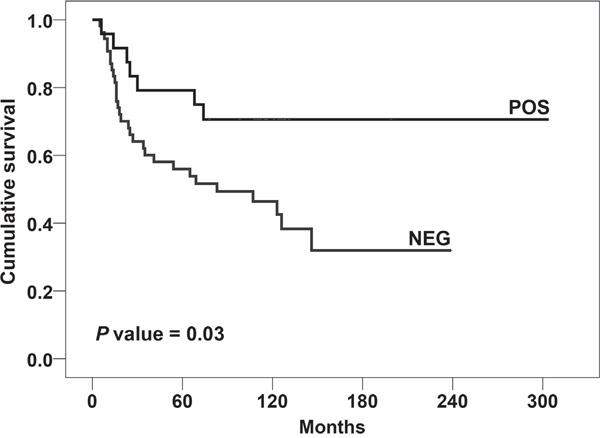
Ewing sarcoma (EWS), the second most common primary bone tumor in pediatric age, is known for its paucity of recurrent somatic abnormalities. Apart from the chimeric oncoprotein that derives from the fusion of EWS and FLI genes, recent genome-wide association studies have identified susceptibility variants near the EGR2 gene that regulate DNA binding of EWS-FLI. However, to induce transformation, EWS-FLI requires the presence of additional molecular events, including the expression of CD99, a cell surface molecule with critical relevance for the pathogenesis of EWS. High expression of CD99 is a common and distinctive feature of EWS cells, and it has largely been used for the differential diagnosis of the disease. The present study first links CD99 germline genetic variants to the susceptibility of EWS development and its progression. In particular, a panel of 25 single nucleotide polymorphisms has been genotyped in a case-control study. The CD99 rs311059 T variant was found to be significantly associated [P value = 0.0029; ORhet = 3.9 (95% CI 1.5-9.8) and ORhom = 5.3 (95% CI 1.2-23.7)] with EWS onset in patients less than 14 years old, while the CD99 rs312257-T was observed to be associated [P value = 0.0265; ORhet = 3.5 (95% CI 1.3-9.9)] with a reduced risk of relapse. Besides confirming the importance of CD99, our findings indicate that polymorphic variations in this gene may affect either development or progression of EWS, leading to further understanding of this cancer and development of better diagnostics/prognostics for children and adolescents with this devastating disease.
尤因肉瘤(EWS)是儿童期第二常见的原发性骨肿瘤,以其复发性体细胞异常较少而闻名。除了由EWS和FLI基因融合产生的嵌合癌蛋白外,最近的全基因组关联研究已经在EGR2基因附近鉴定出调节EWS-FLI DNA结合的易感变异。然而,为了诱导转化,EWS-FLI需要存在其他分子事件,包括CD99的表达,CD99是一种与EWS发病机制密切相关的细胞表面分子。CD99的高表达是EWS细胞的一个常见且独特的特征,并且在很大程度上已被用于该疾病的鉴别诊断。本研究首次将CD99种系基因变异与EWS发生及其进展的易感性联系起来。特别是,在一项病例对照研究中对一组25个单核苷酸多态性进行了基因分型。发现CD99 rs311059 T变异与14岁以下患者的EWS发病显著相关[P值 = 0.0029;ORhet = 3.9(95% CI 1.5 - 9.8)和ORhom = 5.3(95% CI 1.2 - 23.7)],而观察到CD99 rs312257 - T与复发风险降低相关[P值 = 0.0265;ORhet = 3.5(95% CI 1.3 - 9.9)]。除了证实CD99的重要性外,我们的研究结果表明该基因的多态性变异可能影响EWS的发生或进展,从而有助于进一步了解这种癌症,并为患有这种毁灭性疾病的儿童和青少年开发更好的诊断/预后方法。